Luke D. Burkhart, James D. Teoh, Yaxing Zhang, Christopher J. Axline, Luigi Frunzio, M.H. Devoret, Liang Jiang, S.M. Girvin, and R.J. Schoelkopf
PRX Quantum 2, 030321 (2021) - Published 5 August, 2021
The challenge of linking and operating physically independent modular quantum computers is tackled: Several key capabilities are experimentally demonstrated, including error correction.
S.H. Madkhaly, L.A. Coles, C. Morley, C.D. Colquhoun, T.M. Fromhold, N. Cooper, and L. Hackermüller
PRX Quantum 2, 030326 (2021) - Published 12 August, 2021
Fabricate your own portable quantum hardware: A design methodology on 3D printing for rapid device prototyping and dramatic reductions in size, weight, and cost.
Matteo Ippoliti, Kostyantyn Kechedzhi, Roderich Moessner, S.L. Sondhi, and Vedika Khemani
PRX Quantum 2, 030346 (2021) - Published 20 September, 2021
NISQ devices are shown to be exceptionally well-suited for simulating periodically driven quantum systems, offering key capabilities for the realization of novel non-equilibrium phases of matter such as the elusive discrete time crystal.
F. Setiawan, Peter Groszkowski, Hugo Ribeiro, and Aashish A. Clerk
PRX Quantum 2, 030306 (2021) - Published 9 July, 2021
A new analytic approach to quantum control in complex multi-level systems is presented, laying the groundwork for designing low-error quantum operations in a variety of systems.
Fernando G.S.L. Brandão, Wissam Chemissany, Nicholas Hunter-Jones, Richard Kueng, and John Preskill
PRX Quantum 2, 030316 (2021) - Published 29 July, 2021
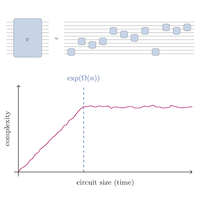
A rigorous connection between complexity growth and unitary k-designs is provided, establishing a stronger notion of quantum complexity.
Zheng-Hao Liu, Kai Sun, Jiannis K. Pachos, Mu Yang, Yu Meng, Yu-Wei Liao, Qiang Li, Jun-Feng Wang, Ze-Yu Luo, Yi-Fei He, Dong-Yu Huang, Guang-Rui Ding, Jin-Shi Xu, Yong-Jian Han, Chuan-Feng Li, and Guang-Can Guo
PRX Quantum 2, 030323 (2021) - Published 9 August, 2021
Properties of a parafermion-based quantum processor are simulated in a photonic platform, realizing Clifford operations and demonstrating contextuality in a topological system.
Daniel Carney, Holger Müller, and Jacob M. Taylor
PRX Quantum 2, 030330 (2021) - Published 18 August, 2021
Testing if graviton creates entanglement between massive objects: A concrete sensing protocol that relies on measurements of a single subsystem is laid out.
Danny Paulson, Luca Dellantonio, Jan F. Haase, Alessio Celi, Angus Kan, Andrew Jena, Christian Kokail, Rick van Bijnen, Karl Jansen, Peter Zoller, and Christine A. Muschik
PRX Quantum 2, 030334 (2021) - Published 25 August, 2021
A method for simulations of quantum field theory in more than one dimension, feasible on the existing quantum hardware, is presented.
Mathieu Bozzio, Adrien Cavaillès, Eleni Diamanti, Adrian Kent, and Damián Pitalúa-García
PRX Quantum 2, 030338 (2021) - Published 1 September, 2021
New types of attacks on practical implementations of mistrustful quantum cryptographic schemes are identified, showing that countermeasures previously believed to ensure security in fact can leave schemes completely vulnerable.
Xin-Yue Zhang, Yu-Xuan Wang, Thomas A. Tartaglia, Thomas Ding, Mason J. Gray, Kenneth S. Burch, Fazel Tafti, and Brian B. Zhou
PRX Quantum 2, 030352 (2021) - Published 28 September, 2021
A novel function for quantum sensing is demonstrated, in which NV magnetometry is extended to the dynamic character of magnetism, enabling ac and dc study of spintronic materials at the nanoscale.
András Gyenis, Agustin Di Paolo, Jens Koch, Alexandre Blais, Andrew A. Houck, and David I. Schuster
PRX Quantum 2, 030101 (2021) - Published 2 September, 2021
The latest progress and challenges on engineering superconducting qubits to achieve noise-protection at the hardware-level is presented.
John P. Philbin and Prineha Narang
PRX Quantum 2, 030102 (2021) - Published 20 September, 2021
A path to bridge the gap between ab initio materials calculations and the model Hamiltonians used to discover and develop scalable quantum systems is presented.
Simon Milz and Kavan Modi
PRX Quantum 2, 030201 (2021) - Published 14 July, 2021
An insightful tutorial on how to deal with stochastic processes in the quantum domain: The tools to understand the effect of the environment on quantum systems’ dynamics are provided.
Philipp Strasberg and Andreas Winter
PRX Quantum 2, 030202 (2021) - Published 19 August, 2021
A consistent and versatile framework to understand and apply the laws of thermodynamics for quantum systems far from equilibrium is presented.
U. Boscain, M. Sigalotti, and D. Sugny
PRX Quantum 2, 030203 (2021) - Published 14 September, 2021
Optimal control theory is introduced for quantum systems, providing the mathematical understanding for constructing open-loop control laws without experimental feedback.
Mattia Walschaers
PRX Quantum 2, 030204 (2021) - Published 28 September, 2021
A phase-space exploration of continuous-variable systems is presented, guiding newcomers through the methodology needed for investigating non-Gaussian states.
Nicholas H. Stair and Francesco A. Evangelista
PRX Quantum 2, 030301 (2021) - Published 1 July, 2021
A reformulation of a variational quantum algorithm enables investigation of strongly correlated electronic systems with one to two orders of magnitude fewer quantum measurements than the state-of-the-art.
Amro Dodin and Paul Brumer
PRX Quantum 2, 030302 (2021) - Published 2 July, 2021
The adiabatic theorem is generalized to deal with fields that oscillate at arbitrary timescales, helping to describe previously inaccessible dynamical problems.
Zixin Huang, Cosmo Lupo, and Pieter Kok
PRX Quantum 2, 030303 (2021) - Published 6 July, 2021
The ultimate precision limits are determined for simultaneously estimating the range and velocity of a target and the range and velocity separations of a pair of targets by using lidar systems, with or without entanglement.
Gong Zhang, Ignatius William Primaatmaja, Jing Yan Haw, Xiao Gong, Chao Wang, and Charles Ci Wen Lim
PRX Quantum 2, 030304 (2021) - Published 7 July, 2021
Thermo-optical defocusing effects can help to beat quantum hacking: An experiment shows how to increase the security of quantum cryptosystems without compromising the communication signal.
Joonho Lee, Dominic W. Berry, Craig Gidney, William J. Huggins, Jarrod R. McClean, Nathan Wiebe, and Ryan Babbush
PRX Quantum 2, 030305 (2021) - Published 8 July, 2021
An efficient algorithm for simulating quantum chemistry is introduced and further analyzed for the paradigmatic FeMoCo molecule, providing cost estimates and required resources.
F. Setiawan, Peter Groszkowski, Hugo Ribeiro, and Aashish A. Clerk
PRX Quantum 2, 030306 (2021) - Published 9 July, 2021
A new analytic approach to quantum control in complex multi-level systems is presented, laying the groundwork for designing low-error quantum operations in a variety of systems.
Yong-Xin Yao, Niladri Gomes, Feng Zhang, Cai-Zhuang Wang, Kai-Ming Ho, Thomas Iadecola, and Peter P. Orth
PRX Quantum 2, 030307 (2021) - Published 12 July, 2021
A time-dependent adaptive variational method is developed to enable practical and highly accurate quantum dynamics simulations on NISQ devices.
Martina Gschwendtner and Andreas Winter
PRX Quantum 2, 030308 (2021) - Published 13 July, 2021
Programmable quantum processors for continuous-variable systems are defined, and investigated in view of their memory requirements, linking universal processors to their discrete counterparts, and deriving upper and lower bounds on the programmability of Gaussian transformations of Bosonic modes.
Brittany Richman and Jacob M. Taylor
PRX Quantum 2, 030309 (2021) - Published 15 July, 2021
A chip-scale circulator is proposed that operates via the rotation of persistent-current vortices, promising signal routing with moderate bandwidth, low insertion loss, and operation at microwave frequencies relevant for experiments with qubits.
Marek Gluza, João Sabino, Nelly H.Y. Ng, Giuseppe Vitagliano, Marco Pezzutto, Yasser Omar, Igor Mazets, Marcus Huber, Jörg Schmiedmayer, and Jens Eisert
PRX Quantum 2, 030310 (2021) - Published 19 July, 2021
A blueprint of a genuine quantum thermal machine based on ultra-cold atomic gases is presented, and a road map is laid out to explore several open questions.
Carlos de Gois, George Moreno, Ranieri Nery, Samuraí Brito, Rafael Chaves, and Rafael Rabelo
PRX Quantum 2, 030311 (2021) - Published 20 July, 2021
Prepare and measure: A general and sufficient condition to certify that a given set of preparations can only generate classical statistics, for any number of generalized measurements, is devised.
Jarrod R. McClean, Matthew P. Harrigan, Masoud Mohseni, Nicholas C. Rubin, Zhang Jiang, Sergio Boixo, Vadim N. Smelyanskiy, Ryan Babbush, and Hartmut Neven
PRX Quantum 2, 030312 (2021) - Published 21 July, 2021
By gaining intuition about the mechanisms by which quantum optimization algorithms solve problems, approaches are identified that substantially improve the performance of quantum algorithms for this task.
Shengqi Sang, Yaodong Li, Tianci Zhou, Xiao Chen, Timothy H. Hsieh, and Matthew P.A. Fisher
PRX Quantum 2, 030313 (2021) - Published 23 July, 2021
Universal multipartite entanglement is studied for a variety of measurement induced phase transitions, exact results are presented in a special case, and remarkable consistency is found in several different models away from this limit.
F. Battistel, B.M. Varbanov, and B.M. Terhal
PRX Quantum 2, 030314 (2021) - Published 26 July, 2021
A scheme to bring a leaked state back into the computational subspace of superconducting qubits is presented, opening the prospect for near-term scalable demonstrations of quantum error correction.
Teerawat Chalermpusitarak, Behnam Tonekaboni, Yuanlong Wang, Leigh M. Norris, Lorenza Viola, and Gerardo A. Paz-Silva
PRX Quantum 2, 030315 (2021) - Published 27 July, 2021
A framework for resource-efficient characterization and control of non-Markovian open quantum systems is developed based on the notion of frames, overcoming severe constraints of existing approaches.
Fernando G.S.L. Brandão, Wissam Chemissany, Nicholas Hunter-Jones, Richard Kueng, and John Preskill
PRX Quantum 2, 030316 (2021) - Published 29 July, 2021
A rigorous connection between complexity growth and unitary k-designs is provided, establishing a stronger notion of quantum complexity.
Andrew D. King, Cristian D. Batista, Jack Raymond, Trevor Lanting, Isil Ozfidan, Gabriel Poulin-Lamarre, Hao Zhang, and Mohammad H. Amin
PRX Quantum 2, 030317 (2021) - Published 30 July, 2021
A quantum annealing processor is used to investigate frustrated magnetism and show how the tuning of quantum fluctuations effect dynamical and equilibrium properties.
Tatiana A. Bespalova and Oleksandr Kyriienko
PRX Quantum 2, 030318 (2021) - Published 2 August, 2021
A strategy is devised to approximate the Hamiltonian operator in ways that benefit analog quantum simulators, potentially outperforming variational methods in terms of gate depth and a total number of measurements.
K. C. Chen, W. Dai, C. Errando-Herranz, S. Lloyd, and D. Englund
PRX Quantum 2, 030319 (2021) - Published 3 August, 2021
A quantum RAM architecture based on photonic integrated circuits and existing technologies is proposed.
Carolin Lüders, Matthias Pukrop, Elena Rozas, Christian Schneider, Sven Höfling, Jan Sperling, Stefan Schumacher, and Marc Aßmann
PRX Quantum 2, 030320 (2021) - Published 4 August, 2021
A quantifier of quantum coherence applicable to exciton-polariton condensates is developed and experimentally investigated, helping to identify the resourcefulness of states created in the lab for quantum protocols.
Luke D. Burkhart, James D. Teoh, Yaxing Zhang, Christopher J. Axline, Luigi Frunzio, M.H. Devoret, Liang Jiang, S.M. Girvin, and R.J. Schoelkopf
PRX Quantum 2, 030321 (2021) - Published 5 August, 2021
The challenge of linking and operating physically independent modular quantum computers is tackled: Several key capabilities are experimentally demonstrated, including error correction.
Sam R. Cohen and Jeff D. Thompson
PRX Quantum 2, 030322 (2021) - Published 6 August, 2021
A proposal for preparing Rydberg arrays containing hundreds of circular Rydberg atoms and comparatively small two-qubit gate errors is presented, enabling significant improvement to quantum computing and simulation with neutral atoms.
Zheng-Hao Liu, Kai Sun, Jiannis K. Pachos, Mu Yang, Yu Meng, Yu-Wei Liao, Qiang Li, Jun-Feng Wang, Ze-Yu Luo, Yi-Fei He, Dong-Yu Huang, Guang-Rui Ding, Jin-Shi Xu, Yong-Jian Han, Chuan-Feng Li, and Guang-Can Guo
PRX Quantum 2, 030323 (2021) - Published 9 August, 2021
Properties of a parafermion-based quantum processor are simulated in a photonic platform, realizing Clifford operations and demonstrating contextuality in a topological system.
Barnaby van Straaten and Bálint Koczor
PRX Quantum 2, 030324 (2021) - Published 10 August, 2021
A rigorous strategy is devised for optimally using quantum resources in metric-aware algorithms, such as natural gradient for variational quantum eigensolvers and simulators of quantum dynamics.
Mikkel V. Larsen, Christopher Chamberland, Kyungjoo Noh, Jonas S. Neergaard-Nielsen, and Ulrik L. Andersen
PRX Quantum 2, 030325 (2021) - Published 11 August, 2021
A scalable architecture for topological measurement-based quantum computation is proposed, and GKP error correction is shown to be efficiently achievable by teleportation.
S.H. Madkhaly, L.A. Coles, C. Morley, C.D. Colquhoun, T.M. Fromhold, N. Cooper, and L. Hackermüller
PRX Quantum 2, 030326 (2021) - Published 12 August, 2021
Fabricate your own portable quantum hardware: A design methodology on 3D printing for rapid device prototyping and dramatic reductions in size, weight, and cost.
Zhi-Cheng Yang, Dmitry Green, Hongji Yu, and Claudio Chamon
PRX Quantum 2, 030327 (2021) - Published 13 August, 2021
A path for experimentally building realistic models of quantum spin liquids is laid out: The construction is based on superconducting wire arrays and could lead to topological qubits.
Yanwu Gu, Rajesh Mishra, Berthold-Georg Englert, and Hui Khoon Ng
PRX Quantum 2, 030328 (2021) - Published 16 August, 2021
An experimentally friendlier version of gate-set tomography that greatly simplifies its accompanying classical processes is introduced, improving the practical characterization of noise in current quantum devices.
Guillem Müller-Rigat, Albert Aloy, Maciej Lewenstein, and Irénée Frérot
PRX Quantum 2, 030329 (2021) - Published 17 August, 2021
A versatile algorithm for searching Bell’s inequalities with scaling advantages is developed, and new families of many-body Bell’s inequalities are discovered.
Daniel Carney, Holger Müller, and Jacob M. Taylor
PRX Quantum 2, 030330 (2021) - Published 18 August, 2021
Testing if graviton creates entanglement between massive objects: A concrete sensing protocol that relies on measurements of a single subsystem is laid out.
Pierre-André Mortemousque, Baptiste Jadot, Emmanuel Chanrion, Vivien Thiney, Christopher Bäuerle, Arne Ludwig, Andreas D. Wieck, Matias Urdampilleta, and Tristan Meunier
PRX Quantum 2, 030331 (2021) - Published 20 August, 2021
A ten-fold boost in the coherence time of spin qubits in a two-dimensional array of quantum dots is achieved: The role of electron displacement is discussed in the context of large-scale quantum circuits
T. Mendes-Santos, A. Angelone, Alex Rodriguez, R. Fazio, and M. Dalmonte
PRX Quantum 2, 030332 (2021) - Published 23 August, 2021
Data structure is used to probe many-body systems by exploring how certain quantum statistical mechanics models capture genuine quantum effects, such as quantum critical behavior and quantum phases.
Wenzheng Dong, Fei Zhuang, Sophia E. Economou, and Edwin Barnes
PRX Quantum 2, 030333 (2021) - Published 24 August, 2021
A general approach to quantum control is presented, designing control waveforms that suppress both environmental noise and control errors at the same time.
Danny Paulson, Luca Dellantonio, Jan F. Haase, Alessio Celi, Angus Kan, Andrew Jena, Christian Kokail, Rick van Bijnen, Karl Jansen, Peter Zoller, and Christine A. Muschik
PRX Quantum 2, 030334 (2021) - Published 25 August, 2021
A method for simulations of quantum field theory in more than one dimension, feasible on the existing quantum hardware, is presented.
Julian Wechs, Hippolyte Dourdent, Alastair A. Abbott, and Cyril Branciard
PRX Quantum 2, 030335 (2021) - Published 26 August, 2021
Controlling the order of quantum operations in a circuit with another quantum system uncovers new types of noncausal computations.
Thiago Guerreiro
PRX Quantum 2, 030336 (2021) - Published 30 August, 2021
Qubots, built upon Rydberg-dressed atoms, can be engineered to protect a logical qubit state against decoherence and thermalization.
Sam Cree, Kfir Dolev, Vladimir Calvera, and Dominic J. Williamson
PRX Quantum 2, 030337 (2021) - Published 31 August, 2021
The future of holographic stabilizer codes for achieving universal fault-tolerant quantum computation does not appear promising: severe limitations on its usefulness are conceptually presented and theoretically verified.
Mathieu Bozzio, Adrien Cavaillès, Eleni Diamanti, Adrian Kent, and Damián Pitalúa-García
PRX Quantum 2, 030338 (2021) - Published 1 September, 2021
New types of attacks on practical implementations of mistrustful quantum cryptographic schemes are identified, showing that countermeasures previously believed to ensure security in fact can leave schemes completely vulnerable.
Yoshifumi Nakata, Da Zhao, Takayuki Okuda, Eiichi Bannai, Yasunari Suzuki, Shiro Tamiya, Kentaro Heya, Zhiguang Yan, Kun Zuo, Shuhei Tamate, Yutaka Tabuchi, and Yasunobu Nakamura
PRX Quantum 2, 030339 (2021) - Published 3 September, 2021
A long-standing open problem in quantum information is solved: Exact unitary t-designs with any strength can be generated using quantum circuits.
J. Estrada, R. Harnik, D. Rodrigues, and M. Senger
PRX Quantum 2, 030340 (2021) - Published 7 September, 2021
The search for dark matter candidates, such as axion-like particles and dark photons, may be aided by experiments using nonlinear crystals and tools long explored in quantum optics.
Claudio Chamon, Dmitry Green, and Andrew J. Kerman
PRX Quantum 2, 030341 (2021) - Published 8 September, 2021
A sophisticated proposal for engineering topologically ordered systems with superconducting quantum circuits and gauge symmetry is presented.
Yi-Hsiang Chen, Amir Kalev, and Itay Hen
PRX Quantum 2, 030342 (2021) - Published 9 September, 2021
An integral-free approach is introduced for time-dependent Hamiltonian simulation that leads to algorithmic speedup for many relevant systems.
Carlos González-Arciniegas, Paulo Nussenzveig, Marcelo Martinelli, and Olivier Pfister
PRX Quantum 2, 030343 (2021) - Published 13 September, 2021
Standard approaches to design and characterize CV cluster states can miss entanglement: From the identification of the problem to the proposed solution.
F. Benatti, R. Floreanini, and L. Memarzadeh
PRX Quantum 2, 030344 (2021) - Published 15 September, 2021
The stationary state of an open spin chain of arbitrary length is analytically computed, showing that the spin flow is affected by the presence of sinks and sources and providing an algorithm to compute the concurrence along the chain, and to study the dependencies on bath temperatures and spin chain parameters.
Andrew S. Darmawan, Benjamin J. Brown, Arne L. Grimsmo, David K. Tuckett, and Shruti Puri
PRX Quantum 2, 030345 (2021) - Published 16 September, 2021
An architecture for scalable fault-tolerant quantum computing based on Kerr-cat qubits and the XZZX code is shown to be viable with parameters that can be realized in current experiments.
Matteo Ippoliti, Kostyantyn Kechedzhi, Roderich Moessner, S.L. Sondhi, and Vedika Khemani
PRX Quantum 2, 030346 (2021) - Published 20 September, 2021
NISQ devices are shown to be exceptionally well-suited for simulating periodically driven quantum systems, offering key capabilities for the realization of novel non-equilibrium phases of matter such as the elusive discrete time crystal.
Hassan Shapourian, Shang Liu, Jonah Kudler-Flam, and Ashvin Vishwanath
PRX Quantum 2, 030347 (2021) - Published 21 September, 2021
A valuable tool for investigating entanglement structures in random mixed states is developed and applied to a wide range of quantum many-body problems.
Senrui Chen, Wenjun Yu, Pei Zeng, and Steven T. Flammia
PRX Quantum 2, 030348 (2021) - Published 22 September, 2021
Shadow estimation can be made noise-resilient and sample-efficient by using an experimentally friendly calibration procedure.
Ian Mondragon-Shem, Maxim G. Vavilov, and Ivar Martin
PRX Quantum 2, 030349 (2021) - Published 23 September, 2021
The role of disorder in quantum simulators that implement many-body scars —a phenomenon that avoids thermalization— is investigated, showing that robust scar signatures can be detected in near-term devices.
Oles Shtanko, Abhinav Deshpande, Paul S. Julienne, and Alexey V. Gorshkov
PRX Quantum 2, 030350 (2021) - Published 24 September, 2021
The transition from classically simulable to non-simulable due to noise is investigated, showing how to take advantage of dissipation in order to implement entangling gates with cold atoms.
Roberto D. Baldijão, Rafael Wagner, Cristhiano Duarte, Bárbara Amaral, and Marcelo Terra Cunha
PRX Quantum 2, 030351 (2021) - Published 27 September, 2021
Quantum to classical transition is explored by analyzing the connection between noncontextuality and quantum Darwinism.
Xin-Yue Zhang, Yu-Xuan Wang, Thomas A. Tartaglia, Thomas Ding, Mason J. Gray, Kenneth S. Burch, Fazel Tafti, and Brian B. Zhou
PRX Quantum 2, 030352 (2021) - Published 28 September, 2021
A novel function for quantum sensing is demonstrated, in which NV magnetometry is extended to the dynamic character of magnetism, enabling ac and dc study of spintronic materials at the nanoscale.
Andrea Solfanelli, Alessandro Santini, and Michele Campisi
PRX Quantum 2, 030353 (2021) - Published 30 September, 2021
A method to test non-equilibrium energetics on a quantum computer is developed and used, validating several theoretical predictions, such as the robustness of fluctuation theorems.