Recent Articles

Lee-Yang theory of the superradiant phase transition in the open Dicke model

Fredrik Brange, Neill Lambert, Franco Nori, and Christian Flindt

Phys. Rev. Research 6, 033181 (2024) - Published 19 August, 2024

Limit cycles as stationary states of an extended harmonic balance ansatz

Javier del Pino, Jan Košata, and Oded Zilberberg

Phys. Rev. Research 6, 033180 (2024) - Published 19 August, 2024

Trade-offs between unitary and measurement induced spin squeezing in cavity QED

Diego Barberena, Anjun Chu, James K. Thompson, and Ana Maria Rey

Phys. Rev. Research 6, L032037 (2024) - Published 16 August, 2024

The preparation of spin squeezing in cavity QED using a combination of unitary one-axis-twisting (OAT) and quantum nondemolition (QND) measurements is studied. Fundamental sources of decoherence are taken into account and simple criteria are provided that determine under which conditions either approach (OAT, QND, or a combination) should be used.

Quantum tangent kernel

Norihito Shirai, Kenji Kubo, Kosuke Mitarai, and Keisuke Fujii

Phys. Rev. Research 6, 033179 (2024) - Published 16 August, 2024

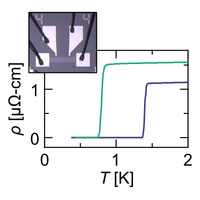
Controllable suppression of the unconventional superconductivity in bulk and thin-film Sr2RuO4 via high-energy electron irradiation

Jacob P. Ruf, Hilary M. L. Noad, Romain Grasset, Ludi Miao, Elina Zhakina, Philippa H. McGuinness, Hari P. Nair, Nathaniel J. Schreiber, Naoki Kikugawa, Dmitry Sokolov, Marcin Konczykowski, Darrell G. Schlom, Kyle M. Shen, and Andrew P. Mackenzie

Phys. Rev. Research 6, 033178 (2024) - Published 16 August, 2024

Point disorder introduced by high-energy electron irradiation suppresses the superconducting transition temperature in bulk single-crystal and thin-film Sr2RuO4 at nearly identical rates, suggesting that part of the residual resistivity in films comes from defects that do not contribute to superconducting pairbreaking

Exploring interlayer coupling in the twisted bilayer PtTe2

Jeonghwan Ahn, Seoung-Hun Kang, Mina Yoon, and Jaron T. Krogel

Phys. Rev. Research 6, 033177 (2024) - Published 16 August, 2024

From cell intercalation to flow, the importance of T1 transitions

Harish P. Jain, Axel Voigt, and Luiza Angheluta

Phys. Rev. Research 6, 033176 (2024) - Published 15 August, 2024

Decoherence induced by a sparse bath of two-level fluctuators: Peculiar features of 1/f noise in high-quality qubits

M. Mehmandoost and V. V. Dobrovitski

Phys. Rev. Research 6, 033175 (2024) - Published 15 August, 2024

Progress in fabrication has greatly diminished the number of fluctuating defects that produce detrimental 1/f noise in solid-state qubits. It is shown that coherence of clean qubits is controlled by only a few special defects, whose impact is determined by their fluctuation rates; removing these defects can lead to great improvements in the coherence properties of individual qubits and qubit ensembles.

Synchronization of bowhead whales

Evgeny A. Podolskiy, Jonas Teilmann, and Mads Peter Heide-Jørgensen

Phys. Rev. Research 6, 033174 (2024) - Published 15 August, 2024

In contrast to periodic oscillators, detecting chaotic biological systems’ rhythmicity and interaction is difficult. This study detects a springtime diel diving pattern and a long-distance (∼100-km) synchronization of bowhead whales via a nonlinear analysis of the largest fine-scale dive-depth dataset to date.

Exact thermodynamics for weakly interacting normal-phase quantum gases: Equations of state for all partial waves

Xin-Yuan Gao, D. Blume, and Yangqian Yan

Phys. Rev. Research 6, 033173 (2024) - Published 14 August, 2024

Geometric and electronic structures of Cs2BB′X6 double perovskites: The importance of exact exchange

Yuyang Ji, Peize Lin, Xinguo Ren, and Lixin He

Phys. Rev. Research 6, 033172 (2024) - Published 14 August, 2024

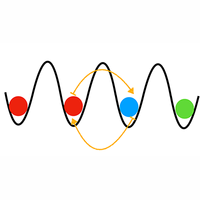
Cooper quartets in interacting hybrid superconducting systems

Luca Chirolli, Alessandro Braggio, and Francesco Giazotto

Phys. Rev. Research 6, 033171 (2024) - Published 14 August, 2024

First-principles investigation of near-field energy transfer between localized quantum emitters in solids

Swarnabha Chattaraj, Supratik Guha, and Giulia Galli

Phys. Rev. Research 6, 033170 (2024) - Published 14 August, 2024

A theoretical framework integrating quantum electrodynamics and first-principles electronic structure calculations is used to study near-field energy transfer between localized defects in solids. The results suggest breaking of selection rules in optical absorption at near field, relevant toward a novel optical memory protocol.

Generalized autocorrelation function in the family of deterministic and stochastic anomalous diffusion processes

Muhammad Tayyab

Phys. Rev. Research 6, 033169 (2024) - Published 14 August, 2024

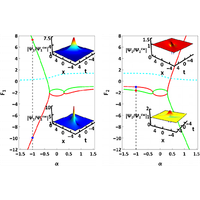
Ultra-high-amplitude Peregrine solitons induced by helicoidal spin-orbit coupling

Cui-Cui Ding, Qin Zhou, and B. A. Malomed

Phys. Rev. Research 6, L032036 (2024) - Published 13 August, 2024

A theoretical investigation delves into the existence of anomalous Peregrine solitons exhibiting ultrahigh amplitudes, embedded within both flat and periodic backgrounds, in a spatially nonuniform Bose-Einstein condensate (BEC) endowed with helicoidal spin-orbit coupling. This exploration extends the frontiers of research, transitioning from the realm of nonlinear optics into the domain of BECs, thereby advancing our understanding of these unique solitonic phenomena.

Spin-S Kitaev-Heisenberg model on the honeycomb lattice: A high-order treatment via the many-body coupled cluster method

M. Georgiou, I. Rousochatzakis, D. J. J. Farnell, J. Richter, and R. F. Bishop

Phys. Rev. Research 6, 033168 (2024) - Published 13 August, 2024

A coupled cluster method technique captures strong quantum-mechanical fluctuations of generalized Kitaev models and uncovers new insights into their complex phase diagrams.

Non-Bloch theory for spatiotemporal photonic crystals assisted by continuum effective medium

Haozhi Ding and Kun Ding

Phys. Rev. Research 6, 033167 (2024) - Published 13 August, 2024

Three-dimensional theory of superradiant free-electron lasers

River R. Robles, Luca Giannessi, and Agostino Marinelli

Phys. Rev. Research 6, 033158 (2024) - Published 13 August, 2024

Moiré patterns of space-filling curves

Henning U. Voss and Douglas J. Ballon

Phys. Rev. Research 6, L032035 (2024) - Published 12 August, 2024

Two preasymptotic space-filling curves can lead to Moiré patterns when shifted or twisted against each other. If the curves are taken to be electric conductors, inductive coupling shows local extrema at the Moiré points, and zero coupling is possible, too.

Topological order in higher composites

Egor Babaev

Phys. Rev. Research 6, L032034 (2024) - Published 12 August, 2024

In recent decades, there has been significant interest in symmetry-breaking higher-order condensation, such as the condensation of electron quadruplets or sextuplets instead of pairs. This work goes beyond the symmetry discussion in composite orders and proposes a topological counterpart to this concept, where the system is topologically trivial at the level of original degrees of freedom, but the higher-composite-order counterflow modes of multiple components are topologically nontrivial.

Sign In to Your Journals Account

Filter

Recent Issues

Vol. 8, Iss. 4
October - December 2026
Vol. 8, Iss. 3
July - September 2026
Vol. 8, Iss. 2
April - June 2026
Vol. 8, Iss. 1
January - March 2026
Category
Article Type

Filter

Article Lookup

Enter a citation