- Open Access
Dynamical law behind eye movements: Distinguishing between Lévy and intermittent strategies
Phys. Rev. Research 7, 043042 – Published 14 October, 2025
DOI: https://doi.org/10.1103/2bzm-t9k1
Abstract
Foraging is a complex spatiotemporal process that is often described with stochastic models. Two particular ones, Lévy walks and intermittent search, became popular in this context. Researchers from the two communities, each advocating for either Lévy or intermittent approach, independently analyzed foraging patterns and reported agreement between empirical data and the model they used. We resolve this Lévy-intermittent dichotomy for eye-gaze trajectories collected in a series of experiments designed to stimulate free foraging for visual information. By combining analytical results, statistical quantifiers, and basic machine learning techniques, we devise a method to score the performance of the models when they are used to approximate an individual gaze trajectory. Our analysis indicates that the intermittent search model consistently yields higher scores and thus approximates the majority of the eye-gaze trajectories better.
Physics Subject Headings (PhySH)
Article Text
References (62)
- P. M. Kareiva and N. Shigesada, Analyzing insect movement as a correlated random walk, Oecologia 56, 234 (1983).
- C. Lin and L. A. Segel, Mathematics Applied to Deterministic Problems in the Natural Sciences (SIAM, Philadelphia, PA, USA, 1988).
- A. Okubo, Diffusion and Ecological Problems: Mathematical Models (Springer-Verlag, Berlin, Germany, 1980).
- C. S Patlak, Random walk with persistence and external bias, Bull. Math. Biol. 15, 311 (1953).
- M. F. Shlesinger, J. Klafter, and Y. M. Wong, Random walks with infinite spatial and temporal moments, J. Stat. Phys. 27, 499 (1982).
- V. Zaburdaev, S. Denisov, and J. Klafter, Lévy walks, Rev. Mod. Phys. 87, 483 (2015).
- O. Bénichou, M. Coppey, M. Moreau, and R. Voituriez, Intermittent search strategies: When losing time becomes efficient, Europhys. Lett. 75, 349 (2006).
- O. Bénichou, C. Loverdo, M. Moreau, and R. Voituriez, Intermittent search strategies, Rev. Mod. Phys. 83, 81 (2011).
- C. Papanikolaou, A. Sharma, P. G. Lind, and P. Lencastre, Lévy flight model of gaze trajectories to assist in ADHD diagnoses, Entropy 26, 392 (2024).
- C. Guarcello, G. Filatrella, B. Spagnolo, V. Pierro, and D. Valenti, Voltage drop across Josephson junctions for Lévy noise detection, Phys. Rev. Res. 2, 043332 (2020).
- G. Parisi, Nobel lecture: Multiple equilibria, Rev. Mod. Phys. 95, 030501 (2023).
- G. Ariel, A. Rabani, S. Benisty, J. D. Partridge, R. M. Harshey, and A. Be’ Er, Swarming bacteria migrate by Lévy walk, Nat. Commun. 6, 8396 (2015).
- N. E. Humphries, N. Queiroz, J. R. M. Dyer, N. G. Pade, M. K. Musyl, K. M. Schaefer, D. W. Fuller, J. M. Brunnschweiler, T. K. Doyle, J. D. R. Houghton et al., Environmental context explains Lévy and Brownian movement patterns of marine predators, Nature (London) 465, 1066 (2010).
- D. W. Sims, E. J. Southall, N. E. Humphries, G. C. Hays, C. J. A. Bradshaw, J. W. Pitchford, A. James, M. Z. Ahmed, A. S. Brierley, M. A. Hindell et al., Scaling laws of marine predator search, Nature (London) 451, 1098 (2008).
- C. T. Brown, L. S. Liebovitch, and R. Glendon, Lévy flights in dobe Ju/’hoansi foraging patterns, Human Ecol. 35, 129 (2007).
- K. Garg and C. T. Kello, Efficient Lévy walks in virtual human foraging, Sci. Rep. 11, 1 (2021).
- D. A. Raichlen, B. M. Wood, A. D. Gordon, A. Z. P. Mabulla, F. W. Marlowe, and H. Pontzer, Evidence of Lévy walk foraging patterns in human hunter–gatherers, Proc. Natl. Acad. Sci. USA 111, 728 (2014).
- S. Beulig, M. Waechter, T. Geisel, and J. Peinke, Determining the Stochastic Process of Human Gaze Shifts (2025).
- D. W. Sims, A. M. Reynolds, N. E. Humphries, E. J. Southall, V. J. Wearmouth, B. Metcalfe, and R. J. Twitchett, Hierarchical random walks in trace fossils and the origin of optimal search behavior, Proc. Natl. Acad. Sci. USA 111, 11073 (2014).
- G. M. Viswanathan, S. V. Buldyrev, S. Havlin, M. G. E. Da Luz, E. P. Raposo, and H. E. Stanley, Optimizing the success of random searches, Nature (London) 401, 911 (1999).
- D. Boyer, G. Mercado-Vásquez, S. N. Majumdar, and G. Schehr, Optimizing the random search of a finite-lived target by a Lévy flight, Phys. Rev. E 109, L022103 (2024).
- G. M. Viswanathan, E. P. Raposo, and M. G. E. da Luz, Lévy flights and superdiffusion in the context of biological encounters and random searches, Phys. Life Rev. 5, 133 (2008).
- S. V. Buldyrev, E. P. Raposo, F. Bartumeus, S. Havlin, F. R Rusch, M. G. E. da Luz, and G. M. Viswanathan, Comment on “inverse square Lévy walks are not optimal search strategies for , Phys. Rev. Lett. 126, 048901 (2021).
- A. M. Edwards, Overturning conclusions of Lévy flight movement patterns by fishing boats and foraging animals, Ecology 92, 1247 (2011).
- A. M. Edwards, R. A. Phillips, N. W. Watkins, M. P. Freeman, E. J. Murphy, V. Afanasyev, S. V. Buldyrev, M. G. E. da Luz, E. P Raposo, H. E. Stanley et al., Revisiting Lévy flight search patterns of wandering albatrosses, bumblebees and deer, Nature (London) 449, 1044 (2007).
- N. Levernier, J. Textor, O. Bénichou, and R. Voituriez, Inverse square Lévy walks are not optimal search strategies for , Phys. Rev. Lett. 124, 080601 (2020).
- N. Levernier, J. Textor, O. Bénichou, and R. Voituriez, Reply to “Comment on ‘Inverse square Lévy walks are not optimal search strategies for ,”’ Phys. Rev. Lett. 126, 048902 (2021).
- A. Reynolds, Liberating Lévy walk research from the shackles of optimal foraging, Phys. Life Rev. 14, 59 (2015).
- O. Bénichou, M. Coppey, M. Moreau, P. H. Suet, and R. Voituriez, Optimal search strategies for hidden targets, Phys. Rev. Lett. 94, 198101 (2005).
- O. Bénichou, C. Loverdo, M. Moreau, and R. Voituriez, Two-dimensional intermittent search processes: An alternative to lévy flight strategies, Phys. Rev. E 74, 020102 (2006).
- G. Oshanin, K. Lindenberg, H. S Wio, and S. Burlatsky, Efficient search by optimized intermittent random walks, J. Phys. A: Math. Theor. 42, 434008 (2009).
- W. Campeau, A. M Simons, and B. Stevens, Intermittent search, not strict Lévy flight, evolves under relaxed foraging distribution constraints, Am. Nat. 203, 513 (2024).
- S. Duncan, G. Estrada-Rodriguez, J. Stocek, M. Dragone, P. A. Vargas, and H. Gimperlein, Efficient quantitative assessment of robot swarms: Coverage and targeting Lévy strategies, Bioinspir. Biomim. 17, 036006 (2022).
- G. Matthew Fricke, F. Asperti-Boursin, J. Hecker, J. Cannon, and M. Moses, From microbiology to microcontrollers: Robot search patterns inspired by T-cell movement, in The International Society for Artificial Life. (MIT Press, Cambridge, MA, USA, 2013), pp. 1009–1016.
- Y. Katada, A. Nishiguchi, K. Moriwaki, and R. Watakabe, Swarm robotic network using lévy flight in target detection problem, Artif. Life Rob. 21, 295 (2016).
- M. Krivonosov, S. Denisov, and V. Zaburdaev, Lévy rob., arXiv:1612.03997.
- I. Rhee, M. Shin, S. Hong, K. Lee, S. J. Kim, and S. Chong, On the Lévy-walk nature of human mobility, IEEE/ACM Trans. Netw. 19, 630 (2011).
- G. Viswanathan, V. Afanasyev, S. Buldyrev, E. Murphy, P. A. Prince, and E. Stanley, Lévy flight search patterns of wandering albatrosses, Nature (London) 381, 413 (1996).
- R. B. D’Agostino, Goodness-of-Fit-Techniques (Routledge, Amsterdam, Netherlands, 2017).
- G. Boccignone and M. Ferraro, Modelling gaze shift as a constrained random walk, Physica A 331, 207 (2004).
- D. Brockmann and T. Geisel, The ecology of gaze shifts, Neurocomputing 32-33, 643 (2000).
- D. G. Stephen, D. Mirman, J. S. Magnuson, and J. A. Dixon, Lévy-like diffusion in eye movements during spoken-language comprehension, Phys. Rev. E 79, 056114 (2009).
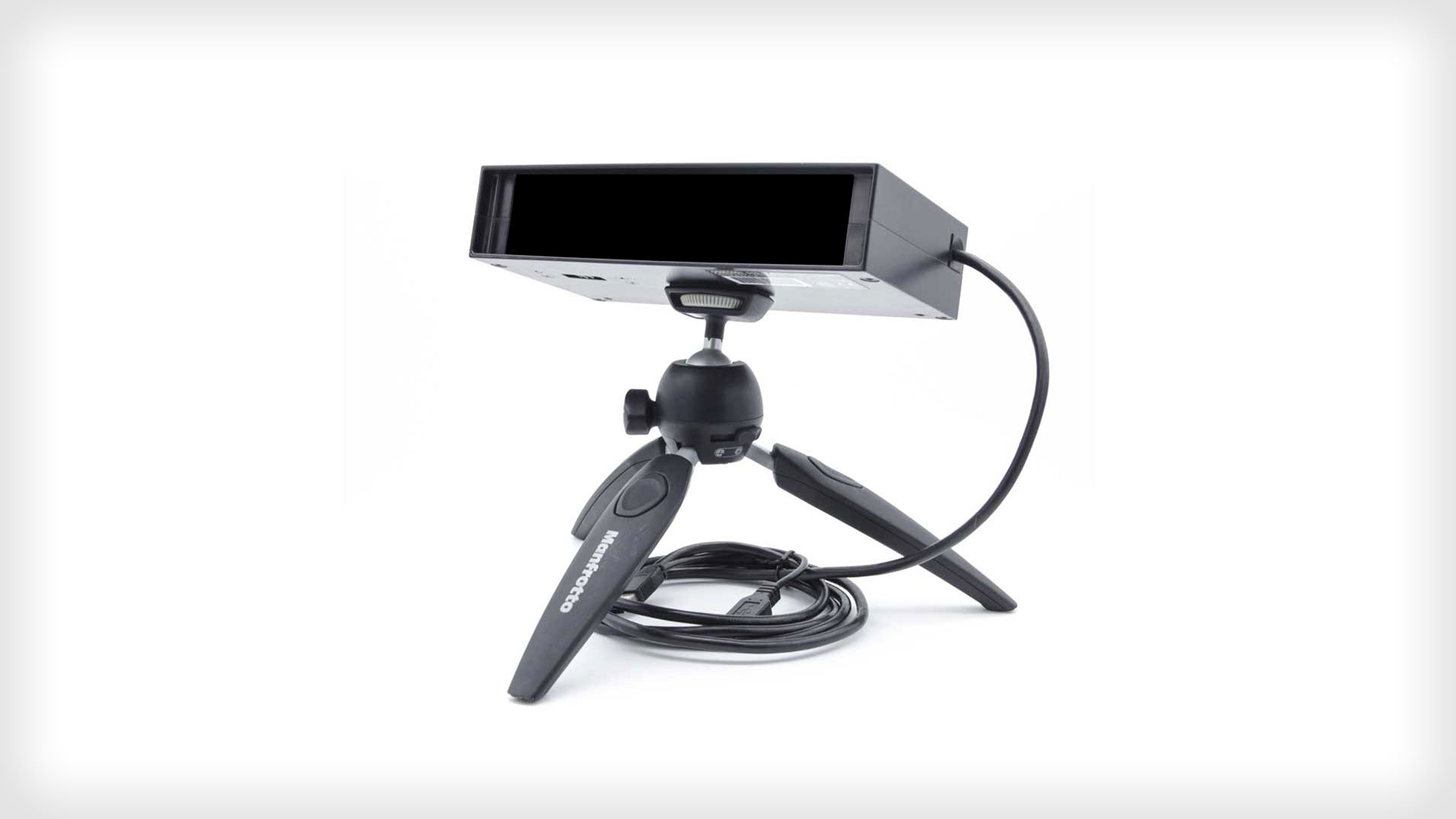
- SR Research, Eyelink Portable Duo, 2023, https://www.sr-research.com/wp-content/uploads/2021/07/eyelink-duo-eye-tracker-video-cover.jpg.
- V. Zaburdaev, I. Fouxon, S. Denisov, and E. Barkai, Superdiffusive dispersals impart the geometry of underlying random walks, Phys. Rev. Lett. 117, 270601 (2016).
- J. Klafter and G. Zumofen, Dynamically generated enhanced diffusion: The stationary state case, Physica A 196, 102 (1993).
- Y. Xiang, D. Y. Sun, W. Fan, and X. G. Gong, Generalized simulated annealing algorithm and its application to the Thomson model, Phys. Lett. A 233, 216 (1997).
- P. A. Knight, The Sinkhorn–Knopp algorithm: Convergence and applications, SIAM J. Matrix Anal. Appl. 30, 261 (2008).
- M. Ezekiel, Methods of Correlation Analysis, APA Psycnet, 1930, https://psycnet.apa.org/record/1931-02963-000.
- P. Lencastre, S. Bhurtel, A. Yazidi, G. B. M. Mello, S. Denysov, and P. G. Lind, EyeT4empathy: Dataset of foraging for visual information, gaze typing and empathy assessment, Sci. Data 9, 752 (2022).
- S. Liversedge, I. Gilchrist, and S. Everling, The Oxford Handbook of Eye Movements (Oxford University Press, Oxford, 2011).
- A. L. Yarbus, Eye Movements and Vision (Springer, London, UK, 2013).
- H. Devillez, N. Guyader, T. Curran, and R. C. O’Reilly, The bimodality of saccade duration during the exploration of visual scenes, Vis. Cogn. 28, 484 (2020).
- N. Galley, D. Betz, and C. Biniossek, Fixation durations—Why are they so highly variable, das ende von rational choice? Zur Leistungsfähigkeit der Rational-Choice-Theorie 93, 83 (2015).
- L. N. Podladchikova, D. G. Shaposhnikov, T. I. Koltunova, A. V. Dyachenko, and V. I. Gusakova, Temporal dynamics of fixation duration saccade amplitude, and viewing trajectory, J. Integr. Neurosci. 08, 487 (2009).
- V. Zaburdaev, S. Denisov, and P. Hänggi, Perturbation spreading in many-particle systems: A random walk approach, Phys. Rev. Lett. 106, 180601 (2011).
- B. Guinard and A. Korman, Intermittent inverse-square Lévy walks are optimal for finding targets of all sizes, Sci. Adv. 7, eabe8211 (2021).
- J. M. Morales, D. T. Haydon, J. Frair, K. E. Holsinger, and J. M. Fryxell, Extracting more out of relocation data: Building movement models as mixtures of random walks, Ecology 85, 2436 (2004).
- A. Reynolds, How many animals really do the Lévy walk? Comment, Ecology 89, 2347 (2008).
- M. Auger-Méthé, A. E. Derocher, M. J. Plank, E. A. Codling, and M. A. Lewis, Differentiating the Lévy walk from a composite correlated random walk, Methods Ecol. Evol. 6, 1179 (2015).
- G. Muñoz-Gil, G. Volpe, M. A. Garcia-March, E. Aghion, A. Argun, C. B. Hong, T. Bland, S. Bo, J. A. Conejero, and N. Firbas, The Anomalous Diffusion (AnDi) Challenge, http://andi-challenge.org/, Accessed on 2024-11-04.
- G. Muñoz-Gil, G. Volpe, M. A. Garcia-March, E. Aghion, A. Argun, C. B. Hong, T. Bland, S. Bo, J. A. Conejero, N. Firbas et al., Objective comparison of methods to decode anomalous diffusion, Nat. Commun. 12, 1 (2021).
- A. Rebenshtok, S. Denisov, P. Hänggi, and E. Barkai, Infinite densities for Lévy walks, Phys. Rev. E 90, 062135 (2014).