Recent Articles

Development and validation of the moon phases concept inventory for middle school

Pierre Chastenay and Martin Riopel

Phys. Rev. Phys. Educ. Res. 16, 020107 (2020) - Published 29 July, 2020

The moon phases concept inventory for middle school is a valid and reliable instrument for use with students 10-14 years old.

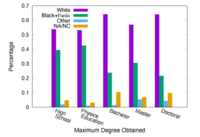
Demographics of physics education research

Stephen Kanim and Ximena C. Cid

Phys. Rev. Phys. Educ. Res. 16, 020106 (2020) - Published 27 July, 2020

American physics education research relies on research subjects that are not representative of the overall population of physics students.

Beyond teaching methods: Highlighting physics faculty’s strengths and agency

Linda E. Strubbe, Adrian M. Madsen, Sarah B. McKagan, and Eleanor C. Sayre

Phys. Rev. Phys. Educ. Res. 16, 020105 (2020) - Published 17 July, 2020

Working with instructors to improve physics teaching; physics education research should move from a teaching method centered paradigm to an asset-based agentic paradigm.

Active learning reduces academic risk of students with nonformal reasoning skills: Evidence from an introductory physics massive course in a Chilean public university

Guillaume Lagubeau, Silvia Tecpan, and Carla Hernández

Phys. Rev. Phys. Educ. Res. 16, 023101 (2020) - Published 14 July, 2020

Active learning lectures in introductory physics course for engineering students is effective at improving student learning in a country with below average results in mathematics and science.

Validity of Colorado Learning Attitudes about Science Survey for a high-achieving, Finnish population

Inkeri Kontro and David Buschhüter

Phys. Rev. Phys. Educ. Res. 16, 020104 (2020) - Published 14 July, 2020

The Colorado Learning Attitudes about Science Survey is suitable for a variety of student populations.

Assessing the longitudinal measurement invariance of the Force Concept Inventory and the Conceptual Survey of Electricity and Magnetism

Yang Xiao, Guiqing Xu, Jing Han, Hua Xiao, Jianwen Xiong, and Lei Bao

Phys. Rev. Phys. Educ. Res. 16, 020103 (2020) - Published 14 July, 2020

The Force Concept Inventory and reduced Conceptual Survey of Electricity and Magnetism can be used to assess of students’ changes in conceptual understanding over time in introductory physics courses.

Professional development combining cognitive apprenticeship and expectancy-value theories improves lab teaching assistants’ instructional views and practices

Danny Doucette, Russell Clark, and Chandralekha Singh

Phys. Rev. Phys. Educ. Res. 16, 020102 (2020) - Published 10 July, 2020

A lab teaching assistant professional development program designed using cognitive apprenticeship and expectancy-value theory was successful in moving graduate student teaching assistants to a higher level of teaching effectiveness.

Student epistemological framing on paper-based assessments

Kelli Shar, Rosemary S. Russ, and James T. Laverty

Phys. Rev. Phys. Educ. Res. 16, 020101 (2020) - Published 7 July, 2020

Physics instructors often think of assessment as occurring after instruction, however, students get information from assessments that influence their understandings of how they should engage in physics learning.

Development of a construct map to describe students’ reasoning about introductory quantum mechanics

Umberto Scotti di Uccio, Arturo Colantonio, Silvia Galano, Irene Marzoli, Fabio Trani, and Italo Testa

Phys. Rev. Phys. Educ. Res. 16, 010144 (2020) - Published 29 June, 2020

Development and validation of a learning progression for quantum mechanics topics at the high school level.

Effects of instruction on students’ overconfidence in introductory quantum mechanics

Italo Testa, Arturo Colantonio, Silvia Galano, Irene Marzoli, Fabio Trani, and Umberto Scotti di Uccio

Phys. Rev. Phys. Educ. Res. 16, 010143 (2020) - Published 29 June, 2020

PER-based instructional strategies can help reduce student overconfidence as well as increasing performance.

Thematic analysis of 18 years of physics education research conference proceedings using natural language processing

Tor Ole B. Odden, Alessandro Marin, and Marcos D. Caballero

Phys. Rev. Phys. Educ. Res. 16, 010142 (2020) - Published 29 June, 2020

A machine learning process finds that the physics education research has had increased interest in several topics; beginning with qualitative studies of student cognition, giving rise to a focus on problem solving, and more increase of sociocultural-based research on teaching and learning.

Examination of quantitative methods for analyzing data from concept inventories

Eric Burkholder, Cole Walsh, and N. G. Holmes

Phys. Rev. Phys. Educ. Res. 16, 010141 (2020) - Published 29 June, 2020

Analyzing student learning gains through an equity lens depends on the type of equity embedded in the research questions.

Retention of conceptual learning after an interactive introductory mechanics course

Bethany R. Wilcox, Steven J. Pollock, and Daniel R. Bolton

Phys. Rev. Phys. Educ. Res. 16, 010140 (2020) - Published 24 June, 2020

Conceptual understanding students gain in Physics I is almost entirely retained during the gap between Physics I and Physics II.

Learning assistant approaches to teaching computational physics problems in a problem-based learning course

Alanna Pawlak, Paul W. Irving, and Marcos D. Caballero

Phys. Rev. Phys. Educ. Res. 16, 010139 (2020) - Published 19 June, 2020

There is a hierarchical structure of four approaches to teaching computational problems that learning assistants take in a problem-based undergraduate physics course incorporating computation.

Relationship between students’ online learning behavior and course performance: What contextual information matters?

Zhongzhou Chen, Mengyu Xu, Geoffrey Garrido, and Matthew W. Guthrie

Phys. Rev. Phys. Educ. Res. 16, 010138 (2020) - Published 15 June, 2020

Including contextual information about online instructional events is more likely to provide actionable instructional suggestions than other data analytics approaches.

Social networks and academic performance in physics: Undergraduate cooperation enhances ill-structured problem elaboration and inhibits well-structured problem solving

Javier Pulgar, Cristian Candia, and Paul M. Leonardi

Phys. Rev. Phys. Educ. Res. 16, 010137 (2020) - Published 11 June, 2020

Introductory physics students who actively sought out information from multiple peers were less likely to solve well structured problems compared to those who did not seek help; for ill-structured problems, this effect depended on the features of the learning environment.

Brazilian physicists community diversity, equity, and inclusion: A first diagnostic

Celia Anteneodo, Carolina Brito, Alan Alves-Brito, Simone Silva Alexandre, Beatriz Nattrodt D’Avila, and Débora Peres Menezes

Phys. Rev. Phys. Educ. Res. 16, 010136 (2020) - Published 5 June, 2020

The Brazilian Physical Society lacks diversity; it is made up predominately of white men in a country where non-white people and women are the majority.

Students’ understanding of the concept of the electric field through conversions of multiple representations

Esmeralda Campos, Genaro Zavala, Kristina Zuza, and Jenaro Guisasola

Phys. Rev. Phys. Educ. Res. 16, 010135 (2020) - Published 4 June, 2020

Introductory physics students have more difficulties understanding electric fields using the electric field lines representation than the vector field plot or the algebraic notation of the field.

Identifying physics misconceptions at the circus: The case of circular motion

Alexander Volfson, Haim Eshach, and Yuval Ben-Abu

Phys. Rev. Phys. Educ. Res. 16, 010134 (2020) - Published 2 June, 2020

Interview discussions following circus acts can provide not only a diagnostic instrument but also an opportunity for delivering advanced scientific ideas to the general public via dialogic teaching.

Gendered motivations and aspirations of university physics students in Finland

Ramón S. Barthelemy and Alexis V. Knaub

Phys. Rev. Phys. Educ. Res. 16, 010133 (2020) - Published 2 June, 2020

Finland is known worldwide for their strong K-12 education system and robust gender equality across their nation, yet Finnish female university students still face challenges that male students do not.

Sign In to Your Journals Account

Filter

Recent Issues

Vol. 22, Iss. 2
July - December 2026
Vol. 22, Iss. 1
January - June 2026
Vol. 21, Iss. 2
July - December 2025
Vol. 21, Iss. 1
January - June 2025
Category
Article Type

Filter

Article Lookup

Enter a citation