

Reaction pathway variability in electrochemical conversion reactions for ion batteries
Phys. Rev. Materials 9, 110301 – Published 19 November, 2025
DOI: https://doi.org/10.1103/ynck-qw12
Abstract
Electrochemical energy storage plays a key role in supporting the continued electrification of the energy grid, transportation, and other technological sectors. Current ion batteries have been successfully implemented in mobile devices and light-duty transport vehicles, but they have insufficient energy densities for higher-power applications such as aviation, heavy-duty vehicles, or the support of intermittent energy sources. The specific capacity of the cathode limits the energy density of an ion battery, which motivates a transition to new cathode chemistries. Conversion materials, in which the redox-active ion is fully reduced in a multielectron reaction, are promising candidates with double to quadruple the specific capacities of commercial intercalation materials. However, the complexity of conversion reactions and associated phase transitions correlate with poor electrochemical reversibility. Here, we provide several examples of candidate conversion materials and highlight unifying features that describe their phase evolution. We argue that materials with structural simplicity, topotactic relationships between reactants and intermediates, and access to metastable structural polymorphs offer opportunities to design a reversible conversion material.
Physics Subject Headings (PhySH)
Collections
This article appears in the following collection:
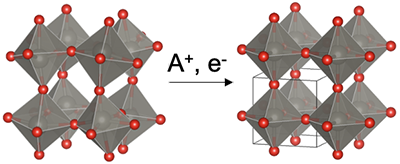
Functional Materials Through Electrochemical Ion Insertion
The Editors of Physical Review Materials are pleased to present the Collection on Functional Materials Through Electrochemical Ion Insertion, highlighting cutting-edge advances in the theory, synthesis, and structural and physical characterization of dynamic property modulation (e.g. optical, electrical, mechanical, chemical) using electrochemical ion insertion into solid state hosts. The Collection is being guest-edited by Veronica Augustyn and Nina Balke of North Carolina State University (USA). Every article published in this collection underwent a rigorous peer review process, adhering to the same high standards applied to all papers. The Physical Review Materials editorial team managed the peer review and made all editorial decisions.
