

Ca pillar effect on the electrochemistry and stability of for sodium-ion batteries
Phys. Rev. Materials 9, 115406 – Published 24 November, 2025
DOI: https://doi.org/10.1103/t868-pv1p
Abstract
Cationic substitution at the Na site in the layered transition-metal oxides creates a pillar effect that enhances the stability and electrochemical performance of sodium-ion battery cathodes. However, the conventional solid-state synthesis method for such substitution is often plagued by nonuniform elemental distribution or phase segregation, limiting the application and understanding of the pillaring effect. In this study, we synthesized a series of P2-type materials via a solid-state ion exchange method, achieving controlled incorporation of at the Na sites. Structural analysis confirms successful Ca substitution and uniform distribution. Ca substitution reduces the lattice mismatch for the phase transitions during electrochemical cycling. Electrochemical testing reveals that Ca substitution decreases reversible capacity without significant improvement in capacity retention. Furthermore, Ca-substituted samples demonstrate enhanced resistance to degradation under air, water, and moist exposure. These findings highlight the pillaring effects induced by Ca, which provide insights into designing more durable cathode materials for sodium-ion batteries.
Physics Subject Headings (PhySH)
Collections
This article appears in the following collection:
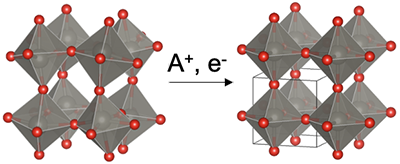
Functional Materials Through Electrochemical Ion Insertion
The Editors of Physical Review Materials are pleased to present the Collection on Functional Materials Through Electrochemical Ion Insertion, highlighting cutting-edge advances in the theory, synthesis, and structural and physical characterization of dynamic property modulation (e.g. optical, electrical, mechanical, chemical) using electrochemical ion insertion into solid state hosts. The Collection is being guest-edited by Veronica Augustyn and Nina Balke of North Carolina State University (USA). Every article published in this collection underwent a rigorous peer review process, adhering to the same high standards applied to all papers. The Physical Review Materials editorial team managed the peer review and made all editorial decisions.
