Highlights

Dynamical Formation of Regular Black Holes

Pablo Bueno, Pablo A. Cano, Robie A. Hennigar, and Ángel J. Murcia

Phys. Rev. Lett. 134, 181401 (2025) - Published 6 May, 2025

Nonsingular black hole solutions are generically possible in modified theories of gravity in dimensions D ≥ 5.

Plasmonic Time Crystals

Joshua Feinberg, David E. Fernandes, Boris Shapiro, and Mário G. Silveirinha

Phys. Rev. Lett. 134, 183801 (2025) - Published 6 May, 2025

Photonic time-crystals when extended to plasmonic media can support collective resonance of longitudinal plasmons that can significantly enhance parametric gain.

In Situ Imaging of the Thermal de Broglie Wavelength in an Ultracold Bose Gas

Jinggang Xiang, Enid Cruz-Colón, Candice C. Chua, William R. Milner, Julius de Hond, Jacob F. Fricke, and Wolfgang Ketterle

Phys. Rev. Lett. 134, 183401 (2025) - Published 5 May, 2025

An innovative way to image atoms in cold gases could provide deeper insights into the atoms’ quantum correlations.

Measuring Pair Correlations in Bose and Fermi Gases via Atom-Resolved Microscopy

Ruixiao Yao, Sungjae Chi, Mingxuan Wang, Richard J. Fletcher, and Martin Zwierlein

Phys. Rev. Lett. 134, 183402 (2025) - Published 5 May, 2025

An innovative way to image atoms in cold gases could provide deeper insights into the atoms’ quantum correlations.

Quantum Gas Microscopy of Fermions in the Continuum

Tim de Jongh, Joris Verstraten, Maxime Dixmerias, Cyprien Daix, Bruno Peaudecerf, and Tarik Yefsah

Phys. Rev. Lett. 134, 183403 (2025) - Published 5 May, 2025

An innovative way to image atoms in cold gases could provide deeper insights into the atoms’ quantum correlations.

Inverse Design of Kirigami through Shape Programming of Rotating Units

Chuan Qiao, Shijun Chen, Yu Chen, Zhihong Zhou, Wentao Jiang, Qingyuan Wang, Xiaobao Tian, and Damiano Pasini

Phys. Rev. Lett. 134, 176103 (2025) - Published 2 May, 2025

A purely geometric method for inverse design of shape-morphing kirigami reveals how rotating unit shapes control global deformation, making possible intuitive, calculation-free control of both the folded and unfolded forms.

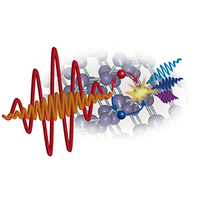
Attosecond Control of Solid-State High Harmonic Generation Using ω−3ω Fields

Adam Gindl, Pawan Suthar, František Trojánek, Petr Malý, Thibault J.-Y. Derrien, and Martin Kozák

Phys. Rev. Lett. 134, 176903 (2025) - Published 2 May, 2025

A combination of coherent two-color control and a phase-resolved detection scheme with attosecond resolution reveals the connection between electron tunneling and high harmonic emission processes in solids.

Leading Axion-Photon Sensitivity with NuSTAR Observations of M82 and M87

Orion Ning and Benjamin R. Safdi

Phys. Rev. Lett. 134, 171003 (2025) - Published 1 May, 2025

Two independent teams have searched for axions using x-ray observations of entire galaxies, setting some of the strictest constraints to date on the properties of these dark matter candidates.

NuSTAR Bounds on Radiatively Decaying Particles from M82

Francisco R. Candón, Damiano F. G. Fiorillo, Giuseppe Lucente, Edoardo Vitagliano, and Julia K. Vogel

Phys. Rev. Lett. 134, 171004 (2025) - Published 1 May, 2025

Two independent teams have searched for axions using x-ray observations of entire galaxies, setting some of the strictest constraints to date on the properties of these dark matter candidates.

Extended TeV Halos May Commonly Exist around Middle-Aged Pulsars

A. Albert et al.

Phys. Rev. Lett. 134, 171005 (2025) - Published 30 April, 2025

The results of a survey of middle-aged pulsars suggest that a feature previously seen around a handful of pulsars might be ubiquitous.

Describing Landau Level Mixing in Fractional Quantum Hall States with Deep Learning

Yubing Qian, Tongzhou Zhao, Jianxiao Zhang, Tao Xiang, Xiang Li, and Ji Chen

Phys. Rev. Lett. 134, 176503 (2025) - Published 30 April, 2025

A novel framework using real-space neural networks simultaneously captures electron correlations and Landau level mixing with high precision.

Statistical Mechanics of Transfer Learning in Fully Connected Networks in the Proportional Limit

Alessandro Ingrosso, Rosalba Pacelli, Pietro Rotondo, and Federica Gerace

Phys. Rev. Lett. 134, 177301 (2025) - Published 30 April, 2025

Tools from spin glass theory such as the replica method help explain the efficacy of transfer learning.

Current-Driven Collective Control of Helical Spin Texture in van der Waals Antiferromagnet

Kai-Xuan Zhang, Suik Cheon, Hyuncheol Kim, Pyeongjae Park, Yeochan An, Suhan Son, Jingyuan Cui, Jihoon Keum, Joonyoung Choi, Younjung Jo, Hwiin Ju, Jong-Seok Lee, Youjin Lee, Maxim Avdeev, Armin Kleibert, Hyun-Woo Lee, and Je-Geun Park

Phys. Rev. Lett. 134, 176701 (2025) - Published 29 April, 2025

The demonstration that helical spin arrangements can be manipulated using electric currents holds promise for spin-based electronics.

In Situ Measurements of Dark Photon Dark Matter Using Parker Solar Probe: Going beyond the Radio Window

Haipeng An, Shuailiang Ge, Jia Liu, and Mingzhe Liu

Phys. Rev. Lett. 134, 171001 (2025) - Published 28 April, 2025

Researchers have turned NASA’s Parker Solar Probe into a dark-matter detector, taking advantage of its close encounters with the Sun to search for dark-photon signals.

Surface Kinematics and the Canonical Yang-Mills All-Loop Integrand

Nima Arkani-Hamed, Qu Cao (曹趣), Jin Dong (董晋), Carolina Figueiredo, and Song He (何颂)

Phys. Rev. Lett. 134, 171601 (2025) - Published 28 April, 2025

A formulation of gluon scattering amplitudes in terms of curves on surfaces leads to new recursion relations for loop integrands in the Yang-Mills theory without supersymmetry.

Critical Clusters in Liquid Crystals: Fractal Geometry and Conformal Invariance

Renan A. L. Almeida and Jeferson J. Arenzon

Phys. Rev. Lett. 134, 178101 (2025) - Published 28 April, 2025

During phase ordering, twisted nematic liquid crystals self-generate critical clusters in the percolation universality class.

Search for Light Dark Matter in Low-Energy Ionization Signals from XENONnT

E. Aprile et al. (XENON Collaboration)

Phys. Rev. Lett. 134, 161004 (2025) - Published 25 April, 2025

The first blinded search by the XENON-nT Collaboration using low-energy ionization signals places new constraints on hypothetical sub-keV dark matter.

Corrugation-Dominated Mechanical Softening of Defect-Engineered Graphene

Wael Joudi, Rika Saskia Windisch, Alberto Trentino, Diana Propst, Jacob Madsen, Toma Susi, Clemens Mangler, Kimmo Mustonen, Florian Libisch, and Jani Kotakoski

Phys. Rev. Lett. 134, 166102 (2025) - Published 25 April, 2025

Microscopy and molecular dynamics suggest that the decrease in the two-dimensional elastic modulus of graphene with engineered defects is primarily due to corrugations from local strain at vacancies with two or more missing atoms, while single vacancies have a negligible effect.

Quadrupolar and Dipolar Excitons in Bilayer 2H−MoSe2

Shun Feng, Aidan J. Campbell, Bibi Mary Francis, Hyeonjun Baek, Takashi Taniguchi, Kenji Watanabe, Iann C. Gerber, Brian D. Gerardot, and Mauro Brotons-Gisbert

Phys. Rev. Lett. 134, 166901 (2025) - Published 25 April, 2025

Quadrupolar exciton states are shown experimentally to be present in the reflectance contrast spectrum of 2H-stacked bilayer MoSe2.

Differential Elasticity Affects Lineage Segregation of Embryonic Stem Cells

Christine M. Ritter, Tianxiang Ma, Natascha Leijnse, Younes Farhangi Barooji, William Hamilton, Joshua M. Brickman, Amin Doostmohammadi, and Lene B. Oddershede

Phys. Rev. Lett. 134, 168401 (2025) - Published 25 April, 2025

The segregation of two cell types at the earliest stages of embryo development may be enabled by differences in their stiffness.

Sign In to Your Journals Account

Filter

Section

Filter

Article Lookup

Enter a citation