Highlights

Direct Constraints on Strongly Interacting Dark Matter from the James Webb Space Telescope

Peizhi Du, Rouven Essig, Bernard J. Rauscher, and Hailin Xu

Phys. Rev. Lett. 135, 051002 (2025) - Published 31 July, 2025

Researchers have analyzed “blank” calibration images, seeking signs of dark matter moving through the telescope.

Flux-Controlled Two-Site Kitaev Chain

Ivan Kulesh, Sebastiaan L. D. ten Haaf, Qingzhen Wang, Vincent P. M. Sietses, Yining Zhang, Sebastiaan R. Roelofs, Christian G. Prosko, Di Xiao, Candice Thomas, Michael J. Manfra, and Srijit Goswami

Phys. Rev. Lett. 135, 056301 (2025) - Published 30 July, 2025

Tunable long-range superconducting coupling makes it possible to engineer Majorana bound states in Kitaev chains.

Impact of Tiny Fermi Pockets with Extremely High Mobility on the Hall Anomaly in the Kagome Metal CsV3Sb5

S. Liu, M. Roppongi, M. Kimata, K. Ishihara, R. Grasset, M. Konczykowski, B. R. Ortiz, S. D. Wilson, K. Yoshimi, T. Shibauchi, and K. Hashimoto

Phys. Rev. Lett. 135, 056502 (2025) - Published 30 July, 2025

The Hall anomaly in the AV₃Sb₅ family of kagome metals originates from high-mobility tiny Fermi pockets formed by Fermi surface reconstruction at the charge-density-wave transition, rather than anomalous Hall mechanisms.

Greater than 1000-fold Gain in a Free-Electron Laser Driven by a Laser-Plasma Accelerator with High Reliability

S. K. Barber, F. Kohrell, C. E. Doss, K. Jensen, C. Berger, F. Isono, Z. Eisentraut, S. Schröder, A. J. Gonsalves, K. Nakamura, G. R. Plateau, R. A. van Mourik, M. Gracia-Linares, L. Labun, B. M. Hegelich, S. V. Milton, C. G. R. Geddes, J. Osterhoff, C. B. Schroeder, E. H. Esarey, and J. van Tilborg

Phys. Rev. Lett. 135, 055001 (2025) - Published 29 July, 2025

A laser-plasma-driven free-electron laser achieves record performance, marking a step toward making intense, ultrafast x-ray sources more accessible.

Approximately Symmetric Neural Networks for Quantum Spin Liquids

Dominik S. Kufel, Jack Kemp, DinhDuy Vu, Simon M. Linsel, Chris R. Laumann, and Norman Y. Yao

Phys. Rev. Lett. 135, 056702 (2025) - Published 29 July, 2025

A new neural network scheme based on approximate symmetry facilitates neural quantum state interpretability.

Observation of Residual Entanglement in Entanglement Purification

Lan Zhou, Cen-Xiao Huang, Yu-Bo Sheng, Yu Guo, Xiao-Min Hu, Yun-Feng Huang, Chuan-Feng Li, Guang-Can Guo, and Bi-Heng Liu

Phys. Rev. Lett. 135, 050801 (2025) - Published 28 July, 2025

An experimental implementation of entanglement purification protocols with nonidentical input mixed states confirms the existence of residual entanglement in different error models.

Quasiparticle Gap Renormalization Driven by Internal and External Screening in a WS2 Device

Chakradhar Sahoo, Yann in ’t Veld, Alfred J. H. Jones, Zhihao Jiang, Greta Lupi, Paulina E. Majchrzak, Kimberly Hsieh, Kenji Watanabe, Takashi Taniguchi, Philip Hofmann, Jill A. Miwa, Yong P. Chen, Malte Rösner, and Søren Ulstrup

Phys. Rev. Lett. 135, 056401 (2025) - Published 28 July, 2025

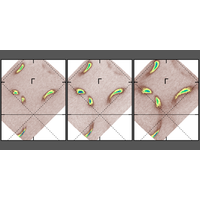
Angle-resolved photoemission spectroscopy reveals band gap renormalization in a WS2/h-BN device.

Physical Interpretation of Imaginary Time Delay

Isabella L. Giovannelli and Steven M. Anlage

Phys. Rev. Lett. 135, 043801 (2025) - Published 24 July, 2025

The time delay experienced by a scattered light signal has an imaginary part that was considered unobservable, but researchers have isolated its effect in a frequency shift.

Pressure-Driven Moiré Potential Enhancement and Tertiary Gap Opening in Graphene/h-BN Heterostructure

Yupeng Wang, Jiaqi An, Chunhui Ye, Xiangqi Wang, Di Mai, Hongze Zhao, Yang Zhang, Chiyu Peng, Kenji Watanabe, Takashi Taniguchi, Xiaoyu Sun, Rucheng Dai, Zhongping Wang, Wei Qin, Zhenhua Qiao, and Zengming Zhang

Phys. Rev. Lett. 135, 046303 (2025) - Published 24 July, 2025

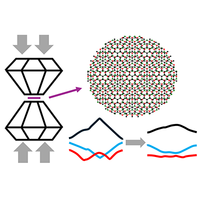
Pressure serving as a universal knob to dynamically amplify moiré potential strength allows for the observation of a pressure-activated tertiary gap in graphene/h-BN.

Strongly Enhanced Mass Anisotropy in Monolayer Phosphorene and Field Tunability

Wanying Chen, Yiwen Yin, Fei Wang, Hongyun Zhang, Yixuan Ma, Kejie Bao, Haoyuan Zhong, Qian Li, Tianyun Lin, Changhua Bao, Hugen Yan, Junyi Zhu, and Shuyun Zhou

Phys. Rev. Lett. 135, 046401 (2025) - Published 24 July, 2025

Interlayer coupling and external electric field combine to renormalize the band parameters in phosphorene.

Effective Theory for Strongly Attractive One-Dimensional Fermions

Timothy G. Backert, Fabian Brauneis, Matija Čufar, Joachim Brand, Hans-Werner Hammer, and Artem G. Volosniev

Phys. Rev. Lett. 135, 040401 (2025) - Published 23 July, 2025

The problem of strongly attractive fermionic systems in one dimension can be tackled by semianalytical methods.

Finite-Temperature Quantum Topological Order in Three Dimensions

Shu-Tong Zhou, Meng Cheng, Tibor Rakovszky, Curt von Keyserlingk, and Tyler D. Ellison

Phys. Rev. Lett. 135, 040402 (2025) - Published 23 July, 2025

The three-dimensional fermionic toric code shows topological order and long-range entanglement at low but nonzero temperatures due to the anomalous 2-form symmetry of the system.

Indirect Band Nature of Atomically Thin Hexagonal Boron Nitride Identified by Resonant Excitation in the Deep Ultraviolet Regime

Lei Fu, Yuqing Hu, Ning Tang, Junxi Duan, Xionghui Jia, Huaiyuan Yang, Zhuoxian Li, Xiangyan Han, Guoping Li, Jianming Lu, Lun Dai, Weikun Ge, Yugui Yao, and Bo Shen

Phys. Rev. Lett. 135, 046903 (2025) - Published 23 July, 2025

Multiple spectroscopic measurements, including photoluminescence, Raman, and reflectance contrast spectroscopy in deep-UV regime on monolayer and few-layer hexagonal boron nitride confirm an indirect bandgap in the material.

Enhanced Superconducting Gap in the Outer CuO2 Plane of the Trilayer Cuprate (Hg, Re)Ba2Ca2Cu3O8+δ

M. Horio, M. Miyamoto, Y. Mino, S. Ishida, B. Thiagarajan, C. M. Polley, C. H. Lee, T. Nishio, H. Eisaki, and I. Matsuda

Phys. Rev. Lett. 135, 046501 (2025) - Published 22 July, 2025

The material with the highest-temperature superconductivity at ambient pressure has received less attention than its easier-to-prepare relatives—until now.

Possible Spin-Triplet Excitonic Insulator in the Ultraquantum Limit of HfTe5

Jinyu Liu, Varsha Subramanyan, Robert Welser, Timothy McSorley, Triet Ho, David Graf, Michael T. Pettes, Avadh Saxena, Laurel E. Winter, Shi-Zeng Lin, and Luis A. Jauregui

Phys. Rev. Lett. 135, 046601 (2025) - Published 22 July, 2025

Precise quantum transport measurements reveal a spin-triplet excitonic insulator phase in the ultra-quantum limit of HfTe5, a three-dimensional topological material.

Effective Markovian Dynamics Method for Solving Non-Markovian Dynamics of Stochastic Gene Expression

Youming Li and Chen Jia

Phys. Rev. Lett. 135, 048401 (2025) - Published 22 July, 2025

A two-stage model of gene expression, accounting for an arbitrary distribution of protein degradation times, explains why nonexponentially degraded proteins have smaller mRNA-protein correlation than exponentially degraded proteins.

Superlubric Motion of Wavelike Domain Walls in Sliding Ferroelectrics

Changming Ke, Fucai Liu, and Shi Liu

Phys. Rev. Lett. 135, 046201 (2025) - Published 21 July, 2025

Polarization reversal in sliding ferroelectrics relies on symmetry-breaking domain walls and the tensorial nature of Born effective charges.

Linear Scaling Causal Discovery from High-Dimensional Time Series by Dynamical Community Detection

Matteo Allione, Vittorio Del Tatto, and Alessandro Laio

Phys. Rev. Lett. 135, 047401 (2025) - Published 21 July, 2025

A new statistical test identifies groups of variables that are mutually coupled and can be represented in a causal graph as single, aggregated nodes, which allows the extraction of hierarchical structures from observational data.

Kinematic Flow and the Emergence of Time

Nima Arkani-Hamed, Daniel Baumann, Aaron Hillman, Austin Joyce, Hayden Lee, and Guilherme L. Pimentel

Phys. Rev. Lett. 135, 031602 (2025) - Published 18 July, 2025

Changes in strengths of cosmological correlations may give a way to think of time as an emergent entity.

First Lasing and Stable Operation of a Direct-Amplification Enabled Harmonic Generation Free-Electron Laser

Zheng Qi et al.

Phys. Rev. Lett. 135, 035001 (2025) - Published 17 July, 2025

A direct-amplification-enabled harmonic generation free-electron laser has been realized experimentally as a robust external-seeding technique which has the potential to combine substantial seed amplification with high-order harmonic generation pulses and enable MHz-level repetition-rate fully coherent EUV and soft x-ray light sources.

Sign In to Your Journals Account

Filter

Section

Filter

Article Lookup

Enter a citation