Highlights

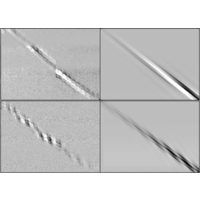
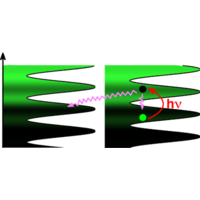
Control of Exciton Valley Coherence in Transition Metal Dichalcogenide Monolayers

G. Wang, X. Marie, B. L. Liu, T. Amand, C. Robert, F. Cadiz, P. Renucci, and B. Urbaszek

Phys. Rev. Lett. 117, 187401 (2016) - Published 25 October, 2016

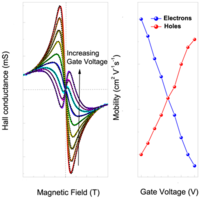
A magnetic field can be used to change the “valley” states that emerge in certain semiconductors.

Dielectric Susceptibility of Liquid Water: Microscopic Insights from Coherent and Incoherent Neutron Scattering

A. Arbe, P. Malo de Molina, F. Alvarez, B. Frick, and J. Colmenero

Phys. Rev. Lett. 117, 185501 (2016) - Published 24 October, 2016

The combination of two spectroscopic techniques reveals the microscopic mechanisms that control the behavior of water’s dielectric constant.

Spin Pumping and Measurement of Spin Currents in Optical Superlattices

C. Schweizer, M. Lohse, R. Citro, and I. Bloch

Phys. Rev. Lett. 117, 170405 (2016) - Published 21 October, 2016

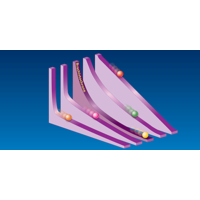
A spin pump is experimentally demonstrated using ultracold boson atoms in an optical superlattice.

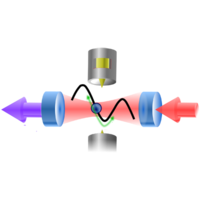
Resonant Optomechanics with a Vibrating Carbon Nanotube and a Radio-Frequency Cavity

N. Ares, T. Pei, A. Mavalankar, M. Mergenthaler, J. H. Warner, G. A. D. Briggs, and E. A. Laird

Phys. Rev. Lett. 117, 170801 (2016) - Published 21 October, 2016

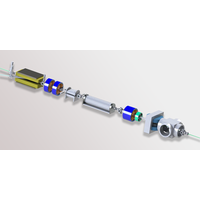
Experimentalists demonstrate resonant optomechanical coupling between a carbon nanotube and a microwave cavity.

Nonlinear Dynamics and Strong Cavity Cooling of Levitated Nanoparticles

P. Z. G. Fonseca, E. B. Aranas, J. Millen, T. S. Monteiro, and P. F. Barker

Phys. Rev. Lett. 117, 173602 (2016) - Published 21 October, 2016

Millilelvin cavity cooling of levitated nanoparticles is experimentally demonstrated.

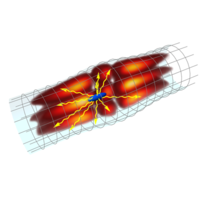
Electron Plasmas Cooled by Cyclotron-Cavity Resonance

A. P. Povilus, N. D. DeTal, L. T. Evans, N. Evetts, J. Fajans, W. N. Hardy, E. D. Hunter, I. Martens, F. Robicheaux, S. Shanman, C. So, X. Wang, and J. S. Wurtele

Phys. Rev. Lett. 117, 175001 (2016) - Published 21 October, 2016

Nonneutral plasma cooling can be enhanced by up to a factor of 14 using an electromagnetic cavity with 105 electrons.

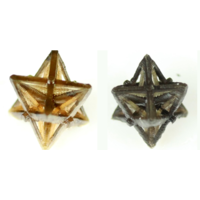
Lightweight Mechanical Metamaterials with Tunable Negative Thermal Expansion

Qiming Wang, Julie A. Jackson, Qi Ge, Jonathan B. Hopkins, Christopher M. Spadaccini, and Nicholas X. Fang

Phys. Rev. Lett. 117, 175901 (2016) - Published 21 October, 2016

The volume of a star-shaped structure decreases when baked. Combining this technology with more conventional structures could lead to materials that don’t expand or contract with temperature changes.

Transient Weakening of Earth’s Magnetic Shield Probed by a Cosmic Ray Burst

P. K. Mohanty, K. P. Arunbabu, T. Aziz, S. R. Dugad, S. K. Gupta, B. Hariharan, P. Jagadeesan, A. Jain, S. D. Morris, B. S. Rao, Y. Hayashi, S. Kawakami, A. Oshima, S. Shibata, S. Raha, P. Subramanian, and H. Kojima

Phys. Rev. Lett. 117, 171101 (2016) - Published 20 October, 2016

Observations with India’s cosmic-ray telescope indicate that Earth’s magnetic field weakened during a 2015 geomagnetic storm, allowing cosmic rays to pass through.

Experimental Time-Optimal Universal Control of Spin Qubits in Solids

Jianpei Geng, Yang Wu, Xiaoting Wang, Kebiao Xu, Fazhan Shi, Yijin Xie, Xing Rong, and Jiangfeng Du

Phys. Rev. Lett. 117, 170501 (2016) - Published 19 October, 2016

New experiments find the fastest way to manipulate logic gates with two qubits as inputs.

High Efficiency Energy Extraction from a Relativistic Electron Beam in a Strongly Tapered Undulator

N. Sudar, P. Musumeci, J. Duris, I. Gadjev, M. Polyanskiy, I. Pogorelsky, M. Fedurin, C. Swinson, K. Kusche, M. Babzien, and A. Gover

Phys. Rev. Lett. 117, 174801 (2016) - Published 19 October, 2016

An unprecedented amount of energy extracted from a relativistic electron beam is converted into coherent radiation, a result that could enable high-average-power light sources to be created.

Direct Observation of a Long-Range Field Effect from Gate Tuning of Nonlocal Conductivity

Lin Wang, Ignacio Gutiérrez-Lezama, Céline Barreteau, Dong-Keun Ki, Enrico Giannini, and Alberto F. Morpurgo

Phys. Rev. Lett. 117, 176601 (2016) - Published 19 October, 2016

An unconventional long-range field effect in WTe2 is used to gate-tune the bulk properties of the material. This method could be used to gate-tune electronic properties deep in the interior of conducting materials, avoiding limitations imposed by electrostatic screening.

Quantum Phase Transition in the Shape of Zr isotopes

Tomoaki Togashi, Yusuke Tsunoda, Takaharu Otsuka, and Noritaka Shimizu

Phys. Rev. Lett. 117, 172502 (2016) - Published 17 October, 2016

High-resolution inelastic electron scattering on 96Zr establishes shape coexistence—where two nearby states possess distinct shapes—for this nucleus. Monte Carlo shell-model calculations indicate that the shape change in Zr isotopes is a quantum phase transition.

First Measurement of Collectivity of Coexisting Shapes Based on Type II Shell Evolution: The Case of Zr96

C. Kremer, S. Aslanidou, S. Bassauer, M. Hilcker, A. Krugmann, P. von Neumann-Cosel, T. Otsuka, N. Pietralla, V. Yu. Ponomarev, N. Shimizu, M. Singer, G. Steinhilber, T. Togashi, Y. Tsunoda, V. Werner, and M. Zweidinger

Phys. Rev. Lett. 117, 172503 (2016) - Published 17 October, 2016

High-resolution inelastic electron scattering on 96Zr establishes shape coexistence—where two nearby states possess distinct shapes—for this nucleus. Monte Carlo shell-model calculations indicate that the shape change in Zr isotopes is a quantum phase transition.

Microwave-Induced Oscillations in Magnetocapacitance: Direct Evidence for Nonequilibrium Occupation of Electronic States

S. I. Dorozhkin, A. A. Kapustin, V. Umansky, K. von Klitzing, and J. H. Smet

Phys. Rev. Lett. 117, 176801 (2016) - Published 17 October, 2016

Experiments show that microwave-induced magneto-oscillations in the capacitance of two-dimensional electron gases differ from the corresponding oscillations in resistance. The oscillations reflect a nonequilibrium energy distribution of electrons and support a quantum origin of the effect.

Two-Proton Radioactivity of Kr67

T. Goigoux et al.

Phys. Rev. Lett. 117, 162501 (2016) - Published 14 October, 2016

The measured half-life for two-proton emission from 67Kr—the heaviest such emitter observed to date—is much shorter than theoretical predictions.

Josephson Currents Induced by the Witten Effect

Flavio S. Nogueira, Zohar Nussinov, and Jeroen van den Brink

Phys. Rev. Lett. 117, 167002 (2016) - Published 14 October, 2016

Type-II superconductors with a topological insulator junction are predicted to generate an AC Josephson effect in the absence of an external voltage.

Rippled Quasiperpendicular Shock Observed by the Magnetospheric Multiscale Spacecraft

A. Johlander, S. J. Schwartz, A. Vaivads, Yu. V. Khotyaintsev, I. Gingell, I. B. Peng, S. Markidis, P.-A. Lindqvist, R. E. Ergun, G. T. Marklund, F. Plaschke, W. Magnes, R. J. Strangeway, C. T. Russell, H. Wei, R. B. Torbert, W. R. Paterson, D. J. Gershman, J. C. Dorelli, L. A. Avanov, B. Lavraud, Y. Saito, B. L. Giles, C. J. Pollock, and J. L. Burch

Phys. Rev. Lett. 117, 165101 (2016) - Published 12 October, 2016

Satellites orbiting near the edge of Earth’s magnetosphere have measured the velocities of ions accelerated by a shockwave with unprecedented temporal resolution.

Hydrogen Bonds in Excited State Proton Transfer

D. A. Horke, H. M. Watts, A. D. Smith, E. Jager, E. Springate, O. Alexander, C. Cacho, R. T. Chapman, and R. S. Minns

Phys. Rev. Lett. 117, 163002 (2016) - Published 11 October, 2016

Hydrogen bonding may safeguard biomolecules against the damaging effects of UV light.

Cooling Mechanical Oscillators by Coherent Control

Martin Frimmer, Jan Gieseler, and Lukas Novotny

Phys. Rev. Lett. 117, 163601 (2016) - Published 11 October, 2016

Two oscillation modes of a levitated nanoparticle are cooled to their ground state through coupling of the modes.

Limits on Active to Sterile Neutrino Oscillations from Disappearance Searches in the MINOS, Daya Bay, and Bugey-3 Experiments

P. Adamson et al. (Daya Bay Collaboration, MINOS Collaboration)

Phys. Rev. Lett. 117, 151801 (2016) - Published 7 October, 2016

An analysis of data from the MINOS, Daya Bay, and Bugey-3 experiments places stringent limits on the mass and mixing of a hypothetical sterile neutrino.

Sign In to Your Journals Account

Filter

Section

Filter

Article Lookup

Enter a citation