Highlights

Minimal Explanation of Flavor Anomalies: B-Meson Decays, Muon Magnetic Moment, and the Cabibbo Angle

David Marzocca and Sokratis Trifinopoulos

Phys. Rev. Lett. 127, 061803 (2021) - Published 4 August, 2021

Implications of the recent g-2 results and other flavor anomalies, involving thermal dark matter or leptoquarks

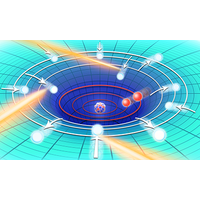
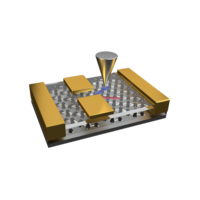
Skyrmion Qubits: A New Class of Quantum Logic Elements Based on Nanoscale Magnetization

Christina Psaroudaki and Christos Panagopoulos

Phys. Rev. Lett. 127, 067201 (2021) - Published 4 August, 2021

Predictions suggest that magnetic quasiparticles known as skyrmions could provide the basis for a novel quantum-computing platform.

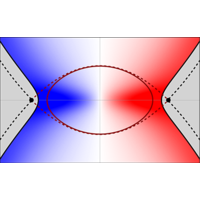
Infinite Berry Curvature of Weyl Fermi Arcs

Dennis Wawrzik, Jhih-Shih You, Jorge I. Facio, Jeroen van den Brink, and Inti Sodemann

Phys. Rev. Lett. 127, 056601 (2021) - Published 30 July, 2021

A divergence of Berry curvature occurring over an entire line in the surface momentum space of Weyl semimetals growing as the inverse distance square to such line, opens the possibility of finding a variety of enhanced Berry-curvature-driven physical effects.

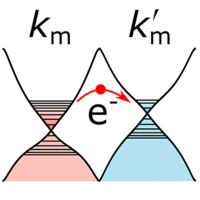
Strong Interminivalley Scattering in Twisted Bilayer Graphene Revealed by High-Temperature Magneto-Oscillations

I. Y. Phinney, D. A. Bandurin, C. Collignon, I. A. Dmitriev, T. Taniguchi, K. Watanabe, and P. Jarillo-Herrero

Phys. Rev. Lett. 127, 056802 (2021) - Published 30 July, 2021

A finite displacement field applied across layers in small-angle twisted bilayer graphene points to scattering mechanisms with large momentum transfer.

Stability of Superdiffusion in Nearly Integrable Spin Chains

Jacopo De Nardis, Sarang Gopalakrishnan, Romain Vasseur, and Brayden Ware

Phys. Rev. Lett. 127, 057201 (2021) - Published 30 July, 2021

Combined analytical and numerical approaches in a range of spin chains at finite temperature point to diffusive transport that may be robust in the presence of external environments.

Bell Nonlocality Is Not Sufficient for the Security of Standard Device-Independent Quantum Key Distribution Protocols

Máté Farkas, Maria Balanzó-Juandó, Karol Łukanowski, Jan Kołodyński, and Antonio Acín

Phys. Rev. Lett. 127, 050503 (2021) - Published 29 July, 2021

Bell nonlocality is insufficient to ensure the security of a type of secure quantum-communications protocol known as DI-QKD.

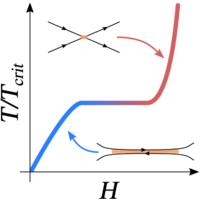
Thermodynamic Phase Transition in Magnetic Reconnection

J. Jara-Almonte and H. Ji

Phys. Rev. Lett. 127, 055102 (2021) - Published 29 July, 2021

Fully kinetic plasma simulations in combination with concepts from condensed matter physics, show that the transition from collisional (Sweet-Parker) reconnection to collisionless (Hall) reconnection may be viewed as a thermodynamic phase transition.

Non-Line-of-Sight Imaging with Picosecond Temporal Resolution

Bin Wang, Ming-Yang Zheng, Jin-Jian Han, Xin Huang, Xiu-Ping Xie, Feihu Xu, Qiang Zhang, and Jian-Wei Pan

Phys. Rev. Lett. 127, 053602 (2021) - Published 28 July, 2021

An update to a technique for imaging around corners allows researchers to capture objects out of the line of sight that have a width of a few human hairs, 100 times tinier than previous demonstrations.

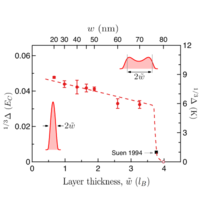
Fractional Quantum Hall Effect Energy Gaps: Role of Electron Layer Thickness

K. A. Villegas Rosales, P. T. Madathil, Y. J. Chung, L. N. Pfeiffer, K. W. West, K. W. Baldwin, and M. Shayegan

Phys. Rev. Lett. 127, 056801 (2021) - Published 28 July, 2021

Energy gaps of the 1/3 fractional quantum Hall effect states in GaAs 2D electron systems decrease with increasing layer thickness.

Deexcitation Dynamics of Muonic Atoms Revealed by High-Precision Spectroscopy of Electronic K X Rays

T. Okumura et al.

Phys. Rev. Lett. 127, 053001 (2021) - Published 27 July, 2021

Decay dynamics of iron atoms after capturing muons is measured with unprecedented resolution using superconducting microcalorimeters.

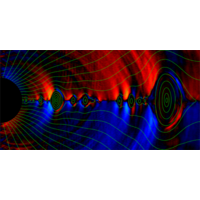
Magnetic Hair and Reconnection in Black Hole Magnetospheres

Ashley Bransgrove, Bart Ripperda, and Alexander Philippov

Phys. Rev. Lett. 127, 055101 (2021) - Published 27 July, 2021

First-principles plasma simulations show that black holes can’t keep their magnetic fields.

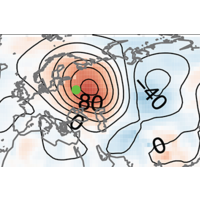
Fingerprinting Heatwaves and Cold Spells and Assessing Their Response to Climate Change Using Large Deviation Theory

Vera Melinda Galfi and Valerio Lucarini

Phys. Rev. Lett. 127, 058701 (2021) - Published 27 July, 2021

A new statistical mechanical model indicates how to improve predictive power for heatwaves and cold spells, and also explains the connection between two exceptional events which occurred in 2010, as well as the natural climate variability.

Deeply Subwavelength Localization with Reverberation-Coded Aperture

Michael del Hougne, Sylvain Gigan, and Philipp del Hougne

Phys. Rev. Lett. 127, 043903 (2021) - Published 23 July, 2021

An echo chamber captures small-scale information about an object without the need for up-close probing.

On-Demand Bulk Nanobubble Generation through Pulsed Laser Illumination

Juan Manuel Rosselló and Claus-Dieter Ohl

Phys. Rev. Lett. 127, 044502 (2021) - Published 22 July, 2021

An optical technique uses a pump (laser pulse) and probe (collimated laser beam) to generate nanosized gas bubbles in water.

Skyrmion Dynamics at Finite Temperatures: Beyond Thiele’s Equation

Markus Weißenhofer, Levente Rózsa, and Ulrich Nowak

Phys. Rev. Lett. 127, 047203 (2021) - Published 22 July, 2021

Adding a friction term to models helps them better account for how spin textures evolve experimentally at room temperature.

Elastoplasticity Mediates Dynamical Heterogeneity Below the Mode Coupling Temperature

Rahul N. Chacko, François P. Landes, Giulio Biroli, Olivier Dauchot, Andrea J. Liu, and David R. Reichman

Phys. Rev. Lett. 127, 048002 (2021) - Published 22 July, 2021

As a cooling liquid nears the glass transition temperature, the dynamic facilitation of heterogeneous rearrangements becomes increasingly long-ranged and elastically-mediated.

Electrical Control of Valley-Zeeman Spin-Orbit-Coupling–Induced Spin Precession at Room Temperature

Josep Ingla-Aynés, Franz Herling, Jaroslav Fabian, Luis E. Hueso, and Fèlix Casanova

Phys. Rev. Lett. 127, 047202 (2021) - Published 21 July, 2021

Researchers demonstrate that they can control the polarization direction of a spin current without having to apply a magnetic field, which could aid in implementing energy-efficient spintronics devices.

Space-Time Quantum Metasurfaces

Wilton J. M. Kort-Kamp, Abul K. Azad, and Diego A. R. Dalvit

Phys. Rev. Lett. 127, 043603 (2021) - Published 20 July, 2021

When it’s modulated by laser beams, a surface made of polarizable meta-atoms can entangle a photon’s properties in multiple, controllable ways.

Coherent Jetting from a Gate-Defined Channel in Bilayer Graphene

Carolin Gold, Angelika Knothe, Annika Kurzmann, Aitor Garcia-Ruiz, Kenji Watanabe, Takashi Taniguchi, Vladimir Fal’ko, Klaus Ensslin, and Thomas Ihn

Phys. Rev. Lett. 127, 046801 (2021) - Published 20 July, 2021

Studying the current that flows in bilayer graphene, researchers have isolated electron jets associated with specific valley states.

Observation of a Dissipative Time Crystal

Hans Keßler, Phatthamon Kongkhambut, Christoph Georges, Ludwig Mathey, Jayson G. Cosme, and Andreas Hemmerich

Phys. Rev. Lett. 127, 043602 (2021) - Published 19 July, 2021

Experiments successfully capture signatures of a discrete time crystal phase in an open, quantum many-body system.

Sign In to Your Journals Account

Filter

Section

Filter

Article Lookup

Enter a citation