Browse Issues:

HIGHLIGHTED ARTICLES

Route to turbulence in magnetohydrodynamic square duct flow

Mattias Brynjell-Rahkola, Yohann Duguet, and Thomas Boeck

Phys. Rev. Fluids 10, 023903 (2025) - Published 20 February, 2025

The transition route from laminar to turbulent flow in a magnetohydrodynamic duct with a square cross-section is investigated in the limit of low magnetic Reynolds number. In the presence of a transverse magnetic field, Hartmann and Shercliff layers are present on the walls orthogonal and parallel to the field direction, respectively. Independently of the initial location of a finite perturbation in either Shercliff or Hartmann layers, transition relies on a tripping of the Shercliff layer by perturbations, while the Hartmann layer plays a passive role. This is explained, using a dynamical systems interpretation, by the spatial localization of the edge states in the Shercliff layer.

Experiments on buoyancy-driven instability ahead of a dissolution front in a porous rock

Sam Clarke, Jon Harrington, Simon Norris, and Andy Woods

Phys. Rev. Fluids 10, 024001 (2025) - Published 6 February, 2025

New experiments show the Rayleigh-Taylor instability in a partially soluble porous medium. An initially buoyant fluid invades from the top. As the fluid dissolves some of the solid material, it becomes dense relative to the underlying formation fluid. This leads to growth of Rayleigh-Taylor fingers at the fluid-fluid interface. We present a new theory to model the nonlinear growth of these fingers, as well as a novel technique to track dissolution fronts.

Mesoscopic hydrodynamic model for spreading, sliding, and coarsening compound drops

Jan Diekmann and Uwe Thiele

Phys. Rev. Fluids 10, 024002 (2025) - Published 10 February, 2025

We consider the dynamics of compound drops that are formed by two immiscible, partially wetting liquids within a mesoscopic hydrodynamic description based on a gradient dynamics approach in full-curvature and long-wave variants. After discussing existing models we establish conditions between macroscopic and mesoscopic descriptions that ensure consistent Neumann and Young laws. As examples, we then numerically study spreading and sliding compound drops on horizontal and inclined substrates, respectively, as well as coarsening drop ensembles.

Thin film flow over a spinning disk: Experiments and direct numerical simulations

Jason Stafford, Nwachukwu Uzo, Enrico Piccoli, Camille Petit, and Omar K. Matar

Phys. Rev. Fluids 10, 024805 (2025) - Published 25 February, 2025

We examine large-amplitude wave formation on thin films flowing over a rapidly spinning disk with experiments and direct numerical simulations. Our results capture the transition from stationary two-dimensional spiral to fully three-dimensional waves.

ARTICLES

Invited Articles

Flow measurements in clinical cardiac imaging

Brett A. Meyers and Pavlos P. Vlachos

Phys. Rev. Fluids 10, 020501 (2025) - Published 28 February, 2025

Echocardiography and cardiac MRI have helped expand understanding of complex fluid dynamics within the heart’s chambers. However, many of the advances have yet to be fully used in clinical practice. We explore the role of fluid mechanics in intracardiac flow analysis and in assessing cardiac function and diagnosing diseases. Emerging trends include a shift from pressure-based assessments to more detailed analyses of flow energy and vortex dynamics, and the use of machine learning. Reproducibility and standardization remain challenging. Critical research needs are identified, including validating fluid mechanics measurements and developing a unified framework for intracardiac flow analysis.

LETTERS

Turbulent Flows

Expressing turbulent kinetic energy as coarse-grained enstrophy or strain deformations

Damiano Capocci

Phys. Rev. Fluids 10, L022601 (2025) - Published 10 February, 2025

In turbulent flows, the fluid element is deformed by chaotic motion due to the formation of sharp velocity gradients, yet an exact relationship between these deformations and kinetic energy remains elusive. In the context of incompressible and homogeneous turbulence, this work derives an exact identity connecting velocity gradient norms across the scales to kinetic energy, offering a novel decomposition in terms of strain-rate deformations and vortical motion. The formulation also leads to an exact real-space representation of the kinetic energy spectrum, providing new insights into the Kolmogorov constant and spectral scaling in hydrodynamic turbulence theory and beyond.

Stochastic identities for random isotropic fields

A. S. Il'yn, A. V. Kopyev, V. A. Sirota, and K. P. Zybin

Phys. Rev. Fluids 10, L022602 (2025) - Published 12 February, 2025

The article presents a new result on statistical properties of isotropic tensor fields. It turns out that for the components of such fields there exists a set of nontrivial identities. Deviations from these identities allow us to make conclusions about the spatial configuration of turbulent flows.

ARTICLES

Combustion Fluid Mechanics and Reacting Flows

Spectral characteristic of a scalar-dissipation-rate-based turbulent burning velocity

Sajjad Mohammadnejad and Sina Kheirkhah

Phys. Rev. Fluids 10, 023201 (2025) - Published 3 February, 2025

How fast do turbulent premixed flames burn? This experimental investigation utilizes both active and passive turbulence generators to produce a wide range of turbulent flow characteristics for studying the scalar dissipation rate (the image), which is related to the burning velocity of premixed flames. Then, the spectral characteristics of the background turbulence, scalar dissipation rate, and the related burning velocity are presented, discussed, and compared. This study discusses the important role of large-scale turbulence in enhancing the burning velocity of turbulent premixed methane-air and hydrogen-enriched methane-air flames.

Complex and Non-Newtonian Fluids

Friction-induced bubble edge curvature in flowing two-dimensional confined foams

Christophe Raufaste, Lauren Rose, Stéphane Santucci, and Benjamin Dollet

Phys. Rev. Fluids 10, 023301 (2025) - Published 5 February, 2025

Liquid foams are widely used in industrial processes, yet the interplay between foam structure and flow properties remains a topic of active research. This study investigates how friction forces and confinement in quasi-two-dimensional foams influence bubble shapes during flow, revealing anisotropic deformations and curvature of the films correlated to their orientation. Using experiments and a viscous froth-based model, we demonstrate a robust link between bubble curvature, anisotropy, and flow properties, providing new insights into the dynamics of foam flows under confinement.

Flow asymmetry enhanced by viscoelasticity

Vivaswan ChandraShekar, Guillaume Maîtrejean, and Hugues Bodiguel

Phys. Rev. Fluids 10, 023302 (2025) - Published 14 February, 2025

The development of preferential pathways in viscoelastic flow through a porous medium is a widely researched topic. We recognize a gap in the works that use simple geometries to model flow through such complex media. These geometries are often symmetric, like the archetypal confined cylinder. Therefore, in this work, we explore the flow of viscoelastic and shear-thinning viscoelastic fluids using finite-volume numerical simulations in three simple yet asymmetrical geometries involving a flow bifurcation. We show a robust elastic phenomenon of enhanced flow asymmetry above a Weissenberg number (Wi) of unity, irrespective of the geometry with even the slightest asymmetry in the pathways.

Mixing of passive scalars in viscoelastic turbulent jets and wakes

Mateus C. Guimarães, Fernando T. Pinho, and Carlos B. da Silva

Phys. Rev. Fluids 10, 023303 (2025) - Published 18 February, 2025

The figures show passive scalar contours in Newtonian (top) and viscoelastic (bottom) turbulent jets generated by direct numerical simulations (DNS). Initially, the depletion of small scale perturbations by the polymers suppresses the small scale mixing, but later allows the appearance of very large coherent structures that promote the stirring and thus enhance large and intermediate scale stirring.

Drops, Bubbles, Capsules, and Vesicles

Rise and fall of a multicomponent droplet in a surrounding fluid: Simulation study of a bumpy path

Mirantsoa Aimé Rasolofomanana, Romain Le Tellier, and Hervé Henry

Phys. Rev. Fluids 10, 023601 (2025) - Published 5 February, 2025

The buoyancy driven motion of a droplet that loses a component through diffusion in a fluid is studied numerically. The interplay of diffusion and advection is shown to have unexpected effects that cannot be explained in the fast or slow diffusion limit.

Path of a pair of deformable bubbles rising initially in line and close to a vertical wall

Haochen Huang (黄澔辰), Pengyu Shi, Nina Elkina, Henrik Schulz, and Jie Zhang (张杰)

Phys. Rev. Fluids 10, 023602 (2025) - Published 5 February, 2025

We simulate the dynamics of a pair of three-dimensional deformable bubbles rising initially in-line and close to a vertical wall in an otherwise quiescent liquid. Our findings reveal that the wall-induced asymmetry significantly alters the evolution of the bubble paths and wakes, with horizontal separation occurring in either the wall-normal plane or the wall-parallel plane, depending on the competition between irrotational and vortical effects. We also analyze the influence of initial angular deviations, demonstrating how the final geometry of the bubble pair helps us understand inhomogeneous near-wall bubble distributions.

Impact of a water drop on a water bed of varying depth

Raghavendra Naidu S., Kamal Poddar, and Sanjay Kumar

Phys. Rev. Fluids 10, 023603 (2025) - Published 13 February, 2025

The dynamics of liquid drop impact on a liquid surface is studied experimentally. The interplay between the inertia forces and surface tension forces during the expansion and contraction of the cavity determines the shape of the cavity. In shallow water, the cavity expansion and retraction are dominated by surface tension forces but in deep water the inertia forces and gravity forces dominate the cavity dynamics. The cavity expansion resembles a source of the potential flow below the surface of the liquid. Time resolved Particle Image Velocimetry (PIV) measurements enable estimates of time variation of the source strength.

Effects of liquid viscosity and surface tension on bubble rising and bouncing with a free surface

Ruoqing Gao, Cheng Liu, Yuxiao Yang, and Changhong Hu

Phys. Rev. Fluids 10, 023604 (2025) - Published 19 February, 2025

When a rising bubble impacts the free surface, the interface deforms, and the bubble rebounds multiple times before ultimately rupturing. This study investigates the kinematic characteristics of bubble motion influenced by the Morton number (liquid viscosity) and the Weber number (surface tension) through numerical simulations. The results reveal that the parameters associated with bubble bouncing exhibit a distinct logarithmic-linear decay with the Morton number and a linear decrease with the Weber number. Furthermore, the first rebound of the bubble is predominantly governed by the approach velocity, while subsequent rebounds are primarily influenced by the bubble’s shape.

Electrokinetic Phenomena, Electrohydrodynamics, and Magnetohydrodynamics

Dynamics of a Lorentz force activated oscillating jet

Jaewuk Jung, Jihoo Moon, and Daegyoum Kim

Phys. Rev. Fluids 10, 023701 (2025) - Published 25 February, 2025

This study presents a method of generating oscillating jets in conductive fluids with time-varying Lorentz force, which eliminates the need for complex nozzle geometries or active components. A steady jet under constant forcing is modeled as a baseline to examine the effects of electromagnetic and fluid variables on jet deflection. Furthermore, the classification of oscillating jet behaviors with respect to Strouhal number and Stuart number reveals how variations in forcing frequency and electromagnetic parameters modulate jet structure. These findings enhance the understanding of electromagnetically controlled flows with broad implications for flow control and heat transfer.

Instability, Transition, and Control

Pattern formation in coiling of falling viscous threads: Revisiting the geometric model

Will Sze, Eusebius J. Doedel, Ida Karimfazli, and Behrooz Yousefzadeh

Phys. Rev. Fluids 10, 023901 (2025) - Published 5 February, 2025

A flowing viscous thread in contact with a moving platform forms intricate patterns. The shape of these patterns depends on the fall height and the platform’s speed. At moderate fall heights, these patterns can be reproduced using a model based on the no-slip condition and the curvature of the thread at the contact point. We re-examine these patterns experimentally and revisit the model computationally. We discover new patterns in both cases, highlighting the presence of greater complexity within the phenomenon than known previously.

Streaky perturbations in swept-wing flow over forward-facing step

Jordi Casacuberta, Sven Westerbeek, Juan Alberto Franco, Koen J. Groot, Stefan Hickel, Stefan Hein, and Marios Kotsonis

Phys. Rev. Fluids 10, 023902 (2025) - Published 14 February, 2025

Stationary velocity-perturbation streaks are found to be inherent to laminar swept-wing boundary layers interacting with a forward-facing step, often promoting premature laminar-turbulent transition. Using Direct Numerical Simulations, this study reveals that these streaks emerge as a linear response of the step flow to incoming three-dimensional (3D) perturbations via the lift-up effect, further amplified by base-flow deceleration, i.e., a streamwise analogous “push-forward effect.” By elucidating steak formation and stability, this work contributes to the predictive understanding of the transition of 3D boundary layers with surface features, with implications for aerodynamic design.

Route to turbulence in magnetohydrodynamic square duct flow

Mattias Brynjell-Rahkola, Yohann Duguet, and Thomas Boeck

Phys. Rev. Fluids 10, 023903 (2025) - Published 20 February, 2025

The transition route from laminar to turbulent flow in a magnetohydrodynamic duct with a square cross-section is investigated in the limit of low magnetic Reynolds number. In the presence of a transverse magnetic field, Hartmann and Shercliff layers are present on the walls orthogonal and parallel to the field direction, respectively. Independently of the initial location of a finite perturbation in either Shercliff or Hartmann layers, transition relies on a tripping of the Shercliff layer by perturbations, while the Hartmann layer plays a passive role. This is explained, using a dynamical systems interpretation, by the spatial localization of the edge states in the Shercliff layer.

Manipulation on a heavy fluid layer with dual-mode perturbations via reverberating waves

Ning Zhou, Zhigang Zhai, and Xisheng Luo

Phys. Rev. Fluids 10, 023904 (2025) - Published 20 February, 2025

The growth of a shock-induced heavy fluid layer with dual-mode perturbations is investigated. Processes of the disturbed reverberating waves interacting with the layer are modeled theoretically. By considering the reverberating waves, growth of the heavy fluid layer can be well manipulated.

Pulsatility delays the transition to sustained turbulence in quasi-two-dimensional shear flows

Christopher J. Camobreco, Alban Pothérat, and Gregory J. Sheard

Phys. Rev. Fluids 10, 023905 (2025) - Published 25 February, 2025

This work investigates efficient routes to turbulence in quasi-two-dimensional (Q2D) shear flows. When the base flow is steady, transient growth is modest, as the initial perturbations are two-dimensional. With the addition of an oscillatory base flow component, the transient growth of even two-dimensional initial perturbations increases dramatically. However, as has been shown for three-dimensional flows, this transient growth proves to be almost entirely modal intracyclic growth, rather than non-normal growth, which delays sustained turbulence. Thus, in these Q2D flows, a non-oscillatory driving force sustains turbulence more efficiently than a pulsatile one.

Interfacial Phenomena and Flows

Experiments on buoyancy-driven instability ahead of a dissolution front in a porous rock

Sam Clarke, Jon Harrington, Simon Norris, and Andy Woods

Phys. Rev. Fluids 10, 024001 (2025) - Published 6 February, 2025

New experiments show the Rayleigh-Taylor instability in a partially soluble porous medium. An initially buoyant fluid invades from the top. As the fluid dissolves some of the solid material, it becomes dense relative to the underlying formation fluid. This leads to growth of Rayleigh-Taylor fingers at the fluid-fluid interface. We present a new theory to model the nonlinear growth of these fingers, as well as a novel technique to track dissolution fronts.

Mesoscopic hydrodynamic model for spreading, sliding, and coarsening compound drops

Jan Diekmann and Uwe Thiele

Phys. Rev. Fluids 10, 024002 (2025) - Published 10 February, 2025

We consider the dynamics of compound drops that are formed by two immiscible, partially wetting liquids within a mesoscopic hydrodynamic description based on a gradient dynamics approach in full-curvature and long-wave variants. After discussing existing models we establish conditions between macroscopic and mesoscopic descriptions that ensure consistent Neumann and Young laws. As examples, we then numerically study spreading and sliding compound drops on horizontal and inclined substrates, respectively, as well as coarsening drop ensembles.

Receding contact line dynamics on superhydrophobic surfaces

Lorenzo Betti, Jordy Queiros Campos, Amandine Lechantre, Léa Cailly-Brandstater, Sarra Nouma, Jérôme Fresnais, Etienne Barthel, Yann Bouret, Xavier Noblin, and Céline Cohen

Phys. Rev. Fluids 10, 024003 (2025) - Published 14 February, 2025

Because of their practical importance in applications like self-cleaning and drag reduction, superhydrophobic surfaces have been widely studied. However, the link between microscopic surface properties and macroscopic dynamic contact angles remains an open question. This study systematically examines dynamic contact angles on superhydrophobic micropillar surfaces across a wide range of velocities, analyzing their dependence on solid surface fraction. We compare existing models to identify dissipation sources and propose a new mechanism based on droplet detachment from pillars, as observed in our experiments.

Large eddy simulation of droplet breakup in turbulent flow with adaptive mesh refinement

Xiaoqiang Sun, Hong Yan, and Fuzhen Chen

Phys. Rev. Fluids 10, 024004 (2025) - Published 21 February, 2025

A series of turbulence-droplet interactions with realistic density ratios encountered in an aeroengine combustor are simulated and the effect of droplet size is investigated. It is shown that droplets present periphery shedding at the initial stage of breakup and are stretched into a disk-like shape before final breakup. The vortical turbulence helps to deform and break up the interface. The general turbulent characteristics are similar to single-phase flow and more perturbations are introduced by the gas-liquid interactions.

Faraday instability of a three-layer fluid system in a Hele-Shaw cell: Transition from zigzag mode to B-interface instability mode

Qing Gong (龚庆), Yi-Fei Huang (黄逸飞), Juan-Cheng Yang (阳倦成), and Ming-Jiu Ni (倪明玖)

Phys. Rev. Fluids 10, 024005 (2025) - Published 26 February, 2025

The transition from zigzag mode to B-interface instability mode is experimentally observed in a Hele-Shaw cell filled with three liquid layers. The interface coupling effect is considered to be the determinant factor triggering this Faraday instability. Considering the zero-order interface coupling effect, we identify that the mode transition can be promoted by increasing the wave number and thickness of the middle layer liquid. Furthermore, by including the impact of first-order interface coupling, it is evident that a decrease in vibration acceleration and an increase in viscosity can promote mode transition from the dispersion relation.

Laminar and Viscous Flows

Helical ribbons: Simple chiral sedimentation

Elias Huseby, Josephine Gissinger, Fabien Candelier, Nimish Pujara, Gautier Verhille, Bernhard Mehlig, and Greg Voth

Phys. Rev. Fluids 10, 024101 (2025) - Published 24 February, 2025

We study the design of chiral particle shapes that couple translation to rotation in viscous fluid flow. Despite the importance of chiral design in many areas of science, there isn’t a known hierarchy of increasingly complex geometry with translation-rotation coupling ranging from simple to the general case. We identify helical ribbons as particles with strong translation-rotation coupling that can be tuned from simple axisymmetric behavior through general co-centered dynamics by changing length. During sedimentation, even these simple particles show quasiperiodic angular dynamics with complex spatial trajectories that can be unconfined for special initial orientations.

Mixing by squirmers in stratified fluids

Vaseem A. Shaik and Gwynn J. Elfring

Phys. Rev. Fluids 10, 024102 (2025) - Published 24 February, 2025

We analyze the mixing induced by a model swimmer, the spherical squirmer, in density stratified fluids. Our findings indicate that the mixing by a squirmer is much larger than that caused by a point-sized swimmer (like force-dipole), although still small in weak stratification relevant to the ocean. Equivalent results are also obtained for a homogeneous dilute suspension of noninteracting squirmers.

Micro- and Nanofluidics

Kinetic theory analysis of microscale lubrication of a gas between eccentric circular cylinders: Effect of rotation of the outer cylinder

Toshiyuki Doi

Phys. Rev. Fluids 10, 024201 (2025) - Published 25 February, 2025

A microscale lubrication flow of a gas between rotating eccentric circular cylinders is studied on the basis of kinetic theory. Two flows are compared: one in which only the inner cylinder rotates, and the other in which only the outer cylinder rotates at the same circumferential velocity. The difference in the lubrication performance between the two flows, which is small for a small Knudsen number, becomes evident as the Knudsen number increases. The physical mechanism is discussed using the lubrication equation derived from the Boltzmann equation.

Cavitation inception triggered by transient ambient pressures in electrolyte solutions

Yuhan Li, Mingbo Li, Lu-wen Zhang, and Benlong Wang

Phys. Rev. Fluids 10, 024202 (2025) - Published 25 February, 2025

Shock-induced cavitation in saline-rich seawater—where chloride, sodium, sulfate, and magnesium ions comprise over 90%—involves two key processes: bulk vapor nucleation and gas nanobubble expansion. This study employs all-atom molecular dynamics simulations to provide a nanoscopic perspective on cavitation inception under transient pressure fluctuations. It examines how ionic specificity and concentration affect these processes by discussing hydrogen bond density, interfacial molecular orientation, charge distribution, and surface tension. The findings demonstrate that ionic strength and radius govern water–water interactions, thereby influencing cavitation characteristics.

Multiphase, Granular, and Particle-Laden Flows

Revisiting the linear forcing of turbulence in two-phase flows

Victor Boniou, Stéphane Jay, Guillaume Vinay, and Jean-Lou Pierson

Phys. Rev. Fluids 10, 024301 (2025) - Published 5 February, 2025

Maintaining realistic turbulence in numerical simulations is a key element for studying complex flows. This is typically achieved by forcing turbulence through the synthetic injection of energy at prescribed wavenumbers. The task gets challenging in two-phase flows, where turbulence is closely coupled with interface dynamics. In this work, we revisit the linear forcing method proposed by Lundgren and extend its application to turbulent emulsions and droplet-laden turbulence. We propose a general linear forcing that incorporates two-phase flow contributions and enables a priori control of the turbulent characteristics.

Response of a nonevaporating monodisperse spray in a uniform laminar gas flow to acoustic perturbations

Titouan Moriniere and Thierry Schuller

Phys. Rev. Fluids 10, 024302 (2025) - Published 18 February, 2025

Understanding the interaction between an acoustic field and a dispersed cloud of droplets in particle-laden flows is critical, particularly for thermoacoustic instabilities in spray flame combustors. This study develops analytical expressions for particle velocity and number density, leading to insights into the particle clustering mechanism. While individual droplets may remain largely unaffected by acoustic perturbations, the droplet population spatial distribution can still undergo significant disturbances. An evanescent convective wave in the particle velocity response is identified as the primary driver of clustering, which is predominantly a convective phenomenon at low Mach numbers.

Gas flow regimes and transition criteria in porous media

Mingbao Zhang, Zhiguo Tian, Yunfan Huang, and Moran Wang

Phys. Rev. Fluids 10, 024303 (2025) - Published 24 February, 2025

This study examines gas flow in porous media, finding four regimes: slip, Darcy, inertia, and turbulence. After scaling the Forchheimer equation, we introduce a dimensionless number, Rd, which provides a more physically grounded criterion for the transition to the inertia regime. Through experimental validations, the new mechanism also shows how gas slip effects influence flow at low permeability. These insights contribute to advancing both theoretical frameworks and experimental studies of gas flow in porous systems.

Three-dimensional numerical simulation of tandem droplets accelerated by continuous uniform airflow

Shuting Peng, Fuzhen Chen, Hong Yan, and Fan Liu

Phys. Rev. Fluids 10, 024304 (2025) - Published 25 February, 2025

We simulate the dynamics of tandem double droplets accelerated by uniform airflow. The deformation of the tandem droplets under different dimensionless parameters has been studied. The shape of the droplets is influenced by the vortex structure in the recirculation zone and the Rayleigh-Taylor instability (RTI). Decreasing the Reynolds number and the relative distance between droplets, as well as increasing the liquid/gas density ratio, increases the inhibitory effect of the leading droplet on the deformation of the trailing droplet. Finally, a predictive model was proposed to describe the temporal evolution of the radius of tandem droplets.

Flocculation of suspended cohesive particles in Rayleigh-Bénard turbulence

Han Huang, Shuaiqi Zhao, Rui Zhang, Binbin Pei, Kunpeng Zhao, and Bofeng Bai

Phys. Rev. Fluids 10, 024305 (2025) - Published 25 February, 2025

We use a four-way coupled numerical approach to investigate dynamics of suspended cohesive particles in Rayleigh-Bénard turbulence. The Stokes drag, cohesive, and direct contact forces between primary particles are included, yielding the flocs’ aggregation, breakage, and deformation. We find that the initial increase of the average floc size is a transient flocculation phase, which is followed by an equilibrium phase with a stable average floc size, due to a balance of aggregation and breakage. In contrast to the traditional perspective, in which local particle accumulation is due to gravity, we find that suspended particles still tend to accumulate in the bottom hot boundary layer region.

Transport and Mixing

Linking mixing interface deformation to concentration gradients in porous media

Saif Farhat, Diogo Bolster, and Guillem Sole-Mari

Phys. Rev. Fluids 10, 024501 (2025) - Published 14 February, 2025

Pore-scale concentration fluctuations play a crucial role in mixing-limited reactions in porous media. We mathematically establish a direct link between mixing interface deformation and pore-scale concentration gradients. Contrary to the classical assumption that these fluctuations eventually get washed out, we show that for Peclet numbers above a critical threshold, advection sustains them indefinitely. Our analytical model quantifies the elongation of the mixing interface and accurately predicts reaction product formation in three-dimensional porous media, offering new insights into transport and reaction kinetics at the pore scale.

Turbulent Flows

Diminishing effect of a pressure gradient on large-scale rolls of plane Couette flow: A singular value analysis

Toni Dokoza, Joao Vinicius Hennings de Lara, and Martin Oberlack

Phys. Rev. Fluids 10, 024601 (2025) - Published 5 February, 2025

This study investigates the transition from Couette flow to Poiseuille flow, focusing on the disappearance of single-circle coherent structures and their link to pressure gradients. By combining direct numerical simulation (DNS) data with resolvent and structured singular value analysis, the work identifies critical layers as key to the wall-normal positioning of structures and highlights the influence of pressure gradients on their size and shape. The findings demonstrate that structured singular value analysis aligns well with DNS results, offering a cost-effective and deeper theoretical understanding of flow dynamics.

Active control of an overexpanded jet using plasma-based actuators

Anirudh Lakshmi Narasimha Prasad and S. Unnikrishnan

Phys. Rev. Fluids 10, 024602 (2025) - Published 10 February, 2025

Supersonic over-expanded jets, common during high-speed military aircraft takeoff, generate intense noise, posing health risks to personnel. This study tests a plasma actuator-based small perturbation control mechanism to reduce noise. Results show that optimal forcing conditions can achieve over 2.5dB noise reduction with minimal thrust loss. The study also explores the mechanisms behind noise reduction and examines the impact of control on jet flow features, providing insights into its effectiveness.

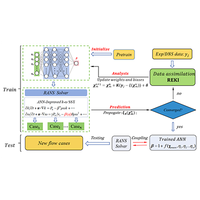
Feature-consistent field inversion and machine learning framework with regularized ensemble Kalman method for improving the k-ω shear stress transport model in simulating separated flows

Long Chen and Yan Wang

Phys. Rev. Fluids 10, 024603 (2025) - Published 12 February, 2025

Numerical simulations of separated turbulent flows are needed for practical applications of computational fluid dynamics. Due to the inherent Boussinesq assumption and initial development based on simplified flows, the commonly used RANS models often encounter errors and uncertainties when simulating complex turbulence, particularly in separated flows. To address this problem, a feature-consistent correction framework is presented in this work, using regularized ensemble Kalman inversion and machine learning. Insufficient prediction accuracy of RANS in simulating separated flows is addressed by incorporating DNS data and experimental measurements into the k-ω shear stress transport model.

Effects of rough walls on sheared annular centrifugal Rayleigh-Bénard convection

Fan Xu, Jun Zhong, Jinghong Su, Bidan Zhao, Yurong He, Chao Sun, and Junwu Wang

Phys. Rev. Fluids 10, 024604 (2025) - Published 14 February, 2025

The interaction between wall shear and roughness leads to distinct heat transfer behavior in different regimes in an annular centrifugal Rayleigh-Bénard convection (ACRBC) system. In the buoyancy-dominant regime, an increase in the non-dimensional angular velocity difference (Ω) significantly enhances heat transfer. However, as Ω continues to rise, a sharp reduction in heat transfer is observed in the transitional regime. Beyond a critical value of Ω, the flow enters a shear-dominant regime, where heat transfer remains unchanged despite further increases in Ω.

Differentiable turbulence: Closure as a partial differential equation constrained optimization

Varun Shankar, Dibyajyoti Chakraborty, Venkatasubramanian Viswanathan, and Romit Maulik

Phys. Rev. Fluids 10, 024605 (2025) - Published 26 February, 2025

Improved turbulence closure models for large eddy simulations (LES) have the potential to impact a large variety of societal applications. This work introduces differentiable turbulence, where deep learning is embedded within a differentiable LES solver to enhance closure models given sparse observations of the true flow state. By leveraging physics-informed neural network architectures and solver-in-the-loop optimization, we put forth a technique that allows for the learning of novel closures without the use of high-fidelity numerical simulations - opening a pathway to the development and identification of LES closures in a multifidelity setting.

Two-way momentum and thermal coupling particle-laden compressible turbulent boundary layers

Ming Yu, Yibin Du, Qian Wang, Siwei Dong, and Xianxu Yuan

Phys. Rev. Fluids 10, 024606 (2025) - Published 28 February, 2025

This paper employs direct numerical simulations at Mach 2 to reveal how particles with infinite thermal inertia, acting as persistent heat sinks or sources, drastically alter turbulence statistics and coherent structures. Hot particles suppress turbulence by weakening velocity streaks and vortical motions, whereas cold particles amplify Reynolds shear stress and skin friction. Crucially, particle feedback forces inhibit wall-normal fluctuations, with heat transfer aligning coherently with ejection and sweeping events.

Vortex Dynamics

Flow-induced vibration of a flexible cantilever in tandem configuration

Shayan Heydari and Rajeev K. Jaiman

Phys. Rev. Fluids 10, 024701 (2025) - Published 13 February, 2025

This study explores the fluid-structure interaction of a flexible cylindrical cantilever in a tandem configuration, focusing on sustained oscillations across subcritical and post-critical Reynolds number regimes. A fully coupled numerical solver is used to analyze spatiotemporal power transfer patterns, response amplitudes, and vorticity dynamics. The findings reveal that wake-body interactions and vortex synchronization drive sustained oscillations, offering insights into the design of bio-inspired cantilever flow sensors.

Numerical investigation of oscillatory flow regimes around an elliptic cylinder at low Keulegan-Carpenter and Reynolds numbers

Xinru Wang (王新茹), Jianxun Zhu (朱建勋), Lars Erik Holmedal, Dag Myrhaug, and Hong Wang (王红)

Phys. Rev. Fluids 10, 024702 (2025) - Published 14 February, 2025

Oscillatory flow past an elliptic cylinder with an aspect ratio of 0.4 has been investigated for low Keulegan-Carpenter (KC) and Reynolds (Re) numbers by conducting two-dimensional numerical simulations. Four flow regimes A, C, F’ (a newfound one) and F are identified and mapped out, and the physics mechanisms underpinning the transition between the top- and bottom-dominated vortex shedding in flow regime C, the one-sided vortex pair shedding in a new flow regime F’, and the diagonal two-sided vortex pairs shedding in flow regime F have been investigated in detail. The resulting hydrodynamic forces acting on the cylinder are also explained in light of the vortex dynamics around the cylinder.

Surrogate models for multiregime flow problems

Jiyoung Lee, Leon Chan, Tony Zahtila, Wilson Lu, Gianluca Iaccarino, and Andrew Ooi

Phys. Rev. Fluids 10, 024703 (2025) - Published 26 February, 2025

We investigate methods for mapping between low- and high-resolution simulations to generate surrogate models, which would significantly reduce the overall computational costs. Our focus is on interpolative decomposition, a rank-revealing matrix decomposition technique that efficiently selects key parameters to minimize the number of required simulation sets. We demonstrate that this approach remains effective even in the presence of multiple flow regimes (mode transitions) and show that the mapping process can also function as a classification tool for identifying different flow modes.

Wave Dynamics, Free Surface Flows, Stratified, and Rotating Flows

Deep-water closure model for surface waves on axisymmetric swirling flows

Emanuele Zuccoli, Edward J. Brambley, and Dwight Barkley

Phys. Rev. Fluids 10, 024801 (2025) - Published 14 February, 2025

This paper proposes a novel set of two-dimensional governing equations to describe surface waves propagation on top of vortical flows, such as those easily observable in a swimming pool (left image). The model presented here overcomes three limitations of existing models, namely: it is not restricted to potential base flows; it does not assume the base flow to have a flat free surface; and it does not require the use of infinite-order differential operators. The model can be also applied in the case of rapid swirl where the base free surface is substantially deformed, as shown in the right image.

Two-dimensional Ekman-inertial instability: A comparison with inertial instability

Fabiola Trujano-Jiménez, Varvara E. Zemskova, and Nicolas Grisouard

Phys. Rev. Fluids 10, 024802 (2025) - Published 18 February, 2025

The upper ocean is home to several hydrodynamic instabilities which are known to generate strong vertical flows crucial for the transport of physical and biochemical properties. Here we study the two-dimensional Ekman-Inertial Instability (EII), the analytical description of which is currently limited to one dimension, and compare its effects with those of Inertial Instability (InI). We found that EII grows significantly faster and creates stronger vertical flows than InI. Moreover, we explore the sensitivity of its growth rate to variations in the Rossby number of the initial flow. We found that EII and InI radiate near-inertial waves that propagate in regions of anticyclonic vorticity.

Morphology of entrapped air bubbles during water impact of a flat plate

Xiaohang Shi, Qiulin Qu, Peiqing Liu, Tianxiang Hu, Yunlong Zheng, and Peizhe Zhou

Phys. Rev. Fluids 10, 024803 (2025) - Published 19 February, 2025

When a flat plate impacts a water surface, bubbles of different shapes can be entrapped depending on impact velocity. This work numerically investigates the morphology of air bubbles and the underlying physics. In a wide range of impact velocities, two typical air bubble patterns are found: small-bubble pattern and large-bubble pattern. Importantly, their evolutions are shown to be dictated by two physical factors: the compression-expansion intensity of trapped air during initial impact stages (before the plate edge contacts the water surface) and wind-driven waves below the plate.

Flow structure around a vertical cylinder placed in an open channel under combined wave-current flows

Wen-Yi Chang and George Constantinescu

Phys. Rev. Fluids 10, 024804 (2025) - Published 20 February, 2025

Surface mounted cylinders in combined wave-current flow generate a wide range of coherent structures that include vortex tubes (VT), wake billow vortices (VW), and horseshoe vortices observed in steady flow. Additionally, horizontal near-bed vortices are sometimes generated on the wake side of the cylinder. The formation of these vortices and the forces acting on the cylinder are a function of the ratio between the steady current velocity and the oscillatory velocity (0≤Us/Um≤1.4) and of the Keulegan-Carpenter number, KC=UmT/D (1.5≤KC≤30.8), where T is the period of the oscillatory flow.

Thin film flow over a spinning disk: Experiments and direct numerical simulations

Jason Stafford, Nwachukwu Uzo, Enrico Piccoli, Camille Petit, and Omar K. Matar

Phys. Rev. Fluids 10, 024805 (2025) - Published 25 February, 2025

We examine large-amplitude wave formation on thin films flowing over a rapidly spinning disk with experiments and direct numerical simulations. Our results capture the transition from stationary two-dimensional spiral to fully three-dimensional waves.

ERRATA

Erratum: Reorientation dynamics of microswimmers at fluid-fluid interfaces [Phys. Rev. Fluids 7, L042001 (2022)]

Harinadha Gidituri, Zaiyi Shen, Alois Würger, and Juho S. Lintuvuori

Phys. Rev. Fluids 10, 029902 (2025) - Published 13 February, 2025

Sign In to Your Journals Account

Filter

Filter

Article Lookup

Enter a citation