Recent Articles

Matrix product state representation of non-Abelian quasiholes

Yang-Le Wu, B. Estienne, N. Regnault, and B. Andrei Bernevig

Phys. Rev. B 92, 045109 (2015) - Published 9 July, 2015

Geometry dependence of the sign problem in quantum Monte Carlo simulations

V. I. Iglovikov, E. Khatami, and R. T. Scalettar

Phys. Rev. B 92, 045110 (2015) - Published 9 July, 2015

Antiferromagnetism in the Hubbard model on the honeycomb lattice: A two-particle self-consistent study

S. Arya, P. V. Sriluckshmy, S. R. Hassan, and A.-M. S. Tremblay

Phys. Rev. B 92, 045111 (2015) - Published 9 July, 2015

Elevated Curie temperature and half-metallicity in the ferromagnetic semiconductor LaxEu1−xO

Pedro M. S. Monteiro, Peter J. Baker, Nicholas D. M. Hine, Nina-J. Steinke, Adrian Ionescu, Joshaniel F. K. Cooper, Crispin H. W. Barnes, Christian J. Kinane, Zaher Salman, Andrew R. Wildes, Thomas Prokscha, and Sean Langridge

Phys. Rev. B 92, 045202 (2015) - Published 9 July, 2015

Towards high-cooperativity strong coupling of a quantum dot in a tunable microcavity

Lukas Greuter, Sebastian Starosielec, Andreas V. Kuhlmann, and Richard J. Warburton

Phys. Rev. B 92, 045302 (2015) - Published 9 July, 2015

Catching the bound states in the continuum of a phantom atom in graphene

L. H. Guessi, R. S. Machado, Y. Marques, L. S. Ricco, K. Kristinsson, M. Yoshida, I. A. Shelykh, M. de Souza, and A. C. Seridonio

Phys. Rev. B 92, 045409 (2015) - Published 9 July, 2015

Comment on “Theory of microwave-induced zero-resistance states in two-dimensional electron systems” and on “Microwave-induced zero-resistance states and second-harmonic generation in an ultraclean two-dimensional electron gas”

M. A. Zudov

Phys. Rev. B 92, 047301 (2015) - Published 9 July, 2015

Reply to “Comment on ‘Theory of microwave-induced zero-resistance states in two-dimensional electron systems’ and on ‘Microwave-induced zero-resistance states and second-harmonic generation in an ultraclean two-dimensional electron gas’ ”

S. A. Mikhailov

Phys. Rev. B 92, 047302 (2015) - Published 9 July, 2015

Melting and metallization of silica in the cores of gas giants, ice giants, and super Earths

S. Mazevet, T. Tsuchiya, T. Taniuchi, A. Benuzzi-Mounaix, and F. Guyot

Phys. Rev. B 92, 014105 (2015) - Published 8 July, 2015

Accelerated materials property predictions and design using motif-based fingerprints

Tran Doan Huan, Arun Mannodi-Kanakkithodi, and Rampi Ramprasad

Phys. Rev. B 92, 014106 (2015) - Published 8 July, 2015

Localized systems coupled to small baths: From Anderson to Zeno

David A. Huse, Rahul Nandkishore, Francesca Pietracaprina, Valentina Ros, and Antonello Scardicchio

Phys. Rev. B 92, 014203 (2015) - Published 8 July, 2015

Driving magnetic skyrmions with microwave fields

Weiwei Wang, Marijan Beg, Bin Zhang, Wolfgang Kuch, and Hans Fangohr

Phys. Rev. B 92, 020403(R) (2015) - Published 8 July, 2015

Spin waves in ultrathin hexagonal cobalt films on W(110), Cu(111), and Au(111) surfaces

E. Michel, H. Ibach, and C. M. Schneider

Phys. Rev. B 92, 024407 (2015) - Published 8 July, 2015

Fidelity study of superconductivity in extended Hubbard models

N. Plonka, C. J. Jia, Y. Wang, B. Moritz, and T. P. Devereaux

Phys. Rev. B 92, 024503 (2015) - Published 8 July, 2015

Transport in ultradilute solutions of He3 in superfluid He4

Gordon Baym, D. H. Beck, and C. J. Pethick

Phys. Rev. B 92, 024504 (2015) - Published 8 July, 2015

Ab initio theory of superconductivity in a magnetic field. I. Spin density functional theory for superconductors and Eliashberg equations

A. Linscheid, A. Sanna, F. Essenberger, and E. K. U. Gross

Phys. Rev. B 92, 024505 (2015) - Published 8 July, 2015

The interplay between superconductivity and magnetism is a complex but very interesting and technologically important topic in solid state physics. The rich physics resulting from the competition of these two phases has been studied so far with models and phenomenological approaches that leave the prediction of material-specific properties, such as the critical temperature Tc, or the magnetization, out of reach. Density functional approaches have been very successful in the prediction of the material specific magnetization via Spin-DFT on the one, and Tc for superconducting system via SCDFT on the other hand. In this work the authors present a fully ab initio theory to describe the microscopic competition of magnetism and superconductivity, in the framework of a density functional theory unifying SpinDFT and SCDFT.

Ab initio theory of superconductivity in a magnetic field. II. Numerical solution

A. Linscheid, A. Sanna, and E. K. U. Gross

Phys. Rev. B 92, 024506 (2015) - Published 8 July, 2015

This work presents the numerical solution of the equations derived in the companion manuscript “Ab Initio Theory of Superconductivity in a Magnetic Field. I. Spin Density Functional Theory For Superconductors and Eliashberg Equations.” and the comparison of the methods presented therein. To perform this comparison the authors analyze a superconducting test system where free electron states couple via a phonon field and are Zeeman split by a tunable homogeneous magnetic field. It turns out that while the superconducting analogue of the Kohn-Sham (KS) density functional framework can accurately predict the superconducting critical temperature, it also suffers from the analogue of the “band gap” problem for the quasiparticle spectrum in the superconducting state. The authors resolve this problem by introducing a generalization of the G0W0 approximation to superconductors.

Loop braiding statistics in exactly soluble three-dimensional lattice models

Chien-Hung Lin and Michael Levin

Phys. Rev. B 92, 035115 (2015) - Published 8 July, 2015

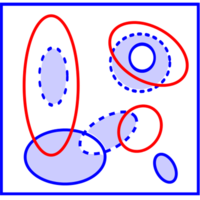
Motivated by the question of whether or not two gapped Hamiltonians belong to the same phase, the authors compare two exactly solvable lattice models. They show that the only way to see that these models belong to distinct phases is to examine their three-loop braiding statistics.

Coherent revival of tunneling

Liang-Yan Hsu and Herschel Rabitz

Phys. Rev. B 92, 035410 (2015) - Published 8 July, 2015

Engineering two-dimensional electron gases at the (001) and (101) surfaces of TiO2 anatase using light

T. C. Rödel, F. Fortuna, F. Bertran, M. Gabay, M. J. Rozenberg, A. F. Santander-Syro, and P. Le Fèvre

Phys. Rev. B 92, 041106(R) (2015) - Published 8 July, 2015

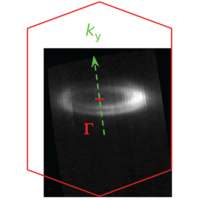
Angle-resolved photoemission shows the existence of two-dimensional metallic states of confined itinerant electrons at the (001) and (101) surfaces of insulating TiO2 anatase. This is a material of much current interest, as a photocatalyst or a transparent conducting oxide, for instance. The 2D electron gases come from the formation of oxygen vacancies in the near-surface region, created by exposure to ultraviolet irradiation. The results here open a route to nano-engineering these confined electronic states using ultraviolet light, controlling their metallic or insulating nature.

Sign In to Your Journals Account

Filter

Recent Issues

Vol. 114, Iss. 30
15 November 2026
Vol. 114, Iss. 29
15 November 2026
Vol. 114, Iss. 28
15 November 2026
Vol. 114, Iss. 27
1 November 2026
Category
Article Type
Section

Filter

Article Lookup

Enter a citation