Recent Articles

Ni-based Heusler compounds: How to tune the magnetocrystalline anisotropy

H. C. Herper

Phys. Rev. B 98, 014411 (2018) - Published 9 July, 2018

Critical behavior in the itinerant ferromagnet AsNCr3 with tetragonal-antiperovskite structure

Shuai Lin, Hongyan Lv, Jianchao Lin, Yanan Huang, Lei Zhang, Wenhai Song, Peng Tong, Wenjian Lu, and Yuping Sun

Phys. Rev. B 98, 014412 (2018) - Published 9 July, 2018

Doping-induced antiferromagnetic bicollinear insulating state and superconducting temperature of monolayer FeSe systems

Michael C. Lucking, Fawei Zheng, Myung Joon Han, Junhyeok Bang, and Shengbai Zhang

Phys. Rev. B 98, 014504 (2018) - Published 9 July, 2018

Chiral superconductivity in thin films of doped Bi2Se3

Luca Chirolli

Phys. Rev. B 98, 014505 (2018) - Published 9 July, 2018

Mapping of the dark exciton landscape in transition metal dichalcogenides

Gunnar Berghäuser, Philipp Steinleitner, Philipp Merkl, Rupert Huber, Andreas Knorr, and Ermin Malic

Phys. Rev. B 98, 020301(R) (2018) - Published 9 July, 2018

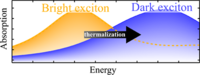
Transition-metal dichalcogenides (TMDs) exhibit a remarkable exciton landscape with a majority of optically forbidden dark excitonic states. Here, the authors present a study that combines microscopic theory with femtosecond infrared spectroscopy. It allows to map the excitonic landscape of an arbitrary TMD material by investigating the temporal evolution of the intraexcitonic 1s-2p transition. By resolving the optical response shortly after the excitation and after the exciton thermalization, the authors reveal the relative position of bright and dark excitonic states. The theoretical prediction is confirmed on the exemplary WSe2 material as shown in the picture.

Hydrogen as a source of flux noise in SQUIDs

Zhe Wang, Hui Wang, Clare C. Yu, and R. Q. Wu

Phys. Rev. B 98, 020403(R) (2018) - Published 9 July, 2018

Extremely wide 13 magnetic plateau of volborthite Cu3V2O7(OH)2·2H2O in ultrahigh magnetic fields up to 182 T

D. Nakamura, T. Yamashita, H. Ishikawa, Z. Hiroi, and S. Takeyama

Phys. Rev. B 98, 020404(R) (2018) - Published 9 July, 2018

Universal 2Δmax/kBTc scaling decoupled from the electronic coherence in iron-based superconductors

H. Miao, W. H. Brito, Z. P. Yin, R. D. Zhong, G. D. Gu, P. D. Johnson, M. P. M. Dean, S. Choi, G. Kotliar, W. Ku, X. C. Wang, C. Q. Jin, S.-F. Wu, T. Qian, and H. Ding

Phys. Rev. B 98, 020502(R) (2018) - Published 9 July, 2018

Nonlinear phononic control and emergent magnetism in Mott insulating titanates

Mingqiang Gu and James M. Rondinelli

Phys. Rev. B 98, 024102 (2018) - Published 9 July, 2018

Metastable states in the frustrated triangular compounds Ca3Co2−xMnxO6 and Ca3Co2O6

Jae Wook Kim, E. D. Mun, X. Ding, A. Hansen, M. Jaime, N. Harrison, H. T. Yi, Y. Chai, Y. Sun, S. W. Cheong, and V. S. Zapf

Phys. Rev. B 98, 024407 (2018) - Published 9 July, 2018

Coherent merging of counterpropagating exciton-polariton superfluids

T. Boulier, S. Pigeon, E. Cancellieri, P. Robin, E. Giacobino, Q. Glorieux, and A. Bramati

Phys. Rev. B 98, 024503 (2018) - Published 9 July, 2018

Anisotropic superconductivity and frozen electronic states at the (111) LaAlO3/SrTiO3 interface

S. Davis, Z. Huang, K. Han, Ariando, T. Venkatesan, and V. Chandrasekhar

Phys. Rev. B 98, 024504 (2018) - Published 9 July, 2018

Magnetically driven band shift and metal-insulator transition in spin-orbit-coupled Sr3(Ir1−xRux)2O7

Seungjae Song, S. Kim, G. H. Ahn, J. H. Seo, Julian L. Schmehr, Michael Aling, Stephen D. Wilson, Y. K. Kim, and S. J. Moon

Phys. Rev. B 98, 035110 (2018) - Published 9 July, 2018

Theory of spin-coherent electrical transport through a defect spin state in a metal/insulator/ferromagnet tunnel junction undergoing ferromagnetic resonance

N. J. Harmon and M. E. Flatté

Phys. Rev. B 98, 035412 (2018) - Published 9 July, 2018

Coexistence of classical snake states and Aharonov-Bohm oscillations along graphene p−n junctions

Péter Makk, Clevin Handschin, Endre Tóvári, Kenji Watanabe, Takashi Taniguchi, Klaus Richter, Ming-Hao Liu (劉明豪), and Christian Schönenberger

Phys. Rev. B 98, 035413 (2018) - Published 9 July, 2018

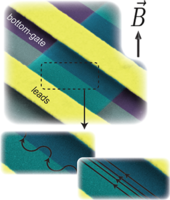
Graphene provides an ideal platform for engineering electron optical elements and electronic interferometers. The central building blocks of many of these devices are p-n junctions formed by electrostatic gating. These junctions show a rich behavior when placed in magnetic field as a variety of magneto-oscillations emerges. Some of these oscillations are due to quasiclassical snake states, whereas others can be attributed to edge-state Aharonov-Bohm interference. Here, the authors demonstrate the surprising coexistence of these oscillations and identify them via their detailed dependencies on several parameters.

Topological order from disorder and the quantized Hall thermal metal: Possible applications to the ν=5/2 state

Chong Wang, Ashvin Vishwanath, and Bertrand I. Halperin

Phys. Rev. B 98, 045112 (2018) - Published 9 July, 2018

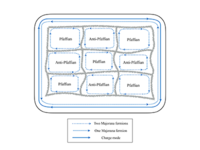
This work addresses the apparent discrepancy between the recent observation of a quantized thermal conductance with thermal quantum number K=5/2 in the quantum Hall state at filling fraction n=5/2 and the numerical simulations of the same system during the past two decades. The authors show that under certain conditions a quantized phase with K=5/2 could be stabilized by disorder, a direction not previously appreciated, but under other conditions (such as an altered disorder strength) disorder could lead to a new exotic phase with quantized electrical conductance, yet with metallic thermal conduction, which the authors term a “quantized Hall thermal metal.”

Evidence for a topological “exciton Fermi sea” in bilayer graphene

Michael P. Zaletel, Scott Geraedts, Zlatko Papić, and Edward H. Rezayi

Phys. Rev. B 98, 045113 (2018) - Published 9 July, 2018

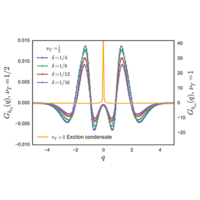
The authors report on the discovery of a new state of matter, a topological exciton Fermi sea, which is found to live in bilayer graphene. There, the nature of the fractionalized quantum Hall states at suitable fillings provides for the emergence of nontrivial fermionic excitons in addition to the usual bosonic ones, made of bound electron-hole pairs.

Comparison of different concurrences characterizing photon pairs generated in the biexciton cascade in quantum dots coupled to microcavities

M. Cygorek, F. Ungar, T. Seidelmann, A. M. Barth, A. Vagov, V. M. Axt, and T. Kuhn

Phys. Rev. B 98, 045303 (2018) - Published 9 July, 2018

Crystal-field effects in graphene with interface-induced spin-orbit coupling

Tarik P. Cysne, Aires Ferreira, and Tatiana G. Rappoport

Phys. Rev. B 98, 045407 (2018) - Published 9 July, 2018

Classification of symmetry derived pairing at the M point in FeSe

P. Myles Eugenio and Oskar Vafek

Phys. Rev. B 98, 014503 (2018) - Published 6 July, 2018

Sign In to Your Journals Account

Filter

Recent Issues

Vol. 114, Iss. 30
15 November 2026
Vol. 114, Iss. 29
15 November 2026
Vol. 114, Iss. 28
15 November 2026
Vol. 114, Iss. 27
1 November 2026
Category
Article Type
Section

Filter

Article Lookup

Enter a citation