Recent Articles

Chiral spin order in some purported Kitaev spin-liquid compounds

K. A. Modic, B. J. Ramshaw, A. Shekhter, and C. M. Varma

Phys. Rev. B 98, 205110 (2018) - Published 5 November, 2018

Role of oxygen and chlorine impurities in β−In2S3: A first-principles study

Elaheh Ghorbani and Karsten Albe

Phys. Rev. B 98, 205201 (2018) - Published 5 November, 2018

Dominant electron-phonon scattering mechanisms in n-type PbTe from first principles

Jiang Cao, José D. Querales-Flores, Aoife R. Murphy, Stephen Fahy, and Ivana Savić

Phys. Rev. B 98, 205202 (2018) - Published 5 November, 2018

Vacuum-dressed cavity magnetotransport of a two-dimensional electron gas

Nicola Bartolo and Cristiano Ciuti

Phys. Rev. B 98, 205301 (2018) - Published 5 November, 2018

Four-Majorana qubit with charge readout: Dynamics and decoherence

Tommy Li, William A. Coish, Michael Hell, Karsten Flensberg, and Martin Leijnse

Phys. Rev. B 98, 205403 (2018) - Published 5 November, 2018

Configuration-controlled many-body localization and the mobility emulsion

Michael Schecter, Thomas Iadecola, and Sankar Das Sarma

Phys. Rev. B 98, 174201 (2018) - Published 2 November, 2018

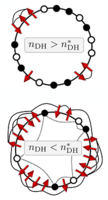
Many-body localization (MBL) is a scenario wherein a many-body quantum system retains memory of its initial state under unitary dynamics out to infinite time, contrary to expectations based on statistical mechanics. Here, the authors argue that there is another, distinct way in which statistical mechanics can fail, namely, certain initial configurations of particles can relax in the way predicted by statistical mechanics, while others fail to do so in a manner reminiscent of MBL. They dub such a system a “mobility emulsion” (ME). The authors demonstrate that an ME exists in a simple model and constitutes a distinct phase from the usual thermal and MBL phases. Furthermore, they show that the strong dependence of the system’s dynamics on its initial state can be understood as an emergent “spin-charge separation” resulting from the interplay of interactions and strong disorder, and has no analog in the case of noninteracting particles. The model for the ME discussed in this work can potentially be realized in synthetic quantum systems, such as cold atomic gases.

Emergent c-axis magnetic helix in manganite-nickelate superlattices

G. Fabbris, N. Jaouen, D. Meyers, J. Feng, J. D. Hoffman, R. Sutarto, S. G. Chiuzbăian, A. Bhattacharya, and M. P. M. Dean

Phys. Rev. B 98, 180401(R) (2018) - Published 2 November, 2018

Interfacial effects in transition metal oxide heterostructures can drive novel magnetism that is not observed in their bulk constituents. Here, the authors use resonant soft x-ray techniques to demonstrate that a helical magnetic structure occurs in the nickelate layers of the (LaNiO3)3/(La2/3Sr1/3MnO3)9 heterostructure. By measuring the Ni 3d electronic configuration, they suggest that the observed helical magnetism is derived from a spin density wave instability in the nickelate layer. This work thus provides important hints into how to drive new forms of magnetism in transition metal oxide heterostructure.

Gilbert damping phenomenology for two-sublattice magnets

Akashdeep Kamra, Roberto E. Troncoso, Wolfgang Belzig, and Arne Brataas

Phys. Rev. B 98, 184402 (2018) - Published 2 November, 2018

Dynamical structure factor of the triangular antiferromagnet: Schwinger boson theory beyond mean field

E. A. Ghioldi, M. G. Gonzalez, Shang-Shun Zhang, Yoshitomo Kamiya, L. O. Manuel, A. E. Trumper, and C. D. Batista

Phys. Rev. B 98, 184403 (2018) - Published 2 November, 2018

Elastic response of the electron fluid in intrinsic graphene: The collisionless regime

Julia M. Link, Daniel E. Sheehy, Boris N. Narozhny, and Jörg Schmalian

Phys. Rev. B 98, 195103 (2018) - Published 2 November, 2018

The frequency-dependent dynamic motion of electrons in graphene is similar to that of an elastic medium, exhibiting viscous flow. Here, the authors demonstrate that, in intrinsic graphene, the dynamical viscosity and the dynamical elastic constants are linked and control the nonlocal energy flow of the system. By computing graphene’s dynamic viscosity, the authors show that contributions due to single-particle motion – as in dilute gases – are comparable in magnitude to contributions due to many-body effects, similar to viscous substances like honey.

Full and unbiased solution of the Dyson-Schwinger equation in the functional integro-differential representation

Tobias Pfeffer and Lode Pollet

Phys. Rev. B 98, 195104 (2018) - Published 2 November, 2018

Strain-induced superconducting pair density wave states in graphene

Feng Xu, Po-Hao Chou, Chung-Hou Chung, Ting-Kuo Lee, and Chung-Yu Mou

Phys. Rev. B 98, 205103 (2018) - Published 2 November, 2018

Exchange interaction of magnetic impurities in a biased bilayer phosphorene nanoribbon

Moslem Zare and Ebrahim Sadeghi

Phys. Rev. B 98, 205401 (2018) - Published 2 November, 2018

Coulomb effects in the absorbance spectra of two-dimensional Dirac materials

Leone Di Mauro Villari, Ian Galbraith, and Fabio Biancalana

Phys. Rev. B 98, 205402 (2018) - Published 2 November, 2018

Effect of covalent bonding on the superconducting critical temperature of the H-S-Se system

Binbin Liu, Wenwen Cui, Jingming Shi, Li Zhu, Ju Chen, Shuyi Lin, Ruiming Su, Jiayu Ma, Kang Yang, Meiling Xu, Jian Hao, Artur P. Durajski, Jingshan Qi, Yanling Li, and Yinwei Li

Phys. Rev. B 98, 174101 (2018) - Published 1 November, 2018

Static and dynamic magnetism of the Ir-based double perovskites La2BIrO6 (B=Co, Zn) probed by magnetic resonance spectroscopies

M. Iakovleva, S. Fuchs, A. Alfonsov, H.-J. Grafe, M. Vogl, S. Aswartham, S. Wurmehl, T. Dey, B. Büchner, E. Vavilova, and V. Kataev

Phys. Rev. B 98, 174401 (2018) - Published 1 November, 2018

Resistance of domain-wall states in half-metallic CrO2

Wenzhe Chen, Lijuan Qian, and Gang Xiao

Phys. Rev. B 98, 174402 (2018) - Published 1 November, 2018

High-pressure spectroscopic investigation of multiferroic Ni3TeO6

Kenneth R. O'Neal, Amanda J. Clune, Nathan C. Harms, Sang-Wook Cheong, Junjie Yang, Zhenxian Liu, Turan Birol, and Janice L. Musfeldt

Phys. Rev. B 98, 184101 (2018) - Published 1 November, 2018

Here, a combined experimental and theoretical investigation of the properties of Ni3TeO6 under pressure reveals reduced compressibility near 4 GPa due to the unique behavior of one bond angle. This trend arises from a nearby cavity in the crystal structure that enhances tunability in this and other corrundumlike materials. Analysis of superexchange angles reveals enhanced antiferromagnetic interactions, in line with an increase in TN observed in magnetization. Magnetoelectric coupling likely enhances polarization under pressure. This work suggests that incorporating empty cavities into crystal structures provides a new route for control of multiferroic properties.

Low-temperature and dynamic magnetism of highly frustrated 5d2Li4MgOsO6 polymorphs in comparison with 5d3Li3Mg2OsO6

Gia T. Tran, Phuong-Hieu T. Nguyen, Charles J. Bloed, Michael E. Evans, Jamie A. Anczarski, William P. Martin, Jefferson Toro, Demetrios V. Papakostas, James Beare, Murray N. Wilson, John E. Greedan, Graeme M. Luke, Thomas Gredig, Jeremy P. Carlo, and Shahab Derakhshan

Phys. Rev. B 98, 184401 (2018) - Published 1 November, 2018

Scale invariance as the cause of the superconducting dome in the cuprates

Zhidong Leong, Kridsanaphong Limtragool, Chandan Setty, and Philip W. Phillips

Phys. Rev. B 98, 184501 (2018) - Published 1 November, 2018
Sign In to Your Journals Account

Filter

Recent Issues

Vol. 114, Iss. 30
15 November 2026
Vol. 114, Iss. 29
15 November 2026
Vol. 114, Iss. 28
15 November 2026
Vol. 114, Iss. 27
1 November 2026
Category
Article Type
Section

Filter

Article Lookup

Enter a citation