
Browse Issues:

HIGHLIGHTED ARTICLES

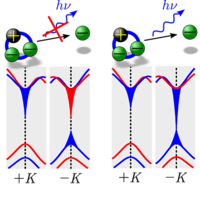
Dark excitations in monolayer transition metal dichalcogenides

Thorsten Deilmann and Kristian Sommer Thygesen

Phys. Rev. B 96, 201113(R) (2017) - Published 27 November, 2017

To date, most studies on electronic excitations in 2D materials have focused on the optically active excitations, but recent experiments have highlighted the existence of dark states, which are equally important in many respects. Here, the authors use ab initio many-body calculations to unravel the nature of the dark excitations in monolayer MoSe2, MoS2, WSe2, and WS2. The lowest neutral and charged excitations are found to be dark. In accordance with experiment, dark trions are weaker bound than bright trions.

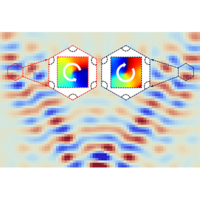
Valley surface-wave photonic crystal and its bulk/edge transport

Zhen Gao, Zhaoju Yang, Fei Gao, Haoran Xue, Yahui Yang, Jianwen Dong, and Baile Zhang

Phys. Rev. B 96, 201402(R) (2017) - Published 6 November, 2017

The valley Hall effect and topological valley edge states are two fundamental properties in gapped valleytronic materials, such as MoS2 and biased bilayer graphene. Such properties have paved the way for applications in valleytronics. Here, the authors experimentally demonstrate a valley surface-wave photonic crystal on a single metal surface, as the photonic analog of the valley-Hall topological insulator phase. The photonic valley-Hall effect with valley-chirality locked beam splitting, and topological valley-polarized edge states, are demonstrated for the first time on a photonic platform.

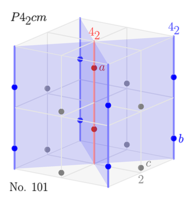
Building crystalline topological phases from lower-dimensional states

Sheng-Jie Huang, Hao Song, Yi-Ping Huang, and Michael Hermele

Phys. Rev. B 96, 205106 (2017) - Published 6 November, 2017

Topological phases protected by the geometrical symmetries of crystal lattices turn out to be surprisingly simple. They can be built from simpler lower-dimensional states, arranged in a crystalline pattern.

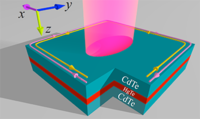
Topological edge-state engineering with high-frequency electromagnetic radiation

Mehedi Hasan, Dmitry Yudin, Ivan Iorsh, Olle Eriksson, and Ivan Shelykh

Phys. Rev. B 96, 205127 (2017) - Published 15 November, 2017

Strong interaction with light may modify quantitatively the electronic properties of condensed matter systems. Here, the authors consider the classical example of topological electron states in a CdTe/HgTe/CdTe heterostructure and demonstrate that the coupling between electrons in a two-dimensional region and an external electromagnetic wave controls with high accuracy the normal and topological phases in the system. The electromagnetic radiation also modifies the properties of the edge states, which leads to the reversal of the edge spin currents. Importantly, all these effects can be realized in controllable and reversible way, and this has high potential impact for their integration of spintronics and optoelectronics.

Quantized charge transport in chiral Majorana edge modes

Stephan Rachel, Eric Mascot, Sagen Cocklin, Matthias Vojta, and Dirk K. Morr

Phys. Rev. B 96, 205131 (2017) - Published 16 November, 2017

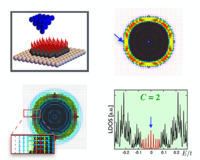
Lattices of magnetic adatoms deposited on the surface of s-wave superconductors (Shiba lattices) have been proposed as a new platform for topological superconductivity, allowing for the local manipulation and detection of Majorana modes via scanning-probe techniques. The authors demonstrate that the topological Majorana edge modes of nanoscopic Shiba islands display universal electronic and transport properties. Most remarkably, these Majorana modes possess a quantized charge conductance that is proportional to the topological Chern number (C), and carry a supercurrent whose chirality reflects the sign of C. These results establish nanoscopic Shiba islands as promising components in future topology-based devices.

Optical conductivity of a two-dimensional metal near a quantum critical point: The status of the extended Drude formula

Andrey V. Chubukov and Dmitrii L. Maslov

Phys. Rev. B 96, 205136 (2017) - Published 20 November, 2017

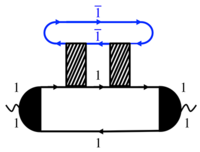
This paper is devoted to the analysis of the frequency dependence of the optical conductivity, σ′(Ω), of a metal near a quantum critical point (QCP). According to general reasoning, the frequency dependence of σ′(Ω) may come via the scattering time and the effective mass, m⋆, but not via the quasiparticle residue Z, because the conductivity probes quasiparticles rather than bare electrons. However, in local theories of QCPs, m⋆/m, coincides with 1/Z, and it is not straightforward to separate the two quantities. The authors use a direct diagrammatic approach, in which m⋆/m and Z are treated separately. They compute the optical conductivity σ′(Ω) near two-dimensional nematic and spin-density wave (SDW) QCPs. They explicitly demonstrate that the Z factor is canceled out by series of vertex corrections, and m⋆/m does not appear separately from Z. As a result, σ′(Ω) diverges as 1/Ω2/3 in the nematic case and as 1/Ω (up to logarithmic factors) in the SDW case.

Nuclear spin cooling by helicity-alternated optical pumping at weak magnetic fields in n-GaAs

P. S. Sokolov, M. Yu. Petrov, K. V. Kavokin, A. S. Kurdyubov, M. S. Kuznetsova, R. V. Cherbunin, S. Yu. Verbin, N. K. Poletaev, D. R. Yakovlev, D. Suter, and M. Bayer

Phys. Rev. B 96, 205205 (2017) - Published 28 November, 2017

Optical cooling of a mesoscopic nuclear spin ensemble in a semiconductor is a complex process that involves transferring angular momentum and energy between nuclear spins and optically oriented localized electrons. The established spin temperature is sensitive to the balance between pumping and losses as well as to the heat capacity of the nuclear spin ensemble. This property allows one to determine the zero-frequency value of the correlator of nuclear spin fluctuations and thus to estimate the spin-spin relaxation time T2 at low magnetic fields from the frequency response of the electron-nuclear spin ensemble to a modulated optical pumping.

Electron teleportation and statistical transmutation in multiterminal Majorana islands

Karen Michaeli, L. Aviad Landau, Eran Sela, and Liang Fu

Phys. Rev. B 96, 205403 (2017) - Published 1 November, 2017

Majorana zero modes are localized zero-energy degrees of freedom in topological superconductors that can store quantum information in a protected manner. Finding a direct proof of the Majorana identity of zero-energy states has been a challenge. The authors show that, in a Coulomb blockaded superconductor island coupled to normal metal leads, Majorana zero modes on the island bind with electrons in the leads to form a charge-e boson, thereby converting the quantum statistics of charge carriers. This statistical transmutation leads to unusual temperature and voltage dependence of the tunneling current as a unique signature of the Majorana zero modes.

Microscopic origin of the Drude-Smith model

T. L. Cocker, D. Baillie, M. Buruma, L. V. Titova, R. D. Sydora, F. Marsiglio, and F. A. Hegmann

Phys. Rev. B 96, 205439 (2017) - Published 27 November, 2017

Terahertz spectroscopy of nanomaterials is one of the most active areas of terahertz physics thanks to its ability to reveal charge-carrier confinement on length scales of tens to hundreds of nanometers. Structural confinement modifies the experimental complex conductivity, such that it is Drude-like at high frequencies but suppressed at low frequencies. This response is often described as a consequence of carrier backscattering off nanoparticle boundaries and modeled using the sometimes controversial Drude-Smith formula. In this paper, it is demonstrated that the terahertz conductivity of a structurally confined Drude gas of electrons is actually suppressed at low frequencies due to carrier confinement on the diffusion length scale and not due to backscattering. A new conductivity formula is derived based on diffusion that is found to be very similar to the Drude-Smith conductivity formula, thereby explaining many of the previous successes of the Drude-Smith model.

Fermi arc plasmons in Weyl semimetals

Justin C. W. Song and Mark S. Rudner

Phys. Rev. B 96, 205443 (2017) - Published 29 November, 2017

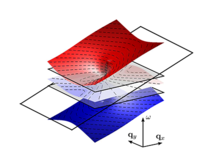
Weyl semimetals, prototypical three dimensional topological metals, possess a unique band structure that has enriched the “standard model” of metallic behavior. This work unveils how the unusual topological surface states of Weyl semimetals radically alter their plasmonic characteristics, yielding intrinsic hyperbolic surface plasmons. These Fermi-arc plasmons have a rich phenomenology, and arise from the coupled dynamics of carriers both on the unusual open-segment surface Fermi arc and the bulk Fermi surface, clearly demonstrating the intricate interplay of bulk and surface. While Fermi-arc plasmons are fascinating in their own right, the essential role that the open-segment Fermi arcs play also indicates more broadly that Weyl semimetals may host new types of interacting phenomena not realizable in conventional metals − an exciting prospect for future developments.

RAPID COMMUNICATIONS

Electronic structure and strongly correlated systems

Charge density wave instabilities of type-II Weyl semimetals in a strong magnetic field

Maximilian Trescher, Emil J. Bergholtz, Masafumi Udagawa, and Johannes Knolle

Phys. Rev. B 96, 201101(R) (2017) - Published 1 November, 2017

Ferromagnetic Weyl semimetal phase in a tetragonal structure

Y. J. Jin, R. Wang, Z. J. Chen, J. Z. Zhao, Y. J. Zhao, and H. Xu

Phys. Rev. B 96, 201102(R) (2017) - Published 2 November, 2017

Realizing and adiabatically preparing bosonic integer and fractional quantum Hall states in optical lattices

Yin-Chen He, Fabian Grusdt, Adam Kaufman, Markus Greiner, and Ashvin Vishwanath

Phys. Rev. B 96, 201103(R) (2017) - Published 3 November, 2017

Fate of interaction-driven topological insulators under disorder

Jing Wang, Carmine Ortix, Jeroen van den Brink, and Dmitry V. Efremov

Phys. Rev. B 96, 201104(R) (2017) - Published 8 November, 2017

Dynamics of Anderson localization in disordered wires

E. Khalaf and P. M. Ostrovsky

Phys. Rev. B 96, 201105(R) (2017) - Published 9 November, 2017

Unbinding slave spins in the Anderson impurity model

Daniele Guerci and Michele Fabrizio

Phys. Rev. B 96, 201106(R) (2017) - Published 13 November, 2017

Superconductivity in FeH5

Arnab Majumdar, John S. Tse, Min Wu, and Yansun Yao

Phys. Rev. B 96, 201107(R) (2017) - Published 13 November, 2017

Observation of an emergent coherent state in the iron-based superconductor KFe2As2

Run Yang, Zhiping Yin, Yilin Wang, Yaomin Dai, Hu Miao, Bing Xu, Xianggang Qiu, and Christopher C. Homes

Phys. Rev. B 96, 201108(R) (2017) - Published 14 November, 2017

Experimentally accessible topological quality factor for wires with zero energy modes

David J. Clarke

Phys. Rev. B 96, 201109(R) (2017) - Published 14 November, 2017

Non-necessity of band inversion process in two-dimensional topological insulators for bulk gapless states and topological phase transitions

Wenjie Xi (奚文杰) and Wei Ku (顧威)

Phys. Rev. B 96, 201110(R) (2017) - Published 16 November, 2017

Surface magnetism in topological crystalline insulators

Sahinur Reja, H. A. Fertig, L. Brey, and Shixiong Zhang

Phys. Rev. B 96, 201111(R) (2017) - Published 20 November, 2017

Time-reversal-symmetric topological magnetoelectric effect in three-dimensional topological insulators

Heinrich-Gregor Zirnstein and Bernd Rosenow

Phys. Rev. B 96, 201112(R) (2017) - Published 27 November, 2017

Dark excitations in monolayer transition metal dichalcogenides

Thorsten Deilmann and Kristian Sommer Thygesen

Phys. Rev. B 96, 201113(R) (2017) - Published 27 November, 2017

To date, most studies on electronic excitations in 2D materials have focused on the optically active excitations, but recent experiments have highlighted the existence of dark states, which are equally important in many respects. Here, the authors use ab initio many-body calculations to unravel the nature of the dark excitations in monolayer MoSe2, MoS2, WSe2, and WS2. The lowest neutral and charged excitations are found to be dark. In accordance with experiment, dark trions are weaker bound than bright trions.

Delocalized glassy dynamics and many-body localization

G. Biroli and M. Tarzia

Phys. Rev. B 96, 201114(R) (2017) - Published 27 November, 2017

Interplay of charge and spin dynamics after an interaction quench in the Hubbard model

Marcin M. Wysokiński and Michele Fabrizio

Phys. Rev. B 96, 201115(R) (2017) - Published 30 November, 2017

Semiconductors I: bulk

Nonlinear cavity feeding and unconventional photon statistics in solid-state cavity QED revealed by many-level real-time path-integral calculations

M. Cygorek, A. M. Barth, F. Ungar, A. Vagov, and V. M. Axt

Phys. Rev. B 96, 201201(R) (2017) - Published 22 November, 2017

Semiconductors II: surfaces, interfaces, microstructures, and related topics

Dirac-electron-mediated magnetic proximity effect in topological insulator/magnetic insulator heterostructures

Mingda Li, Qichen Song, Weiwei Zhao, Joseph A. Garlow, Te-Huan Liu, Lijun Wu, Yimei Zhu, Jagadeesh S. Moodera, Moses H. W. Chan, Gang Chen, and Cui-Zu Chang

Phys. Rev. B 96, 201301(R) (2017) - Published 1 November, 2017

Volkov-Pankratov states in topological heterojunctions

S. Tchoumakov, V. Jouffrey, A. Inhofer, E. Bocquillon, B. Plaçais, D. Carpentier, and M. O. Goerbig

Phys. Rev. B 96, 201302(R) (2017) - Published 1 November, 2017

High-efficiency optical pumping of nuclear polarization in a GaAs quantum well

R. W. Mocek, V. L. Korenev, M. Bayer, M. Kotur, R. I. Dzhioev, D. O. Tolmachev, G. Cascio, K. V. Kavokin, and D. Suter

Phys. Rev. B 96, 201303(R) (2017) - Published 3 November, 2017

Ultracoherent operation of spin qubits with superexchange coupling

Marko J. Rančić and Guido Burkard

Phys. Rev. B 96, 201304(R) (2017) - Published 7 November, 2017

Nodal-knot semimetals

Ren Bi, Zhongbo Yan, Ling Lu, and Zhong Wang

Phys. Rev. B 96, 201305(R) (2017) - Published 20 November, 2017

Transiently stimulated second-harmonic generation from silicon nanogratings

Yong Q. An and Alain C. Diebold

Phys. Rev. B 96, 201306(R) (2017) - Published 29 November, 2017

Robust operating point for capacitively coupled singlet-triplet qubits

M. A. Wolfe, F. A. Calderon-Vargas, and J. P. Kestner

Phys. Rev. B 96, 201307(R) (2017) - Published 30 November, 2017

Surface physics, nanoscale physics, low-dimensional systems

Dissolution of topological Fermi arcs in a dirty Weyl semimetal

Robert-Jan Slager, Vladimir Juričić, and Bitan Roy

Phys. Rev. B 96, 201401(R) (2017) - Published 2 November, 2017

Valley surface-wave photonic crystal and its bulk/edge transport

Zhen Gao, Zhaoju Yang, Fei Gao, Haoran Xue, Yahui Yang, Jianwen Dong, and Baile Zhang

Phys. Rev. B 96, 201402(R) (2017) - Published 6 November, 2017

The valley Hall effect and topological valley edge states are two fundamental properties in gapped valleytronic materials, such as MoS2 and biased bilayer graphene. Such properties have paved the way for applications in valleytronics. Here, the authors experimentally demonstrate a valley surface-wave photonic crystal on a single metal surface, as the photonic analog of the valley-Hall topological insulator phase. The photonic valley-Hall effect with valley-chirality locked beam splitting, and topological valley-polarized edge states, are demonstrated for the first time on a photonic platform.

Effective Zeeman splitting in bent lateral heterojunctions of graphene and hexagonal boron nitride: A new mechanism towards half-metallicity

Ling Yue, Gotthard Seifert, Kai Chang, and Dong-Bo Zhang

Phys. Rev. B 96, 201403(R) (2017) - Published 6 November, 2017

Magnetic field inducing Zeeman splitting and anomalous conductance reduction of half-integer quantized plateaus in InAs quantum wires

Sadashige Matsuo, Hiroshi Kamata, Shoji Baba, Russell S. Deacon, Javad Shabani, Christopher J. Palmstrøm, and Seigo Tarucha

Phys. Rev. B 96, 201404(R) (2017) - Published 7 November, 2017

Refining glass structure in two dimensions

Mahdi Sadjadi, Bishal Bhattarai, D. A. Drabold, M. F. Thorpe, and Mark Wilson

Phys. Rev. B 96, 201405(R) (2017) - Published 10 November, 2017

La interstitial defect-induced insulator-metal transition in the oxide heterostructures LaAlO3/SrTiO3

Jun Zhou, Ming Yang, Yuan Ping Feng, and Andrivo Rusydi

Phys. Rev. B 96, 201406(R) (2017) - Published 13 November, 2017

Minimal geometry for valley filtering in graphene

Mahmoud M. Asmar and Sergio E. Ulloa

Phys. Rev. B 96, 201407(R) (2017) - Published 13 November, 2017

Calibration of the fine-structure constant of graphene by time-dependent density-functional theory

A. Sindona, M. Pisarra, C. Vacacela Gomez, P. Riccardi, G. Falcone, and S. Bellucci

Phys. Rev. B 96, 201408(R) (2017) - Published 17 November, 2017

Helical level structure of Dirac potential wells

Daniel Walkup and Joseph A. Stroscio

Phys. Rev. B 96, 201409(R) (2017) - Published 28 November, 2017

ARTICLES

Electronic structure and strongly correlated systems

Power-law liquid in cuprate superconductors from fermionic unparticles

Zhidong Leong, Chandan Setty, Kridsanaphong Limtragool, and Philip W. Phillips

Phys. Rev. B 96, 205101 (2017) - Published 1 November, 2017

Extended Falicov-Kimball model: Exact solution for the ground state

Romuald Lemański, Konrad Jerzy Kapcia, and Stanisław Robaszkiewicz

Phys. Rev. B 96, 205102 (2017) - Published 1 November, 2017

Large negative magnetoresistance of a nearly Dirac material: Layered antimonide EuMnSb2

Changjiang Yi, Shuai Yang, Meng Yang, Le Wang, Yoshitaka Matsushita, Shanshan Miao, Yuanyuan Jiao, Jinguang Cheng, Yongqing Li, Kazunari Yamaura, Youguo Shi, and Jianlin Luo

Phys. Rev. B 96, 205103 (2017) - Published 1 November, 2017

Simple Z2 lattice gauge theories at finite fermion density

Christian Prosko, Shu-Ping Lee, and Joseph Maciejko

Phys. Rev. B 96, 205104 (2017) - Published 2 November, 2017

Mott transition controlled by lattice-orbital coupling in 3d-metal-doped double-layer ruthenates

J. Peng, M. Q. Gu, X. M. Gu, G. T. Zhou, X. Y. Gao, J. Y. Liu, W. F. Xu, G. Q. Liu, X. Ke, L. Zhang, H. Han, Z. Qu, D. W. Fu, H. L. Cai, F. M. Zhang, Z. Q. Mao, and X. S. Wu

Phys. Rev. B 96, 205105 (2017) - Published 2 November, 2017

Building crystalline topological phases from lower-dimensional states

Sheng-Jie Huang, Hao Song, Yi-Ping Huang, and Michael Hermele

Phys. Rev. B 96, 205106 (2017) - Published 6 November, 2017

Topological phases protected by the geometrical symmetries of crystal lattices turn out to be surprisingly simple. They can be built from simpler lower-dimensional states, arranged in a crystalline pattern.

Coexistence of type-II Dirac point and weak topological phase in Pt3Sn

Minsung Kim, Cai-Zhuang Wang, and Kai-Ming Ho

Phys. Rev. B 96, 205107 (2017) - Published 6 November, 2017

Capacity of entanglement and the distribution of density matrix eigenvalues in gapless systems

Yuya O. Nakagawa and Shunsuke Furukawa

Phys. Rev. B 96, 205108 (2017) - Published 7 November, 2017

Majorana spin liquids, topology, and superconductivity in ladders

Karyn Le Hur, Ariane Soret, and Fan Yang

Phys. Rev. B 96, 205109 (2017) - Published 7 November, 2017

From sudden quench to adiabatic dynamics in the attractive Hubbard model

Giacomo Mazza

Phys. Rev. B 96, 205110 (2017) - Published 7 November, 2017

Role of Hund's splitting in electronic phase competition in Pb1−xSnxTe

S. Kundu and V. Tripathi

Phys. Rev. B 96, 205111 (2017) - Published 7 November, 2017

Theory of hyperbolic stratified nanostructures for surface-enhanced Raman scattering

Herman M. K. Wong, Mohsen Kamandar Dezfouli, Simon Axelrod, Stephen Hughes, and Amr S. Helmy

Phys. Rev. B 96, 205112 (2017) - Published 7 November, 2017

Critical behavior of the QED3-Gross-Neveu model: Duality and deconfined criticality

Lukas Janssen and Yin-Chen He

Phys. Rev. B 96, 205113 (2017) - Published 8 November, 2017

Local magnetic susceptibility, spin dynamics, and charge order in the quasi-one-dimensional conductor β−Li0.33V2O5 investigated by site-selective V51 NMR

Ichihiro Yamauchi, Masayuki Itoh, Touru Yamauchi, Jun-Ichi Yamaura, and Yutaka Ueda

Phys. Rev. B 96, 205114 (2017) - Published 9 November, 2017

Collective charge excitations and the metal-insulator transition in the square lattice Hubbard-Coulomb model

Maksim Ulybyshev, Christopher Winterowd, and Savvas Zafeiropoulos

Phys. Rev. B 96, 205115 (2017) - Published 9 November, 2017

Resonant x-ray emission of hexagonal boron nitride

John Vinson, Terrence Jach, Matthias Müller, Rainer Unterumsberger, and Burkhard Beckhoff

Phys. Rev. B 96, 205116 (2017) - Published 9 November, 2017

Weyl-type topological phase transitions in fractional quantum Hall like systems

Stefanos Kourtis, Titus Neupert, Christopher Mudry, Manfred Sigrist, and Wei Chen

Phys. Rev. B 96, 205117 (2017) - Published 10 November, 2017

Effects of anisotropy in spin molecular-orbital coupling on effective spin models of trinuclear organometallic complexes

J. Merino, A. C. Jacko, A. L. Khosla, and B. J. Powell

Phys. Rev. B 96, 205118 (2017) - Published 10 November, 2017

Electronic chirality in the metallic ferromagnet Fe1/3TaS2

S. Fan, I. Manuel, Amal al-Wahish, K. R. O'Neal, K. A. Smith, C. J. Won, J. W. Kim, S.-W. Cheong, J. T. Haraldsen, and J. L. Musfeldt

Phys. Rev. B 96, 205119 (2017) - Published 13 November, 2017

Signatures of pairing in the magnetic excitation spectrum of strongly correlated two-leg ladders

A. Nocera, N. D. Patel, E. Dagotto, and G. Alvarez

Phys. Rev. B 96, 205120 (2017) - Published 13 November, 2017

Thermal transport in a two-dimensional Z2 spin liquid

Alexandros Metavitsiadis, Angelo Pidatella, and Wolfram Brenig

Phys. Rev. B 96, 205121 (2017) - Published 13 November, 2017

Field-induced metamagnetic transition and nonsaturating magnetoresistance in the antiferromagnetic semimetal NdSb

Ying Zhou, Xiangde Zhu, Sha Huang, Xuliang Chen, Yonghui Zhou, Chao An, Bowen Zhang, Yifang Yuan, Zhengcai Xia, Chuanchuan Gu, and Zhaorong Yang

Phys. Rev. B 96, 205122 (2017) - Published 13 November, 2017

Quantum quench of the Sachdev-Ye-Kitaev model

Andreas Eberlein, Valentin Kasper, Subir Sachdev, and Julia Steinberg

Phys. Rev. B 96, 205123 (2017) - Published 14 November, 2017

Stability of the spin-12 kagome ground state with breathing anisotropy

Cécile Repellin, Yin-Chen He, and Frank Pollmann

Phys. Rev. B 96, 205124 (2017) - Published 14 November, 2017

Bulk and in-gap states in SmB6 revealed by high-field magnetotransport

M. Shahrokhvand, S. Pezzini, M. R. van Delft, U. Zeitler, N. E. Hussey, and S. Wiedmann

Phys. Rev. B 96, 205125 (2017) - Published 14 November, 2017

Generic nearest-neighbor kagome model: XYZ and Dzyaloshinskii-Moriya couplings with comparison to the pyrochlore-lattice case

Karim Essafi, Owen Benton, and L. D. C. Jaubert

Phys. Rev. B 96, 205126 (2017) - Published 15 November, 2017

Topological edge-state engineering with high-frequency electromagnetic radiation

Mehedi Hasan, Dmitry Yudin, Ivan Iorsh, Olle Eriksson, and Ivan Shelykh

Phys. Rev. B 96, 205127 (2017) - Published 15 November, 2017

Strong interaction with light may modify quantitatively the electronic properties of condensed matter systems. Here, the authors consider the classical example of topological electron states in a CdTe/HgTe/CdTe heterostructure and demonstrate that the coupling between electrons in a two-dimensional region and an external electromagnetic wave controls with high accuracy the normal and topological phases in the system. The electromagnetic radiation also modifies the properties of the edge states, which leads to the reversal of the edge spin currents. Importantly, all these effects can be realized in controllable and reversible way, and this has high potential impact for their integration of spintronics and optoelectronics.

Experimental evidence for topological surface states wrapping around a bulk SnTe crystal

K. Dybko, M. Szot, A. Szczerbakow, M. U. Gutowska, T. Zajarniuk, J. Z. Domagala, A. Szewczyk, T. Story, and W. Zawadzki

Phys. Rev. B 96, 205129 (2017) - Published 15 November, 2017

Ground-state phase diagram of the triangular lattice Hubbard model by the density-matrix renormalization group method

Tomonori Shirakawa, Takami Tohyama, Jure Kokalj, Sigetoshi Sota, and Seiji Yunoki

Phys. Rev. B 96, 205130 (2017) - Published 15 November, 2017

Quantized charge transport in chiral Majorana edge modes

Stephan Rachel, Eric Mascot, Sagen Cocklin, Matthias Vojta, and Dirk K. Morr

Phys. Rev. B 96, 205131 (2017) - Published 16 November, 2017

Lattices of magnetic adatoms deposited on the surface of s-wave superconductors (Shiba lattices) have been proposed as a new platform for topological superconductivity, allowing for the local manipulation and detection of Majorana modes via scanning-probe techniques. The authors demonstrate that the topological Majorana edge modes of nanoscopic Shiba islands display universal electronic and transport properties. Most remarkably, these Majorana modes possess a quantized charge conductance that is proportional to the topological Chern number (C), and carry a supercurrent whose chirality reflects the sign of C. These results establish nanoscopic Shiba islands as promising components in future topology-based devices.

Hall effect in cuprates with an incommensurate collinear spin-density wave

M. Charlebois, S. Verret, A. Foley, O. Simard, D. Sénéchal, and A.-M. S. Tremblay

Phys. Rev. B 96, 205132 (2017) - Published 16 November, 2017

Critical divergence of the symmetric (A1g) nonlinear elastoresistance near the nematic transition in an iron-based superconductor

J. C. Palmstrom, A. T. Hristov, S. A. Kivelson, J.-H. Chu, and I. R. Fisher

Phys. Rev. B 96, 205133 (2017) - Published 17 November, 2017

Voltage-dependent cluster expansion for electrified solid-liquid interfaces: Application to the electrochemical deposition of transition metals

Stephen E. Weitzner and Ismaila Dabo

Phys. Rev. B 96, 205134 (2017) - Published 17 November, 2017

Half-metal phases in a quantum wire with modulated spin-orbit interaction

D. C. Cabra, G. L. Rossini, A. Ferraz, G. I. Japaridze, and H. Johannesson

Phys. Rev. B 96, 205135 (2017) - Published 17 November, 2017

Optical conductivity of a two-dimensional metal near a quantum critical point: The status of the extended Drude formula

Andrey V. Chubukov and Dmitrii L. Maslov

Phys. Rev. B 96, 205136 (2017) - Published 20 November, 2017

This paper is devoted to the analysis of the frequency dependence of the optical conductivity, σ′(Ω), of a metal near a quantum critical point (QCP). According to general reasoning, the frequency dependence of σ′(Ω) may come via the scattering time and the effective mass, m⋆, but not via the quasiparticle residue Z, because the conductivity probes quasiparticles rather than bare electrons. However, in local theories of QCPs, m⋆/m, coincides with 1/Z, and it is not straightforward to separate the two quantities. The authors use a direct diagrammatic approach, in which m⋆/m and Z are treated separately. They compute the optical conductivity σ′(Ω) near two-dimensional nematic and spin-density wave (SDW) QCPs. They explicitly demonstrate that the Z factor is canceled out by series of vertex corrections, and m⋆/m does not appear separately from Z. As a result, σ′(Ω) diverges as 1/Ω2/3 in the nematic case and as 1/Ω (up to logarithmic factors) in the SDW case.

Spin-polarized ballistic conduction through correlated Au-NiMnSb-Au heterostructures

C. Morari, W. H. Appelt, A. Östlin, A. Prinz-Zwick, U. Schwingenschlögl, U. Eckern, and L. Chioncel

Phys. Rev. B 96, 205137 (2017) - Published 20 November, 2017

Dispersive Sachdev-Ye-Kitaev model: Band structure and quantum chaos

Pengfei Zhang

Phys. Rev. B 96, 205138 (2017) - Published 21 November, 2017

Renormalization of effective interactions in a negative charge transfer insulator

Priyanka Seth, Oleg E. Peil, Leonid Pourovskii, Markus Betzinger, Christoph Friedrich, Olivier Parcollet, Silke Biermann, Ferdi Aryasetiawan, and Antoine Georges

Phys. Rev. B 96, 205139 (2017) - Published 21 November, 2017

Green's function method to study thin diffraction gratings

Daniel A. Travo, Rodrigo A. Muniz, M. Liscidini, and J. E. Sipe

Phys. Rev. B 96, 205140 (2017) - Published 22 November, 2017

Doping dependence of ordered phases and emergent quasiparticles in the doped Hubbard-Holstein model

C. B. Mendl, E. A. Nowadnick, E. W. Huang, S. Johnston, B. Moritz, and T. P. Devereaux

Phys. Rev. B 96, 205141 (2017) - Published 22 November, 2017

Linear flavor-wave theory for fully antisymmetric SU(N) irreducible representations

Francisco H. Kim, Karlo Penc, Pierre Nataf, and Frédéric Mila

Phys. Rev. B 96, 205142 (2017) - Published 22 November, 2017

X-ray photoelectron spectra for single-crystal Ti2O3: Experiment and theory

S. A. Chambers, M. H. Engelhard, L. Wang, T. C. Droubay, M. E. Bowden, M. J. Wahila, N. F. Quackenbush, L. F. J. Piper, Tien-Lin Lee, C. J. Nelin, and P. S. Bagus

Phys. Rev. B 96, 205143 (2017) - Published 27 November, 2017

Surface, final state, and spin effects in the valence-band photoemission spectra of LaCoO3(001)

S. Halilov, E. Gorelov, M. Izquierdo, A. Yaroslavtsev, V. Aristov, P. Moras, P. M. Sheverdyaeva, S. K. Mahatha, F. Roth, A. Lichtenstein, and S. L. Molodtsov

Phys. Rev. B 96, 205144 (2017) - Published 27 November, 2017

Superconductivity, charge-density waves, antiferromagnetism, and phase separation in the Hubbard-Holstein model

Seher Karakuzu, Luca F. Tocchio, Sandro Sorella, and Federico Becca

Phys. Rev. B 96, 205145 (2017) - Published 27 November, 2017

Kernel methods for interpretable machine learning of order parameters

Pedro Ponte and Roger G. Melko

Phys. Rev. B 96, 205146 (2017) - Published 27 November, 2017

High-pressure magnetization and NMR studies of α−RuCl3

Y. Cui, J. Zheng, K. Ran, Jinsheng Wen, Zheng-Xin Liu, B. Liu, Wenan Guo, and Weiqiang Yu

Phys. Rev. B 96, 205147 (2017) - Published 27 November, 2017

Large nonsaturating magnetoresistance and pressure-induced phase transition in the layered semimetal HfTe2

S. Mangelsen, P. G. Naumov, O. I. Barkalov, S. A. Medvedev, W. Schnelle, M. Bobnar, S. Mankovsky, S. Polesya, C. Näther, H. Ebert, and W. Bensch

Phys. Rev. B 96, 205148 (2017) - Published 28 November, 2017

Scalable quantum computation scheme based on quantum-actuated nuclear-spin decoherence-free qubits

Lihong Dong, Xing Rong, Jianpei Geng, Fazhan Shi, Zhaokai Li, Changkui Duan, and Jiangfeng Du

Phys. Rev. B 96, 205149 (2017) - Published 28 November, 2017

Unification of bosonic and fermionic theories of spin liquids on the kagome lattice

Yuan-Ming Lu, Gil Young Cho, and Ashvin Vishwanath

Phys. Rev. B 96, 205150 (2017) - Published 28 November, 2017

Spintronic signatures of Klein tunneling in topological insulators

Yunkun Xie, Yaohua Tan, and Avik W. Ghosh

Phys. Rev. B 96, 205151 (2017) - Published 28 November, 2017

Restricted Boltzmann machine learning for solving strongly correlated quantum systems

Yusuke Nomura, Andrew S. Darmawan, Youhei Yamaji, and Masatoshi Imada

Phys. Rev. B 96, 205152 (2017) - Published 29 November, 2017

Hall effect measurements of high-quality Mn3CuN thin films and the electronic structure

Toshiki Matsumoto, Takafumi Hatano, Takahiro Urata, Kazumasa Iida, Koshi Takenaka, and Hiroshi Ikuta

Phys. Rev. B 96, 205153 (2017) - Published 29 November, 2017

Interplay between the d- and π-electron systems in magnetic torque of the layered organic conductor κ-(BETS)2Mn[N(CN)2]3

O. M. Vyaselev, W. Biberacher, N. D. Kushch, and M. V. Kartsovnik

Phys. Rev. B 96, 205154 (2017) - Published 29 November, 2017

Antiferromagnetism and competing charge instabilities of electrons in strained graphene from Coulomb interactions

David Sánchez de la Peña, Julian Lichtenstein, Carsten Honerkamp, and Michael M. Scherer

Phys. Rev. B 96, 205155 (2017) - Published 29 November, 2017

Mixed-pairing superconductivity in 5d Mott insulators with antisymmetric exchange: Application to Sr2IrO4

Mohammad-Hossein Zare, Mehdi Biderang, and Alireza Akbari

Phys. Rev. B 96, 205156 (2017) - Published 29 November, 2017

Role of square planar coordination in the magnetic properties of Na4IrO4

Xing Ming, Carmine Autieri, Kunihiko Yamauchi, and Silvia Picozzi

Phys. Rev. B 96, 205158 (2017) - Published 30 November, 2017

First-principles study of the giant magnetic anisotropy energy in bulk Na4IrO4

Di Wang, Feng Tang, Yongping Du, and Xiangang Wan

Phys. Rev. B 96, 205159 (2017) - Published 30 November, 2017

Semiconductors I: bulk

Anisotropic excitons and their contributions to shift current transients in bulk GaAs

Reinold Podzimski, Huynh Thanh Duc, and Torsten Meier

Phys. Rev. B 96, 205201 (2017) - Published 2 November, 2017

Photomagnetoelectric and magnetophotovoltaic effects in multiferroic BiFeO3

Bruno Mettout and Pierre Tolédano

Phys. Rev. B 96, 205202 (2017) - Published 16 November, 2017

Effect of Coulomb correlation on charge transport in disordered organic semiconductors

Feilong Liu, Harm van Eersel, Bojian Xu, Janine G. E. Wilbers, Michel P. de Jong, Wilfred G. van der Wiel, Peter A. Bobbert, and Reinder Coehoorn

Phys. Rev. B 96, 205203 (2017) - Published 20 November, 2017

Nuclear spin cooling by helicity-alternated optical pumping at weak magnetic fields in n-GaAs

P. S. Sokolov, M. Yu. Petrov, K. V. Kavokin, A. S. Kurdyubov, M. S. Kuznetsova, R. V. Cherbunin, S. Yu. Verbin, N. K. Poletaev, D. R. Yakovlev, D. Suter, and M. Bayer

Phys. Rev. B 96, 205205 (2017) - Published 28 November, 2017

Optical cooling of a mesoscopic nuclear spin ensemble in a semiconductor is a complex process that involves transferring angular momentum and energy between nuclear spins and optically oriented localized electrons. The established spin temperature is sensitive to the balance between pumping and losses as well as to the heat capacity of the nuclear spin ensemble. This property allows one to determine the zero-frequency value of the correlator of nuclear spin fluctuations and thus to estimate the spin-spin relaxation time T2 at low magnetic fields from the frequency response of the electron-nuclear spin ensemble to a modulated optical pumping.

Simple vertex correction improves GW band energies of bulk and two-dimensional crystals

Per S. Schmidt, Christopher E. Patrick, and Kristian S. Thygesen

Phys. Rev. B 96, 205206 (2017) - Published 30 November, 2017

Semiconductors II: surfaces, interfaces, microstructures, and related topics

Hybrid quantum-classical modeling of quantum dot devices

Markus Kantner, Markus Mittnenzweig, and Thomas Koprucki

Phys. Rev. B 96, 205301 (2017) - Published 3 November, 2017

Valley blockade in a silicon double quantum dot

Justin K. Perron, Michael J. Gullans, Jacob M. Taylor, M. D. Stewart, Jr., and Neil M. Zimmerman

Phys. Rev. B 96, 205302 (2017) - Published 13 November, 2017

Role of defects in enhanced Fermi level pinning at interfaces between metals and transition metal dichalcogenides

Le Huang, Lin Tao, Kai Gong, Yongtao Li, Huafeng Dong, Zhongming Wei, and Jingbo Li

Phys. Rev. B 96, 205303 (2017) - Published 14 November, 2017

Disorder-induced topological phase transitions on Lieb lattices

Rui Chen, Dong-Hui Xu, and Bin Zhou

Phys. Rev. B 96, 205304 (2017) - Published 17 November, 2017

Spin-charge conversion in disordered two-dimensional electron gases lacking inversion symmetry

Chunli Huang, Mirco Milletarì, and Miguel A. Cazalilla

Phys. Rev. B 96, 205305 (2017) - Published 20 November, 2017

Surface physics, nanoscale physics, low-dimensional systems

Exciton broadening in WS2/graphene heterostructures

Heather M. Hill, Albert F. Rigosi, Archana Raja, Alexey Chernikov, Cyrielle Roquelet, and Tony F. Heinz

Phys. Rev. B 96, 205401 (2017) - Published 1 November, 2017

Structural evolution of Bi thin films on Au(111) revealed by scanning tunneling microscopy

Naoya Kawakami, Chun-Liang Lin, Kazuaki Kawahara, Maki Kawai, Ryuichi Arafune, and Noriaki Takagi

Phys. Rev. B 96, 205402 (2017) - Published 1 November, 2017

Electron teleportation and statistical transmutation in multiterminal Majorana islands

Karen Michaeli, L. Aviad Landau, Eran Sela, and Liang Fu

Phys. Rev. B 96, 205403 (2017) - Published 1 November, 2017

Majorana zero modes are localized zero-energy degrees of freedom in topological superconductors that can store quantum information in a protected manner. Finding a direct proof of the Majorana identity of zero-energy states has been a challenge. The authors show that, in a Coulomb blockaded superconductor island coupled to normal metal leads, Majorana zero modes on the island bind with electrons in the leads to form a charge-e boson, thereby converting the quantum statistics of charge carriers. This statistical transmutation leads to unusual temperature and voltage dependence of the tunneling current as a unique signature of the Majorana zero modes.

Topological magnetoelectric pump in three dimensions

Takahiro Fukui and Takanori Fujiwara

Phys. Rev. B 96, 205404 (2017) - Published 2 November, 2017

Thermal conductance of metallic atomic-size contacts: Phonon transport and Wiedemann-Franz law

J. C. Klöckner, M. Matt, P. Nielaba, F. Pauly, and J. C. Cuevas

Phys. Rev. B 96, 205405 (2017) - Published 2 November, 2017

Parity solitons in nonresonantly driven-dissipative condensate channels

H. Sigurdsson, T. C. H. Liew, and I. A. Shelykh

Phys. Rev. B 96, 205406 (2017) - Published 3 November, 2017

Aharonov-Bohm oscillations and magnetic focusing in ballistic graphene rings

Jan Dauber, Martin Oellers, Florian Venn, Alexander Epping, Kenji Watanabe, Takashi Taniguchi, Fabian Hassler, and Christoph Stampfer

Phys. Rev. B 96, 205407 (2017) - Published 3 November, 2017

Spin-dependent phase shift at ferromagnetic film interfaces from the reflectivity of slow electrons

R. Zdyb and E. Bauer

Phys. Rev. B 96, 205408 (2017) - Published 6 November, 2017

Thickness-dependent energetics for Pb adatoms on low-index Pb nanofilm surfaces: First-principles calculations

Wei Li, Li Huang, Raj Ganesh S. Pala, Guang-Hong Lu, Feng Liu, James W. Evans, and Yong Han

Phys. Rev. B 96, 205409 (2017) - Published 6 November, 2017

Modifications of the Lifshitz-Kosevich formula in two-dimensional Dirac systems

Carolin Küppersbusch and Lars Fritz

Phys. Rev. B 96, 205410 (2017) - Published 6 November, 2017

Origin of polymorphism of the two-dimensional group-IV monochalcogenides

Minghui Wu, Su-Huai Wei, and Li Huang

Phys. Rev. B 96, 205411 (2017) - Published 7 November, 2017

Interaction-driven quantum anomalous Hall effect in halogenated hematite nanosheets

Qi-Feng Liang, Jian Zhou, Rui Yu, Xi Wang, and Hongming Weng

Phys. Rev. B 96, 205412 (2017) - Published 7 November, 2017

Braiding by Majorana tracking and long-range CNOT gates with color codes

Daniel Litinski and Felix von Oppen

Phys. Rev. B 96, 205413 (2017) - Published 8 November, 2017

Integral equation technique for scatterers with mesoscopic insertions: Application to a carbon nanotube

M. V. Shuba, A. V. Melnikov, P. P. Kuzhir, S. A. Maksimenko, G. Y. Slepyan, A. Boag, A. Mosca Conte, O. Pulci, and S. Bellucci

Phys. Rev. B 96, 205414 (2017) - Published 8 November, 2017

Ferromagnetism in the vicinity of Lifshitz topological transitions

P. S. Grigoryev, M. M. Glazov, A. V. Kavokin, and A. A. Varlamov

Phys. Rev. B 96, 205415 (2017) - Published 9 November, 2017

Strain-modulated anisotropy of quantum transport properties in single-layer silicene: Spin and valley filtering

M. Farokhnezhad, M. Esmaeilzadeh, and Kh. Shakouri

Phys. Rev. B 96, 205416 (2017) - Published 9 November, 2017

Hydrodynamic flows of non-Fermi liquids: Magnetotransport and bilayer drag

Aavishkar A. Patel, Richard A. Davison, and Alex Levchenko

Phys. Rev. B 96, 205417 (2017) - Published 9 November, 2017

Casimir stress in materials: Hard divergency at soft walls

Itay Griniasty and Ulf Leonhardt

Phys. Rev. B 96, 205418 (2017) - Published 10 November, 2017

Nonequilibrium nuclear spin distribution function in quantum dots subject to periodic pulses

Natalie Jäschke, Andreas Fischer, Eiko Evers, Vasilii V. Belykh, Alex Greilich, Manfred Bayer, and Frithjof B. Anders

Phys. Rev. B 96, 205419 (2017) - Published 10 November, 2017

Exchange mechanism for electron paramagnetic resonance of individual adatoms

J. L. Lado, A. Ferrón, and J. Fernández-Rossier

Phys. Rev. B 96, 205420 (2017) - Published 13 November, 2017

Revealing the internal spin dynamics in a double quantum dot by periodic voltage modulation

Krzysztof Ptaszyński

Phys. Rev. B 96, 205421 (2017) - Published 13 November, 2017

Nature of carrier injection in metal/2D-semiconductor interface and its implications for the limits of contact resistance

Divya Somvanshi, Sangeeth Kallatt, Chenniappan Venkatesh, Smitha Nair, Garima Gupta, John Kiran Anthony, Debjani Karmakar, and Kausik Majumdar

Phys. Rev. B 96, 205423 (2017) - Published 15 November, 2017

Theory of electron spin resonance in one-dimensional topological insulators with spin-orbit couplings: Detection of edge states

Yuan Yao, Masahiro Sato, Tetsuya Nakamura, Nobuo Furukawa, and Masaki Oshikawa

Phys. Rev. B 96, 205424 (2017) - Published 15 November, 2017

Majorana splitting from critical currents in Josephson junctions

Jorge Cayao, Pablo San-Jose, Annica M. Black-Schaffer, Ramón Aguado, and Elsa Prada

Phys. Rev. B 96, 205425 (2017) - Published 20 November, 2017

Open-boundary reflection of quantum well states at Pb(111)

M. Müller, N. Néel, S. Crampin, and J. Kröger

Phys. Rev. B 96, 205426 (2017) - Published 20 November, 2017

Single layers and multilayers of GaN and AlN in square-octagon structure: Stability, electronic properties, and functionalization

E. Gürbüz, S. Cahangirov, E. Durgun, and S. Ciraci

Phys. Rev. B 96, 205427 (2017) - Published 20 November, 2017

Characterization of topological phases of dimerized Kitaev chain via edge correlation functions

Yucheng Wang, Jian-Jian Miao, Hui-Ke Jin, and Shu Chen

Phys. Rev. B 96, 205428 (2017) - Published 20 November, 2017

Mechanism of single-pulse ablative generation of laser-induced periodic surface structures

Maxim V. Shugaev, Iaroslav Gnilitskyi, Nadezhda M. Bulgakova, and Leonid V. Zhigilei

Phys. Rev. B 96, 205429 (2017) - Published 21 November, 2017

Nonlocal plasmonic response of doped and optically pumped graphene, MoS2, and black phosphorus

René Petersen, Thomas Garm Pedersen, and F. Javier García de Abajo

Phys. Rev. B 96, 205430 (2017) - Published 22 November, 2017

Nontrivial transition of transmission in a highly open quantum point contact in the quantum Hall regime

Changki Hong, Jinhong Park, Yunchul Chung, Hyungkook Choi, and Vladimir Umansky

Phys. Rev. B 96, 205431 (2017) - Published 22 November, 2017

H2/LiF(001) diffractive scattering under fast grazing incidence using a DFT-based potential energy surface

A. S. Muzas, M. del Cueto, F. Gatti, M. F. Somers, G. J. Kroes, F. Martín, and C. Díaz

Phys. Rev. B 96, 205432 (2017) - Published 27 November, 2017

Intrinsic Dirac half-metal and quantum anomalous Hall phase in a hexagonal metal-oxide lattice

Shou-juan Zhang, Chang-wen Zhang, Shu-feng Zhang, Wei-xiao Ji, Ping Li, Pei-ji Wang, Sheng-shi Li, and Shi-shen Yan

Phys. Rev. B 96, 205433 (2017) - Published 27 November, 2017

Single atomic layer allotrope of bismuth with rectangular symmetry

P. J. Kowalczyk, O. Mahapatra, M. Le Ster, S. A. Brown, G. Bian, X. Wang, and T.-C. Chiang

Phys. Rev. B 96, 205434 (2017) - Published 27 November, 2017

Twofold twist defect chains at criticality

Xiongjie Yu, Xiao Chen, Abhishek Roy, and Jeffrey C. Y. Teo

Phys. Rev. B 96, 205435 (2017) - Published 27 November, 2017

Origin of luminescence quenching in structures containing CdSe/ZnSe quantum dots with a few Mn2+ ions

K. Oreszczuk, M. Goryca, W. Pacuski, T. Smoleński, M. Nawrocki, and P. Kossacki

Phys. Rev. B 96, 205436 (2017) - Published 27 November, 2017

Line shapes in inelastic electron tunneling spectroscopy of single-molecule junctions

S. Meierott, N. Néel, and J. Kröger

Phys. Rev. B 96, 205437 (2017) - Published 27 November, 2017

Bistable transport properties of a quasi-one-dimensional Wigner solid on liquid helium under continuous driving

David G. Rees, Sheng-Shiuan Yeh, Ban-Chen Lee, Kimitoshi Kono, and Juhn-Jong Lin

Phys. Rev. B 96, 205438 (2017) - Published 27 November, 2017

Microscopic origin of the Drude-Smith model

T. L. Cocker, D. Baillie, M. Buruma, L. V. Titova, R. D. Sydora, F. Marsiglio, and F. A. Hegmann

Phys. Rev. B 96, 205439 (2017) - Published 27 November, 2017

Terahertz spectroscopy of nanomaterials is one of the most active areas of terahertz physics thanks to its ability to reveal charge-carrier confinement on length scales of tens to hundreds of nanometers. Structural confinement modifies the experimental complex conductivity, such that it is Drude-like at high frequencies but suppressed at low frequencies. This response is often described as a consequence of carrier backscattering off nanoparticle boundaries and modeled using the sometimes controversial Drude-Smith formula. In this paper, it is demonstrated that the terahertz conductivity of a structurally confined Drude gas of electrons is actually suppressed at low frequencies due to carrier confinement on the diffusion length scale and not due to backscattering. A new conductivity formula is derived based on diffusion that is found to be very similar to the Drude-Smith conductivity formula, thereby explaining many of the previous successes of the Drude-Smith model.

Phase diagrams for quantum Brownian motion on two-dimensional Bravais lattices

Grace H. Zhang

Phys. Rev. B 96, 205440 (2017) - Published 27 November, 2017

Unified theory of resonances and bound states in the continuum in Hermitian tight-binding models

A. A. Gorbatsevich and N. M. Shubin

Phys. Rev. B 96, 205441 (2017) - Published 28 November, 2017

Interacting Majorana chain: Transport properties and signatures of an emergent two-dimensional weak topological phase

Zhao Liu, Emil J. Bergholtz, Alessandro Romito, and Dganit Meidan

Phys. Rev. B 96, 205442 (2017) - Published 28 November, 2017

Fermi arc plasmons in Weyl semimetals

Justin C. W. Song and Mark S. Rudner

Phys. Rev. B 96, 205443 (2017) - Published 29 November, 2017

Weyl semimetals, prototypical three dimensional topological metals, possess a unique band structure that has enriched the “standard model” of metallic behavior. This work unveils how the unusual topological surface states of Weyl semimetals radically alter their plasmonic characteristics, yielding intrinsic hyperbolic surface plasmons. These Fermi-arc plasmons have a rich phenomenology, and arise from the coupled dynamics of carriers both on the unusual open-segment surface Fermi arc and the bulk Fermi surface, clearly demonstrating the intricate interplay of bulk and surface. While Fermi-arc plasmons are fascinating in their own right, the essential role that the open-segment Fermi arcs play also indicates more broadly that Weyl semimetals may host new types of interacting phenomena not realizable in conventional metals − an exciting prospect for future developments.

Bilayer graphene phonovoltaic-FET: In situ phonon recycling

Corey Melnick and Massoud Kaviany

Phys. Rev. B 96, 205444 (2017) - Published 29 November, 2017

Path integral Monte Carlo benchmarks for two-dimensional quantum dots

Ilkka Kylänpää and Esa Räsänen

Phys. Rev. B 96, 205445 (2017) - Published 30 November, 2017

Sign In to Your Journals Account

Filter

Filter

Article Lookup

Enter a citation