Browse Issues:

HIGHLIGHTED ARTICLES

Nature and topology of the low-energy states in ZrTe5

L. Moreschini, J. C. Johannsen, H. Berger, J. Denlinger, C. Jozwiak, E. Rotenberg, K. S. Kim, A. Bostwick, and M. Grioni

Phys. Rev. B 94, 081101(R) (2016) - Published 4 August, 2016

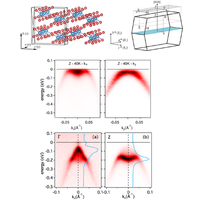
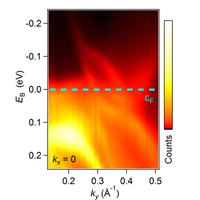
The transport properties of zirconium pentatelluride ZrTe5, where the sign of carriers changes with temperature, have so far eluded a clear understanding. In this work, the authors investigate by angle-resolved photoemission the temperature dependence of the low-energy electronic bands, and find that the transport behavior can be explained by the presence of a van Hove singularity in the density of states. By surface doping with alkali atoms, the authors also access the unoccupied states in the conduction band and define this material as being a weak topological insulator.

Anisotropic and strong negative magnetoresistance in the three-dimensional topological insulator Bi2Se3

S. Wiedmann, A. Jost, B. Fauqué, J. van Dijk, M. J. Meijer, T. Khouri, S. Pezzini, S. Grauer, S. Schreyeck, C. Brüne, H. Buhmann, L. W. Molenkamp, and N. E. Hussey

Phys. Rev. B 94, 081302(R) (2016) - Published 10 August, 2016

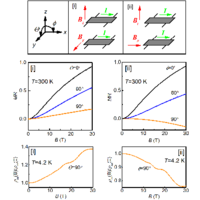
Magnetoresistance studies are one of the simplest yet powerful tools to investigate the electronic properties of solids. The authors here report on high-field angle-dependent magnetotransport measurements on epitaxial thin films of Bi2Se3, a three-dimensional topological insulator. At low temperature, they observe quantum oscillations that demonstrate the simultaneous presence of bulk and surface carriers. Their key observation is a strong anisotropy in the magnetoresistance in Bi2Se3 that depends on the orientation of the applied current (electric field) with respect to the applied magnetic field. When the magnetic field is applied parallel to the electric field, they find a strong negative longitudinal magnetoresistance (NLMR) that, quite strikingly, persists even up to room temperature. With this finding, the authors demonstrate that the observation of a NLMR is not unique to topological semimetals, such as Weyl semimetals, and therefore cannot by itself be taken as a diagnostic tool and as conclusive evidence for the existence of Weyl fermions. These results could pave the way towards a general understanding of the emergence of the axial anomaly that is suggested to be a universal phenomenon for generic three-dimensional metals in the presence of parallel electric and magnetic fields.

Nano-optical imaging of WSe2 waveguide modes revealing light-exciton interactions

Z. Fei, M. E. Scott, D. J. Gosztola, J. J. Foley, IV, J. Yan, D. G. Mandrus, H. Wen, P. Zhou, D. W. Zhang, Y. Sun, J. R. Guest, S. K. Gray, W. Bao, G. P. Wiederrecht, and X. Xu

Phys. Rev. B 94, 081402(R) (2016) - Published 1 August, 2016

The authors perform near-field nanoimaging of various waveguide modes inside thin flakes of WSe2 by using state-of-the-art near-field scanning optical microscopy. This compound is a prototypical transition metal dichalcogenide with strongly bound excitons. The nanoimaging data provides direct evidence of strong coupling between waveguide photon modes and excitons. Such coupling generates hybrid polaritonic modes that are imaged for the first time as propagative modes in real space. This work uncovers in real space the physics of nanoscale light-matter interactions in van der Waals semiconductors and thus provides guidelines for future applications of this class of materials in nanophotonics and optoelectronics.

Determining the quantum-coherent to semiclassical transition in atomic-scale quasi-one-dimensional metals

Bent Weber and Michelle Y. Simmons

Phys. Rev. B 94, 081412(R) (2016) - Published 29 August, 2016

Individual dopants in semiconductors are attracting considerable attention due to the prospect of using them in a wide range of applications. In particular, phosphorus donors in silicon have attracted significant interest owing to their weak interaction with the host crystal. However, harnessing their attributes toward the construction of scalable circuitry will require low resistive interconnects at a comparable scale as the dopant atoms. In this Rapid Communication, the authors investigate the transition from quantum coherent to the semiclassical diffusive transport in a 4.6-nm quasi-one-dimensional Si:P metal wire. Analyzing the temperature dependence of universal conductance fluctuations (UCF) the authors show that electron transport evolves from a quantum coherent to a semiclassical regime at temperatures as low as ~4 K and confirm that concepts of UCF and weak localization remain valid in metallic conductors at the atomic-scale.

Response properties of axion insulators and Weyl semimetals driven by screw dislocations and dynamical axion strings

Yizhi You, Gil Young Cho, and Taylor L. Hughes

Phys. Rev. B 94, 085102 (2016) - Published 1 August, 2016

The authors here explore the properties of Weyl semimetals and axion insulators coupled to geometry. The novel interplay between axion strings and lattice dislocation defects are studied through both effective field theory and microscopic arguments. Various new phenomena are proposed for a Weyl semimetal with dislocations. This work should be of great interest both in the context of topological semimetal/insulators and for the problem of topological defects in strongly correlated systems.

Pseudospin, real spin, and spin polarization of photoemitted electrons

Rui Yu, Hongming Weng, Zhong Fang, and Xi Dai

Phys. Rev. B 94, 085123 (2016) - Published 12 August, 2016

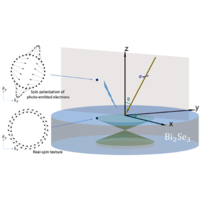
Spin-resolved and circular dichroism angle-resolved photoemission spectroscopies (ARPES) are powerful techniques to detect the spin information of electrons in materials. In this work, the authors distinguish the following three types of spin in the ARPES experiment: the real spin, the pseudospin, and the spin polarization of photoemitted electrons. The authors present an interesting theoretical study on these three spin textures for topological surface states of Bi2Se3 and SmB6. Based on a model-type surface state Hamiltonian, they discuss the connections and differences of these spin textures as a function of the symmetry of the investigated system and the polarization of the incident detection light. This work provides a detailed and quantitative analytical study of the spin polarization and circular dichroism spectrum of the photoelectrons detected in an ARPES experiment.

Fermi arc electronic structure and Chern numbers in the type-II Weyl semimetal candidate MoxW1−xTe2

Ilya Belopolski et al.

Phys. Rev. B 94, 085127 (2016) - Published 15 August, 2016

Members of the MoxW1-xTe2 series are predicted to be Weyl semimetals, hosting type-II Weyl fermions, which have yet to be experimentally realized and which are unusual because they strongly violate Lorentz invariance. Crucially, the Weyl points in this system are predicted to sit above the Fermi level. Here, the authors show that for a type-II Weyl cone, although not for a type-I Weyl cone, if the Weyl point is above the Fermi level, then it’s necessary to see the band structure above the Fermi level to observe a topological Fermi arc. The authors also discover that pump-probe angle-resolved photoemission beautifully displays the unoccupied band structure in MoxW1-xTe2. Their work sets the stage for demonstrating that this system is the first type-II Weyl semimetal, as well as the first tunable Weyl semimetal.

Computation of dynamical correlation functions for many-fermion systems with auxiliary-field quantum Monte Carlo

Ettore Vitali, Hao Shi, Mingpu Qin, and Shiwei Zhang

Phys. Rev. B 94, 085140 (2016) - Published 23 August, 2016

Quantum Monte Carlo simulations provide a powerful tool to compute static properties of quantum many-particles models and realistic systems. A vast array of ground-state energies and properties defined by equal-time correlation functions can be computed with high accuracy. On the other hand, the extensions needed to study time-displaced correlation functions, which provide access to excited states, have been challenging, especially for fermionic strongly correlated systems. The authors present a methodology that allows a high-accuracy calculation of the dynamical Green functions of many-fermions systems in the framework of the auxiliary-field quantum Monte Carlo method. They extract the the charge gap of the repulsive two-dimensional Hubbard model at half-filling as a function of the interaction strength and propose strategies for applying their methodology to more realistic systems.

Enhancement of hopping conductivity by spontaneous fractal ordering of low-energy sites

Tianran Chen and Brian Skinner

Phys. Rev. B 94, 085146 (2016) - Published 29 August, 2016

In the usual theory of electrical insulators, a small conductivity is permitted at finite temperature by the process of phonon-assisted quantum tunneling, or “hopping”, of electrons across a disordered energy landscape. The long-standing assumption has been that during this process each electron hops between essentially random locations in space. Here the authors show that the paths followed by electrons through a compensated semiconductor are in fact far from random. Instead, these electron pathways spontaneously form a fractal shape with effective dimension 2. The existence of these fractal pathways allows an unexpectedly high electrical current to move through the material at low temperature. The authors’ results can be used to explain recent surprising observations about electron transport through compensated topological insulators and nanocrystal arrays.

Quantum dynamical field theory for nonequilibrium phase transitions in driven open systems

Jamir Marino and Sebastian Diehl

Phys. Rev. B 94, 085150 (2016) - Published 30 August, 2016

Driven-dissipative quantum many-body systems, i.e., many-particle systems where quantum coherent dynamics and dissipative effects occur on the same footing, can constitute a promising platform to initiate a systematic classification of quantum dynamical criticality. In this work, the authors show that both nonequilibrium and quantum features can be simultaneously present and persist in the low-frequency properties of a critical one-dimensional driven open Bose gas, and no effective equilibrium description is applicable for this novel type of nonequilibrium quantum criticality.

Tunability of the dielectric function of heavily doped germanium thin films for mid-infrared plasmonics

Jacopo Frigerio, Andrea Ballabio, Giovanni Isella, Emilie Sakat, Giovanni Pellegrini, Paolo Biagioni, Monica Bollani, Enrico Napolitani, Costanza Manganelli, Michele Virgilio, Alexander Grupp, Marco P. Fischer, Daniele Brida, Kevin Gallacher, Douglas J. Paul, Leonetta Baldassarre, Paolo Calvani, Valeria Giliberti, Alessandro Nucara, and Michele Ortolani

Phys. Rev. B 94, 085202 (2016) - Published 15 August, 2016

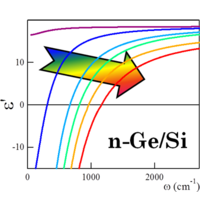
Mid-infrared plasmonics has the potential to revolutionize molecular sensing technology, if integrated into optoelectronic chips. Recently,several groups working on plasmonics have substituted metals with heavily doped semiconductors for the sake of integration, also opening up the possibility of tuning the device response via the doping level. In this work, the authors analyze the relevant case of heavily doped Ge films by combining transport measurements with infrared spectroscopy. They demonstrate a broad tunability of the screened plasma frequency up to the mid-infrared range. The main loss channels are identified through comparison of the experimental scattering rates with quantum calculations and pump-probe measurements. Heavily doped Ge is highlighted as a viable route for the integration of mid-infrared plasmonics into silicon optoelectronic platforms.

Uniaxial strain-induced Kohn anomaly and electron-phonon coupling in acoustic phonons of graphene

M. E. Cifuentes-Quintal, O. de la Peña-Seaman, R. Heid, R. de Coss, and K.-P. Bohnen

Phys. Rev. B 94, 085401 (2016) - Published 1 August, 2016

Strain engineering in graphene is of high current interest because of the possibility to induce new physical phenomena by means of mechanical strain. The authors of this work study the effect of strain on the electron-phonon interaction that plays an important role in the vibrational, thermal, and transport properties of graphene. It has been commonly assumed that Kohn anomalies and electron-phonon coupling in strained graphene occur only for the longitudinal and transverse optical phonons, as in pristine graphene. In contrast, this study shows that uniaxial strain in graphene induces a Kohn anomaly and enhancement of the electron-phonon coupling in the longitudinal acoustic phonon branch. This feature is a major difference between pristine and uniaxially strained graphene, due to the presence of a new intervalley phonon-scattering channel for electronic states close to the Dirac point.

Signatures of topological Josephson junctions

Yang Peng, Falko Pientka, Erez Berg, Yuval Oreg, and Felix von Oppen

Phys. Rev. B 94, 085409 (2016) - Published 11 August, 2016

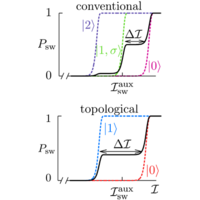
The fractional Josephson effect is of the most striking phenomena heralding topological superconductivity and Majorana bound states. In contrast to the conventional Josephson current that is 2π-periodic in the applied phase difference, the periodicity is 4π in the junctions connecting topological superconductors. Unfortunately, this effect can be easily masked in experiments due to the quasiparticle poisoning processes resulting from inelastic transitions between the localized subgap states of the junction and delocalized states in the quasiparticle continuum. The authors propose a simple and feasible solution to this problem by embedding the topological Josephson junction in a SQUID setup. They show that signatures of the topological junction can be found in the switching probability of the supercurrent through the SQUID, even in the presence of quasiparticle poisoning processes.

RAPID COMMUNICATIONS

Electronic structure and strongly correlated systems

Nature and topology of the low-energy states in ZrTe5

L. Moreschini, J. C. Johannsen, H. Berger, J. Denlinger, C. Jozwiak, E. Rotenberg, K. S. Kim, A. Bostwick, and M. Grioni

Phys. Rev. B 94, 081101(R) (2016) - Published 4 August, 2016

The transport properties of zirconium pentatelluride ZrTe5, where the sign of carriers changes with temperature, have so far eluded a clear understanding. In this work, the authors investigate by angle-resolved photoemission the temperature dependence of the low-energy electronic bands, and find that the transport behavior can be explained by the presence of a van Hove singularity in the density of states. By surface doping with alkali atoms, the authors also access the unoccupied states in the conduction band and define this material as being a weak topological insulator.

First-principles design of a half-filled flat band of the kagome lattice in two-dimensional metal-organic frameworks

Masahiko G. Yamada, Tomohiro Soejima, Naoto Tsuji, Daisuke Hirai, Mircea Dincă, and Hideo Aoki

Phys. Rev. B 94, 081102(R) (2016) - Published 8 August, 2016

Photoinduced Chern insulating states in semi-Dirac materials

Kush Saha

Phys. Rev. B 94, 081103(R) (2016) - Published 8 August, 2016

Simultaneous measurement of resistively and optically detected nuclear magnetic resonance in the ν=2/3 fractional quantum Hall regime

Keiichirou Akiba, Katsumi Nagase, and Yoshiro Hirayama

Phys. Rev. B 94, 081104(R) (2016) - Published 9 August, 2016

Charge ordering in Ni1+/Ni2+ nickelates: La4Ni3O8 and La3Ni2O6

Antia S. Botana, Victor Pardo, Warren E. Pickett, and Michael R. Norman

Phys. Rev. B 94, 081105(R) (2016) - Published 9 August, 2016

Localized and mixed valence state of Ce 4f in superconducting and ferromagnetic CeO1−xFxBiS2 revealed by x-ray absorption and photoemission spectroscopy

T. Sugimoto, D. Ootsuki, E. Paris, A. Iadecola, M. Salome, E. F. Schwier, H. Iwasawa, K. Shimada, T. Asano, R. Higashinaka, T. D. Matsuda, Y. Aoki, N. L. Saini, and T. Mizokawa

Phys. Rev. B 94, 081106(R) (2016) - Published 17 August, 2016

Photocreating supercooled spiral-spin states in a multiferroic manganite

Y. M. Sheu, N. Ogawa, Y. Kaneko, and Y. Tokura

Phys. Rev. B 94, 081107(R) (2016) - Published 18 August, 2016

Asymmetric mass acquisition in LaBi: Topological semimetal candidate

Yun Wu, Tai Kong, Lin-Lin Wang, D. D. Johnson, Daixiang Mou, Lunan Huang, Benjamin Schrunk, S. L. Bud'ko, P. C. Canfield, and Adam Kaminski

Phys. Rev. B 94, 081108(R) (2016) - Published 18 August, 2016

Description of quasiparticle and satellite properties via cumulant expansions of the retarded one-particle Green's function

Matthew Z. Mayers, Mark S. Hybertsen, and David R. Reichman

Phys. Rev. B 94, 081109(R) (2016) - Published 22 August, 2016

Entanglement entropy of composite Fermi liquid states on the lattice: In support of the Widom formula

Ryan V. Mishmash and Olexei I. Motrunich

Phys. Rev. B 94, 081110(R) (2016) - Published 25 August, 2016

SmB6 electron-phonon coupling constant from time- and angle-resolved photoelectron spectroscopy

A. Sterzi, A. Crepaldi, F. Cilento, G. Manzoni, E. Frantzeskakis, M. Zacchigna, E. van Heumen, Y. K. Huang, M. S. Golden, and F. Parmigiani

Phys. Rev. B 94, 081111(R) (2016) - Published 25 August, 2016

Universal entanglement spectra in critical spin chains

Rex Lundgren, Jonathan Blair, Pontus Laurell, Nicolas Regnault, Gregory A. Fiete, Martin Greiter, and Ronny Thomale

Phys. Rev. B 94, 081112(R) (2016) - Published 26 August, 2016

Exchange anisotropy as mechanism for spin-stripe formation in frustrated spin chains

M. Pregelj, O. Zaharko, M. Herak, M. Gomilšek, A. Zorko, L. C. Chapon, F. Bourdarot, H. Berger, and D. Arčon

Phys. Rev. B 94, 081114(R) (2016) - Published 29 August, 2016

Quantum critical transport at a continuous metal-insulator transition

P. Haldar, M. S. Laad, and S. R. Hassan

Phys. Rev. B 94, 081115(R) (2016) - Published 30 August, 2016

Role of SrTiO3 phonon penetrating into thin FeSe films in the enhancement of superconductivity

Shuyuan Zhang, Jiaqi Guan, Xun Jia, Bing Liu, Weihua Wang, Fangsen Li, Lili Wang, Xucun Ma, Qikun Xue, Jiandi Zhang, E. W. Plummer, Xuetao Zhu, and Jiandong Guo

Phys. Rev. B 94, 081116(R) (2016) - Published 31 August, 2016

Semiconductors I: bulk

Nuclear spin warm up in bulk n-GaAs

M. Kotur, R. I. Dzhioev, M. Vladimirova, B. Jouault, V. L. Korenev, and K. V. Kavokin

Phys. Rev. B 94, 081201(R) (2016) - Published 22 August, 2016

Semiconductors II: surfaces, interfaces, microstructures, and related topics

Analog of microwave-induced resistance oscillations induced in GaAs heterostructures by terahertz radiation

T. Herrmann, I. A. Dmitriev, D. A. Kozlov, M. Schneider, B. Jentzsch, Z. D. Kvon, P. Olbrich, V. V. Bel'kov, A. Bayer, D. Schuh, D. Bougeard, T. Kuczmik, M. Oltscher, D. Weiss, and S. D. Ganichev

Phys. Rev. B 94, 081301(R) (2016) - Published 1 August, 2016

Anisotropic and strong negative magnetoresistance in the three-dimensional topological insulator Bi2Se3

S. Wiedmann, A. Jost, B. Fauqué, J. van Dijk, M. J. Meijer, T. Khouri, S. Pezzini, S. Grauer, S. Schreyeck, C. Brüne, H. Buhmann, L. W. Molenkamp, and N. E. Hussey

Phys. Rev. B 94, 081302(R) (2016) - Published 10 August, 2016

Magnetoresistance studies are one of the simplest yet powerful tools to investigate the electronic properties of solids. The authors here report on high-field angle-dependent magnetotransport measurements on epitaxial thin films of Bi2Se3, a three-dimensional topological insulator. At low temperature, they observe quantum oscillations that demonstrate the simultaneous presence of bulk and surface carriers. Their key observation is a strong anisotropy in the magnetoresistance in Bi2Se3 that depends on the orientation of the applied current (electric field) with respect to the applied magnetic field. When the magnetic field is applied parallel to the electric field, they find a strong negative longitudinal magnetoresistance (NLMR) that, quite strikingly, persists even up to room temperature. With this finding, the authors demonstrate that the observation of a NLMR is not unique to topological semimetals, such as Weyl semimetals, and therefore cannot by itself be taken as a diagnostic tool and as conclusive evidence for the existence of Weyl fermions. These results could pave the way towards a general understanding of the emergence of the axial anomaly that is suggested to be a universal phenomenon for generic three-dimensional metals in the presence of parallel electric and magnetic fields.

Low-temperature behavior of transmission phase shift across a Kondo correlated quantum dot

S. Takada, M. Yamamoto, C. Bäuerle, A. Alex, J. von Delft, A. Ludwig, A. D. Wieck, and S. Tarucha

Phys. Rev. B 94, 081303(R) (2016) - Published 19 August, 2016

Polarization-dependent exciton linewidth in semiconductor quantum wells: A consequence of bosonic nature of excitons

Rohan Singh, Takeshi Suzuki, Travis M. Autry, Galan Moody, Mark E. Siemens, and Steven T. Cundiff

Phys. Rev. B 94, 081304(R) (2016) - Published 29 August, 2016

Convection roll-driven generation of supra-wavelength periodic surface structures on dielectrics upon irradiation with femtosecond pulsed lasers

George D. Tsibidis, Evangelos Skoulas, Antonis Papadopoulos, and Emmanuel Stratakis

Phys. Rev. B 94, 081305(R) (2016) - Published 29 August, 2016

Surface physics, nanoscale physics, low-dimensional systems

Free-standing electronic character of monolayer MoS2 in van der Waals epitaxy

HoKwon Kim (김호권), Dumitru Dumcenco, Mathieu Frégnaux, Anass Benayad, Ming-Wei Chen, Yen-Cheng Kung, Andras Kis, and Olivier Renault

Phys. Rev. B 94, 081401(R) (2016) - Published 1 August, 2016

Nano-optical imaging of WSe2 waveguide modes revealing light-exciton interactions

Z. Fei, M. E. Scott, D. J. Gosztola, J. J. Foley, IV, J. Yan, D. G. Mandrus, H. Wen, P. Zhou, D. W. Zhang, Y. Sun, J. R. Guest, S. K. Gray, W. Bao, G. P. Wiederrecht, and X. Xu

Phys. Rev. B 94, 081402(R) (2016) - Published 1 August, 2016

The authors perform near-field nanoimaging of various waveguide modes inside thin flakes of WSe2 by using state-of-the-art near-field scanning optical microscopy. This compound is a prototypical transition metal dichalcogenide with strongly bound excitons. The nanoimaging data provides direct evidence of strong coupling between waveguide photon modes and excitons. Such coupling generates hybrid polaritonic modes that are imaged for the first time as propagative modes in real space. This work uncovers in real space the physics of nanoscale light-matter interactions in van der Waals semiconductors and thus provides guidelines for future applications of this class of materials in nanophotonics and optoelectronics.

Manifestation of nonlocal electron-electron interaction in graphene

Søren Ulstrup, Malte Schüler, Marco Bianchi, Felix Fromm, Christian Raidel, Thomas Seyller, Tim Wehling, and Philip Hofmann

Phys. Rev. B 94, 081403(R) (2016) - Published 5 August, 2016

Crystalline and electronic structure of single-layer TaS2

Charlotte E. Sanders, Maciej Dendzik, Arlette S. Ngankeu, Andreas Eich, Albert Bruix, Marco Bianchi, Jill A. Miwa, Bjørk Hammer, Alexander A. Khajetoorians, and Philip Hofmann

Phys. Rev. B 94, 081404(R) (2016) - Published 3 August, 2016

Observation of normal-force-independent superlubricity in mesoscopic graphite contacts

Cuong Cao Vu, Shoumo Zhang, Michael Urbakh, Qunyang Li, Q.-C. He, and Quanshui Zheng

Phys. Rev. B 94, 081405(R) (2016) - Published 5 August, 2016

Designing electron spin textures and spin interferometers by shape deformations

Zu-Jian Ying, Paola Gentile, Carmine Ortix, and Mario Cuoco

Phys. Rev. B 94, 081406(R) (2016) - Published 11 August, 2016

Fingerprint of topological Andreev bound states in phase-dependent heat transport

Björn Sothmann and Ewelina M. Hankiewicz

Phys. Rev. B 94, 081407(R) (2016) - Published 12 August, 2016

Klein tunneling and magnetoresistance of p−n junctions in Weyl semimetals

Songci Li, A. V. Andreev, and B. Z. Spivak

Phys. Rev. B 94, 081408(R) (2016) - Published 15 August, 2016

Quantum transport investigation of anomalous Hall resistance in four-probe magnetic nanostructures

Lei Zhang, Kui Gong, Lei Liu, Yu Zhu, Guanghua Yu, and Hong Guo

Phys. Rev. B 94, 081409(R) (2016) - Published 16 August, 2016

Density functional theory of the Seebeck coefficient in the Coulomb blockade regime

Kaike Yang, Enrico Perfetto, Stefan Kurth, Gianluca Stefanucci, and Roberto D'Agosta

Phys. Rev. B 94, 081410(R) (2016) - Published 23 August, 2016

Detection of topological states in two-dimensional Dirac systems by the dynamic spin susceptibility

Masaaki Nakamura and Akiyuki Tokuno

Phys. Rev. B 94, 081411(R) (2016) - Published 26 August, 2016

Determining the quantum-coherent to semiclassical transition in atomic-scale quasi-one-dimensional metals

Bent Weber and Michelle Y. Simmons

Phys. Rev. B 94, 081412(R) (2016) - Published 29 August, 2016

Individual dopants in semiconductors are attracting considerable attention due to the prospect of using them in a wide range of applications. In particular, phosphorus donors in silicon have attracted significant interest owing to their weak interaction with the host crystal. However, harnessing their attributes toward the construction of scalable circuitry will require low resistive interconnects at a comparable scale as the dopant atoms. In this Rapid Communication, the authors investigate the transition from quantum coherent to the semiclassical diffusive transport in a 4.6-nm quasi-one-dimensional Si:P metal wire. Analyzing the temperature dependence of universal conductance fluctuations (UCF) the authors show that electron transport evolves from a quantum coherent to a semiclassical regime at temperatures as low as ~4 K and confirm that concepts of UCF and weak localization remain valid in metallic conductors at the atomic-scale.

ARTICLES

Electronic structure and strongly correlated systems

Tensor network quotient takes the vacuum to the thermal state

Bartłomiej Czech, Glen Evenbly, Lampros Lamprou, Samuel McCandlish, Xiao-liang Qi, James Sully, and Guifré Vidal

Phys. Rev. B 94, 085101 (2016) - Published 1 August, 2016

Response properties of axion insulators and Weyl semimetals driven by screw dislocations and dynamical axion strings

Yizhi You, Gil Young Cho, and Taylor L. Hughes

Phys. Rev. B 94, 085102 (2016) - Published 1 August, 2016

The authors here explore the properties of Weyl semimetals and axion insulators coupled to geometry. The novel interplay between axion strings and lattice dislocation defects are studied through both effective field theory and microscopic arguments. Various new phenomena are proposed for a Weyl semimetal with dislocations. This work should be of great interest both in the context of topological semimetal/insulators and for the problem of topological defects in strongly correlated systems.

Benchmark study of the two-dimensional Hubbard model with auxiliary-field quantum Monte Carlo method

Mingpu Qin, Hao Shi, and Shiwei Zhang

Phys. Rev. B 94, 085103 (2016) - Published 4 August, 2016

Correlated non-Gaussian phase fluctuations in LaAlO3/SrTiO3 heterointerfaces

Gopi Nath Daptary, Shelender Kumar, Pramod Kumar, Anjana Dogra, N. Mohanta, A. Taraphder, and Aveek Bid

Phys. Rev. B 94, 085104 (2016) - Published 4 August, 2016

Stability of the M2 phase of vanadium dioxide induced by coherent epitaxial strain

N. F. Quackenbush, H. Paik, M. J. Wahila, S. Sallis, M. E. Holtz, X. Huang, A. Ganose, B. J. Morgan, D. O. Scanlon, Y. Gu, F. Xue, L.-Q. Chen, G. E. Sterbinsky, C. Schlueter, T.-L. Lee, J. C. Woicik, J.-H. Guo, J. D. Brock, D. A. Muller, D. A. Arena, D. G. Schlom, and L. F. J. Piper

Phys. Rev. B 94, 085105 (2016) - Published 5 August, 2016

Ground-state phase diagram of the repulsive fermionic t−t′ Hubbard model on the square lattice from weak coupling

Fedor Šimkovic, IV, Xuan-Wen Liu, Youjin Deng, and Evgeny Kozik

Phys. Rev. B 94, 085106 (2016) - Published 5 August, 2016

PT-invariant Weyl semimetals in gauge-symmetric systems

L. Lepori, I. C. Fulga, A. Trombettoni, and M. Burrello

Phys. Rev. B 94, 085107 (2016) - Published 5 August, 2016

On achieving pure electromagnetic left-handedness through magnetodielectric field compression

Loïc Markley

Phys. Rev. B 94, 085108 (2016) - Published 8 August, 2016

Selection of direction of the ordered moments in Na2IrO3 and α−RuCl3

Yuriy Sizyuk, Peter Wölfle, and Natalia B. Perkins

Phys. Rev. B 94, 085109 (2016) - Published 8 August, 2016

Orbital diamagnetic susceptibility in excitonic condensation phase

Koudai Sugimoto and Yukinori Ohta

Phys. Rev. B 94, 085111 (2016) - Published 8 August, 2016

Absolute stability and spatiotemporal long-range order in Floquet systems

C. W. von Keyserlingk, Vedika Khemani, and S. L. Sondhi

Phys. Rev. B 94, 085112 (2016) - Published 8 August, 2016

Majorana approach to the stochastic theory of line shapes

Yashar Komijani and Piers Coleman

Phys. Rev. B 94, 085113 (2016) - Published 8 August, 2016

Matrix model for non-Abelian quantum Hall states

Nick Dorey, David Tong, and Carl Turner

Phys. Rev. B 94, 085114 (2016) - Published 9 August, 2016

Density matrix embedding theory for interacting electron-phonon systems

Barbara Sandhoefer and Garnet Kin-Lic Chan

Phys. Rev. B 94, 085115 (2016) - Published 9 August, 2016

Geometric defects in quantum Hall states

Andrey Gromov

Phys. Rev. B 94, 085116 (2016) - Published 10 August, 2016

Green's function variational approach to orbital polarons in KCuF3

Krzysztof Bieniasz, Mona Berciu, Maria Daghofer, and Andrzej M. Oleś

Phys. Rev. B 94, 085117 (2016) - Published 11 August, 2016

Photonic crystals composed of virtual pillars with magnetic walls: Photonic band gaps and double Dirac cones

Seong-Han Kim, Soeun Kim, and Chul-Sik Kee

Phys. Rev. B 94, 085118 (2016) - Published 11 August, 2016

Brane parity orders in the insulating state of Hubbard ladders

Cristian Degli Esposti Boschi, Arianna Montorsi, and Marco Roncaglia

Phys. Rev. B 94, 085119 (2016) - Published 11 August, 2016

Dynamical many-body localization in an integrable model

Aydin Cem Keser, Sriram Ganeshan, Gil Refael, and Victor Galitski

Phys. Rev. B 94, 085120 (2016) - Published 11 August, 2016

Three-dimensional Dirac cone carrier dynamics in Na3Bi and Cd3As2

G. S. Jenkins, C. Lane, B. Barbiellini, A. B. Sushkov, R. L. Carey, Fengguang Liu, J. W. Krizan, S. K. Kushwaha, Q. Gibson, Tay-Rong Chang, Horng-Tay Jeng, Hsin Lin, R. J. Cava, A. Bansil, and H. D. Drew

Phys. Rev. B 94, 085121 (2016) - Published 12 August, 2016

Out-of-equilibrium density dynamics of a quenched fermionic system

S. Porta, F. M. Gambetta, F. Cavaliere, N. Traverso Ziani, and M. Sassetti

Phys. Rev. B 94, 085122 (2016) - Published 12 August, 2016

Pseudospin, real spin, and spin polarization of photoemitted electrons

Rui Yu, Hongming Weng, Zhong Fang, and Xi Dai

Phys. Rev. B 94, 085123 (2016) - Published 12 August, 2016

Spin-resolved and circular dichroism angle-resolved photoemission spectroscopies (ARPES) are powerful techniques to detect the spin information of electrons in materials. In this work, the authors distinguish the following three types of spin in the ARPES experiment: the real spin, the pseudospin, and the spin polarization of photoemitted electrons. The authors present an interesting theoretical study on these three spin textures for topological surface states of Bi2Se3 and SmB6. Based on a model-type surface state Hamiltonian, they discuss the connections and differences of these spin textures as a function of the symmetry of the investigated system and the polarization of the incident detection light. This work provides a detailed and quantitative analytical study of the spin polarization and circular dichroism spectrum of the photoelectrons detected in an ARPES experiment.

Spatial interferences in the electron transport of heavy-fermion materials

Shu-feng Zhang, Yu Liu, Hai-Feng Song, and Yi-feng Yang

Phys. Rev. B 94, 085124 (2016) - Published 12 August, 2016

Excitation spectra of aromatic molecules within a real-space GW-BSE formalism: Role of self-consistency and vertex corrections

Linda Hung, Felipe H. da Jornada, Jaime Souto-Casares, James R. Chelikowsky, Steven G. Louie, and Serdar Öğüt

Phys. Rev. B 94, 085125 (2016) - Published 15 August, 2016

Accurate van der Waals coefficients between fullerenes and fullerene-alkali atoms and clusters: Modified single-frequency approximation

Jianmin Tao, Yuxiang Mo, Guocai Tian, and Adrienn Ruzsinszky

Phys. Rev. B 94, 085126 (2016) - Published 15 August, 2016

Fermi arc electronic structure and Chern numbers in the type-II Weyl semimetal candidate MoxW1−xTe2

Ilya Belopolski et al.

Phys. Rev. B 94, 085127 (2016) - Published 15 August, 2016

Members of the MoxW1-xTe2 series are predicted to be Weyl semimetals, hosting type-II Weyl fermions, which have yet to be experimentally realized and which are unusual because they strongly violate Lorentz invariance. Crucially, the Weyl points in this system are predicted to sit above the Fermi level. Here, the authors show that for a type-II Weyl cone, although not for a type-I Weyl cone, if the Weyl point is above the Fermi level, then it’s necessary to see the band structure above the Fermi level to observe a topological Fermi arc. The authors also discover that pump-probe angle-resolved photoemission beautifully displays the unoccupied band structure in MoxW1-xTe2. Their work sets the stage for demonstrating that this system is the first type-II Weyl semimetal, as well as the first tunable Weyl semimetal.

Two-parameter scaling theory of the longitudinal magnetoconductivity in a Weyl metal phase: Chiral anomaly, weak disorder, and finite temperature

Kyoung-Min Kim, Dongwoo Shin, M. Sasaki, Heon-Jung Kim, Jeehoon Kim, and Ki-Seok Kim

Phys. Rev. B 94, 085128 (2016) - Published 15 August, 2016

Braiding statistics and classification of two-dimensional charge-2m superconductors

Chenjie Wang

Phys. Rev. B 94, 085130 (2016) - Published 16 August, 2016

Impurity-induced antiferromagnetic domains in the periodic Anderson model

A. Benali, Z. J. Bai, N. J. Curro, and R. T. Scalettar

Phys. Rev. B 94, 085132 (2016) - Published 17 August, 2016

Quantum electrodynamical theory of high-efficiency excitation energy transfer in laser-driven nanostructure systems

Dilusha Weeraddana, Malin Premaratne, Sarath D. Gunapala, and David L. Andrews

Phys. Rev. B 94, 085133 (2016) - Published 17 August, 2016

Transition from the Z2 spin liquid to antiferromagnetic order: Spectrum on the torus

Seth Whitsitt and Subir Sachdev

Phys. Rev. B 94, 085134 (2016) - Published 19 August, 2016

Coulomb interactions, Dirac sea polarization, and SU(4) symmetry breaking of the integer quantum Hall states of graphene

Vinu Lukose and R. Shankar

Phys. Rev. B 94, 085135 (2016) - Published 19 August, 2016

Dynamic structure factor of the spin-12 XXZ chain in a transverse field

Benedikt Bruognolo, Andreas Weichselbaum, Jan von Delft, and Markus Garst

Phys. Rev. B 94, 085136 (2016) - Published 22 August, 2016

Standard model of the rare earths analyzed from the Hubbard I approximation

I. L. M. Locht, Y. O. Kvashnin, D. C. M. Rodrigues, M. Pereiro, A. Bergman, L. Bergqvist, A. I. Lichtenstein, M. I. Katsnelson, A. Delin, A. B. Klautau, B. Johansson, I. Di Marco, and O. Eriksson

Phys. Rev. B 94, 085137 (2016) - Published 22 August, 2016

Exact solution of the D3 non-Abelian anyon chain

Natalia Braylovskaya, Peter E. Finch, and Holger Frahm

Phys. Rev. B 94, 085138 (2016) - Published 22 August, 2016

Qualitative breakdown of the noncrossing approximation for the symmetric one-channel Anderson impurity model at all temperatures

C. N. Sposetti, L. O. Manuel, and P. Roura-Bas

Phys. Rev. B 94, 085139 (2016) - Published 23 August, 2016

Computation of dynamical correlation functions for many-fermion systems with auxiliary-field quantum Monte Carlo

Ettore Vitali, Hao Shi, Mingpu Qin, and Shiwei Zhang

Phys. Rev. B 94, 085140 (2016) - Published 23 August, 2016

Quantum Monte Carlo simulations provide a powerful tool to compute static properties of quantum many-particles models and realistic systems. A vast array of ground-state energies and properties defined by equal-time correlation functions can be computed with high accuracy. On the other hand, the extensions needed to study time-displaced correlation functions, which provide access to excited states, have been challenging, especially for fermionic strongly correlated systems. The authors present a methodology that allows a high-accuracy calculation of the dynamical Green functions of many-fermions systems in the framework of the auxiliary-field quantum Monte Carlo method. They extract the the charge gap of the repulsive two-dimensional Hubbard model at half-filling as a function of the interaction strength and propose strategies for applying their methodology to more realistic systems.

Structure and ferromagnetic instability of the oxygen-deficient SrTiO3 surface

Soham S. Ghosh and Efstratios Manousakis

Phys. Rev. B 94, 085141 (2016) - Published 24 August, 2016

Study of localized character of 4f electrons and ultrasonic dispersions in SmOs4Sb12 by high-pressure high-frequency ultrasonic measurements

S. Mombetsu, T. Murazumi, H. Hidaka, T. Yanagisawa, H. Amitsuka, P.-C. Ho, and M. B. Maple

Phys. Rev. B 94, 085142 (2016) - Published 24 August, 2016

First-principles investigation of cubic BaRuO3: A Hund's metal

Nagamalleswararao Dasari, S. R. K. C. Sharma Yamijala, Manish Jain, T. Saha Dasgupta, Juana Moreno, Mark Jarrell, and N. S. Vidhyadhiraja

Phys. Rev. B 94, 085143 (2016) - Published 24 August, 2016

Incident-energy-dependent spectral weight of resonant inelastic x-ray scattering in doped cuprates

Kenji Tsutsui and Takami Tohyama

Phys. Rev. B 94, 085144 (2016) - Published 26 August, 2016

Evolution of critical pressure with increasing Fe substitution in the heavy-fermion system URu2−xFexSi2

C. T. Wolowiec, N. Kanchanavatee, K. Huang, S. Ran, and M. B. Maple

Phys. Rev. B 94, 085145 (2016) - Published 29 August, 2016

Enhancement of hopping conductivity by spontaneous fractal ordering of low-energy sites

Tianran Chen and Brian Skinner

Phys. Rev. B 94, 085146 (2016) - Published 29 August, 2016

In the usual theory of electrical insulators, a small conductivity is permitted at finite temperature by the process of phonon-assisted quantum tunneling, or “hopping”, of electrons across a disordered energy landscape. The long-standing assumption has been that during this process each electron hops between essentially random locations in space. Here the authors show that the paths followed by electrons through a compensated semiconductor are in fact far from random. Instead, these electron pathways spontaneously form a fractal shape with effective dimension 2. The existence of these fractal pathways allows an unexpectedly high electrical current to move through the material at low temperature. The authors’ results can be used to explain recent surprising observations about electron transport through compensated topological insulators and nanocrystal arrays.

Optical observation of spin-density-wave fluctuations in Ba122 iron-based superconductors

B. Xu, Y. M. Dai, H. Xiao, B. Shen, Z. R. Ye, A. Forget, D. Colson, D. L. Feng, H. H. Wen, X. G. Qiu, and R. P. S. M. Lobo

Phys. Rev. B 94, 085147 (2016) - Published 29 August, 2016

Interpolation across a muffin-tin interstitial using localized linear combinations of spherical waves

Yoshiro Nohara and O. K. Andersen

Phys. Rev. B 94, 085148 (2016) - Published 29 August, 2016

Topological edge Mott insulating state in two dimensions at finite temperatures: Bulk and edge analysis

Tsuneya Yoshida and Norio Kawakami

Phys. Rev. B 94, 085149 (2016) - Published 30 August, 2016

Quantum dynamical field theory for nonequilibrium phase transitions in driven open systems

Jamir Marino and Sebastian Diehl

Phys. Rev. B 94, 085150 (2016) - Published 30 August, 2016

Driven-dissipative quantum many-body systems, i.e., many-particle systems where quantum coherent dynamics and dissipative effects occur on the same footing, can constitute a promising platform to initiate a systematic classification of quantum dynamical criticality. In this work, the authors show that both nonequilibrium and quantum features can be simultaneously present and persist in the low-frequency properties of a critical one-dimensional driven open Bose gas, and no effective equilibrium description is applicable for this novel type of nonequilibrium quantum criticality.

Magnetoelectric spectroscopy of Andreev bound states in Josephson quantum dots

Nils Wentzell, Serge Florens, Tobias Meng, Volker Meden, and Sabine Andergassen

Phys. Rev. B 94, 085151 (2016) - Published 30 August, 2016

Coexistence of nematic order and superconductivity in the Hubbard model

Jan Kaczmarczyk, Tobias Schickling, and Jörg Bünemann

Phys. Rev. B 94, 085152 (2016) - Published 30 August, 2016

Nonequilibrium itinerant-electron magnetism: A time-dependent mean-field theory

A. Secchi, A. I. Lichtenstein, and M. I. Katsnelson

Phys. Rev. B 94, 085153 (2016) - Published 31 August, 2016

Spin excitations in the quasi-two-dimensional charge-ordered insulator α−(BEDT−TTF)2I3 probed via C13 NMR

Kyohei Ishikawa, Michihiro Hirata, Dong Liu, Kazuya Miyagawa, Masafumi Tamura, and Kazushi Kanoda

Phys. Rev. B 94, 085154 (2016) - Published 31 August, 2016

Semiconductors I: bulk

Nongeneric dispersion of excitons in the bulk of WSe2

R. Schuster, Y. Wan, M. Knupfer, and B. Büchner

Phys. Rev. B 94, 085201 (2016) - Published 1 August, 2016

Tunability of the dielectric function of heavily doped germanium thin films for mid-infrared plasmonics

Jacopo Frigerio, Andrea Ballabio, Giovanni Isella, Emilie Sakat, Giovanni Pellegrini, Paolo Biagioni, Monica Bollani, Enrico Napolitani, Costanza Manganelli, Michele Virgilio, Alexander Grupp, Marco P. Fischer, Daniele Brida, Kevin Gallacher, Douglas J. Paul, Leonetta Baldassarre, Paolo Calvani, Valeria Giliberti, Alessandro Nucara, and Michele Ortolani

Phys. Rev. B 94, 085202 (2016) - Published 15 August, 2016

Mid-infrared plasmonics has the potential to revolutionize molecular sensing technology, if integrated into optoelectronic chips. Recently,several groups working on plasmonics have substituted metals with heavily doped semiconductors for the sake of integration, also opening up the possibility of tuning the device response via the doping level. In this work, the authors analyze the relevant case of heavily doped Ge films by combining transport measurements with infrared spectroscopy. They demonstrate a broad tunability of the screened plasma frequency up to the mid-infrared range. The main loss channels are identified through comparison of the experimental scattering rates with quantum calculations and pump-probe measurements. Heavily doped Ge is highlighted as a viable route for the integration of mid-infrared plasmonics into silicon optoelectronic platforms.

Electronic properties of GeTe and Ag- or Sb-substituted GeTe studied by low-temperature Te125 NMR

J. Cui, E. M. Levin, Y. Lee, and Y. Furukawa

Phys. Rev. B 94, 085203 (2016) - Published 18 August, 2016

Thermoelectric coefficients of n-doped silicon from first principles via the solution of the Boltzmann transport equation

Mattia Fiorentini and Nicola Bonini

Phys. Rev. B 94, 085204 (2016) - Published 25 August, 2016

Rashba semiconductor as spin Hall material: Experimental demonstration of spin pumping in wurtzite n-GaN:Si

R. Adhikari, M. Matzer, A. Tarazaga Martín-Luengo, M. C. Scharber, and A. Bonanni

Phys. Rev. B 94, 085205 (2016) - Published 31 August, 2016

Statistical error in simulations of Poisson processes: Example of diffusion in solids

Johan O. Nilsson, Mikael Leetmaa, Olga Yu. Vekilova, Sergei I. Simak, and Natalia V. Skorodumova

Phys. Rev. B 94, 085206 (2016) - Published 31 August, 2016

Semiconductors II: surfaces, interfaces, microstructures, and related topics

Enhanced and polarized emission from single colloidal CdSe/CdS nanocrystals coupled to a one-dimensional gold grating

F. Eloi, H. Frederich, F. Mazéas, A. Kumar, S. Buil, X. Quélin, A. Bouhelier, J. C. Weeber, M. Nasilowski, B. Dubertret, G. Colas des Francs, and J.-P. Hermier

Phys. Rev. B 94, 085301 (2016) - Published 3 August, 2016

Magnetotransport in single-layer graphene in a large parallel magnetic field

F. Chiappini, S. Wiedmann, M. Titov, A. K. Geim, R. V. Gorbachev, E. Khestanova, A. Mishchenko, K. S. Novoselov, J. C. Maan, and U. Zeitler

Phys. Rev. B 94, 085302 (2016) - Published 8 August, 2016

Theory of magnetic response in two-dimensional giant Rashba system

Hidekatsu Suzuura and Tsuneya Ando

Phys. Rev. B 94, 085303 (2016) - Published 9 August, 2016

Pseudospin anisotropy of trilayer semiconductor quantum Hall ferromagnets

D. Miravet and C. R. Proetto

Phys. Rev. B 94, 085304 (2016) - Published 10 August, 2016

Ultrafast shift and rectification photocurrents in GaAs quantum wells: Excitation intensity dependence and the importance of band mixing

Huynh Thanh Duc, Reinold Podzimski, Shekhar Priyadarshi, Mark Bieler, and Torsten Meier

Phys. Rev. B 94, 085305 (2016) - Published 11 August, 2016

Effect of in-plane magnetic field and applied strain in quantum spin Hall systems: Application to InAs/GaSb quantum wells

Lun-Hui Hu, Dong-Hui Xu, Fu-Chun Zhang, and Yi Zhou

Phys. Rev. B 94, 085306 (2016) - Published 12 August, 2016

Surface-step defect in three-dimensional topological insulators: Electric manipulation of spin and quantum spin Hall effect

Yan-Feng Zhou, Ai-Min Guo, and Qing-Feng Sun

Phys. Rev. B 94, 085307 (2016) - Published 25 August, 2016

Optical orientation of spins in GaAs:Mn/AlGaAs quantum wells via impurity-to-band excitation

P. V. Petrov, I. A. Kokurin, Yu. L. Ivanov, N. S. Averkiev, R. P. Campion, B. L. Gallagher, P. M. Koenraad, and A. Yu. Silov

Phys. Rev. B 94, 085308 (2016) - Published 25 August, 2016

Highly efficient two-photon generation from a coherently pumped quantum dot embedded in a microcavity

J. K. Verma and P. K. Pathak

Phys. Rev. B 94, 085309 (2016) - Published 29 August, 2016

Surface physics, nanoscale physics, low-dimensional systems

Uniaxial strain-induced Kohn anomaly and electron-phonon coupling in acoustic phonons of graphene

M. E. Cifuentes-Quintal, O. de la Peña-Seaman, R. Heid, R. de Coss, and K.-P. Bohnen

Phys. Rev. B 94, 085401 (2016) - Published 1 August, 2016

Strain engineering in graphene is of high current interest because of the possibility to induce new physical phenomena by means of mechanical strain. The authors of this work study the effect of strain on the electron-phonon interaction that plays an important role in the vibrational, thermal, and transport properties of graphene. It has been commonly assumed that Kohn anomalies and electron-phonon coupling in strained graphene occur only for the longitudinal and transverse optical phonons, as in pristine graphene. In contrast, this study shows that uniaxial strain in graphene induces a Kohn anomaly and enhancement of the electron-phonon coupling in the longitudinal acoustic phonon branch. This feature is a major difference between pristine and uniaxially strained graphene, due to the presence of a new intervalley phonon-scattering channel for electronic states close to the Dirac point.

Vacancy-mediated fcc/bcc phase separation in Fe1−xNix ultrathin films

T. O. Menteş, N. Stojić, E. Vescovo, J. M. Ablett, M. A. Niño, and A. Locatelli

Phys. Rev. B 94, 085402 (2016) - Published 1 August, 2016

Valley-dependent band structure and valley polarization in periodically modulated graphene

Wei-Tao Lu

Phys. Rev. B 94, 085403 (2016) - Published 2 August, 2016

Ultranarrow resonance in Coulomb drag between quantum wires at coinciding densities

A. P. Dmitriev, I. V. Gornyi, and D. G. Polyakov

Phys. Rev. B 94, 085404 (2016) - Published 3 August, 2016

Quantum Hall conductance and de Haas–van Alphen oscillation in a tight-binding model with electron and hole pockets for (TMTSF)2NO3

Keita Kishigi and Yasumasa Hasegawa

Phys. Rev. B 94, 085405 (2016) - Published 4 August, 2016

Structural and magnetic properties of FeMnx chains (x=1–6) supported on Cu2N/Cu (100)

Deung-Jang Choi, Roberto Robles, Jean-Pierre Gauyacq, Markus Ternes, Sebastian Loth, and Nicolás Lorente

Phys. Rev. B 94, 085406 (2016) - Published 5 August, 2016

Band structure and topological properties of graphene in a superlattice spin exchange field

Luis Brey, A. R. Carvalho, and H. A. Fertig

Phys. Rev. B 94, 085407 (2016) - Published 8 August, 2016

Hidden quantum mirage by negative refraction in semiconductor P-N junctions

Shu-Hui Zhang, Jia-Ji Zhu, Wen Yang, Hai-Qing Lin, and Kai Chang

Phys. Rev. B 94, 085408 (2016) - Published 11 August, 2016

Signatures of topological Josephson junctions

Yang Peng, Falko Pientka, Erez Berg, Yuval Oreg, and Felix von Oppen

Phys. Rev. B 94, 085409 (2016) - Published 11 August, 2016

The fractional Josephson effect is of the most striking phenomena heralding topological superconductivity and Majorana bound states. In contrast to the conventional Josephson current that is 2π-periodic in the applied phase difference, the periodicity is 4π in the junctions connecting topological superconductors. Unfortunately, this effect can be easily masked in experiments due to the quasiparticle poisoning processes resulting from inelastic transitions between the localized subgap states of the junction and delocalized states in the quasiparticle continuum. The authors propose a simple and feasible solution to this problem by embedding the topological Josephson junction in a SQUID setup. They show that signatures of the topological junction can be found in the switching probability of the supercurrent through the SQUID, even in the presence of quasiparticle poisoning processes.

Intrinsic spin Hall conductivity in one-, two-, and three-dimensional trivial and topological systems

L. Matthes, S. Küfner, J. Furthmüller, and F. Bechstedt

Phys. Rev. B 94, 085410 (2016) - Published 12 August, 2016

Quantum anomalous Hall effect in atomic crystal layers from in-plane magnetization

Yafei Ren, Junjie Zeng, Xinzhou Deng, Fei Yang, Hui Pan, and Zhenhua Qiao

Phys. Rev. B 94, 085411 (2016) - Published 15 August, 2016

Resonant tunneling and intrinsic bistability in twisted graphene structures

J. F. Rodriguez-Nieva, M. S. Dresselhaus, and L. S. Levitov

Phys. Rev. B 94, 085412 (2016) - Published 15 August, 2016

Spin- and valley-polarized transport in a monolayer of MoS2

P. M. Krstajić, P. Vasilopoulos, and M. Tahir

Phys. Rev. B 94, 085413 (2016) - Published 15 August, 2016

Direct coupling between charge current and spin polarization by extrinsic mechanisms in graphene

Chunli Huang, Y. D. Chong, and Miguel A. Cazalilla

Phys. Rev. B 94, 085414 (2016) - Published 15 August, 2016

Two-dimensional Fröhlich interaction in transition-metal dichalcogenide monolayers: Theoretical modeling and first-principles calculations

Thibault Sohier, Matteo Calandra, and Francesco Mauri

Phys. Rev. B 94, 085415 (2016) - Published 16 August, 2016

Multistep atomic reaction enhanced by an atomic force microscope probe on Si(111) and Ge(111) surfaces

Batnyam Enkhtaivan and Atsushi Oshiyama

Phys. Rev. B 94, 085416 (2016) - Published 17 August, 2016

Strain-induced topological phase transition in phosphorene and in phosphorene nanoribbons

E. Taghizadeh Sisakht, F. Fazileh, M. H. Zare, M. Zarenia, and F. M. Peeters

Phys. Rev. B 94, 085417 (2016) - Published 18 August, 2016

Spin-dependent thermoelectric effects in a strongly correlated double quantum dot

Łukasz Karwacki and Piotr Trocha

Phys. Rev. B 94, 085418 (2016) - Published 18 August, 2016

Wide-band-gap wrinkled nanoribbon-like structures in a continuous metallic graphene sheet

Si-Yu Li, Mei Zhou, Jia-Bin Qiao, Wenhui Duan, and Lin He

Phys. Rev. B 94, 085419 (2016) - Published 22 August, 2016

Hidden phases revealed at the surface of double-layered Sr3(Ru1−xMnx)2O7

Chen Chen, Jisun Kim, V. B. Nascimento, Zhenyu Diao, Jing Teng, Biao Hu, Guorong Li, Fangyang Liu, Jiandi Zhang, Rongying Jin, and E. W. Plummer

Phys. Rev. B 94, 085420 (2016) - Published 22 August, 2016

Many-body effects on graphene conductivity: Quantum Monte Carlo calculations

D. L. Boyda, V. V. Braguta, M. I. Katsnelson, and M. V. Ulybyshev

Phys. Rev. B 94, 085421 (2016) - Published 22 August, 2016

Correlated transport in silicene-based Josephson junctions

Hai Li, Rui Wang, and C. S. Ting

Phys. Rev. B 94, 085422 (2016) - Published 24 August, 2016

Electron-phonon vertex and its influence on the superconductivity of two-dimensional metals on a piezoelectric substrate

David G. González, Fernando Sols, Francisco Guinea, and Ivar Zapata

Phys. Rev. B 94, 085423 (2016) - Published 24 August, 2016

Stability of suspended graphene under Casimir force

E. M. Chudnovsky and R. Zarzuela

Phys. Rev. B 94, 085424 (2016) - Published 24 August, 2016

Symmetry-protected coherent transport for diluted vacancies and adatoms in graphene

David A. Ruiz-Tijerina and Luis G. G. V. Dias da Silva

Phys. Rev. B 94, 085425 (2016) - Published 25 August, 2016

Hydrogen intercalation in MoS2

Zhen Zhu, Hartwin Peelaers, and Chris G. Van de Walle

Phys. Rev. B 94, 085426 (2016) - Published 25 August, 2016

Controlled thermodynamics for tunable electron doping of graphene on Ir(111)

C. Struzzi, C. S. Praveen, M. Scardamaglia, N. I. Verbitskiy, A. V. Fedorov, M. Weinl, M. Schreck, A. Grüneis, S. Piccinin, S. Fabris, and L. Petaccia

Phys. Rev. B 94, 085427 (2016) - Published 25 August, 2016

Operator approach to effective medium theory to overcome a breakdown of Maxwell Garnett approximation

Vladislav Popov, Andrei V. Lavrinenko, and Andrey Novitsky

Phys. Rev. B 94, 085428 (2016) - Published 26 August, 2016

Direct versus indirect band gap emission and exciton-exciton annihilation in atomically thin molybdenum ditelluride (MoTe2)

Guillaume Froehlicher, Etienne Lorchat, and Stéphane Berciaud

Phys. Rev. B 94, 085429 (2016) - Published 26 August, 2016

Renormalization group analysis of graphene with a supercritical Coulomb impurity

Yusuke Nishida

Phys. Rev. B 94, 085430 (2016) - Published 29 August, 2016

Intercalation of graphene on SiC(0001) via ion implantation

Alexander Stöhr, Stiven Forti, Stefan Link, Alexei A. Zakharov, Klaus Kern, Ulrich Starke, and Hadj M. Benia

Phys. Rev. B 94, 085431 (2016) - Published 31 August, 2016

Sign In to Your Journals Account

Filter

Filter

Article Lookup

Enter a citation