
Browse Issues:

HIGHLIGHTED ARTICLES

Almost pure Jeff=12 Mott state of In2Ir2O7 in the limit of reduced intersite hopping

A. Krajewska, T. Takayama, R. Dinnebier, A. Yaresko, K. Ishii, M. Isobe, and H. Takagi

Phys. Rev. B 101, 121101(R) (2020) - Published 2 March, 2020

The pyrochlore iridates A2Ir2O7 are expected to host novel electronic phases due to the interplay of spin-orbit coupling and correlation on a frustrated lattice. Their properties and orbital character are reported to vary as a function of the distortion of IrO6 octahedra, which is scaled by the A cation radius. Here, the authors report a new pyrochlore iridate In2Ir2O7 at the small A cation and large distortion limit. By means of resonant inelastic x-ray scattering and band calculations they show that the orbital character of pyrochlore iridates largely depends on Ir-O-Ir intersite hopping rather than the local distortions. Furthermore, the In-O bond covalency in In2Ir2O7 suppresses this intersite hopping, generating a nearly pure Jeff=½ state, in contrast to other pyrochlore iridates.

Universal spin dynamics in infinite-temperature one-dimensional quantum magnets

Maxime Dupont and Joel E. Moore

Phys. Rev. B 101, 121106(R) (2020) - Published 12 March, 2020

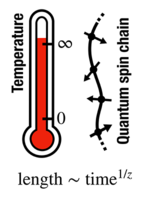
The spin dynamics of strongly interacting one-dimensional quantum magnets at high-temperature displays an emergent coarse-grained hydrodynamic behavior, understood as the result of conserved quantities. Different kinds of emergent hydrodynamics can be characterized by the dynamical exponent z governing the length-time scaling x∼t1/z. Relying on extensive numerical simulations, the authors extract the exponent z for various microscopic quantum spin-S models. They identify three universal regimes for the spin transport (superdiffusive with z=3/2, ballistic with z=1, and diffusive with z=2), which depend only on the isotropy and integrability of the system, but are independent of its microscopic details.

Electrically controlled dielectric band gap engineering in a two-dimensional semiconductor

Anders C. Riis-Jensen, Jiong Lu, and Kristian S. Thygesen

Phys. Rev. B 101, 121110(R) (2020) - Published 16 March, 2020

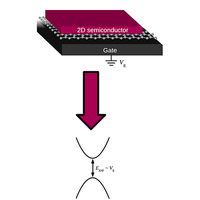
This work proposes and investigates a new physical concept of electrically controlled dielectric band gap engineering in a two-dimensional (2D) semiconductor. The authors show, using first-principles many-body calculations, that the band gap of a 2D semiconductor can be varied by several hundred meV’s by varying the doping concentration in a supporting graphene sheet as illustrated in the accompanying image. This provides a method for continuous and dynamical insitu tuning of the band gap. Importantly, the band gap adjustment is achieved via nonlocal Coulomb interactions and does not involve changes in the atomic structure, or even the shape or hybridization pattern, of the wave functions of the 2D semiconductor.

Wigner crystals in two-dimensional transition-metal dichalcogenides: Spin physics and readout

J. Knörzer, M. J. A. Schuetz, G. Giedke, D. S. Wild, K. De Greve, R. Schmidt, M. D. Lukin, and J. I. Cirac

Phys. Rev. B 101, 125101 (2020) - Published 3 March, 2020

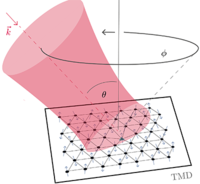
This work appraises two-dimensional semiconductors as a platform for Wigner crystalization and outlines a procedure for minimally invasive all-optical detection of charge and spin ordering in such structures. For incident light with optimally chosen beam parameters and polarization, the authors predict a strong dependence of the transmitted and reflected signals on the underlying lattice periodicity, thus revealing the charge order inherent in self-assembled electron lattices. Furthermore, the spin physics of Wigner crystals in transition-metal dichalcogenides is discussed, which is of relevance for quantum simulation of spin models.

Statistical localization: From strong fragmentation to strong edge modes

Tibor Rakovszky, Pablo Sala, Ruben Verresen, Michael Knap, and Frank Pollmann

Phys. Rev. B 101, 125126 (2020) - Published 25 March, 2020

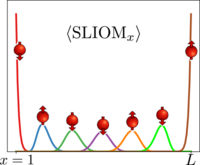
Certain disorder-free Hamiltonians are nonergodic due to a strong fragmentation of the Hilbert space. Here, the authors introduce the notion of “statistically localized integrals of motion” (SLIOM) to characterize these systems. Despite SLIOMs being nonlocal operators, they become spatially localized to subextensive regions when their expectation value is taken in typical states. These can also result in statistically localized strong zero modes, leading to topological string order for certain highly excited eigenstates as well as infinitely long-lived edge magnetization along with a thermalizing bulk.

Observation of quantum Hall interferometer phase jumps due to a change in the number of bulk quasiparticles

Marc P. Röösli, Lars Brem, Benedikt Kratochwil, Giorgio Nicolí, Beat A. Braem, Szymon Hennel, Peter Märki, Matthias Berl, Christian Reichl, Werner Wegscheider, Klaus Ensslin, Thomas Ihn, and Bernd Rosenow

Phys. Rev. B 101, 125302 (2020) - Published 9 March, 2020

Quantum dots, operated at high magnetic fields, are a laboratory for intricate quantum Hall physics. Between filling factors of 1 and 2, one finds a striking similarity in the magnetotransport of a micron-sized quantum dot in the Coulomb-blockaded and the Fabry-Pérot quantum Hall interferometer regimes. Abrupt jumps of the interferometer phase relate to a change in the number of bulk quasiparticles. This paves the way for the investigation of phase shifts due to (fractional) charge redistributions in future experiments.

Gap-size dependence of optical near fields in a variable nanoscale two-tip junction

Jonas Heimerl, Takuya Higuchi, Maximilian Ammon, M. Alexander Schneider, and Peter Hommelhoff

Phys. Rev. B 101, 125403 (2020) - Published 2 March, 2020

Nanometer-sharp objects coupled with femtosecond laser pulses find much current interest because they allow us to reach high spatiotemporal control – like a needle tip enables the scanning tunneling microscope (STM). With two needles facing each other, a special nanometric gap is formed, facilitating large optical near fields. Here, the authors experimentally retrieve the optical near fields of femtosecond laser pulses present in a nanogap as a function of the gap size, bearing direct ramifications for plasmonics and strong-field physics.

Theory of quantum acoustomagnonics and acoustomechanics with a micromagnet

C. Gonzalez-Ballestero, D. Hümmer, J. Gieseler, and O. Romero-Isart

Phys. Rev. B 101, 125404 (2020) - Published 3 March, 2020

The authors outline a method to cool micromechanical resonators. It is experimentally feasible and requires neither external cavities nor feedback, thus potentially reducing the complexity of optomechanical experiments. In addition, the team proposes a novel way of accessing the internal acoustic modes of highly isolated microparticles. Both advances exploit a heretofore uncharted regime of magnon-phonon interaction. This work unveils a new playground for the implementation and use of levitated microparticles by demonstrating that internal solid-state quantum excitations can be harnessed and used as a resource.

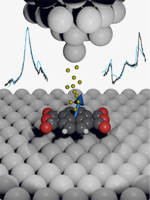
Inelastic electron tunneling spectroscopy for probing strongly correlated many-body systems by scanning tunneling microscopy

Fabian Eickhoff, Elena Kolodzeiski, Taner Esat, Norman Fournier, Christian Wagner, Thorsten Deilmann, Ruslan Temirov, Michael Rohlfing, F. Stefan Tautz, and Frithjof B. Anders

Phys. Rev. B 101, 125405 (2020) - Published 6 March, 2020

A theory for scanning tunneling spectroscopy is presented that includes elastic and inelastic electron-vibrational processes on equal footing. It is especially suited for the investigation of strongly correlated sample systems. As an example, the theory is applied to a molecular Kondo impurity, using a combination of abinitio density functional theory and numerical renormalization group to quantitatively explain the experiment. In particular, the presented approach allows to identify a vibrational sharpening of the Kondo resonance in the targeted system.

RAPID COMMUNICATIONS

Electronic structure and strongly correlated systems

Almost pure Jeff=12 Mott state of In2Ir2O7 in the limit of reduced intersite hopping

A. Krajewska, T. Takayama, R. Dinnebier, A. Yaresko, K. Ishii, M. Isobe, and H. Takagi

Phys. Rev. B 101, 121101(R) (2020) - Published 2 March, 2020

The pyrochlore iridates A2Ir2O7 are expected to host novel electronic phases due to the interplay of spin-orbit coupling and correlation on a frustrated lattice. Their properties and orbital character are reported to vary as a function of the distortion of IrO6 octahedra, which is scaled by the A cation radius. Here, the authors report a new pyrochlore iridate In2Ir2O7 at the small A cation and large distortion limit. By means of resonant inelastic x-ray scattering and band calculations they show that the orbital character of pyrochlore iridates largely depends on Ir-O-Ir intersite hopping rather than the local distortions. Furthermore, the In-O bond covalency in In2Ir2O7 suppresses this intersite hopping, generating a nearly pure Jeff=½ state, in contrast to other pyrochlore iridates.

Phonon-induced renormalization of electron wave functions

Jae-Mo Lihm and Cheol-Hwan Park

Phys. Rev. B 101, 121102(R) (2020) - Published 2 March, 2020

van der Waals metamaterials

William Dorrell, Harris Pirie, S. Minhal Gardezi, Nathan C. Drucker, and Jennifer E. Hoffman

Phys. Rev. B 101, 121103(R) (2020) - Published 5 March, 2020

Misuse of the minimal coupling to the electromagnetic field in quantum many-body systems

Jan Skolimowski, Adriano Amaricci, and Michele Fabrizio

Phys. Rev. B 101, 121104(R) (2020) - Published 5 March, 2020

Strain-driven disproportionation at a correlated oxide metal-insulator transition

T. H. Kim, T. R. Paudel, R. J. Green, K. Song, H.-S. Lee, S.-Y. Choi, J. Irwin, B. Noesges, L. J. Brillson, M. S. Rzchowski, G. A. Sawatzky, E. Y. Tsymbal, and C. B. Eom

Phys. Rev. B 101, 121105(R) (2020) - Published 9 March, 2020

Universal spin dynamics in infinite-temperature one-dimensional quantum magnets

Maxime Dupont and Joel E. Moore

Phys. Rev. B 101, 121106(R) (2020) - Published 12 March, 2020

The spin dynamics of strongly interacting one-dimensional quantum magnets at high-temperature displays an emergent coarse-grained hydrodynamic behavior, understood as the result of conserved quantities. Different kinds of emergent hydrodynamics can be characterized by the dynamical exponent z governing the length-time scaling x∼t1/z. Relying on extensive numerical simulations, the authors extract the exponent z for various microscopic quantum spin-S models. They identify three universal regimes for the spin transport (superdiffusive with z=3/2, ballistic with z=1, and diffusive with z=2), which depend only on the isotropy and integrability of the system, but are independent of its microscopic details.

Quantum aspects of hydrodynamic transport from weak electron-impurity scattering

Aaron Hui, Samuel Lederer, Vadim Oganesyan, and Eun-Ah Kim

Phys. Rev. B 101, 121107(R) (2020) - Published 12 March, 2020

Scrambling in strongly chaotic weakly coupled bipartite systems: Universality beyond the Ehrenfest timescale

Ravi Prakash and Arul Lakshminarayan

Phys. Rev. B 101, 121108(R) (2020) - Published 13 March, 2020

Many-body approach to non-Hermitian physics in fermionic systems

Eunwoo Lee, Hyunjik Lee, and Bohm-Jung Yang

Phys. Rev. B 101, 121109(R) (2020) - Published 16 March, 2020

Electrically controlled dielectric band gap engineering in a two-dimensional semiconductor

Anders C. Riis-Jensen, Jiong Lu, and Kristian S. Thygesen

Phys. Rev. B 101, 121110(R) (2020) - Published 16 March, 2020

This work proposes and investigates a new physical concept of electrically controlled dielectric band gap engineering in a two-dimensional (2D) semiconductor. The authors show, using first-principles many-body calculations, that the band gap of a 2D semiconductor can be varied by several hundred meV’s by varying the doping concentration in a supporting graphene sheet as illustrated in the accompanying image. This provides a method for continuous and dynamical insitu tuning of the band gap. Importantly, the band gap adjustment is achieved via nonlocal Coulomb interactions and does not involve changes in the atomic structure, or even the shape or hybridization pattern, of the wave functions of the 2D semiconductor.

Change in the optical spectrum of BaV10O15 with applied uniaxial strain

T. Saiki, S. Ohkubo, K. Funahashi, T. Yamazaki, T. Kajita, and T. Katsufuji

Phys. Rev. B 101, 121111(R) (2020) - Published 17 March, 2020

Intrinsic orbital moment and prediction of a large orbital Hall effect in two-dimensional transition metal dichalcogenides

Sayantika Bhowal and S. Satpathy

Phys. Rev. B 101, 121112(R) (2020) - Published 18 March, 2020

Magnetic Weyl semimetals with diamond structure realized in spinel compounds

Wei Jiang, Huaqing Huang, Feng Liu, Jian-Ping Wang, and Tony Low

Phys. Rev. B 101, 121113(R) (2020) - Published 18 March, 2020

Genesis of the periodic lattice distortions in the charge density wave state of 2H−TaSe2

Valeri Petkov, Kamal Chapagain, Sarvjit Shastri, and Yang Ren

Phys. Rev. B 101, 121114(R) (2020) - Published 19 March, 2020

Van Hove singularity arising from Mexican-hat-shaped inverted bands in the topological insulator Sn-doped Bi1.1Sb0.9Te2S

Wenchao Jiang, Bowen Li, Xiaomeng Wang, Guanyu Chen, Tong Chen, Ying Xiang, Wei Xie, Yaomin Dai, Xiyu Zhu, Huan Yang, Jian Sun, and Hai-Hu Wen

Phys. Rev. B 101, 121115(R) (2020) - Published 24 March, 2020

Defective edge states and number-anomalous bulk-boundary correspondence in non-Hermitian topological systems

Xiao-Ran Wang, Cui-Xian Guo, and Su-Peng Kou

Phys. Rev. B 101, 121116(R) (2020) - Published 27 March, 2020

Semiconductors II: surfaces, interfaces, microstructures, and related topics

Strain-engineered higher-order topological phases for spin-32 Luttinger fermions

András L. Szabó, Roderich Moessner, and Bitan Roy

Phys. Rev. B 101, 121301(R) (2020) - Published 2 March, 2020

Signatures of quantum mechanical Zeeman effect in classical transport due to topological properties of two-dimensional spin-32 holes

E. Marcellina, Pankaj Bhalla, A. R. Hamilton, and Dimitrie Culcer

Phys. Rev. B 101, 121302(R) (2020) - Published 9 March, 2020

Photovoltaic effect generated by spin-orbit interactions

O. Entin-Wohlman, R. I. Shekhter, M. Jonson, and A. Aharony

Phys. Rev. B 101, 121303(R) (2020) - Published 30 March, 2020

Surface physics, nanoscale physics, low-dimensional systems

Axion insulator state in ferromagnetically ordered CrI3/Bi2Se3/MnBi2Se4 heterostructures

Y. S. Hou, J. W. Kim, and R. Q. Wu

Phys. Rev. B 101, 121401(R) (2020) - Published 2 March, 2020

Observation and origin of the Δ manifold in Si:P δ layers

Ann Julie Holt, Sanjoy K. Mahatha, Raluca-Maria Stan, Frode S. Strand, Thomas Nyborg, Davide Curcio, Alex K. Schenk, Simon P. Cooil, Marco Bianchi, Justin W. Wells, Philip Hofmann, and Jill A. Miwa

Phys. Rev. B 101, 121402(R) (2020) - Published 5 March, 2020

Thermal conductance of one-dimensional disordered harmonic chains

Biswarup Ash, Ariel Amir, Yohai Bar-Sinai, Yuval Oreg, and Yoseph Imry

Phys. Rev. B 101, 121403(R) (2020) - Published 6 March, 2020

Control of the orbital character of indirect excitons in MoS2/WS2 heterobilayers

Jonas Kiemle, Florian Sigger, Michael Lorke, Bastian Miller, Kenji Watanabe, Takashi Taniguchi, Alexander Holleitner, and Ursula Wurstbauer

Phys. Rev. B 101, 121404(R) (2020) - Published 18 March, 2020

Topological theory for perfect metasurface isolators

Wai Chun Wong, Wenyan Wang, Wang Tat Yau, and Kin Hung Fung

Phys. Rev. B 101, 121405(R) (2020) - Published 26 March, 2020

NMR-based gap behavior related to the quantum size effect

Tomonori Okuno, Masahiro Manago, Shunsaku Kitagawa, Kenji Ishida, Kohei Kusada, and Hiroshi Kitagawa

Phys. Rev. B 101, 121406(R) (2020) - Published 30 March, 2020

Strain-tunable out-of-plane polarization in two-dimensional materials

J. Z. Zhao, L. C. Chen, B. Xu, B. B. Zheng, J. Fan, and H. Xu

Phys. Rev. B 101, 121407(R) (2020) - Published 31 March, 2020

ARTICLES

Electronic structure and strongly correlated systems

Wigner crystals in two-dimensional transition-metal dichalcogenides: Spin physics and readout

J. Knörzer, M. J. A. Schuetz, G. Giedke, D. S. Wild, K. De Greve, R. Schmidt, M. D. Lukin, and J. I. Cirac

Phys. Rev. B 101, 125101 (2020) - Published 3 March, 2020

This work appraises two-dimensional semiconductors as a platform for Wigner crystalization and outlines a procedure for minimally invasive all-optical detection of charge and spin ordering in such structures. For incident light with optimally chosen beam parameters and polarization, the authors predict a strong dependence of the transmitted and reflected signals on the underlying lattice periodicity, thus revealing the charge order inherent in self-assembled electron lattices. Furthermore, the spin physics of Wigner crystals in transition-metal dichalcogenides is discussed, which is of relevance for quantum simulation of spin models.

Optical evidence of the chiral magnetic anomaly in the Weyl semimetal TaAs

A. L. Levy, A. B. Sushkov, Fengguang Liu, Bing Shen, Ni Ni, H. D. Drew, and G. S. Jenkins

Phys. Rev. B 101, 125102 (2020) - Published 4 March, 2020

Hubbard model on the honeycomb lattice: From static and dynamical mean-field theories to lattice quantum Monte Carlo simulations

Marcin Raczkowski, Robert Peters, Thị Thu Phùng, Nayuta Takemori, Fakher F. Assaad, Andreas Honecker, and Javad Vahedi

Phys. Rev. B 101, 125103 (2020) - Published 5 March, 2020

Coupled wire model of Z2×Z2 orbifold quantum Hall states

Pok Man Tam, Yichen Hu, and Charles L. Kane

Phys. Rev. B 101, 125104 (2020) - Published 6 March, 2020

Hybrid functional calculations of electronic structure and carrier densities in rare-earth monopnictides

Shoaib Khalid, Abhishek Sharan, and Anderson Janotti

Phys. Rev. B 101, 125105 (2020) - Published 9 March, 2020

An ab initio perspective on scanning tunneling microscopy measurements of the tunable Kondo resonance of the TbPc2 molecule on a gold substrate

Ivan I. Vrubel, Anastasiia A. Pervishko, Heike Herper, Barbara Brena, Olle Eriksson, and Dmitry Yudin

Phys. Rev. B 101, 125106 (2020) - Published 9 March, 2020

Nanoscale phase separation and pseudogap in the hole-doped cuprates from fluctuating Cu-O-Cu bonds

Sergi Julià-Farré, Alexandre Dauphin, Ravindra W. Chhajlany, Piotr T. Grochowski, Simon Wall, Maciej Lewenstein, and Przemysław R. Grzybowski

Phys. Rev. B 101, 125107 (2020) - Published 10 March, 2020

Number-conserving analysis of measurement-based braiding with Majorana zero modes

Christina Knapp, Jukka I. Väyrynen, and Roman M. Lutchyn

Phys. Rev. B 101, 125108 (2020) - Published 11 March, 2020

Optimal grouping of arbitrary diagrammatic expansions via analytic pole structure

Amir Taheridehkordi, S. H. Curnoe, and J. P. F. LeBlanc

Phys. Rev. B 101, 125109 (2020) - Published 12 March, 2020

Interplay of dipoles and spins in κ−(BEDT−TTF)2X, where X=Hg(SCN)2Cl, Hg(SCN)2Br, Cu[N(CN)2]Cl, Cu[N(CN)2]Br, and Ag2(CN)3

A. C. Jacko, E. P. Kenny, and B. J. Powell

Phys. Rev. B 101, 125110 (2020) - Published 13 March, 2020

Magnetic field control of topological magnon-polaron bands in two-dimensional ferromagnets

Pengtao Shen and Se Kwon Kim

Phys. Rev. B 101, 125111 (2020) - Published 13 March, 2020

Low-rank Sachdev-Ye-Kitaev models

Jaewon Kim, Xiangyu Cao, and Ehud Altman

Phys. Rev. B 101, 125112 (2020) - Published 16 March, 2020

One-dimensional few-electron effective Wigner crystal in quantum and classical regimes

DinhDuy Vu and S. Das Sarma

Phys. Rev. B 101, 125113 (2020) - Published 16 March, 2020

Robustness of topological insulating phase against vacancy, vacancy cluster, and grain boundary bulk defects

Xiaojuan Ni, Huaqing Huang, and Feng Liu

Phys. Rev. B 101, 125114 (2020) - Published 19 March, 2020

Reentrant Kondo effect for a quantum impurity coupled to a metal-semiconductor hybrid contact

G. Diniz, G. S. Diniz, G. B. Martins, and E. Vernek

Phys. Rev. B 101, 125115 (2020) - Published 19 March, 2020

Hall-coefficient diagnostics of the surface state in pressurized SmB6

Yazhou Zhou, Priscila F. S. Rosa, Jing Guo, Shu Cai, Rong Yu, Sheng Jiang, Ke Yang, Aiguo Li, Qimiao Si, Qi Wu, Zachary Fisk, and Liling Sun

Phys. Rev. B 101, 125116 (2020) - Published 19 March, 2020

Optical response in the excitonic insulating state: Variational cluster approach

Hengyue Li, Junya Otsuki, Makoto Naka, and Sumio Ishihara

Phys. Rev. B 101, 125117 (2020) - Published 19 March, 2020

Topological metals induced by the Zeeman effect

Song Sun, Zhida Song, Hongming Weng, and Xi Dai

Phys. Rev. B 101, 125118 (2020) - Published 19 March, 2020

Anisotropic electrical and thermal magnetotransport in the magnetic semimetal GdPtBi

Clemens Schindler, Stanislaw Galeski, Walter Schnelle, Rafał Wawrzyńczak, Wajdi Abdel-Haq, Satya N. Guin, Johannes Kroder, Nitesh Kumar, Chenguang Fu, Horst Borrmann, Chandra Shekhar, Claudia Felser, Tobias Meng, Adolfo G. Grushin, Yang Zhang, Yan Sun, and Johannes Gooth

Phys. Rev. B 101, 125119 (2020) - Published 23 March, 2020

Classification of critical points in energy bands based on topology, scaling, and symmetry

Noah F. Q. Yuan and Liang Fu

Phys. Rev. B 101, 125120 (2020) - Published 23 March, 2020

Enhanced anomalous Hall effect in the magnetic topological semimetal Co3Sn2−xInxS2

Huibin Zhou, Guoqing Chang, Guangqiang Wang, Xin Gui, Xitong Xu, Jia-Xin Yin, Zurab Guguchia, Songtian S. Zhang, Tay-Rong Chang, Hsin Lin, Weiwei Xie, M. Zahid Hasan, and Shuang Jia

Phys. Rev. B 101, 125121 (2020) - Published 24 March, 2020

Evidence of charge density wave transverse pinning by x-ray microdiffraction

E. Bellec, I. Gonzalez-Vallejo, V. L. R. Jacques, A. A. Sinchenko, A. P. Orlov, P. Monceau, S. J. Leake, and D. Le Bolloc'h

Phys. Rev. B 101, 125122 (2020) - Published 24 March, 2020

Nature of the 5f electronic structure of plutonium

Li Huang and Haiyan Lu

Phys. Rev. B 101, 125123 (2020) - Published 24 March, 2020

Many-body and anisotropy effects in x-ray absorption spectra of pristine and defective vanadium pentoxide

Yu Fujikata, Fukiko Ota, Keisuke Hatada, and Peter Krüger

Phys. Rev. B 101, 125124 (2020) - Published 25 March, 2020

Signature of band inversion in the perovskite thin-film alloys BaSn1–xPbxO3

Junichi Shiogai, Takumaru Chida, Kenichiro Hashimoto, Kohei Fujiwara, Takahiko Sasaki, and Atsushi Tsukazaki

Phys. Rev. B 101, 125125 (2020) - Published 25 March, 2020

Statistical localization: From strong fragmentation to strong edge modes

Tibor Rakovszky, Pablo Sala, Ruben Verresen, Michael Knap, and Frank Pollmann

Phys. Rev. B 101, 125126 (2020) - Published 25 March, 2020

Certain disorder-free Hamiltonians are nonergodic due to a strong fragmentation of the Hilbert space. Here, the authors introduce the notion of “statistically localized integrals of motion” (SLIOM) to characterize these systems. Despite SLIOMs being nonlocal operators, they become spatially localized to subextensive regions when their expectation value is taken in typical states. These can also result in statistically localized strong zero modes, leading to topological string order for certain highly excited eigenstates as well as infinitely long-lived edge magnetization along with a thermalizing bulk.

Understanding XANES spectra of two-temperature warm dense copper using ab initio simulations

N. Jourdain, V. Recoules, L. Lecherbourg, P. Renaudin, and F. Dorchies

Phys. Rev. B 101, 125127 (2020) - Published 26 March, 2020

Hydrodynamic transport in the Luttinger-Abrikosov-Beneslavskii non-Fermi liquid

Julia M. Link and Igor F. Herbut

Phys. Rev. B 101, 125128 (2020) - Published 26 March, 2020

Dipolar polaritons squeezed at unitarity

S. V. Andreev

Phys. Rev. B 101, 125129 (2020) - Published 26 March, 2020

Strongly anharmonic collective modes in a coupled electron-phonon-spin problem

Sauri Bhattacharyya, Sankha Subhra Bakshi, Saurabh Pradhan, and Pinaki Majumdar

Phys. Rev. B 101, 125130 (2020) - Published 26 March, 2020

Relaxation dynamics in a Hubbard dimer coupled to fermionic baths: Phenomenological description and its microscopic foundation

Eric Kleinherbers, Nikodem Szpak, Jürgen König, and Ralf Schützhold

Phys. Rev. B 101, 125131 (2020) - Published 27 March, 2020

Semiconductors I: bulk

Nieh-Yan anomaly: Torsional Landau levels, central charge, and anomalous thermal Hall effect

Ze-Min Huang, Bo Han, and Michael Stone

Phys. Rev. B 101, 125201 (2020) - Published 10 March, 2020

Ideal near-Dirac triple-point semimetal in III-V semiconductor alloys

Zhenyao Fang, Heng Gao, Jörn W. F. Venderbos, and Andrew M. Rappe

Phys. Rev. B 101, 125202 (2020) - Published 18 March, 2020

Quantum magnetotransport in massive Dirac materials

Bo Fu, Huan-Wen Wang, and Shun-Qing Shen

Phys. Rev. B 101, 125203 (2020) - Published 18 March, 2020

Probing intraband excitations in ZrTe5: A high-pressure infrared and transport study

D. Santos-Cottin, M. Padlewski, E. Martino, S. Ben David, F. Le Mardelé, F. Capitani, F. Borondics, M. D. Bachmann, C. Putzke, P. J. W. Moll, R. D. Zhong, G. D. Gu, H. Berger, M. Orlita, C. C. Homes, Z. Rukelj, and Ana Akrap

Phys. Rev. B 101, 125205 (2020) - Published 20 March, 2020

Phonon scattering limited mobility in the representative cubic perovskite semiconductors SrGeO3, BaSnO3, and SrTiO3

Christian A. Niedermeier, Yu Kumagai, Keisuke Ide, Takayoshi Katase, Fumiyasu Oba, Hideo Hosono, and Toshio Kamiya

Phys. Rev. B 101, 125206 (2020) - Published 24 March, 2020

Nodal plane and persistent spin texture in a Weyl semimetal without mirror symmetry

Wujun Shi and Gang Li

Phys. Rev. B 101, 125207 (2020) - Published 30 March, 2020

Semiconductors II: surfaces, interfaces, microstructures, and related topics

Surface plasmon polaritons in planar graphene superlattices

Pavel V. Ratnikov

Phys. Rev. B 101, 125301 (2020) - Published 9 March, 2020

Observation of quantum Hall interferometer phase jumps due to a change in the number of bulk quasiparticles

Marc P. Röösli, Lars Brem, Benedikt Kratochwil, Giorgio Nicolí, Beat A. Braem, Szymon Hennel, Peter Märki, Matthias Berl, Christian Reichl, Werner Wegscheider, Klaus Ensslin, Thomas Ihn, and Bernd Rosenow

Phys. Rev. B 101, 125302 (2020) - Published 9 March, 2020

Quantum dots, operated at high magnetic fields, are a laboratory for intricate quantum Hall physics. Between filling factors of 1 and 2, one finds a striking similarity in the magnetotransport of a micron-sized quantum dot in the Coulomb-blockaded and the Fabry-Pérot quantum Hall interferometer regimes. Abrupt jumps of the interferometer phase relate to a change in the number of bulk quasiparticles. This paves the way for the investigation of phase shifts due to (fractional) charge redistributions in future experiments.

Electrical detection of excitonic states by time-resolved conductance measurements

C. Ebler, P. A. Labud, A. K. Rai, D. Reuter, A. D. Wieck, and A. Ludwig

Phys. Rev. B 101, 125303 (2020) - Published 18 March, 2020

Topological spin-Meissner states in nonequilibrium polariton condensates

Szu-Cheng Cheng and Ting-Wei Chen

Phys. Rev. B 101, 125304 (2020) - Published 20 March, 2020

Surface physics, nanoscale physics, low-dimensional systems

Manipulation of valley pseudospin in WSe2/CrI3 heterostructures by the magnetic proximity effect

Tao Hu, Guodong Zhao, Heng Gao, Yabei Wu, Jisang Hong, Alessandro Stroppa, and Wei Ren

Phys. Rev. B 101, 125401 (2020) - Published 2 March, 2020

Phase-space representation of Landau and electron coherent states for uniaxially strained graphene

Erik Díaz-Bautista and Yonatan Betancur-Ocampo

Phys. Rev. B 101, 125402 (2020) - Published 2 March, 2020

Gap-size dependence of optical near fields in a variable nanoscale two-tip junction

Jonas Heimerl, Takuya Higuchi, Maximilian Ammon, M. Alexander Schneider, and Peter Hommelhoff

Phys. Rev. B 101, 125403 (2020) - Published 2 March, 2020

Nanometer-sharp objects coupled with femtosecond laser pulses find much current interest because they allow us to reach high spatiotemporal control – like a needle tip enables the scanning tunneling microscope (STM). With two needles facing each other, a special nanometric gap is formed, facilitating large optical near fields. Here, the authors experimentally retrieve the optical near fields of femtosecond laser pulses present in a nanogap as a function of the gap size, bearing direct ramifications for plasmonics and strong-field physics.

Theory of quantum acoustomagnonics and acoustomechanics with a micromagnet

C. Gonzalez-Ballestero, D. Hümmer, J. Gieseler, and O. Romero-Isart

Phys. Rev. B 101, 125404 (2020) - Published 3 March, 2020

The authors outline a method to cool micromechanical resonators. It is experimentally feasible and requires neither external cavities nor feedback, thus potentially reducing the complexity of optomechanical experiments. In addition, the team proposes a novel way of accessing the internal acoustic modes of highly isolated microparticles. Both advances exploit a heretofore uncharted regime of magnon-phonon interaction. This work unveils a new playground for the implementation and use of levitated microparticles by demonstrating that internal solid-state quantum excitations can be harnessed and used as a resource.

Inelastic electron tunneling spectroscopy for probing strongly correlated many-body systems by scanning tunneling microscopy

Fabian Eickhoff, Elena Kolodzeiski, Taner Esat, Norman Fournier, Christian Wagner, Thorsten Deilmann, Ruslan Temirov, Michael Rohlfing, F. Stefan Tautz, and Frithjof B. Anders

Phys. Rev. B 101, 125405 (2020) - Published 6 March, 2020

A theory for scanning tunneling spectroscopy is presented that includes elastic and inelastic electron-vibrational processes on equal footing. It is especially suited for the investigation of strongly correlated sample systems. As an example, the theory is applied to a molecular Kondo impurity, using a combination of abinitio density functional theory and numerical renormalization group to quantitatively explain the experiment. In particular, the presented approach allows to identify a vibrational sharpening of the Kondo resonance in the targeted system.

Tunable nonlocal valley-entangled Cooper pair splitter realized in bilayer-graphene van der Waals spin valves

Xiuqiang Wu, Hao Meng, Fanjie Kong, Haiyang Zhang, Yujie Bai, and Ning Xu

Phys. Rev. B 101, 125406 (2020) - Published 9 March, 2020

Detection of Fermi arcs in Weyl semimetals through surface negative refraction

Guangze Chen, Oded Zilberberg, and Wei Chen

Phys. Rev. B 101, 125407 (2020) - Published 9 March, 2020

Monolayer diboron dinitride: Direct band-gap semiconductor with high absorption in the visible range

Salih Demirci, Soheil Ershad Rad, Sahmurat Kazak, Saffet Nezir, and Seymur Jahangirov

Phys. Rev. B 101, 125408 (2020) - Published 9 March, 2020

Perfect one-dimensional chiral states in biased twisted bilayer graphene

Bonnie Tsim, Nguyen N. T. Nam, and Mikito Koshino

Phys. Rev. B 101, 125409 (2020) - Published 9 March, 2020

Stochastic thermodynamics of an electron spin resonance quantum dot system

JunYan Luo, Yiying Yan, Hailong Wang, Jing Hu, Xiao-Ling He, and Gernot Schaller

Phys. Rev. B 101, 125410 (2020) - Published 10 March, 2020

Topological flat bands without magic angles in massive twisted bilayer graphenes

Srivani Javvaji, Jin-Hua Sun, and Jeil Jung

Phys. Rev. B 101, 125411 (2020) - Published 12 March, 2020

Topology by dissipation: Transport properties

Gal Shavit and Moshe Goldstein

Phys. Rev. B 101, 125412 (2020) - Published 13 March, 2020

Exciton-phonon coupling in InP quantum dots with ZnS and (Zn,Cd)Se shells

Annalisa Brodu, Mariana V. Ballottin, Jonathan Buhot, Dorian Dupont, Mickael Tessier, Zeger Hens, Freddy T. Rabouw, Peter C. M. Christianen, Celso de Mello Donega, and Daniel Vanmaekelbergh

Phys. Rev. B 101, 125413 (2020) - Published 13 March, 2020

Majorana bound states in nanowire-superconductor hybrid systems in periodic magnetic fields

Viktoriia Kornich, Maxim G. Vavilov, Mark Friesen, M. A. Eriksson, and S. N. Coppersmith

Phys. Rev. B 101, 125414 (2020) - Published 16 March, 2020

First-principles predictions of temperature-dependent infrared dielectric function of polar materials by including four-phonon scattering and phonon frequency shift

Zhen Tong, Xiaolong Yang, Tianli Feng, Hua Bao, and Xiulin Ruan

Phys. Rev. B 101, 125416 (2020) - Published 16 March, 2020

Dual Majorana universality in thermally induced nonequilibrium

Sergey Smirnov

Phys. Rev. B 101, 125417 (2020) - Published 18 March, 2020

Topological phases in one-dimensional nonreciprocal superlattices

Qi-Bo Zeng, Yan-Bin Yang, and Rong Lü

Phys. Rev. B 101, 125418 (2020) - Published 18 March, 2020

Multiorbital electronic correlation effects of Co adatoms on graphene: An ionic Hamiltonian approach

M. S. Tacca, T. Jacob, and E. C. Goldberg

Phys. Rev. B 101, 125419 (2020) - Published 18 March, 2020

Microscopic model for the stacking-fault potential and the exciton wave function in GaAs

Mikhail V. Durnev, Mikhail M. Glazov, Xiayu Linpeng, Maria L. K. Viitaniemi, Bethany Matthews, Steven R. Spurgeon, Peter V. Sushko, Andreas D. Wieck, Arne Ludwig, and Kai-Mei C. Fu

Phys. Rev. B 101, 125420 (2020) - Published 20 March, 2020

Unexpected softness of bilayer graphene and softening of A-A stacked graphene layers

Y. W. Sun, D. Holec, D. Gehringer, O. Fenwick, D. J. Dunstan, and C. J. Humphreys

Phys. Rev. B 101, 125421 (2020) - Published 20 March, 2020

Band nesting and exciton spectrum in monolayer MoS2

Maciej Bieniek, Ludmiła Szulakowska, and Paweł Hawrylak

Phys. Rev. B 101, 125423 (2020) - Published 23 March, 2020

Calculation of the biexciton shift in nanocrystals of inorganic perovskites

T. P. T. Nguyen, S. A. Blundell, and C. Guet

Phys. Rev. B 101, 125424 (2020) - Published 25 March, 2020

Conductivity scaling and the effects of symmetry-breaking terms in bilayer graphene Hamiltonian

Dominik Suszalski, Grzegorz Rut, and Adam Rycerz

Phys. Rev. B 101, 125425 (2020) - Published 30 March, 2020

Landau-Zener transitions in a fermionic dissipative environment

Ruofan Chen

Phys. Rev. B 101, 125426 (2020) - Published 30 March, 2020

Modeling of epitaxial film growth of C60 revisited

William Janke and Thomas Speck

Phys. Rev. B 101, 125427 (2020) - Published 30 March, 2020

Tunable bandwidths and gaps in twisted double bilayer graphene on the verge of correlations

Pratap Chandra Adak, Subhajit Sinha, Unmesh Ghorai, L. D. Varma Sangani, Kenji Watanabe, Takashi Taniguchi, Rajdeep Sensarma, and Mandar M. Deshmukh

Phys. Rev. B 101, 125428 (2020) - Published 30 March, 2020

Magnetic flux periodicity in second order topological superconductors

Suman Jyoti De, Udit Khanna, and Sumathi Rao

Phys. Rev. B 101, 125429 (2020) - Published 30 March, 2020

Electronic and optical properties of monolayer tin diselenide: The effect of doping, magnetic field, and defects

Hongxia Zhong, Jin Yu, Xueheng Kuang, Kaixiang Huang, and Shengjun Yuan

Phys. Rev. B 101, 125430 (2020) - Published 30 March, 2020

Strong Coulomb interactions in the problem of Majorana modes in a wire of the nontrivial topological class BDI

S. V. Aksenov, A. O. Zlotnikov, and M. S. Shustin

Phys. Rev. B 101, 125431 (2020) - Published 30 March, 2020

Nonlinearity-induced anomalous mode collapse and nonchiral asymmetric mode switching around multiple exceptional points

Sibnath Dey, Arnab Laha, and Somnath Ghosh

Phys. Rev. B 101, 125432 (2020) - Published 31 March, 2020

COMMENTS

Comment on “Excitons, trions, and biexcitons in transition-metal dichalcogenides: Magnetic-field dependence”

Ngoc-Tram D. Hoang, Duy-Nhat Ly, and Van-Hoang Le

Phys. Rev. B 101, 127401 (2020) - Published 18 March, 2020

Reply to “Comment on ‘Excitons, trions, and biexcitons in transition-metal dichalcogenides: Magnetic-field dependence’ ”

M. Van der Donck, M. Zarenia, and F. M. Peeters

Phys. Rev. B 101, 127402 (2020) - Published 18 March, 2020

Sign In to Your Journals Account

Filter

Filter

Article Lookup

Enter a citation