Browse Issues:

HIGHLIGHTED ARTICLES

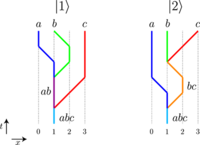
Microscopic definitions of anyon data

Kyle Kawagoe and Michael Levin

Phys. Rev. B 101, 115113 (2020) - Published 9 March, 2020

The algebraic theory of anyons is one of the most powerful tools for studying two-dimensional interacting topological phases of matter. However, despite its success, this formalism is lacking an important conceptual ingredient: concrete, microscopic definitions of the different pieces of ‘anyon data’ that characterize anyon excitations. This paper fills the gap by providing precise operational definitions of every piece of anyon data.

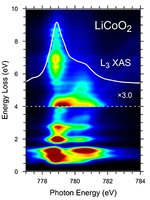
LDA+DMFT approach to resonant inelastic x-ray scattering in correlated materials

Atsushi Hariki, Mathias Winder, Takayuki Uozumi, and Jan Kuneš

Phys. Rev. B 101, 115130 (2020) - Published 18 March, 2020

Motivated by recent improvement of the energy resolution of resonant inelastic x-ray scattering (RIXS), the authors develop a theoretical framework based on the local density approximation and dynamical mean-field theory (LDA+DMFT). It provides a computationally feasible material-specific approach to RIXS spectra in a wide range of materials, including strongly correlated ones. A good agreement with recent experimental data for typical transition-metal oxides is obtained. The relationship of RIXS fluorescencelike features and the electronic structure is explained.

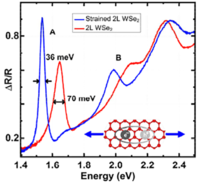
Strained bilayer WSe2 with reduced exciton-phonon coupling

Burak Aslan, Minda Deng, Mark L. Brongersma, and Tony F. Heinz

Phys. Rev. B 101, 115305 (2020) - Published 23 March, 2020

The authors investigate here the influence of strain on bilayer WSe2 using optical reflection and photoluminescence spectroscopy. The linewidth of the A exciton exhibits a significant decrease, from 70 to 36 meV at room temperature under 2.1% strain. They note that this behavior is quite different in monolayer WSe2. They apply the model used earlier on monolayer WSe2 and show that the distinct behavior under strain stems from having different indirect-to-direct gap separations. Their findings are inspiring for utilizing strain for further studies on two-dimensional materials.

Topological models in rotationally symmetric quasicrystals

Callum W. Duncan, Sourav Manna, and Anne E. B. Nielsen

Phys. Rev. B 101, 115413 (2020) - Published 13 March, 2020

The presence and construction of topological states in two-dimensional quasicrystalline models are investigated. Interesting topological states that exist in the bulk but not at the boundary are found for single-particle Hofstadter models on quasicrystalline quasilattices. The destruction of the periodic nature of the Hofstadter butterfly, due to incommensurate fluxes, is demonstrated. Furthermore, the authors describe an approach to construct topologically ordered states for quasicrystals starting from an analytical fractional quantum Hall type wave function.

Quantum limit cyclotron resonance in monolayer epitaxial graphene in magnetic fields up to 560 T: The relativistic electron and hole asymmetry

Daisuke Nakamura, Hiroaki Saito, Hiroki Hibino, Kenichi Asano, and Shojiro Takeyama

Phys. Rev. B 101, 115420 (2020) - Published 17 March, 2020

Electron-hole symmetry breaking of Dirac electrons has been evidenced as a well-resolved cyclotron resonance (CR) peak splitting at magnetic fields around 300-500 T in epitaxial monolayer graphene. The magnetic field was swept up to 560 T for the infrared CR by means of the electromagnetic flux compression technique in a 1000-T class megagauss generator. The authors argue that it is the CR mode repulsion, caused by the electron-electron correlation, which is responsible for the observed CR intensity transfer from the hole to the electron.

Exciton diffusion in monolayer semiconductors with suppressed disorder

Jonas Zipfel, Marvin Kulig, Raül Perea-Causín, Samuel Brem, Jonas D. Ziegler, Roberto Rosati, Takashi Taniguchi, Kenji Watanabe, Mikhail M. Glazov, Ermin Malic, and Alexey Chernikov

Phys. Rev. B 101, 115430 (2020) - Published 30 March, 2020

Monolayer semiconductors with suppressed environmental disorder from encapsulation in high-quality insulators provide a versatile platform to study the propagation of excitonic quasiparticles at ambient conditions. Using time-resolved emission microscopy, the authors monitored linear and nonlinear exciton diffusion in single layers of tungsten disulfide, observing highly mobile excitons with nonmonotonic density dependence of the diffusion. Combining experiment and theory, the authors discuss the impact of multivalley band structure, the role of bound and free charge carriers, the interplay of nonradiative recombination and diffusion as well as the suppressed Auger recombination.

ARTICLES

Electronic structure and strongly correlated systems

Topological spin liquids: Robustness under perturbations

Mohsin Iqbal, Helena Casademunt, and Norbert Schuch

Phys. Rev. B 101, 115101 (2020) - Published 2 March, 2020

Enhanced quantum oscillations in Kondo insulators

Yen-Wen Lu, Po-Hao Chou, Chung-Hou Chung, Ting-Kuo Lee, and Chung-Yu Mou

Phys. Rev. B 101, 115102 (2020) - Published 2 March, 2020

Symmetric spin liquids on the stuffed honeycomb lattice

Jyotisman Sahoo and Rebecca Flint

Phys. Rev. B 101, 115103 (2020) - Published 3 March, 2020

Double photoemission from Ag and Pd surfaces: Energy relations

F. O. Schumann, Y. Aliaev, I. Kostanovskiy, and J. Kirschner

Phys. Rev. B 101, 115104 (2020) - Published 3 March, 2020

Dispersive toric code model with fusion and defusion

Bruno Nachtergaele and Nicholas E. Sherman

Phys. Rev. B 101, 115105 (2020) - Published 5 March, 2020

Emerging chiral edge states from the confinement of a magnetic Weyl semimetal in Co3Sn2S2

Lukas Muechler, Enke Liu, Jacob Gayles, Qiunan Xu, Claudia Felser, and Yan Sun

Phys. Rev. B 101, 115106 (2020) - Published 5 March, 2020

Analytical theory of pyrochlore cooperative paramagnets

Akshat Pandey, Roderich Moessner, and Claudio Castelnovo

Phys. Rev. B 101, 115107 (2020) - Published 6 March, 2020

Dynamical density response and collective modes of topological-insulator ultrathin films

Moslem Mir and Saeed H. Abedinpour

Phys. Rev. B 101, 115108 (2020) - Published 6 March, 2020

Accurate optical spectra of solids from pure time-dependent density functional theory

Sarah Cavo, J. A. Berger, and Pina Romaniello

Phys. Rev. B 101, 115109 (2020) - Published 9 March, 2020

n-hourglass Weyl fermions in nonsymmorphic materials

Yijie Zeng, Luyang Wang, and Dao-Xin Yao

Phys. Rev. B 101, 115110 (2020) - Published 9 March, 2020

Self-learning Monte Carlo method with Behler-Parrinello neural networks

Yuki Nagai, Masahiko Okumura, and Akinori Tanaka

Phys. Rev. B 101, 115111 (2020) - Published 9 March, 2020

Nanoscale electronic inhomogeneity in FeSe0.4Te0.6 revealed through unsupervised machine learning

P. Wahl, U. R. Singh, V. Tsurkan, and A. Loidl

Phys. Rev. B 101, 115112 (2020) - Published 9 March, 2020

Microscopic definitions of anyon data

Kyle Kawagoe and Michael Levin

Phys. Rev. B 101, 115113 (2020) - Published 9 March, 2020

The algebraic theory of anyons is one of the most powerful tools for studying two-dimensional interacting topological phases of matter. However, despite its success, this formalism is lacking an important conceptual ingredient: concrete, microscopic definitions of the different pieces of ‘anyon data’ that characterize anyon excitations. This paper fills the gap by providing precise operational definitions of every piece of anyon data.

Topological Z2 resonating-valence-bond quantum spin liquid on the ruby lattice

Saeed S. Jahromi and Román Orús

Phys. Rev. B 101, 115114 (2020) - Published 9 March, 2020

Fractional disclination charge in two-dimensional Cn-symmetric topological crystalline insulators

Tianhe Li, Penghao Zhu, Wladimir A. Benalcazar, and Taylor L. Hughes

Phys. Rev. B 101, 115115 (2020) - Published 9 March, 2020

Phase diagram and thermal Hall conductivity of the spin-liquid Kekulé-Kitaev model

Fatemeh Mirmojarabian, Mehdi Kargarian, and Abdollah Langari

Phys. Rev. B 101, 115116 (2020) - Published 11 March, 2020

Time-dependent spectral functions of the Anderson impurity model in response to a quench with application to time-resolved photoemission spectroscopy

H. T. M. Nghiem, H. T. Dang, and T. A. Costi

Phys. Rev. B 101, 115117 (2020) - Published 11 March, 2020

Magnetic-order-driven metal-insulator transitions in the quasi-one-dimensional spin-ladder compounds BaFe2S3 and BaFe2Se3

Seulki Roh, Soohyeon Shin, Jaekyung Jang, Seokbae Lee, Myounghoon Lee, Yu-Seong Seo, Weiwu Li, Tobias Biesner, Martin Dressel, Joo Yull Rhee, Tuson Park, and Jungseek Hwang

Phys. Rev. B 101, 115118 (2020) - Published 11 March, 2020

Temperature dependence of the Kohn anomaly in bcc Nb from first-principles self-consistent phonon calculations

Johan Tidholm, Olle Hellman, Nina Shulumba, Sergei I. Simak, Ferenc Tasnádi, and Igor A. Abrikosov

Phys. Rev. B 101, 115119 (2020) - Published 12 March, 2020

Appearance of hinge states in second-order topological insulators via the cutting procedure

Yutaro Tanaka, Ryo Takahashi, and Shuichi Murakami

Phys. Rev. B 101, 115120 (2020) - Published 12 March, 2020

Aspects of the normal state resistivity of cuprate superconductors

B. Sriram Shastry and Peizhi Mai

Phys. Rev. B 101, 115121 (2020) - Published 13 March, 2020

XFe4Ge2(X=Y,Lu) and Mn3Pt: Filling-enforced magnetic topological metals

Di Wang, Feng Tang, Hoi Chun Po, Ashvin Vishwanath, and Xiangang Wan

Phys. Rev. B 101, 115122 (2020) - Published 13 March, 2020

Quantum critical scaling of gapped phases in nodal-line semimetals

Geo Jose and Bruno Uchoa

Phys. Rev. B 101, 115123 (2020) - Published 16 March, 2020

Pressure-driven Lifshitz transition in type-II Dirac semimetal NiTe2

Mengyao Qi, Chao An, Yonghui Zhou, Hao Wu, Bowen Zhang, Chunhua Chen, Yifang Yuan, Shuyang Wang, Ying Zhou, Xuliang Chen, Ranran Zhang, and Zhaorong Yang

Phys. Rev. B 101, 115124 (2020) - Published 16 March, 2020

Coherent band-edge oscillations and dynamic longitudinal-optical phonon mode splitting as evidence for polarons in perovskites

Z. Liu, C. Vaswani, L. Luo, D. Cheng, X. Yang, X. Zhao, Y. Yao, Z. Song, R. Brenes, R. J. H. Kim, J. Jean, V. Bulović, Y. Yan, K.-M. Ho, and J. Wang

Phys. Rev. B 101, 115125 (2020) - Published 16 March, 2020

Seebeck coefficient in low-dimensional fluctuating charge density wave systems

M. Mbodji and C. Bourbonnais

Phys. Rev. B 101, 115126 (2020) - Published 16 March, 2020

Electron-phonon interaction and zero-field charge carrier transport in the nodal-line semimetal ZrSiS

Alexander N. Rudenko and Shengjun Yuan

Phys. Rev. B 101, 115127 (2020) - Published 16 March, 2020

Localization anisotropy and complex geometry in two-dimensional insulators

Bruno Mera

Phys. Rev. B 101, 115128 (2020) - Published 17 March, 2020

Three-dimensional and temperature-dependent electronic structure of the heavy-fermion compound CePt2In7 studied by angle-resolved photoemission spectroscopy

Yang Luo, Chen Zhang, Qi-Yi Wu, Fan-Ying Wu, Jiao-Jiao Song, W. Xia, Yanfeng Guo, Ján Rusz, Peter M. Oppeneer, Tomasz Durakiewicz, Yin-Zou Zhao, Hao Liu, Shuang-Xing Zhu, Ya-Hua Yuan, Xiao-Fang Tang, Jun He, Shi-Yong Tan, Y. B. Huang, Zhe Sun, Yi Liu, H. Y. Liu, Yu-Xia Duan, and Jian-Qiao Meng

Phys. Rev. B 101, 115129 (2020) - Published 18 March, 2020

LDA+DMFT approach to resonant inelastic x-ray scattering in correlated materials

Atsushi Hariki, Mathias Winder, Takayuki Uozumi, and Jan Kuneš

Phys. Rev. B 101, 115130 (2020) - Published 18 March, 2020

Motivated by recent improvement of the energy resolution of resonant inelastic x-ray scattering (RIXS), the authors develop a theoretical framework based on the local density approximation and dynamical mean-field theory (LDA+DMFT). It provides a computationally feasible material-specific approach to RIXS spectra in a wide range of materials, including strongly correlated ones. A good agreement with recent experimental data for typical transition-metal oxides is obtained. The relationship of RIXS fluorescencelike features and the electronic structure is explained.

Disentangling quantum matter with measurements

Daniel Ben-Zion, John McGreevy, and Tarun Grover

Phys. Rev. B 101, 115131 (2020) - Published 18 March, 2020

Locality meets machine learning: Excited and ground-state energy surfaces of large systems at the cost of small ones

Mahboobeh Babaei, Yavar T. Azar, and Ali Sadeghi

Phys. Rev. B 101, 115132 (2020) - Published 18 March, 2020

Competition between Kondo physics and Kitaev physics in Kitaev clusters coupled to a fermionic bath

Tathagata Chowdhury, Achim Rosch, and Ralf Bulla

Phys. Rev. B 101, 115133 (2020) - Published 18 March, 2020

Fermionic tensor networks for higher-order topological insulators from charge pumping

Anna Hackenbroich, B. Andrei Bernevig, Norbert Schuch, and Nicolas Regnault

Phys. Rev. B 101, 115134 (2020) - Published 19 March, 2020

Lasing in a coupled hybrid double quantum dot-resonator system

S. Mojtaba Tabatabaei and Neda Jahangiri

Phys. Rev. B 101, 115135 (2020) - Published 19 March, 2020

Entanglement spectroscopy of chiral edge modes in the quantum Hall effect

Benoit Estienne and Jean-Marie Stéphan

Phys. Rev. B 101, 115136 (2020) - Published 19 March, 2020

Electronic structure investigation of GdNi using x-ray absorption, magnetic circular dichroism, and hard x-ray photoemission spectroscopy

C. W. Chuang, H. J. Lin, F. M. F. de Groot, F. H. Chang, C. T. Chen, Y. Y. Chin, Y. F. Liao, K. D. Tsuei, J. Arout Chelvane, R. Nirmala, and A. Chainani

Phys. Rev. B 101, 115137 (2020) - Published 19 March, 2020

Spinon confinement and deconfinement in spin-1 chains

Laurens Vanderstraeten, Elisabeth Wybo, Natalia Chepiga, Frank Verstraete, and Frédéric Mila

Phys. Rev. B 101, 115138 (2020) - Published 20 March, 2020

Exact solutions of a model for synthetic anyons in a noninteracting system

Frane Lunić, Marija Todorić, Bruno Klajn, Tena Dubček, Dario Jukić, and Hrvoje Buljan

Phys. Rev. B 101, 115139 (2020) - Published 20 March, 2020

Identifying Cn-symmetric higher-order topology and fractional corner charge using entanglement spectra

Penghao Zhu, Kieran Loehr, and Taylor L. Hughes

Phys. Rev. B 101, 115140 (2020) - Published 20 March, 2020

Doping and temperature evolution of pseudogap and spin-spin correlations in the two-dimensional Hubbard model

V. I. Kuz'min, M. A. Visotin, S. V. Nikolaev, and S. G. Ovchinnikov

Phys. Rev. B 101, 115141 (2020) - Published 25 March, 2020

Quantum coherence spectrum and quantum phase transitions

Yan Chao Li, Jing Zhang, and Hai-Qing Lin

Phys. Rev. B 101, 115142 (2020) - Published 25 March, 2020

Detecting a Z2 topologically ordered phase from unbiased infinite projected entangled-pair state simulations

S. P. G. Crone and P. Corboz

Phys. Rev. B 101, 115143 (2020) - Published 25 March, 2020

Topological orders of monopoles and hedgehogs: From electronic and magnetic spin-orbit coupling to quarks

Predrag Nikolić

Phys. Rev. B 101, 115144 (2020) - Published 30 March, 2020

BaHgSn: A Dirac semimetal with surface hourglass fermions

Tan Zhang, Zhihai Cui, Zhijun Wang, Hongming Weng, and Zhong Fang

Phys. Rev. B 101, 115145 (2020) - Published 30 March, 2020

Multivaluedness of the Luttinger-Ward functional in the fermionic and bosonic system with replicas

Aaram J. Kim and Vincent Sacksteder, IV

Phys. Rev. B 101, 115146 (2020) - Published 31 March, 2020

Semiconductors I: bulk

Magneto-Stark and Zeeman effect as origin of second harmonic generation of excitons in Cu2O

A. Farenbruch, J. Mund, D. Fröhlich, D. R. Yakovlev, M. Bayer, M. A. Semina, and M. M. Glazov

Phys. Rev. B 101, 115201 (2020) - Published 25 March, 2020

Second harmonic generation of cuprous oxide in magnetic fields

Patric Rommel, Jörg Main, Andreas Farenbruch, Johannes Mund, Dietmar Fröhlich, Dmitri R. Yakovlev, Manfred Bayer, and Christoph Uihlein

Phys. Rev. B 101, 115202 (2020) - Published 25 March, 2020

Semiconductors II: surfaces, interfaces, microstructures, and related topics

Measurement of the phonon mean free path spectrum in silicon membranes at different temperatures using arrays of nanoslits

Roman Anufriev, Jose Ordonez-Miranda, and Masahiro Nomura

Phys. Rev. B 101, 115301 (2020) - Published 2 March, 2020

First-principles hyperfine tensors for electrons and holes in GaAs and silicon

Pericles Philippopoulos, Stefano Chesi, and W. A. Coish

Phys. Rev. B 101, 115302 (2020) - Published 4 March, 2020

Discrete time crystal in the gradient-field Heisenberg model

Bikun Li, John S. Van Dyke, Ada Warren, Sophia E. Economou, and Edwin Barnes

Phys. Rev. B 101, 115303 (2020) - Published 6 March, 2020

Quasiparticle poisoning effects on the dynamics of topological Josephson junctions

Daniel Frombach and Patrik Recher

Phys. Rev. B 101, 115304 (2020) - Published 17 March, 2020

Strained bilayer WSe2 with reduced exciton-phonon coupling

Burak Aslan, Minda Deng, Mark L. Brongersma, and Tony F. Heinz

Phys. Rev. B 101, 115305 (2020) - Published 23 March, 2020

The authors investigate here the influence of strain on bilayer WSe2 using optical reflection and photoluminescence spectroscopy. The linewidth of the A exciton exhibits a significant decrease, from 70 to 36 meV at room temperature under 2.1% strain. They note that this behavior is quite different in monolayer WSe2. They apply the model used earlier on monolayer WSe2 and show that the distinct behavior under strain stems from having different indirect-to-direct gap separations. Their findings are inspiring for utilizing strain for further studies on two-dimensional materials.

Anisotropic three-dimensional weak localization in ultrananocrystalline diamond films with nitrogen inclusions

L. H. Willems van Beveren, D. L. Creedon, N. Eikenberg, K. Ganesan, B. C. Johnson, G. Chimowa, D. Churochkin, S. Bhattacharyya, and S. Prawer

Phys. Rev. B 101, 115306 (2020) - Published 23 March, 2020

Exciton valley depolarization in monolayer transition-metal dichalcogenides

Min Yang, Cedric Robert, Zhengguang Lu, Dinh Van Tuan, Dmitry Smirnov, Xavier Marie, and Hanan Dery

Phys. Rev. B 101, 115307 (2020) - Published 26 March, 2020

Aharonov-Bohm oscillations of four-probe resistance in topological quantum rings in silicene and bilayer graphene

Bartłomiej Rzeszotarski, Alina Mreńca-Kolasińska, and Bartłomiej Szafran

Phys. Rev. B 101, 115308 (2020) - Published 27 March, 2020

Evolution of nontrivial Fermi surface features in the band structures of the homologous members Pb5Bi6Se14 and Pb5Bi12Se23

D. Koumoulis, L. Fang, D. Y. Chung, M. G. Kanatzidis, and L.-S. Bouchard

Phys. Rev. B 101, 115309 (2020) - Published 30 March, 2020

Surface physics, nanoscale physics, low-dimensional systems

Conductance quantization and shot noise of a double-layer quantum point contact

D. Terasawa, S. Norimoto, T. Arakawa, M. Ferrier, A. Fukuda, K. Kobayashi, and Y. Hirayama

Phys. Rev. B 101, 115401 (2020) - Published 2 March, 2020

Small polarons and the Janus nature of TiO2(110)

Ji Chen, Christopher Penschke, Ali Alavi, and Angelos Michaelides

Phys. Rev. B 101, 115402 (2020) - Published 2 March, 2020

Majorana bound state in the continuum: Coupling between a Majorana bound state and a quantum dot mediated by a continuum energy spectrum

J. P. Ramos-Andrade, P. A. Orellana, and E. Vernek

Phys. Rev. B 101, 115403 (2020) - Published 2 March, 2020

Quantum control of nonlinear thermoelectricity at the nanoscale

Nobuhiko Taniguchi

Phys. Rev. B 101, 115404 (2020) - Published 3 March, 2020

Surface Green's functions and boundary modes using impurities: Weyl semimetals and topological insulators

Sarah Pinon, Vardan Kaladzhyan, and Cristina Bena

Phys. Rev. B 101, 115405 (2020) - Published 4 March, 2020

Nonlinear spin torque, pumping, and cooling in superconductor/ferromagnet systems

Risto Ojajärvi, Juuso Manninen, Tero T. Heikkilä, and Pauli Virtanen

Phys. Rev. B 101, 115406 (2020) - Published 5 March, 2020

Spin vortices and skyrmions of a single electron in inhomogeneous magnetic fields

Amin Naseri, Shenglin Peng, Wenchen Luo, and Jesko Sirker

Phys. Rev. B 101, 115407 (2020) - Published 9 March, 2020

Probing the in-plane electron spin polarization in Ge/Si0.15Ge0.85 multiple quantum wells

C. Zucchetti, A. Ballabio, D. Chrastina, S. Cecchi, M. Finazzi, M. Virgilio, G. Isella, and F. Bottegoni

Phys. Rev. B 101, 115408 (2020) - Published 9 March, 2020

Evidence for Majorana phases in the magnetoconductance of topological junctions based on two-dimensional electron gases

Llorenç Serra and Kaveh Delfanazari

Phys. Rev. B 101, 115409 (2020) - Published 9 March, 2020

Experimental study of ac Josephson effect in gate-tunable (Bi1−xSbx)2Te3 thin-film Josephson junctions

Yuusuke Takeshige, Sadashige Matsuo, Russell S. Deacon, Kento Ueda, Yosuke Sato, Yi-Fan Zhao, Lingjie Zhou, Cui-Zu Chang, Koji Ishibashi, and Seigo Tarucha

Phys. Rev. B 101, 115410 (2020) - Published 11 March, 2020

Phonon scattering at kinks in suspended graphene

Robin J. Dolleman, Yaroslav M. Blanter, Herre S. J. van der Zant, Peter G. Steeneken, and Gerard J. Verbiest

Phys. Rev. B 101, 115411 (2020) - Published 11 March, 2020

Transport in two-dimensional Rashba electron systems doped with interacting magnetic impurities

A. N. Zarezad and J. Abouie

Phys. Rev. B 101, 115412 (2020) - Published 12 March, 2020

Topological models in rotationally symmetric quasicrystals

Callum W. Duncan, Sourav Manna, and Anne E. B. Nielsen

Phys. Rev. B 101, 115413 (2020) - Published 13 March, 2020

The presence and construction of topological states in two-dimensional quasicrystalline models are investigated. Interesting topological states that exist in the bulk but not at the boundary are found for single-particle Hofstadter models on quasicrystalline quasilattices. The destruction of the periodic nature of the Hofstadter butterfly, due to incommensurate fluxes, is demonstrated. Furthermore, the authors describe an approach to construct topologically ordered states for quasicrystals starting from an analytical fractional quantum Hall type wave function.

Excitonic fine structure of zinc-blende and wurtzite colloidal CdSe nanocrystals and comparison to effective mass results

Hanh Bui, Anastasia Karpulevich, and Gabriel Bester

Phys. Rev. B 101, 115414 (2020) - Published 13 March, 2020

Time diffraction and Zitterbewegung of two-dimensional massless Dirac excitations

Elmer Cruz, Ramon Carrillo-Bastos, and Jorge Villavicencio

Phys. Rev. B 101, 115415 (2020) - Published 13 March, 2020

Two-spin entanglement induced by scattering of backscattering-free chiral electrons in a Chern insulator

M. Soltani and M. Amini

Phys. Rev. B 101, 115416 (2020) - Published 16 March, 2020

Enhancement of electron transport and band gap opening in graphene induced by adsorbates

Lan Chen, Fangping Ouyang, Songshan Ma, Tie-Feng Fang, Ai-Min Guo, and Qing-Feng Sun

Phys. Rev. B 101, 115417 (2020) - Published 16 March, 2020

High-frequency exciton-polariton clock generator

C. Leblanc, G. Malpuech, and D. D. Solnyshkov

Phys. Rev. B 101, 115418 (2020) - Published 17 March, 2020

Resonance peak shift in the photocurrent of ultrahigh-mobility two-dimensional electron systems

Jesús Iñarrea

Phys. Rev. B 101, 115419 (2020) - Published 18 March, 2020

Quantum limit cyclotron resonance in monolayer epitaxial graphene in magnetic fields up to 560 T: The relativistic electron and hole asymmetry

Daisuke Nakamura, Hiroaki Saito, Hiroki Hibino, Kenichi Asano, and Shojiro Takeyama

Phys. Rev. B 101, 115420 (2020) - Published 17 March, 2020

Electron-hole symmetry breaking of Dirac electrons has been evidenced as a well-resolved cyclotron resonance (CR) peak splitting at magnetic fields around 300-500 T in epitaxial monolayer graphene. The magnetic field was swept up to 560 T for the infrared CR by means of the electromagnetic flux compression technique in a 1000-T class megagauss generator. The authors argue that it is the CR mode repulsion, caused by the electron-electron correlation, which is responsible for the observed CR intensity transfer from the hole to the electron.

Graphene-mediated interaction between hydrogen adsorbates

Keian Noori, Hillol Biswas, Su Ying Quek, and Aleksandr Rodin

Phys. Rev. B 101, 115421 (2020) - Published 18 March, 2020

Transport through a network of two-dimensional NbC superconducting crystals connected via weak links

Meng Hao, Chuan Xu, Zhen Liu, Cheng Wang, Zhibo Liu, Su Sun, Hui-Ming Cheng, Wencai Ren, and Ning Kang

Phys. Rev. B 101, 115422 (2020) - Published 23 March, 2020

Gap states and valley-spin filtering in transition metal dichalcogenide monolayers

Dominik Szczęśniak and Sabre Kais

Phys. Rev. B 101, 115423 (2020) - Published 23 March, 2020

Interplay between effects of barrier tilting and scatterers within a barrier on tunneling transport of Dirac electrons in graphene

Farhana Anwar, Andrii Iurov, Danhong Huang, Godfrey Gumbs, and Ashwani Sharma

Phys. Rev. B 101, 115424 (2020) - Published 23 March, 2020

Step-by-step advancement of the charge density wave in the rf-synchronized modes and oscillations of the width of Shapiro steps with respect to the rf power applied

S. G. Zybtsev, S. A. Nikonov, V. Ya. Pokrovskii, V. V. Pavlovskiy, and D. Starešinić

Phys. Rev. B 101, 115425 (2020) - Published 24 March, 2020

Broken poloidal symmetry and plasmonic eigenmodes on a torus

Tharindu Warnakula, Sarath D. Gunapala, Mark I. Stockman, and Malin Premaratne

Phys. Rev. B 101, 115426 (2020) - Published 26 March, 2020

Stacking-dependent topological phase in bilayer MBi2Te4(M=Ge,Sn,Pb)

Rui Peng, Yandong Ma, Hao Wang, Baibiao Huang, and Ying Dai

Phys. Rev. B 101, 115427 (2020) - Published 27 March, 2020

Tailoring metal-insulator transitions and band topology via off-resonant periodic drive in an interacting triangular lattice

Sayan Jana, Priyanka Mohan, Arijit Saha, and Anamitra Mukherjee

Phys. Rev. B 101, 115428 (2020) - Published 27 March, 2020

Selective tuning of spin-orbital Kondo contributions in parallel-coupled quantum dots

Heidi Potts, Martin Leijnse, Adam Burke, Malin Nilsson, Sebastian Lehmann, Kimberly A. Dick, and Claes Thelander

Phys. Rev. B 101, 115429 (2020) - Published 30 March, 2020

Exciton diffusion in monolayer semiconductors with suppressed disorder

Jonas Zipfel, Marvin Kulig, Raül Perea-Causín, Samuel Brem, Jonas D. Ziegler, Roberto Rosati, Takashi Taniguchi, Kenji Watanabe, Mikhail M. Glazov, Ermin Malic, and Alexey Chernikov

Phys. Rev. B 101, 115430 (2020) - Published 30 March, 2020

Monolayer semiconductors with suppressed environmental disorder from encapsulation in high-quality insulators provide a versatile platform to study the propagation of excitonic quasiparticles at ambient conditions. Using time-resolved emission microscopy, the authors monitored linear and nonlinear exciton diffusion in single layers of tungsten disulfide, observing highly mobile excitons with nonmonotonic density dependence of the diffusion. Combining experiment and theory, the authors discuss the impact of multivalley band structure, the role of bound and free charge carriers, the interplay of nonradiative recombination and diffusion as well as the suppressed Auger recombination.

Sign In to Your Journals Account

Filter

Filter

Article Lookup

Enter a citation