Browse by Subject

Demonstration of Single-Shot High-Quality Cascaded High-Energy-Electron Radiography using Compact Imaging Lenses Based on Permanent-Magnet Quadrupoles

Zheng Zhou, Yu Fang, Han Chen, Yipeng Wu, Yingchao Du, Lixin Yan, Chuanxiang Tang, and Wenhui Huang

Phys. Rev. Applied 11, 034068 (2019) - Published 28 March, 2019

High-energy electron radiography is an emerging technique for imaging matter at high energy densities (i.e. under extreme temperature and pressure) with high spatiotemporal resolution, but its development is hindered by the technical difficulty of creating advanced electron optics. This study explores the combination of state-of-the-art high-brightness electron sources with an innovative cascaded imaging system to make progress on the problem. Interestingly, the energy spread of the electron source seems to be the main obstacle to further improvement of the resolving power of this technology.

Theoretical Investigation of a Spectrally Pure-State Generation from Isomorphs of KDP Crystal at Near-Infrared and Telecom Wavelengths

Rui-Bo Jin, Neng Cai, Ying Huang, Xiang-Ying Hao, Shun Wang, Fang Li, Hai-Zhi Song, Qiang Zhou, and Ryosuke Shimizu

Phys. Rev. Applied 11, 034067 (2019) - Published 28 March, 2019

In photonic quantum information processing, spectrally uncorrelated biphoton states generated from nonlinear crystals are a fundamental resource, but a rare one, and researchers have only used a few kinds of crystals to produce such biphoton states, over a limited wavelength range. This study reveals that crystals of a family of phosphate and arsenate salts similar to potassium dihydrogen phosphate (KDP) can be used to generate spectrally pure (as high as 98%) states from near-infrared to telecommunication wavelengths. The key is to engineer group-velocity matching.

Current-Induced Nucleation and Dynamics of Skyrmions in a Co-based Heusler Alloy

W. Akhtar, A. Hrabec, S. Chouaieb, A. Haykal, I. Gross, M. Belmeguenai, M.S. Gabor, B. Shields, P. Maletinsky, A. Thiaville, S. Rohart, and V. Jacques

Phys. Rev. Applied 11, 034066 (2019) - Published 27 March, 2019

Efficient, fully deterministic current-induced generation and displacement of magnetic skyrmions (quasiparticles with topologically protected chiral spin texture) is a prerequisite for a whole class of spintronic devices. One of the key ingredients for fast dynamics is a material with low magnetic damping, and Heusler alloys are interesting in this respect. The authors use N-V center magnetometry to study the creation and movement of skyrmions in a Co-based Heusler alloy, and show that skyrmion generation is facilitated by application of an in-plane magnetic field. Pinning effects due to structural defects limit skyrmion dynamics, even in this favorable material.

Optimization of Spin-Wave Propagation with Enhanced Group Velocities by Exchange-Coupled Ferrimagnet-Ferromagnet Bilayers

K. An, V.S. Bhat, M. Mruczkiewicz, C. Dubs, and D. Grundler

Phys. Rev. Applied 11, 034065 (2019) - Published 27 March, 2019

Channels for high-speed propagation are interesting for magnonic devices, where spin waves can be used as the information carriers. Unfortunately, exchange-dominated perpendicular standing waves suffer from low group velocities. This study uses a Y3Fe5O12/Ni81Fe19 bilayer in a waveguide structure to enhance the group velocities of spin-wave modes. Other bilayer systems are also explored to optimize the enhancement. This work paves the way to high-performance directional couplers and multifrequency magnonic devices that provide multiple spin-wave modes propagating with high group velocities.

Enhanced Transition-Temperature Reduction in a Half-Sphere Au/VO2 Core-Shell Structure: Local Plasmonics versus Induced Stress and Percolation Effects

Igal Balin, Shancheng Wang, Peikui Wang, Yi Long, and Ibrahim Abdulhalim

Phys. Rev. Applied 11, 034064 (2019) - Published 27 March, 2019

VO2, with its reversible metal-insulator transition accompanied by drastic change in optical properties, is a promising material for numerous applications, including energy-saving smart windows. The transition occurs near 68 °C, which is too high for building-type applications, but this temperature can be tuned by varying the Au core size in Au/VO2 core-shell nanoparticles—and the physical mechanism is a bit unexpected. This research points the way to optimizaton of this thermochromic material for switching devices, optical waveguides and limiters, sensing components, tunable metamaterials, and smart windows.

Low-Friction Self-Centering Droplet Propulsion and Transport Using a Leidenfrost Herringbone-Ratchet Structure

Linzi E. Dodd, Prashant Agrawal, Matthew T. Parnell, Nicasio R. Geraldi, Ben B. Xu, Gary G. Wells, Simone Stuart-Cole, Michael I. Newton, Glen McHale, and David Wood

Phys. Rev. Applied 11, 034063 (2019) - Published 27 March, 2019

The Leidenfrost phenomenon (as when a bead of water skates atop trapped steam across a hot griddle) receives much interest for transporting droplets with low friction. While linear motion is eased by low friction, changing direction becomes difficult, without constraint by walls. The authors use the concept of negative feedback by design of substrate structure to achieve transport along complex pathways, without walls. These paths furthermore allow control of a droplet’s position, while maintaining speed and low friction. The intrinsic self-centering and correction via negative feedback offers exciting potential for designing complex paths and tracks for levitated droplets to follow.

Intrinsic Timing Jitter and Latency in Superconducting Nanowire Single-photon Detectors

J.P. Allmaras, A.G. Kozorezov, B.A. Korzh, K.K. Berggren, and M.D. Shaw

Phys. Rev. Applied 11, 034062 (2019) - Published 26 March, 2019

The topic of latency in superconducting nanowire single-photon detectors (SNSPDs, the fastest type of such sensors) is of interest for understanding the absolute limits of timing performance in these devices, but so far no model of the detection mechanism could quantitatively explain recent measurements of intrinsic jitter and latency. This analysis of the connection between detector latency and timing jitter in the presence of Fano fluctuations and spatial nonuniformity provides a framework for studying the intrinsic jitter in SNSPDs, and suggests that intrinsic jitter could be reduced by enhancing scattering to suppress superconductivity as quickly as possible.

Subwavelength Sound Focusing and Imaging Via Gradient Metasurface-Enabled Spoof Surface Acoustic Wave Modulation

Tuo Liu, Fei Chen, Shanjun Liang, He Gao, and Jie Zhu

Phys. Rev. Applied 11, 034061 (2019) - Published 26 March, 2019

Although focusing sound waves beyond the diffraction limit offers possibilities for many applications, such as acoustic detection, sensing, and imaging, experimental realization remains a challenge. This study offers a straightforward way of superfocusing sound, through modulating spoof surface acoustic waves along a gradient-index metasurface. The same system also allows subwavelength acoustic imaging. Intriguingly, the enhanced and confined sound field is measurable even away from the metasurface, allowing “visualization” of the entire sound-field evolution process at subwavelength scales. This capability suggests an enhanced platform for observing many phenomena in wave physics.

Anomalous Near-Field Heat Transfer in Carbon-Based Nanostructures with Edge States

Gaomin Tang, Han Hoe Yap, Jie Ren, and Jian-Sheng Wang

Phys. Rev. Applied 11, 031004 (2019) - Published 26 March, 2019

Near-field heat transfer is essential in thermal nanolithography, scanning thermal microscopy, and thermophotovoltaics, for example, but applications are hindered by low heat-current amplitude. This work shows that the heat current can be significantly boosted in the presence of localized zero-energy edge states, which offers a means of thermal switching via externally tuning for the presence or absence of such states. Surprisingly, heat transfer exhibits nonmonotonic behavior with respect to gap distance, at these length scales; it does not simply increase as the gap closes. These insights could change the way we approach thermal management at the nanoscale.

Quantum Random-Number Generator Based on Tunneling Effects in a Si Diode

Haihan Zhou, Junlin Li, Weixing Zhang, and Gui-Lu Long

Phys. Rev. Applied 11, 034060 (2019) - Published 25 March, 2019

Quantum random-number generators (QRNGs) are important for numerical simulations, communication protocols, and numerous algorithms, as the true randomness coming from quantum mechanics is indispensable. Commercial QRNGs are being held back, though, because many schemes require photon sources and high-precision measurements, which increase cost and limit portability and stability. In this study, the variable time interval between quantum tunneling events in silicon diodes yield a small, reliable, chip-integrable device that churns out random numbers at 6.89 Mb/s.

Topologically Protected Twist Edge States for a Resonant Mechanical Laser-Beam Scanner

Julian Köpfler, Tobias Frenzel, Muamer Kadic, Jörg Schmalian, and Martin Wegener

Phys. Rev. Applied 11, 034059 (2019) - Published 25 March, 2019

Topological band gaps lead to protected edge states and robust transport in electronics, photonics, and even mechanics. In this work, the authors design a one-dimensional mechanical topological band gap hosting a protected twist edge state, using a simple, analytical mass-spring model and finite-element simulations of a three-dimensional chiral beam microstructure. Such a beam can transform a small push-pull excitation at the one end (provided by e.g. a piezoelectric transducer) into a large rotation at the other end. The system could potentially be utilized as a high-frequency resonant mechanical laser-beam scanner.

Asymmetric Magnetization Switching in Perpendicular Magnetic Tunnel Junctions: Role of the Synthetic Antiferromagnet’s Fringe Field

M. Lavanant, P. Vallobra, S. Petit Watelot, V. Lomakin, A.D. Kent, J. Sun, and S. Mangin

Phys. Rev. Applied 11, 034058 (2019) - Published 25 March, 2019

To improve spin-transfer-torque magnetic random-access memory (STT-MRAM) devices, high thermal stability of magnetic states and efficient switching are required, both of which depend on the energy barrier for switching. In characterizing that energy barrier, this study reveals an asymmetry in the transition between the two magnetic states that depends on the initial state, which would not occur in a uniform magnetic field. The asymmetry is likely associated with inhomogeneities of the fringe magnetic field at the edge of the device. This result is expected to be important in engineering tomorrow’s spintronic memory.

Semianalytical Geometry-Property Relationships for Some Generalized Classes of Pentamodelike Additively Manufactured Mechanical Metamaterials

R. Hedayati, S. Jedari Salami, Y. Li, M. Sadighi, and A.A. Zadpoor

Phys. Rev. Applied 11, 034057 (2019) - Published 22 March, 2019

The microarchitecture of mechanical metamaterials is often based on lattice structures made of beamlike elements (struts). Analytical geometry-property relationships could greatly facilitate the rational design of such metamaterials, but are generally only available for struts of uniform cross section. Here the authors present geometry-property relationships for structures of beamlike components of variable cross section. This is of particular interest for pentamode metamaterials, a special class of extremal materials exhibiting unusually high resistance to deformation in certain directions. This work promotes e.g. the design of artificial bone for medical implants.

Thermal Transparency Induced by Periodic Interparticle Interaction

Liujun Xu, Shuai Yang, and Jiping Huang

Phys. Rev. Applied 11, 034056 (2019) - Published 22 March, 2019

Thermal metamaterials usually rely on the asymmetric interaction between embedded particles and the surrounding matrix. This study instead propose tailoring the symmetric interaction between particles arranged in periodic lattices. Consequentially, thermal transparency is also realized. The authors find that the Maxwell-Garnett and Bruggeman formulas can explain periodic systems with large area fractions of particles, and that they depend on each other. This work provides an avenue to exploration of periodic interparticle interactions, either to reduce thermal stress concentration or cheat infrared detection.

Extremely Sharp Bending and Recoverability of Nanoscale Plates with Honeycomb Corrugation

Pengcheng Jiao, Samuel M. Nicaise, Chen Lin, Prashant K. Purohit, and Igor Bargatin

Phys. Rev. Applied 11, 034055 (2019) - Published 22 March, 2019

Plates that can fully recover their shape after extreme bending and folding could allow a large structure to be stored in a small volume, or to survive dramatic collisions. The authors theoretically and experimentally study nanoscale-plate mechanical metamaterials that simultaneously offer enhanced bending stiffness and folding robustness. Recoverable, sharp bending is due to a nonmonotonic moment-curvature relation, caused by structural geometric nonlinearity, even though the local material response remains completely elastic. Such metamaterials could be optimized for e.g. the wings of microflyers, or expandable aerospace components that need to be deployed after takeoff.

Optical Excitation of Single- and Multimode Magnetization Precession in Fe-Ga Nanolayers

A.V. Scherbakov, A.P. Danilov, F. Godejohann, T.L. Linnik, B.A. Glavin, L.A. Shelukhin, D.P. Pattnaik, M. Wang, A.W. Rushforth, D.R. Yakovlev, A.V. Akimov, and M. Bayer

Phys. Rev. Applied 11, 031003 (2019) - Published 22 March, 2019

Nanoscale microwave generators based on magnetization precession require a narrow and tunable spectral band, high absolute amplitude, and high-frequency tunability—a challenging combination. The authors show that this combination can be achieved under ultrafast optical excitation of a nanolayer of galfenol, a ferromagnetic alloy of iron and gallium. In a film several nanometers thick, a femtosecond laser pulse excites only the ground spin-wave mode, not the higher-order modes that would broaden the precession spectral band. The extremely narrow spectral response remains easily detectable above 100 GHz, which is a boon for applications in nanomagnetism and spintronics.

Interference Model for an Array of Wave-Energy-Absorbing Flexible Structures

C. Nové-Josserand, R. Godoy-Diana, and B. Thiria

Phys. Rev. Applied 11, 034054 (2019) - Published 21 March, 2019

Water, water, everywhere… Ocean waves are a source of renewable energy at the terawatt level. Optimizing array layouts for wave-energy converters is tricky, though, as the performance of each device is impacted by the presence of its neighbors. The excitation forces acting on each harvester can be increased or decreased via the complicated interference between waves scattered by the array. Based on small-scale experiments, the authors develop a one-dimensional interference model to predict the force amplifications resulting from such multiple-wave interference, and find that regular arrays may not always be optimal.

Twin-Field Quantum Key Distribution without Phase Postselection

Chaohan Cui, Zhen-Qiang Yin, Rong Wang, Wei Chen, Shuang Wang, Guang-Can Guo, and Zheng-Fu Han

Phys. Rev. Applied 11, 034053 (2019) - Published 21 March, 2019

In quantum cryptography, the twin-field (TF) quantum key distribution (QKD) protocol could extend theoretical key rates through a lossy channel, but most of its security proofs require phase postselection, which complicates practical systems and severely limits secure key rates. This study presents a truncated TF-QKD protocol without any postselection, gives a general security proof, and shows that this scheme may beat other protocols in terms of key rate, even when only finite decoy states are employed. By showing that a medium-range QKD system can reach much higher key rates, this protocol will make QKD systems more applicable in tomorrow’s cybersecurity.

Nanosecond rf-Power Switch for Gyrotron-Driven Millimeter-Wave Accelerators

S.V. Kutsaev, B. Jacobson, A.Yu. Smirnov, T. Campese, V.A. Dolgashev, V. Goncharik, M. Harrison, A. Murokh, E. Nanni, J. Picard, M. Ruelas, and S.C. Schaub

Phys. Rev. Applied 11, 034052 (2019) - Published 21 March, 2019

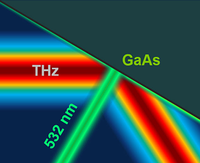
Terahertz accelerators can achieve potential gradients beyond 200 MV/m. Gyrotrons are the only power sources capable of producing megawatt-level, microsecond-long pulses in this frequency range, yet nanosecond-long pulses are required for breakdown-free operation. The authors explore the possibility of using a single GaAs wafer to enable production of the required pulse widths, with rise and fall times that closely track the illuminating laser’s pulse length. They demonstrate and quantify the reflective properties and laser-induced photoconductive effect of GaAs in the millimeter-wave regime, for use in a laser-operated shutter.

Dynamics of magnetoelectric reversal of an antiferromagnetic domain

Arun Parthasarathy and Shaloo Rakheja

Phys. Rev. Applied 11, 034051 (2019) - Published 20 March, 2019

In spintronics research, the actual dynamics of magnetoelectric magnetization switching in an antiferromagnet is often overlooked in experimental work, even though it is important to establish whether multidomain effects play a role. The authors analyze the speed and energy limits of the spatial mechanisms governing electrically controlled domain switching in antiferromagnetic insulators. This study provides valuable insight into the performance of such materials for applications in ultralow-power nonvolatile memory and logic processing.

Sign In to Your Journals Account

Filter

Subject

Filter

Article Lookup

Enter a citation