Highlights

Photon-distillation schemes with reduced resource costs based on multiphoton Fourier interference

F.H.B. Somhorst, B.K. Sauër, S.N. van den Hoven, and J.J. Renema

Phys. Rev. Applied 23, 044003 (2025) - Published 2 April, 2025

The foundation of fault-tolerant linear optical quantum computing is built upon the interference of identical photons to create high-fidelity entangled states. Unfortunately, fabrication limitations cause sources to emit photons that are only partially indistinguishable, leading to computational errors. To address this, the authors introduce a photon-distillation scheme based on multiphoton-interference linear optics. This protocol mitigates arbitrary indistinguishability errors in a single round. A scheme combining conventional quantum error correction and photon distillation has a higher error threshold than quantum error correction alone, and requires fewer optical components.

General protocols for the efficient distillation of indistinguishable photons

Jason Saied, Jeffrey Marshall, Namit Anand, and Eleanor G. Rieffel

Phys. Rev. Applied 23, 034079 (2025) - Published 26 March, 2025

Fault-tolerant linear optical quantum computation relies on interference between identical photons to generate entanglement. Unfortunately, photons in the lab tend to be partially distinguishable, generating less entanglement and causing unheralded errors. The authors introduce families of distillation schemes that use n-photon interference and postselection to filter out “bad” photons and reduce distinguishability by a factor of n, with resource costs scaling only linearly in n. Along the way, the team also resolves an open problem regarding n-mode Fourier interferometers, namely that the Zero Transmission Law characterizes all suppression if and only if n is a prime power.

Universal high-fidelity quantum gates for spin qubits in diamond

H.P. Bartling, J. Yun, K.N. Schymik, M. van Riggelen, L.A. Enthoven, H.B. van Ommen, M. Babaie, F. Sebastiano, M. Markham, D.J. Twitchen, and T.H. Taminiau

Phys. Rev. Applied 23, 034052 (2025) - Published 21 March, 2025

Spins associated with color centers are promising qubits for quantum computation and quantum networks. One of the key challenges toward larger-scale systems is to improve the quality of gate operations. This study realizes a complete set of high-quality gates for the two-qubit system formed by the nitrogen-vacancy center in diamond, using gate designs that protect the qubits from unwanted interactions. These gates are characterized by gate-set tomography, and demonstrate high fidelities for both single- and two-qubit gates. These methods provide opportunities to realize high-quality gates for a variety of color centers in various materials, including diamond, silicon carbide, and silicon.

Algorithm-oriented qubit mapping for variational quantum algorithms

Yanjun Ji, Xi Chen, Ilia Polian, and Yue Ban

Phys. Rev. Applied 23, 034022 (2025) - Published 11 March, 2025

Variational algorithms are among the first practical applications of quantum computing, but their performance is limited by today’s noisy intermediate-scale quantum (NISQ) devices. The authors propose scalable, depth-optimal solutions to overcome these limitations by integrating optimal mapping algorithms applied to small submodules of a given NISQ computer (focusing on popular linear and T- and H-shaped subtopologies). Identification of the best qubits combined with postselection keeps the error rate in check. The team reports up to 82% reduction in circuit depth and an average of 138% better success probability, thus paving the way for reliable quantum computing ecosystems of tomorrow.

Flux-pump-induced degradation of T1 for dissipative cat qubits

Léon Carde, Pierre Rouchon, Joachim Cohen, and Alexandru Petrescu

Phys. Rev. Applied 23, 024073 (2025) - Published 28 February, 2025

Engineering nonlinear dissipation through parametric interactions is a key ingredient in autonomous quantum error correction. In “cat” qubits bit-flip errors may be exponentially suppressed using two-photon driven dissipation, but spurious dissipative channels appear, in a process that is poorly understood. The authors turn to high-order perturbation theory and exact numerical diagonalization to classify the possible decay mechanisms that reduce the coherence of such a qubit, bridging the gap between the microscopic parameters of the circuit and the lifetimes of the modes. Furthermore, engineering constraints on the surrounding apparatus are identified, to reduce decoherence.

On-demand magnon resonance isolation in cavity magnonics

Amin Pishehvar, Zhaoyou Wang, Yujie Zhu, Yu Jiang, Zixin Yan, Fangxin Li, Josep M. Jornet, Jia-Mian Hu, Liang Jiang, and Xufeng Zhang

Phys. Rev. Applied 23, 024053 (2025) - Published 20 February, 2025

Cavity magnonics is crucial for advancing next-generation signal processing (both classical and quantum), but its uptake has been limited by the challenge of achieving on-demand isolation and control of magnons, due to quasistatic magnon-photon interactions. This study employs Floquet engineering, using time-periodic drives in a multimode hybrid magnonic system to dynamically darken magnon modes, effectively decoupling them from the electromagnetic environment. By tuning the relative phase and amplitudes of the drives, precise control over magnon dynamics is achieved. This approach is also scalable, opening the door to large-scale, programmable hybrid magnonic circuits.

How to integrate a miniature optical cavity in a linear ion trap: Shielding dielectrics and trap symmetry

Ezra Kassa, Shaobo Gao, Soon Teh, Dyon van Dinter, and Hiroki Takahashi

Phys. Rev. Applied 23, 024038 (2025) - Published 18 February, 2025

Scaling up qubit numbers remains a major challenge across all quantum computing platforms, including trapped-ion systems. A modular approach seems promising, but hinges on efficient interfaces like miniature optical cavities. Despite decades of effort, a lack of understanding of the relevant challenges has precluded integration. This study identifies key obstacles posed by dielectric optical cavities, and uncovers a critical component that alleviates their negative effects. The findings provide a clear roadmap for improving ion-trap interfacing and suggest that three-dimensional traps are more suitable than planar ones.

On-demand shaped-photon emission based on a parametrically modulated qubit

Xiang Li, Sheng-Yong Li, Si-Lu Zhao, Zheng-Yang Mei, Yang He, Cheng-Lin Deng, Yu Liu, Yan-Jun Liu, Gui-Han Liang, Jin-Zhe Wang, Xiao-Hui Song, Kai Xu, Heng Fan, Yu-Xiang Zhang, Zhong-Cheng Xiang, and Dong-Ning Zheng

Phys. Rev. Applied 23, 024019 (2025) - Published 7 February, 2025

Deterministic emission of shaped microwave photons is important for high-efficiency transmission of quantum information, and thus is crucial for building long-range quantum networks. Current approaches are hindered by the need for complex flux-tunable elements, as well as a small linear range of tunable coupling. This study demonstrates a simple and scalable photon generator that modulates qubit-resonator coupling without extra elements, achieving high-fidelity photon emission with minimal spurious frequency shifts, making it a promising solution for future quantum networks using both single-rail and time-bin encoding.

Extendable optical phase synchronization of remote and independent quantum network nodes over deployed fibers

A.J. Stolk, J.J.B. Biemond, K.L. van der Enden, L. van Dooren, E.J. van Zwet, and R. Hanson

Phys. Rev. Applied 23, 014077 (2025) - Published 30 January, 2025

Entanglement generation using the single-photon protocol is of interest for quantum networks, for its reduced sensitivity to photon losses. This protocol requires a stable relative optical phase on the optical link between network nodes. The authors present a phase-synchronization scheme that enables scalable entanglement generation over metropolitan distances, in a robust and extendable infrastructure. Their results show the feasibility of the single-click heralding protocol at long distances, and the approach can also be used with other types of node hardware, for near-term exploration of large-scale quantum networks.

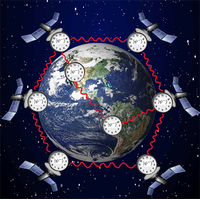
Quantum-assisted master clock in the sky: Global synchronization from satellites at subnanosecond precision

Sage Ducoing, Ivan Agullo, James E. Troupe, and Stav Haldar

Phys. Rev. Applied 23, 014052 (2025) - Published 23 January, 2025

The Global Positioning System (GPS) provides uninterrupted position and timing data across the globe with a precision of up to 40 ns, but is insufficient for advanced applications such as quantum communication, and is susceptible to jamming and spoofing attacks. This article introduces a protocol for synchronizing clocks using a constellation of satellites that relies on the exchange of entangled photons. Simulation shows that 50 low-Earth-orbit satellites bearing off-the-shelf atomic clocks can distribute time globally with a precision that is 2 to 4 orders of magnitude higher than that of GPS. Additionally, the use of entangled photons provides an extra layer of quantum security.

Circuit optimization of informationally complete positive operator–valued qubit measurements for shadow estimation

Zhou You, Qing Liu, and You Zhou

Phys. Rev. Applied 23, 014021 (2025) - Published 9 January, 2025

In quantum information processing, using positive operator–valued measurements (POVMs) enables the design of general measurement schemes and efficient estimation methods with fixed circuits, but the CNOT-gate count during compilation becomes a bottleneck. This study shows that any single-qubit minimal informationally complete POVM (IC POVM) can be realized with at most two CNOT gates—and a symmetric case (SIC POVM) requires only one. This is achieved by virtually inserting gates to adjust unrelated parameters in the compilation circuit. The authors also provide a concise compilation circuit for single-qubit SIC POVMs, paving the way for practical application.

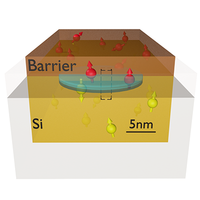
Coherence limit due to hyperfine interaction with nuclei in the barrier material of Si spin qubits

Lukas Cvitkovich, Peter Stano, Christoph Wilhelmer, Dominic Waldhör, Daniel Loss, Yann-Michel Niquet, and Tibor Grasser

Phys. Rev. Applied 22, 064089 (2024) - Published 24 December, 2024

Limited coherence times pose one of the biggest challenges for quantum computing with electron-spin qubits. One promising strategy to enhance the coherence of silicon spin qubits is purification of the semiconducting host material, to remove isotopes with nuclear spins. This study shows that the residual hyperfine interactions with atoms in the barrier material act as an additional source of hyperfine noise, limiting the coherence times even for present-day purification levels of 28Si. Thus we should not focus solely on the silicon to improve silicon qubits.

Independent-optical-frequency-comb-powered 546-km field test of twin-field quantum key distribution

Lai Zhou, Jinping Lin, Chengfang Ge, Yuanbin Fan, Zhiliang Yuan, Hao Dong, Yang Liu, Di Ma, Jiu-Peng Chen, Cong Jiang, Xiang-Bin Wang, Li-Xing You, Qiang Zhang, and Jian-Wei Pan

Phys. Rev. Applied 22, 064057 (2024) - Published 16 December, 2024

Twin-field quantum key distribution exploits single-photon interference to provide long-haul secure communication. However, real-time phase tracking between optical signals sent from opposite ends of the communication link is necessary to realize this scheme. Here the authors show that it is feasible to apply independent optical frequency combs in a quantum communication field trial, using a coherent dual-band stabilization technique. A practical finite-size-secure-key rate of 0.53 bit/s is recorded over a 546-km link connecting two major cities in China. This study represents a significant setup toward the integration of long-distance fiber links into quantum networks.

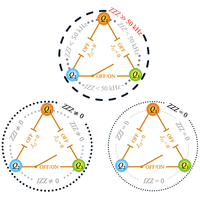
Lattice Hamiltonians and stray interactions within quantum processors

Xuexin Xu, Manabputra, Chloé Vignes, Mohammad H. Ansari, and John M. Martinis

Phys. Rev. Applied 22, 064030 (2024) - Published 10 December, 2024

This study’s modeling of superconducting quantum processors reveals that, contrary to popular belief, three-body ZZZ stray couplings can surpass parasitic ZZ interactions, posing a serious threat to gate fidelity and crosstalk. Even more striking, strongly decoupled qubits—long thought to be ideal—can be more problematic than loosely coupled ones, even when idle. These findings overturn traditional design principles and force us to rethink next-generation architectures for quantum processors.

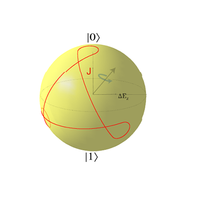
Dynamically corrected gates in silicon singlet-triplet spin qubits

Habitamu Y. Walelign, Xinxin Cai, Bikun Li, Edwin Barnes, and John M. Nichol

Phys. Rev. Applied 22, 064029 (2024) - Published 10 December, 2024

Quantum computers are sensitive to sources of noise in their surroundings. In this work the authors design, implement, and demonstrate a technique that can overcome noise from the nuclei of the atoms hosting a semiconductor spin qubit. The team uses the geometrical properties of qubits to design noise-canceling control sequences and experimentally demonstrate high-fidelity quantum operations.

Quantum limits of superconducting-photonic links and their extension to millimeter waves

Kevin K.S. Multani, Wentao Jiang, Emilio A. Nanni, and Amir H. Safavi-Naeini

Phys. Rev. Applied 22, 054043 (2024) - Published 15 November, 2024

Increasing efficiency is always a good thing, right? When converting laser light into electrical signals that control superconducting quantum computers, we need high efficiency to avoid heating the cryogenic qubits. This study shows, however, that as efficiency increases in such “superconducting-photonic” links, the quantum computer’s error rate also increases, due to the fundamental quantum nature of the light field. This calls into question one route for scaling up quantum computers. Thankfully, the authors also offer a potential solution to this dilemma. This work comes at a key moment, as we seek to scale up from tens or hundreds of qubits to thousands, and eventually millions.

Low-crosstalk optical addressing system for atomic qubits based on multiple objectives and acousto-optic deflectors

Yi-Long Chen (陈一龙), Rui-Rui Li (李睿睿), Ran He (贺冉), Shu-Qian Chen (陈树谦), Wen-Hao Qi (亓文昊), Jin-Ming Cui (崔金明), Yun-Feng Huang (黄运锋), Chuan-Feng Li (李传锋), and Guang-Can Guo (郭光灿)

Phys. Rev. Applied 22, 054003 (2024) - Published 1 November, 2024

Individual addressing with low crosstalk is crucial for high-fidelity quantum gates in trapped-ion systems, but technical challenges in reducing ion crosstalk have thwarted progress. This study uses symmetrically configured acousto-optic deflectors to achieve a Rabi-rate crosstalk as low as 1.19(5)×10−3. Additionally, such deflectors offer flexible manipulation and two-dimensional addressing, making them a promising platform for scalable quantum circuits. This result could significantly advance the practical application of fault-tolerant quantum computing.

Extended spin relaxation times of optically addressed vanadium defects in silicon carbide at telecommunication frequencies

Jonghoon Ahn, Christina Wicker, Nolan Bitner, Michael T. Solomon, Benedikt Tissot, Guido Burkard, Alan M. Dibos, Jiefei Zhang, F. Joseph Heremans, and David D. Awschalom

Phys. Rev. Applied 22, 044078 (2024) - Published 29 October, 2024

Spin defects embedded in a scalable material platform with bright telecom emission are promising candidates for quantum communication technologies. V4+ in SiC fulfills these criteria, but its potential is limited by the lack of understanding of its spin relaxation mechanisms. This study employs all-optical measurements to reveal that the site-dependent spin T1 values can exceed 20 seconds and identifies the mechanism of the spin relaxation processes. These insights lead to a proposal to enable qubit operations at higher temperatures, significantly reducing the infrastructure requirements and paving the way for practical realization of quantum technologies based on V4+ in SiC.

Coherent control of a triangular exchange-only spin qubit

Edwin Acuna, Joseph D. Broz, Kaushal Shyamsundar, Antonio B. Mei, Colin P. Feeney, Valerie Smetanka, Tiffany Davis, Kangmu Lee, Maxwell D. Choi, Brydon Boyd, June Suh, Wonill Ha, Cameron Jennings, Andrew S. Pan, Daniel S. Sanchez, Matthew D. Reed, and Jason R. Petta

Phys. Rev. Applied 22, 044057 (2024) - Published 23 October, 2024

Semiconductor spin qubits are a promising platform for spin-based quantum computing due to their high density and fast gate speeds. Most research to date has focused on linear quantum dot arrays with limited qubit connectivity. Scaling up these devices is desired, but the fabrication process has been an obstacle. Using a semiconductor manufacturing approach, the authors demonstrate a closely packed two-dimensional array of quantum dots with qubit fidelities exceeding 99.8%. The device architecture opens the door to fabricating larger two-dimensional quantum dot arrays with high connectivity.

Room-temperature ladder-type optical memory compatible with single photons from semiconductor quantum dots

Benjamin Maaß, Norman Vincenz Ewald, Avijit Barua, Stephan Reitzenstein, and Janik Wolters

Phys. Rev. Applied 22, 044050 (2024) - Published 18 October, 2024

Robust interfaces between single-photon sources and quantum memories are pivotal for tomorrow’s quantum network architectures. The authors present a room-temperature ladder-type atomic memory for single photons at 895 nm. Comprehensive performance characterization reveals the capabilities of the memory for high bandwidth and low noise, and benchmarking shows its compatibility with state-of-the-art quantum dot single-photon sources. This work paves the way toward a heterogeneous on-demand interface between a single-photon source and an optical memory for buffering and synchronization in quantum network nodes.

Sign In to Your Journals Account

Filter

Filter

Article Lookup

Enter a citation