Highlights

Optimizing nonlocal spin valves via wide-range interfacial-resistance tuning: Toward spin-accumulation sensors

Ben Kaiser, Justin Ramberger, Mikaela Norum, Nileena Nandakumaran, John Dewey, and Chris Leighton

Phys. Rev. Applied 22, 064050 (2024) - Published 13 December, 2024

Spintronic devices known as metallic nonlocal spin valves are leading candidates for next-generation low-resistance hard disk drive read heads but suffer from low signal. This work addresses this challenge through a wide-ranging study of the use of tuned-interface-resistance Al-O barriers, realizing 500-fold enhancement in spin signal even in the ultrathin Al limit. Despite this boost, spin signals still fall short of theoretical predictions, uncovering a universal spin polarization vs. resistance-area product relationship, over twelve orders of magnitude in the resistance-area product.

Spin-wave signal rejection in magnonic waveguides induced by conducting films with a single groove

Aleksei A. Nikitin and Erkki Lähderanta

Phys. Rev. Applied 22, 064049 (2024) - Published 13 December, 2024

Magnonic crystals, artificial magnetic media with periodically modulated properties, are a powerful tool for processing microwave signals, but generally require several millimeters of periodic structure. The authors present an innovative approach to circumvent this issue through a magnonic waveguide covered by a VO2 stripe with a shaped microgroove. Simulations show that such a structure does not manifest noticeable spin-wave reflection, but still demonstrates a rejection band in its transmission characteristic. The obtained findings pave a clear way forward to microminiaturizing spin-wave devices, where features of magnonic crystals are exploited.

Direct measurement of DNA bending by quantum magnetic imaging of a nanomechanical torque balance

Zeeshawn Kazi, Isaac M. Shelby, Ruhee Nirodi, Joseph Turnbull, Hideyuki Watanabe, Kohei M. Itoh, Paul A. Wiggins, and Kai-Mei C. Fu

Phys. Rev. Applied 22, 064044 (2024) - Published 12 December, 2024

DNA flexibility is a key determinant of biological function, but the inability to directly measure the bending energy at short, biophysically relevant length scales leaves this quantity poorly understood. The authors measure DNA bending directly, by tethering a ferromagnetic nanoparticle probe to an individual DNA molecule, applying a magnetic field, and reading out a diamond magnetic field sensor. Wide-field imaging of quantum defects near the surface of the diamond enables measurement of the DNA bending torque.

Acoustic lateral recoil force and stable lift of anisotropic particles

Mikhail Smagin, Ivan Toftul, Konstantin Y. Bliokh, and Mihail Petrov

Phys. Rev. Applied 22, 064041 (2024) - Published 11 December, 2024

Acoustic manipulation of small particles is important for various applications, particularly in the life sciences, yet understanding higher-order acoustic forces and torques on larger, nonspherical particles has remained unexplored. This work reveals two interesting phenomena: a lateral acoustic recoil force, and a stable acoustic lift for an anisotropically shaped particle in a sound-wave field. The authors’ discovery offers fresh functionalities for acoustic manipulation and sorting of anisotropic particles, including biomolecules and cells.

Surface-phononic carbon nanotubes

Jiang-Po Zheng, Xiao-Chen Sun, Fan-Yun Pan, Xiao-Dong Wang, Shi-Li Yang, Yang-Yang Lv, Xue-Jun Yan, Cheng He, Si-Yuan Yu, Ming-Hui Lu, and Yan-Feng Chen

Phys. Rev. Applied 22, 064031 (2024) - Published 10 December, 2024

Carbon nanotubes (CNTs) are known for their exceptional electronic properties, but defects often induce scattering and thus hinder performance. Taking inspiration from CNTs’ electronic band structure, this study introduces phononic CNTs for controlling surface acoustic waves (SAWs). Phononic CNTs support two distinct, chiral SAW bands and exhibit strong resistance to scattering, enabling efficient SAW propagation. With their broad bandwidth, antireflection properties, and minimal loss, these tubes offer a promising solution for application in high-performance acoustics and phononics.

Lattice Hamiltonians and stray interactions within quantum processors

Xuexin Xu, Manabputra, Chloé Vignes, Mohammad H. Ansari, and John M. Martinis

Phys. Rev. Applied 22, 064030 (2024) - Published 10 December, 2024

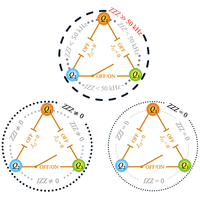
This study’s modeling of superconducting quantum processors reveals that, contrary to popular belief, three-body ZZZ stray couplings can surpass parasitic ZZ interactions, posing a serious threat to gate fidelity and crosstalk. Even more striking, strongly decoupled qubits—long thought to be ideal—can be more problematic than loosely coupled ones, even when idle. These findings overturn traditional design principles and force us to rethink next-generation architectures for quantum processors.

Dynamically corrected gates in silicon singlet-triplet spin qubits

Habitamu Y. Walelign, Xinxin Cai, Bikun Li, Edwin Barnes, and John M. Nichol

Phys. Rev. Applied 22, 064029 (2024) - Published 10 December, 2024

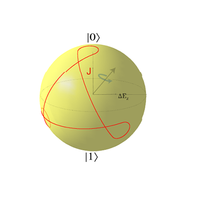
Quantum computers are sensitive to sources of noise in their surroundings. In this work the authors design, implement, and demonstrate a technique that can overcome noise from the nuclei of the atoms hosting a semiconductor spin qubit. The team uses the geometrical properties of qubits to design noise-canceling control sequences and experimentally demonstrate high-fidelity quantum operations.

Piezoelectric microresonators for sensitive spin detection

Cecile A. Skoryna-Kline, Jorge Monroy-Ruz, and Krishna C. Balram

Phys. Rev. Applied 22, 064019 (2024) - Published 4 December, 2024

Piezoelectric devices are traditionally analyzed in the quasistatic regime with the magnetic fields ignored. However, the surface magnetic fields can be significant at GHz frequencies and provide a natural interface to nanoscale spin systems. The authors show via scaling arguments that the surface magnetic field scales with the square of the operation frequency, and demonstrate its existence in a proof-of-concept experiment by showing excess absorption of a focused surface acoustic wave induced by magnon mode. This approach leads to enhanced spin detection sensitivity of piezoelectric devices, and also indicates the feasibility of single-spin electrical readout at cryogenic temperatures.

Inverse design of multishape metamaterials

David M.J. Dykstra and Corentin Coulais

Phys. Rev. Applied 22, 064013 (2024) - Published 3 December, 2024

Metamaterials have emerged as a promising platform to achieve on-demand shape morphing, yet so far it has been difficult to design metamaterials with more than one shape change. This study meets this challenge by introducing a sequential design strategy, where each shape change is achieved by local geometric constraints. As a result, metamaterials with multiple shape changes of arbitrary complexity can be designed. These findings highlight an inherent trade-off between design freedom and design constraints and pave the way towards multishape metamaterials with potential applications in e.g. soft robotics, mechanical computing, and mechanical self-assembly.

Quantum diamond microscope for narrowband magnetic imaging with high spatial and spectral resolution

Zechuan Yin, Jiashen Tang, Connor A. Hart, John W. Blanchard, Xinyan Xiang, Saipriya Satyajit, Smriti Bhalerao, Tao Tao, Stephen J. DeVience, and Ronald L. Walsworth

Phys. Rev. Applied 22, 054050 (2024) - Published 18 November, 2024

The quantum diamond microscope (QDM) is a versatile, widely used platform for magnetic field imaging, but in applications it has been limited to broadband signals. This study integrates a QDM with a narrowband measurement protocol and a fast lock-in camera, enabling imaging of rf magnetic field patterns with micrometer-scale spatial resolution, single-hertz spectral resolution, and nanotesla sensitivity for each pixel. The rf QDM simultaneously images the amplitude, frequency, and phase of narrowband fields, for potential applications in micrometer-scale NMR imaging, ac-susceptibility mapping, impedance tomography, electronic circuit analysis, and spatial eddy-current inspection.

Quantum limits of superconducting-photonic links and their extension to millimeter waves

Kevin K.S. Multani, Wentao Jiang, Emilio A. Nanni, and Amir H. Safavi-Naeini

Phys. Rev. Applied 22, 054043 (2024) - Published 15 November, 2024

Increasing efficiency is always a good thing, right? When converting laser light into electrical signals that control superconducting quantum computers, we need high efficiency to avoid heating the cryogenic qubits. This study shows, however, that as efficiency increases in such “superconducting-photonic” links, the quantum computer’s error rate also increases, due to the fundamental quantum nature of the light field. This calls into question one route for scaling up quantum computers. Thankfully, the authors also offer a potential solution to this dilemma. This work comes at a key moment, as we seek to scale up from tens or hundreds of qubits to thousands, and eventually millions.

Low-crosstalk optical addressing system for atomic qubits based on multiple objectives and acousto-optic deflectors

Yi-Long Chen (陈一龙), Rui-Rui Li (李睿睿), Ran He (贺冉), Shu-Qian Chen (陈树谦), Wen-Hao Qi (亓文昊), Jin-Ming Cui (崔金明), Yun-Feng Huang (黄运锋), Chuan-Feng Li (李传锋), and Guang-Can Guo (郭光灿)

Phys. Rev. Applied 22, 054003 (2024) - Published 1 November, 2024

Individual addressing with low crosstalk is crucial for high-fidelity quantum gates in trapped-ion systems, but technical challenges in reducing ion crosstalk have thwarted progress. This study uses symmetrically configured acousto-optic deflectors to achieve a Rabi-rate crosstalk as low as 1.19(5)×10−3. Additionally, such deflectors offer flexible manipulation and two-dimensional addressing, making them a promising platform for scalable quantum circuits. This result could significantly advance the practical application of fault-tolerant quantum computing.

Extended spin relaxation times of optically addressed vanadium defects in silicon carbide at telecommunication frequencies

Jonghoon Ahn, Christina Wicker, Nolan Bitner, Michael T. Solomon, Benedikt Tissot, Guido Burkard, Alan M. Dibos, Jiefei Zhang, F. Joseph Heremans, and David D. Awschalom

Phys. Rev. Applied 22, 044078 (2024) - Published 29 October, 2024

Spin defects embedded in a scalable material platform with bright telecom emission are promising candidates for quantum communication technologies. V4+ in SiC fulfills these criteria, but its potential is limited by the lack of understanding of its spin relaxation mechanisms. This study employs all-optical measurements to reveal that the site-dependent spin T1 values can exceed 20 seconds and identifies the mechanism of the spin relaxation processes. These insights lead to a proposal to enable qubit operations at higher temperatures, significantly reducing the infrastructure requirements and paving the way for practical realization of quantum technologies based on V4+ in SiC.

Atomic clock locking with Bayesian quantum parameter estimation: Scheme and experiment

Chengyin Han, Zhu Ma, Yuxiang Qiu, Ruihuan Fang, Jiatao Wu, Chang Zhan, Maojie Li, Jiahao Huang, Bo Lu, and Chaohong Lee

Phys. Rev. Applied 22, 044058 (2024) - Published 23 October, 2024

Atomic clocks are crucial for fundamental science and practical technology, but their sensitivity is often constrained by the standard quantum limit. With a cold-atom coherent-population-trapping clock, the authors design and experimentally demonstrate an adaptive Bayesian quantum frequency estimation protocol that approaches the Heisenberg scaling with respect to total interrogation time. This atomic clock also yields improved fractional frequency stability and enhanced robustness against technical noises. This work provides a high-precision approach to atomic clock locking, and holds promising applications in various interferometry-based quantum sensors.

Coherent control of a triangular exchange-only spin qubit

Edwin Acuna, Joseph D. Broz, Kaushal Shyamsundar, Antonio B. Mei, Colin P. Feeney, Valerie Smetanka, Tiffany Davis, Kangmu Lee, Maxwell D. Choi, Brydon Boyd, June Suh, Wonill Ha, Cameron Jennings, Andrew S. Pan, Daniel S. Sanchez, Matthew D. Reed, and Jason R. Petta

Phys. Rev. Applied 22, 044057 (2024) - Published 23 October, 2024

Semiconductor spin qubits are a promising platform for spin-based quantum computing due to their high density and fast gate speeds. Most research to date has focused on linear quantum dot arrays with limited qubit connectivity. Scaling up these devices is desired, but the fabrication process has been an obstacle. Using a semiconductor manufacturing approach, the authors demonstrate a closely packed two-dimensional array of quantum dots with qubit fidelities exceeding 99.8%. The device architecture opens the door to fabricating larger two-dimensional quantum dot arrays with high connectivity.

Vertically graded Fe-Ni alloys with low damping and a sizable spin-orbit torque

Rachel E. Maizel, Shuang Wu, Purnima P. Balakrishnan, Alexander J. Grutter, Christy J. Kinane, Andrew J. Caruana, Prabandha Nakarmi, Bhuwan Nepal, David A. Smith, Youngmin Lim, Julia L. Jones, Wyatt C. Thomas, Jing Zhao, F. Marc Michel, Tim Mewes, and Satoru Emori

Phys. Rev. Applied 22, 044052 (2024) - Published 21 October, 2024

In spintronics, conventional devices exploiting spin-orbit torque cannot simultaneously provide both low damping and strong torque, the two necessities for energy-efficient operation. The authors take a different approach to meet both criteria, using Fe-Ni alloy films with steep vertical gradients in composition. Intriguingly, they find that sizable spin-orbit torque emerges even in an alloy without any intentional compositional gradient, due to a gradient in growth-induced strain. Their results give perspective for materials engineering of spin-orbit-torque devices, leveraging asymmetry not only in chemical composition, but also in atomic-scale lattice structure.

Room-temperature ladder-type optical memory compatible with single photons from semiconductor quantum dots

Benjamin Maaß, Norman Vincenz Ewald, Avijit Barua, Stephan Reitzenstein, and Janik Wolters

Phys. Rev. Applied 22, 044050 (2024) - Published 18 October, 2024

Robust interfaces between single-photon sources and quantum memories are pivotal for tomorrow’s quantum network architectures. The authors present a room-temperature ladder-type atomic memory for single photons at 895 nm. Comprehensive performance characterization reveals the capabilities of the memory for high bandwidth and low noise, and benchmarking shows its compatibility with state-of-the-art quantum dot single-photon sources. This work paves the way toward a heterogeneous on-demand interface between a single-photon source and an optical memory for buffering and synchronization in quantum network nodes.

Ion-chain sympathetic cooling and gate dynamics

A. Paul and C. Noel

Phys. Rev. Applied 22, 044033 (2024) - Published 15 October, 2024

Trapped ions offer much promise for near-term implementations of quantum computing. To ensure that the ions remain coherent, laser-cooling schemes are required to stave off decoherence caused by motional heating, but effective schemes must satisfy trade-offs between motional and dephasing errors, and between cooling power and chain length. This work uses a mix of theoretical and computational techniques to establish best practices for laser cooling for long chains of trapped ions. It turns out that placing the coolant at the center of an ion chain is always optimal.

Topological simulation and chiral spin-spin interaction in driven cavity magnonics

Xin-Lei Hei, Xing-Liang Dong, Jia-Qiang Chen, Yi-Fan Qiao, Xue-Feng Pan, Xiao-Yu Yao, Jun-Cong Zheng, Yu-Meng Ren, Xiao-Wen Huo, and Peng-Bo Li

Phys. Rev. Applied 22, 044025 (2024) - Published 9 October, 2024

Magnon-based hybrid quantum systems show potential for quantum information processing, but their scalability is questionable, due to the short-range nature of direct magnon coupling. The authors propose and analyze a practical design for scalable hybrid quantum devices that enable remote coupling of magnon arrays through microwave photons within a superconducting coplanar-waveguide resonator. By modulating the magnon frequencies, topological magnon chains are obtained, which enables tunable chiral interactions with solid-state spins. This work opens possibilities for quantum computing, quantum communication, and quantum sensing based on magnons and solid-state spins.

Magnetic tunnel junctions featuring the topological Weyl semimetal Co2MnGa

Zhiping He, Chung-Tao Chou, Eugene Park, Alexandre C. Foucher, Brooke C. McGoldrick, Qiuyuan Wang, Justin T. Hou, and Luqiao Liu

Phys. Rev. Applied 22, 044024 (2024) - Published 9 October, 2024

Magnetic Weyl semimetals present particular promise for spintronic applications, as their band-structure topology can be tuned by a magnetic field. Systematic experimental investigation of magnetic tunnel junctions (MTJs) with electrodes of ferromagnetic Weyl semimetal is needed. This study develops fully epitaxial single-crystalline MTJs featuring Co2MnGa, a clean material system for investigating Weyl physics in the devices. Along the way, the authors establish the relationship between tunneling magnetoresistance and the degree of chemical and topological ordering of Co2MnGa.

Sign In to Your Journals Account

Filter

Filter

Article Lookup

Enter a citation