Amplified Optomechanical Transduction of Virtual Radiation Pressure
Mauro Cirio, Kamanasish Debnath, Neill Lambert, and Franco Nori
Phys. Rev. Lett. 119, 053601 (2017) - Published 31 July, 2017

Mauro Cirio, Kamanasish Debnath, Neill Lambert, and Franco Nori
Phys. Rev. Lett. 119, 053601 (2017) - Published 31 July, 2017
Thomas Lilienkamp, Jan Christoph, and Ulrich Parlitz
Phys. Rev. Lett. 119, 054101 (2017) - Published 31 July, 2017
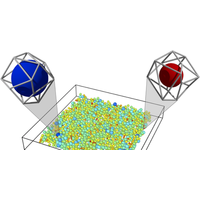
Varghese Mathai, Xiaojue Zhu, Chao Sun, and Detlef Lohse
Phys. Rev. Lett. 119, 054501 (2017) - Published 31 July, 2017
Anshul D. S. Parmar, Shiladitya Sengupta, and Srikanth Sastry
Phys. Rev. Lett. 119, 056001 (2017) - Published 31 July, 2017
Daniel Muñoz-Santiburcio and Dominik Marx
Phys. Rev. Lett. 119, 056002 (2017) - Published 31 July, 2017
A. Chainani, M. Sicot, Y. Fagot-Revurat, G. Vasseur, J. Granet, B. Kierren, L. Moreau, M. Oura, A. Yamamoto, Y. Tokura, and D. Malterre
Phys. Rev. Lett. 119, 057001 (2017) - Published 31 July, 2017
Asato Mizuno, Yoshiaki Shuku, Michio M. Matsushita, Masahisa Tsuchiizu, Yuuki Hara, Nobuo Wada, Yasuhiro Shimizu, and Kunio Awaga
Phys. Rev. Lett. 119, 057201 (2017) - Published 31 July, 2017
Nicholas R. Jungwirth and Gregory D. Fuchs
Phys. Rev. Lett. 119, 057401 (2017) - Published 31 July, 2017
Youngjun Ahn, Joonkyu Park, Anastasios Pateras, Matthew B. Rich, Qingteng Zhang, Pice Chen, Mohammed H. Yusuf, Haidan Wen, Matthew Dawber, and Paul G. Evans
Phys. Rev. Lett. 119, 057601 (2017) - Published 31 July, 2017
Ling Liu and Patrick R. Onck
Phys. Rev. Lett. 119, 057801 (2017) - Published 31 July, 2017
Megan E. Szakasits, Wenxuan Zhang, and Michael J. Solomon
Phys. Rev. Lett. 119, 058001 (2017) - Published 31 July, 2017
M. Padmanath and Nilmani Mathur
Phys. Rev. Lett. 119, 042001 (2017) - Published 28 July, 2017
Josef Grenz, Arne Köhler, Alexander Schwarz, and Roland Wiesendanger
Phys. Rev. Lett. 119, 047205 (2017) - Published 28 July, 2017
D. Heckendorf, K. J. Mutch, S. U. Egelhaaf, and M. Laurati
Phys. Rev. Lett. 119, 048003 (2017) - Published 28 July, 2017
Tian Lan and Xiao-Gang Wen
Phys. Rev. Lett. 119, 040403 (2017) - Published 27 July, 2017
Andrew S. Darmawan and David Poulin
Phys. Rev. Lett. 119, 040502 (2017) - Published 27 July, 2017
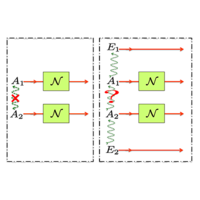
Elton Yechao Zhu, Quntao Zhuang, and Peter W. Shor
Phys. Rev. Lett. 119, 040503 (2017) - Published 27 July, 2017
Erika Cortese, Pavlos G. Lagoudakis, and Simone De Liberato
Phys. Rev. Lett. 119, 043604 (2017) - Published 27 July, 2017
Xingkun Man and Masao Doi
Phys. Rev. Lett. 119, 044502 (2017) - Published 27 July, 2017
J. Cowley, C. Thornton, C. Arran, R. J. Shalloo, L. Corner, G. Cheung, C. D. Gregory, S. P. D. Mangles, N. H. Matlis, D. R. Symes, R. Walczak, and S. M. Hooker
Phys. Rev. Lett. 119, 044802 (2017) - Published 27 July, 2017