Browse Issues:

HIGHLIGHTED ARTICLES

Self-learning Monte Carlo method: Continuous-time algorithm

Yuki Nagai, Huitao Shen, Yang Qi, Junwei Liu, and Liang Fu

Phys. Rev. B 96, 161102(R) (2017) - Published 3 October, 2017

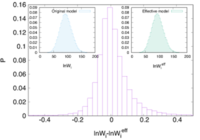
The self-learning Monte Carlo (SLMC) method speeds up the Monte Carlo simulation by designing and training an effective model to propose efficient global updates. We implement the continuous-time quantum Monte Carlo algorithm for quantum impurity models in the framework of SLMC. We introduce and train a diagram generating function (DGF) to model the probability distribution of field configurations in the continuous imaginary time at all orders of diagrammatic expansion. By using the DGF to propose global updates, we show that the self-learning continuous-time Monte Carlo method can significantly reduce the computational complexity of the simulation.

Electronically highly cubic conditions for Ru in α−RuCl3

S. Agrestini, C.-Y. Kuo, K.-T. Ko, Z. Hu, D. Kasinathan, H. B. Vasili, J. Herrero-Martin, S. M. Valvidares, E. Pellegrin, L.-Y. Jang, A. Henschel, M. Schmidt, A. Tanaka, and L. H. Tjeng

Phys. Rev. B 96, 161107(R) (2017) - Published 12 October, 2017

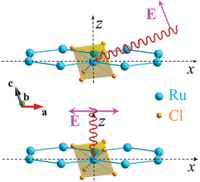
α-RuCl3 is the most promising candidate for the long-sought materialization of the Kitaev model, where compasslike exchange interactions lead to a gapless spin liquid with emergent Majorana fermion excitations. Prerequisite for these expectations is that the symmetry-imposed noncubic crystal field is smaller compared to the spin-orbit coupling and does not perturb significantly the description of the electronic ground state in terms of the Jeff = 1/2 state. Here, the authors combine polarization-dependent x-ray absorption spectroscopy, a technique that gives direct access to the crystal field of a material, and full multiplet calculations to determine the size and sign of the noncubic crystal-field splitting. The results demonstrate that the “electronically cubic conditions” and the Jeff = 1/2 ground state for Ru in α-RuCl3 are fulfilled.

First-principles electron transport with phonon coupling: Large scale at low cost

Tue Gunst, Troels Markussen, Mattias L. N. Palsgaard, Kurt Stokbro, and Mads Brandbyge

Phys. Rev. B 96, 161404(R) (2017) - Published 11 October, 2017

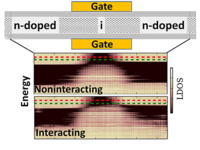
Phonon-assisted tunneling plays a crucial role in sub-10-nanometer gate-length devices. Here, the authors present a first-principles special thermal displacement method that bridges the models used independently in molecular electronics and in device simulations. The method is conceptually simple and much more efficient than any existing first-principles transport method, enabling modeling of realistic rectifiers and transistors with account of electron-phonon coupling. The results are in excellent agreement with both experiments and state-of-the-art perturbation theory calculations discussed in the paper, demonstrating that the method is an appealing design tool for next-generation devices and nanomaterials.

Fractons from partons

Timothy H. Hsieh and Gábor B. Halász

Phys. Rev. B 96, 165105 (2017) - Published 5 October, 2017

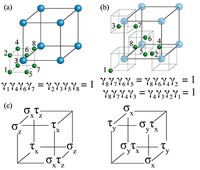
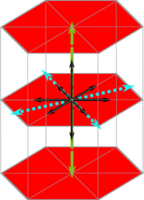
Fracton phases are three dimensional topological phases in which quasiparticle excitations are restricted to move along planes, lines, or not to move at all. In this work, we show how such phases can be understood in terms of parton constructions, and in the process we find a new type-II model with fractal logical operators.

Dual gauge field theory of quantum liquid crystals in three dimensions

Aron J. Beekman, Jaakko Nissinen, Kai Wu, and Jan Zaanen

Phys. Rev. B 96, 165115 (2017) - Published 9 October, 2017

Quantum liquid crystals are strongly correlated quantum many-body systems with broken rotational symmetry but with partial or complete translational symmetry. Inspired by the classical theory for hexatic liquid crystals, which deals with the thermal unbinding of dislocations in 2D solids, the present work advances the idea that 3D solids can melt quantum mechanically via unbinding, or rather Bose-Einstein condensation, of dislocation worldsheets, resulting in quantum analogs of nematic, smectic, and columnar liquid crystals. In these phases, the phonons, as represented by two-form dual gauge fields, develop a mass gap reflecting the loss of shear rigidity.

Photoemission study of the electronic structure of valence band convergent SnSe

C. W. Wang, Y. Y. Y. Xia, Z. Tian, J. Jiang, B. H. Li, S. T. Cui, H. F. Yang, A. J. Liang, X. Y. Zhan, G. H. Hong, S. Liu, C. Chen, M. X. Wang, L. X. Yang, Z. Liu, Q. X. Mi, G. Li, J. M. Xue, Z. K. Liu, and Y. L. Chen

Phys. Rev. B 96, 165118 (2017) - Published 10 October, 2017

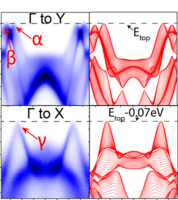
Monocrystalline SnSe, which is a binary semiconductor, has recently been demonstrated to be a high-performance thermoelectric material with a record-high figure of merit of 2.6 at high temperature (923 K). Using angle-resolved photoemission spectroscopy, the authors probed the full electronic structure of SnSe. They observed three convergent hole bands with small energy differences in their band tops and relatively small in-plane effective masses, in agreement with ab initio calculations. These bands are critical for the enhancement of the Seebeck coefficient, while preserving the high electrical conductivity of the material. Thus, they represent a key factor contributing to the high figure of merit in SnSe.

One-dimensional symmetry protected topological phases and their transitions

Ruben Verresen, Roderich Moessner, and Frank Pollmann

Phys. Rev. B 96, 165124 (2017) - Published 12 October, 2017

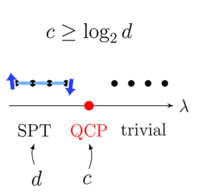
The authors present a unified perspective on a large class of one-dimensional symmetry-protected topological phases. Characterizing critical points between such phases leads to a conjecture of a topological lower bound on the central charge in terms of the phase-specific edge mode dimension.

Bulk Fermi surface of the Weyl type-II semimetallic candidate γ−MoTe2

D. Rhodes, R. Schönemann, N. Aryal, Q. Zhou, Q. R. Zhang, E. Kampert, Y.-C. Chiu, Y. Lai, Y. Shimura, G. T. McCandless, J. Y. Chan, D. W. Paley, J. Lee, A. D. Finke, J. P. C. Ruff, S. Das, E. Manousakis, and L. Balicas

Phys. Rev. B 96, 165134 (2017) - Published 17 October, 2017

The electronic structure of WTe2 and of orthorhombic γ-MoTe2 are theoretically claimed to contain pairs of Weyl type-II points associated with linearly touching electron and hole pockets. A series of recent angle-resolved photoemission spectroscopy (ARPES) experiments claims to observe general agreement with these predictions. Here, the authors report a de Haas–van Alphen study on γ-MoTe2 which, in contrast to ARPES and predictions, finds a simpler and more isotropic Fermi surface. Upon the guidance of ARPES, they show here that it is possible to explain the observed Fermi surface geometry by an independent displacement of the theoretical electron and hole bands relative to the Fermi level. However, this ad hoc procedure, previously used by a number of groups, suppresses the crossings between electron and hole bands and hence the predicted Weyl type-II points.

Extremely large magnetoresistance and Kohler's rule in PdSn4: A complete study of thermodynamic, transport, and band-structure properties

Na Hyun Jo, Yun Wu, Lin-Lin Wang, Peter P. Orth, Savannah S. Downing, Soham Manni, Dixiang Mou, Duane D. Johnson, Adam Kaminski, Sergey L. Bud'ko, and Paul C. Canfield

Phys. Rev. B 96, 165145 (2017) - Published 27 October, 2017

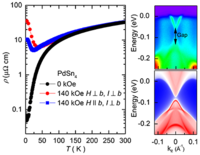
A new type of a topological quantum structure was identified recently in PtSn4 as a Dirac node arc feature on the surface. More importantly, PtSn4 shows extremely large magnetoresistance (XMR). PdSn4 is isostructural with PtSn4 and has the same electron count. By comparing these similar compounds, the authors address the problem about the origin of the XMR in them and establish that neither the carrier compensation nor the Dirac node arc surface state can be the primary reason for it. On the other hand, Kohler’s rule scaling is fulfilled over the entire range of temperatures and field strengths that are explored here.

Indistinguishable and efficient single photons from a quantum dot in a planar nanobeam waveguide

Gabija Kiršanskė, Henri Thyrrestrup, Raphaël S. Daveau, Chris L. Dreeßen, Tommaso Pregnolato, Leonardo Midolo, Petru Tighineanu, Alisa Javadi, Søren Stobbe, Rüdiger Schott, Arne Ludwig, Andreas D. Wieck, Suk In Park, Jin D. Song, Andreas V. Kuhlmann, Immo Söllner, Matthias C. Löbl, Richard J. Warburton, and Peter Lodahl

Phys. Rev. B 96, 165306 (2017) - Published 19 October, 2017

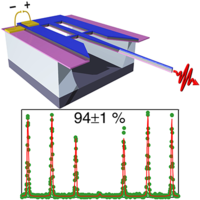
Planar photonic technology provides a highly promising route of creating an on-chip and on-demand source of single photons, which can be scaled into photonic circuitry. While self-assembled quantum dots have been proven to be excellent coherent single-photon emitters in many microscale structures, in nanoscale devices the photon coherence can be compromised due to the nearby surfaces. Here, the authors achieve 94% indistinguishability of photons emitted from a nanoscale photonic waveguide under p-shell excitation.

Narrow optical linewidths and spin pumping on charge-tunable close-to-surface self-assembled quantum dots in an ultrathin diode

Matthias C. Löbl, Immo Söllner, Alisa Javadi, Tommaso Pregnolato, Rüdiger Schott, Leonardo Midolo, Andreas V. Kuhlmann, Søren Stobbe, Andreas D. Wieck, Peter Lodahl, Arne Ludwig, and Richard J. Warburton

Phys. Rev. B 96, 165440 (2017) - Published 30 October, 2017

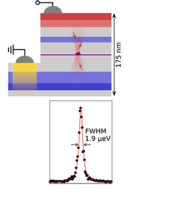
Quantum dots in photonic crystal membrane structures are an attractive platform for on-chip quantum photonics. However, charge control of quantum dots in thin membranes is challenging. The widely used p-i-n diodes operate typically at high bias, resulting in high leakage currents. Here, a modified diode design is presented, fully compatible with the fabrication of photonic crystals, that enables deterministic charging of embedded quantum dots at small biases and, hence, small currents. Narrow optical linewidths and optical spin pumping are demonstrated on quantum dots in this ultrathin diode structure.

RAPID COMMUNICATIONS

Electronic structure and strongly correlated systems

Chiral topological excitons in a Chern band insulator

Ke Chen and Ryuichi Shindou

Phys. Rev. B 96, 161101(R) (2017) - Published 2 October, 2017

Self-learning Monte Carlo method: Continuous-time algorithm

Yuki Nagai, Huitao Shen, Yang Qi, Junwei Liu, and Liang Fu

Phys. Rev. B 96, 161102(R) (2017) - Published 3 October, 2017

The self-learning Monte Carlo (SLMC) method speeds up the Monte Carlo simulation by designing and training an effective model to propose efficient global updates. We implement the continuous-time quantum Monte Carlo algorithm for quantum impurity models in the framework of SLMC. We introduce and train a diagram generating function (DGF) to model the probability distribution of field configurations in the continuous imaginary time at all orders of diagrammatic expansion. By using the DGF to propose global updates, we show that the self-learning continuous-time Monte Carlo method can significantly reduce the computational complexity of the simulation.

Magnetic field induced strong valley polarization in the three-dimensional topological semimetal LaBi

Nitesh Kumar, Chandra Shekhar, J. Klotz, J. Wosnitza, and Claudia Felser

Phys. Rev. B 96, 161103(R) (2017) - Published 3 October, 2017

Chiral flat bands: Existence, engineering, and stability

Ajith Ramachandran, Alexei Andreanov, and Sergej Flach

Phys. Rev. B 96, 161104(R) (2017) - Published 9 October, 2017

Electron transport in nodal-line semimetals

S. V. Syzranov and B. Skinner

Phys. Rev. B 96, 161105(R) (2017) - Published 11 October, 2017

Local breaking of fourfold rotational symmetry by short-range magnetic order in heavily overdoped Ba(Fe1−xCux)2As2

Weiyi Wang, Yu Song, Ding Hu, Yu Li, Rui Zhang, L. W. Harriger, Wei Tian, Huibo Cao, and Pengcheng Dai

Phys. Rev. B 96, 161106(R) (2017) - Published 11 October, 2017

Electronically highly cubic conditions for Ru in α−RuCl3

S. Agrestini, C.-Y. Kuo, K.-T. Ko, Z. Hu, D. Kasinathan, H. B. Vasili, J. Herrero-Martin, S. M. Valvidares, E. Pellegrin, L.-Y. Jang, A. Henschel, M. Schmidt, A. Tanaka, and L. H. Tjeng

Phys. Rev. B 96, 161107(R) (2017) - Published 12 October, 2017

α-RuCl3 is the most promising candidate for the long-sought materialization of the Kitaev model, where compasslike exchange interactions lead to a gapless spin liquid with emergent Majorana fermion excitations. Prerequisite for these expectations is that the symmetry-imposed noncubic crystal field is smaller compared to the spin-orbit coupling and does not perturb significantly the description of the electronic ground state in terms of the Jeff = 1/2 state. Here, the authors combine polarization-dependent x-ray absorption spectroscopy, a technique that gives direct access to the crystal field of a material, and full multiplet calculations to determine the size and sign of the noncubic crystal-field splitting. The results demonstrate that the “electronically cubic conditions” and the Jeff = 1/2 ground state for Ru in α-RuCl3 are fulfilled.

Surfaces and slabs of fractional topological insulator heterostructures

Sharmistha Sahoo, Alexander Sirota, Gil Young Cho, and Jeffrey C. Y. Teo

Phys. Rev. B 96, 161108(R) (2017) - Published 12 October, 2017

Symmetric-gapped surface states of fractional topological insulators

Gil Young Cho, Jeffrey C. Y. Teo, and Eduardo Fradkin

Phys. Rev. B 96, 161109(R) (2017) - Published 12 October, 2017

Controlling phase separation in vanadium dioxide thin films via substrate engineering

Stephanie N. Gilbert Corder, Jianjuan Jiang, Xinzhong Chen, Salinporn Kittiwatanakul, I-Cheng Tung, Yi Zhu, Jiawei Zhang, Hans A. Bechtel, Michael C. Martin, G. Lawrence Carr, Jiwei Lu, Stuart A. Wolf, Haidan Wen, Tiger H. Tao, and Mengkun Liu

Phys. Rev. B 96, 161110(R) (2017) - Published 23 October, 2017

Creating a bosonic fractional quantum Hall state by pairing fermions

Cécile Repellin, Tarik Yefsah, and Antoine Sterdyniak

Phys. Rev. B 96, 161111(R) (2017) - Published 23 October, 2017

Topological surface electronic states in candidate nodal-line semimetal CaAgAs

Xiao-Bo Wang, Xiao-Ming Ma, Eve Emmanouilidou, Bing Shen, Chia-Hsiu Hsu, Chun-Sheng Zhou, Yi Zuo, Rong-Rong Song, Su-Yang Xu, Gan Wang, Li Huang, Ni Ni, and Chang Liu

Phys. Rev. B 96, 161112(R) (2017) - Published 24 October, 2017

Confinement and fermion doubling problem in Dirac-like Hamiltonians

B. Messias de Resende, F. Crasto de Lima, R. H. Miwa, E. Vernek, and G. J. Ferreira

Phys. Rev. B 96, 161113(R) (2017) - Published 25 October, 2017

Identification of Si-vacancy related room-temperature qubits in 4H silicon carbide

Viktor Ivády, Joel Davidsson, Nguyen Tien Son, Takeshi Ohshima, Igor A. Abrikosov, and Adam Gali

Phys. Rev. B 96, 161114(R) (2017) - Published 27 October, 2017

Enriched axial anomaly in Weyl materials

Zachary M. Raines and Victor M. Galitski

Phys. Rev. B 96, 161115(R) (2017) - Published 30 October, 2017

Quasiparticles and charge transfer at the two surfaces of the honeycomb iridate Na2IrO3

L. Moreschini, I. Lo Vecchio, N. P. Breznay, S. Moser, S. Ulstrup, R. Koch, J. Wirjo, C. Jozwiak, K. S. Kim, E. Rotenberg, A. Bostwick, J. G. Analytis, and A. Lanzara

Phys. Rev. B 96, 161116(R) (2017) - Published 30 October, 2017

Semiconductors I: bulk

Four-phonon scattering significantly reduces intrinsic thermal conductivity of solids

Tianli Feng, Lucas Lindsay, and Xiulin Ruan

Phys. Rev. B 96, 161201(R) (2017) - Published 27 October, 2017

Merging of momentum-space monopoles by controlling Zeeman field: From cubic-Dirac to triple-Weyl fermion systems

Motohiko Ezawa

Phys. Rev. B 96, 161202(R) (2017) - Published 31 October, 2017

Semiconductors II: surfaces, interfaces, microstructures, and related topics

ν=2/3 fractional quantum Hall state in an AlAs quantum well probed by electron spin resonance

A. V. Shchepetilnikov, D. D. Frolov, Yu. A. Nefyodov, I. V. Kukushkin, L. Tiemann, C. Reichl, W. Dietsche, and W. Wegscheider

Phys. Rev. B 96, 161301(R) (2017) - Published 9 October, 2017

Weak antilocalization induced by Rashba spin-orbit interaction in layered III-VI compound semiconductor GaSe thin films

Shoichi Takasuna, Junichi Shiogai, Shunichiro Matsuzaka, Makoto Kohda, Yutaka Oyama, and Junsaku Nitta

Phys. Rev. B 96, 161303(R) (2017) - Published 30 October, 2017

Surface physics, nanoscale physics, low-dimensional systems

Two-dimensional square buckled Rashba lead chalcogenides

Paul Z. Hanakata, A. S. Rodin, Alexandra Carvalho, Harold S. Park, David K. Campbell, and A. H. Castro Neto

Phys. Rev. B 96, 161401(R) (2017) - Published 3 October, 2017

Nonlocal Andreev entanglements and triplet correlations in graphene with spin-orbit coupling

Razieh Beiranvand, Hossein Hamzehpour, and Mohammad Alidoust

Phys. Rev. B 96, 161403(R) (2017) - Published 4 October, 2017

First-principles electron transport with phonon coupling: Large scale at low cost

Tue Gunst, Troels Markussen, Mattias L. N. Palsgaard, Kurt Stokbro, and Mads Brandbyge

Phys. Rev. B 96, 161404(R) (2017) - Published 11 October, 2017

Phonon-assisted tunneling plays a crucial role in sub-10-nanometer gate-length devices. Here, the authors present a first-principles special thermal displacement method that bridges the models used independently in molecular electronics and in device simulations. The method is conceptually simple and much more efficient than any existing first-principles transport method, enabling modeling of realistic rectifiers and transistors with account of electron-phonon coupling. The results are in excellent agreement with both experiments and state-of-the-art perturbation theory calculations discussed in the paper, demonstrating that the method is an appealing design tool for next-generation devices and nanomaterials.

Azbel'-Kaner-like cyclotron resonance in a two-dimensional electron system

I. V. Andreev, V. M. Muravev, V. N. Belyanin, and I. V. Kukushkin

Phys. Rev. B 96, 161405(R) (2017) - Published 13 October, 2017

Topological Andreev bands in three-terminal Josephson junctions

Hong-Yi Xie, Maxim G. Vavilov, and Alex Levchenko

Phys. Rev. B 96, 161406(R) (2017) - Published 18 October, 2017

DIII topological superconductivity with emergent time-reversal symmetry

Christopher Reeg, Constantin Schrade, Jelena Klinovaja, and Daniel Loss

Phys. Rev. B 96, 161407(R) (2017) - Published 25 October, 2017

Transport through Andreev bound states in a Weyl semimetal quantum dot

Dibya Kanti Mukherjee, Sumathi Rao, and Arijit Kundu

Phys. Rev. B 96, 161408(R) (2017) - Published 26 October, 2017

Microscopic origin of the mobility enhancement at a spinel/perovskite oxide heterointerface revealed by photoemission spectroscopy

P. Schütz, D. V. Christensen, V. Borisov, F. Pfaff, P. Scheiderer, L. Dudy, M. Zapf, J. Gabel, Y. Z. Chen, N. Pryds, V. A. Rogalev, V. N. Strocov, C. Schlueter, T.-L. Lee, H. O. Jeschke, R. Valentí, M. Sing, and R. Claessen

Phys. Rev. B 96, 161409(R) (2017) - Published 27 October, 2017

ARTICLES

Electronic structure and strongly correlated systems

Magnetoconductivity in Weyl semimetals: Effect of chemical potential and temperature

Xiao Xiao, K. T. Law, and P. A. Lee

Phys. Rev. B 96, 165101 (2017) - Published 2 October, 2017

Topological crystalline antiferromagnetic state in tetragonal FeS

Ningning Hao, Fawei Zheng, Ping Zhang, and Shun-Qing Shen

Phys. Rev. B 96, 165102 (2017) - Published 2 October, 2017

Insulating-to-conducting behavior and band profile across the La0.9Ba0.1MnO3/Nb:SrTiO3 epitaxial interface

Weiwei Li, Josée E. Kleibeuker, Rui Wu, Kelvin H. L. Zhang, Chao Yun, and Judith L. MacManus-Driscoll

Phys. Rev. B 96, 165103 (2017) - Published 2 October, 2017

Hund's coupling driven photocarrier relaxation in the two-band Mott insulator

Hugo U. R. Strand, Denis Golež, Martin Eckstein, and Philipp Werner

Phys. Rev. B 96, 165104 (2017) - Published 3 October, 2017

Fractons from partons

Timothy H. Hsieh and Gábor B. Halász

Phys. Rev. B 96, 165105 (2017) - Published 5 October, 2017

Fracton phases are three dimensional topological phases in which quasiparticle excitations are restricted to move along planes, lines, or not to move at all. In this work, we show how such phases can be understood in terms of parton constructions, and in the process we find a new type-II model with fractal logical operators.

Fracton topological order from nearest-neighbor two-spin interactions and dualities

Kevin Slagle and Yong Baek Kim

Phys. Rev. B 96, 165106 (2017) - Published 5 October, 2017

Phase transitions and adiabatic preparation of a fractional Chern insulator in a boson cold-atom model

Johannes Motruk and Frank Pollmann

Phys. Rev. B 96, 165107 (2017) - Published 5 October, 2017

Diluted paramagnetic impurities in nonmagnetic Ba2YIrO6

F. Hammerath, R. Sarkar, S. Kamusella, C. Baines, H.-H. Klauss, T. Dey, A. Maljuk, S. Gaß, A. U. B. Wolter, H.-J. Grafe, S. Wurmehl, and B. Büchner

Phys. Rev. B 96, 165108 (2017) - Published 5 October, 2017

First-principles investigation of competing magnetic interactions in (Mn,Fe)Ru2Sn Heusler solid solutions

Elizabeth Decolvenaere, Michael Gordon, Ram Seshadri, and Anton Van der Ven

Phys. Rev. B 96, 165109 (2017) - Published 5 October, 2017

Magnetic oscillations measure interlayer coupling in cuprate superconductors

P. D. Grigoriev and Timothy Ziman

Phys. Rev. B 96, 165110 (2017) - Published 5 October, 2017

Metal-insulator transition in a sliding Luttinger liquid with line defects

A. L. Chudnovskiy, V. Kagalovsky, and I. V. Yurkevich

Phys. Rev. B 96, 165111 (2017) - Published 6 October, 2017

Gauging (3+1)-dimensional topological phases: An approach from surface theories

Xiao Chen, Apoorv Tiwari, Chetan Nayak, and Shinsei Ryu

Phys. Rev. B 96, 165112 (2017) - Published 6 October, 2017

Hidden type-II Weyl points in the Weyl semimetal NbP

Shu-Chun Wu, Yan Sun, Claudia Felser, and Binghai Yan

Phys. Rev. B 96, 165113 (2017) - Published 9 October, 2017

Quantum phase transitions in effective spin-ladder models for graphene zigzag nanoribbons

Cornelie Koop and Stefan Wessel

Phys. Rev. B 96, 165114 (2017) - Published 9 October, 2017

Dual gauge field theory of quantum liquid crystals in three dimensions

Aron J. Beekman, Jaakko Nissinen, Kai Wu, and Jan Zaanen

Phys. Rev. B 96, 165115 (2017) - Published 9 October, 2017

Quantum liquid crystals are strongly correlated quantum many-body systems with broken rotational symmetry but with partial or complete translational symmetry. Inspired by the classical theory for hexatic liquid crystals, which deals with the thermal unbinding of dislocations in 2D solids, the present work advances the idea that 3D solids can melt quantum mechanically via unbinding, or rather Bose-Einstein condensation, of dislocation worldsheets, resulting in quantum analogs of nematic, smectic, and columnar liquid crystals. In these phases, the phonons, as represented by two-form dual gauge fields, develop a mass gap reflecting the loss of shear rigidity.

Screening and plasma oscillations in an electron gas in the hydrodynamic approximation

Eugene B. Kolomeisky and Joseph P. Straley

Phys. Rev. B 96, 165116 (2017) - Published 9 October, 2017

Fermionic spin liquid analysis of the paramagnetic state in volborthite

Li Ern Chern, Robert Schaffer, Sopheak Sorn, and Yong Baek Kim

Phys. Rev. B 96, 165117 (2017) - Published 10 October, 2017

Photoemission study of the electronic structure of valence band convergent SnSe

C. W. Wang, Y. Y. Y. Xia, Z. Tian, J. Jiang, B. H. Li, S. T. Cui, H. F. Yang, A. J. Liang, X. Y. Zhan, G. H. Hong, S. Liu, C. Chen, M. X. Wang, L. X. Yang, Z. Liu, Q. X. Mi, G. Li, J. M. Xue, Z. K. Liu, and Y. L. Chen

Phys. Rev. B 96, 165118 (2017) - Published 10 October, 2017

Monocrystalline SnSe, which is a binary semiconductor, has recently been demonstrated to be a high-performance thermoelectric material with a record-high figure of merit of 2.6 at high temperature (923 K). Using angle-resolved photoemission spectroscopy, the authors probed the full electronic structure of SnSe. They observed three convergent hole bands with small energy differences in their band tops and relatively small in-plane effective masses, in agreement with ab initio calculations. These bands are critical for the enhancement of the Seebeck coefficient, while preserving the high electrical conductivity of the material. Thus, they represent a key factor contributing to the high figure of merit in SnSe.

Polar and magnetic order in GaV4Se8

E. Ruff, A. Butykai, K. Geirhos, S. Widmann, V. Tsurkan, E. Stefanet, I. Kézsmárki, A. Loidl, and P. Lunkenheimer

Phys. Rev. B 96, 165119 (2017) - Published 10 October, 2017

Electronic and phonon excitations in α−RuCl3

S. Reschke, F. Mayr, Zhe Wang, Seung-Hwan Do, K.-Y. Choi, and A. Loidl

Phys. Rev. B 96, 165120 (2017) - Published 11 October, 2017

Implementation of a method for calculating temperature-dependent resistivities in the KKR formalism

Carsten E. Mahr, Michael Czerner, and Christian Heiliger

Phys. Rev. B 96, 165121 (2017) - Published 11 October, 2017

Topological Dirac line nodes and superconductivity coexist in SnSe at high pressure

Xuliang Chen, Pengchao Lu, Xuefei Wang, Yonghui Zhou, Chao An, Ying Zhou, Cong Xian, Hao Gao, Zhaopeng Guo, Changyong Park, Binyang Hou, Kunling Peng, Xiaoyuan Zhou, Jian Sun, Yimin Xiong, Zhaorong Yang, Dingyu Xing, and Yuheng Zhang

Phys. Rev. B 96, 165123 (2017) - Published 12 October, 2017

One-dimensional symmetry protected topological phases and their transitions

Ruben Verresen, Roderich Moessner, and Frank Pollmann

Phys. Rev. B 96, 165124 (2017) - Published 12 October, 2017

The authors present a unified perspective on a large class of one-dimensional symmetry-protected topological phases. Characterizing critical points between such phases leads to a conjecture of a topological lower bound on the central charge in terms of the phase-specific edge mode dimension.

Quasiparticle interference of surface states in the type-II Weyl semimetal WTe2

Wenhan Zhang, Quansheng Wu, Lunyong Zhang, Sang-Wook Cheong, Alexey A. Soluyanov, and Weida Wu

Phys. Rev. B 96, 165125 (2017) - Published 13 October, 2017

Proposal of a spin-one chain model with competing dimer and trimer interactions

Yun-Tak Oh, Hosho Katsura, Hyun-Yong Lee, and Jung Hoon Han

Phys. Rev. B 96, 165126 (2017) - Published 13 October, 2017

Experimental and theoretical study of the electronic structure of single-crystal BaBiO3

Shadi Balandeh, Robert J. Green, Kateryna Foyevtsova, Shun Chi, Oleksandr Foyevtsov, Fengmiao Li, and George A. Sawatzky

Phys. Rev. B 96, 165127 (2017) - Published 13 October, 2017

Two-magnon excitations in resonant inelastic x-ray scattering studied within spin density wave formalism

Takuji Nomura

Phys. Rev. B 96, 165128 (2017) - Published 16 October, 2017

Entanglement distance between quantum states and its implications for a density-matrix renormalization group study of degenerate ground states

Mohammad-Sadegh Vaezi and Abolhassan Vaezi

Phys. Rev. B 96, 165129 (2017) - Published 16 October, 2017

Interplay between breathing mode distortion and magnetic order in rare-earth nickelates RNiO3 within DFT+U

Alexander Hampel and Claude Ederer

Phys. Rev. B 96, 165130 (2017) - Published 16 October, 2017

Ordering tendencies and electronic properties in quaternary Heusler derivatives

Pascal Neibecker, Markus E. Gruner, Xiao Xu, Ryosuke Kainuma, Winfried Petry, Rossitza Pentcheva, and Michael Leitner

Phys. Rev. B 96, 165131 (2017) - Published 16 October, 2017

Magnetism and spin-driven ferroelectricity in the multiferroic material α−Cu2V2O7

J. T. Zhang, J. L. Wang, C. Ji, B. X. Guo, W. S. Xia, X. M. Lu, and J. S. Zhu

Phys. Rev. B 96, 165132 (2017) - Published 17 October, 2017

Gross-Neveu-Yukawa model at three loops and Ising critical behavior of Dirac systems

Luminita N. Mihaila, Nikolai Zerf, Bernhard Ihrig, Igor F. Herbut, and Michael M. Scherer

Phys. Rev. B 96, 165133 (2017) - Published 17 October, 2017

Bulk Fermi surface of the Weyl type-II semimetallic candidate γ−MoTe2

D. Rhodes, R. Schönemann, N. Aryal, Q. Zhou, Q. R. Zhang, E. Kampert, Y.-C. Chiu, Y. Lai, Y. Shimura, G. T. McCandless, J. Y. Chan, D. W. Paley, J. Lee, A. D. Finke, J. P. C. Ruff, S. Das, E. Manousakis, and L. Balicas

Phys. Rev. B 96, 165134 (2017) - Published 17 October, 2017

The electronic structure of WTe2 and of orthorhombic γ-MoTe2 are theoretically claimed to contain pairs of Weyl type-II points associated with linearly touching electron and hole pockets. A series of recent angle-resolved photoemission spectroscopy (ARPES) experiments claims to observe general agreement with these predictions. Here, the authors report a de Haas–van Alphen study on γ-MoTe2 which, in contrast to ARPES and predictions, finds a simpler and more isotropic Fermi surface. Upon the guidance of ARPES, they show here that it is possible to explain the observed Fermi surface geometry by an independent displacement of the theoretical electron and hole bands relative to the Fermi level. However, this ad hoc procedure, previously used by a number of groups, suppresses the crossings between electron and hole bands and hence the predicted Weyl type-II points.

Symmetry breaking in occupation number based slave-particle methods

Alexandru B. Georgescu and Sohrab Ismail-Beigi

Phys. Rev. B 96, 165135 (2017) - Published 17 October, 2017

Eigenstate phases with finite on-site non-Abelian symmetry

Abhishodh Prakash, Sriram Ganeshan, Lukasz Fidkowski, and Tzu-Chieh Wei

Phys. Rev. B 96, 165136 (2017) - Published 18 October, 2017

Emergent transport in a many-body open system driven by interacting quantum baths

Juris Reisons, Eduardo Mascarenhas, and Vincenzo Savona

Phys. Rev. B 96, 165137 (2017) - Published 20 October, 2017

Twisted quantum double model of topological order with boundaries

Alex Bullivant, Yuting Hu, and Yidun Wan

Phys. Rev. B 96, 165138 (2017) - Published 20 October, 2017

Entanglement Chern number for three-dimensional topological insulators: Characterization by Weyl points of entanglement Hamiltonians

Hiromu Araki, Takahiro Fukui, and Yasuhiro Hatsugai

Phys. Rev. B 96, 165139 (2017) - Published 23 October, 2017

Corrections to the self-consistent Born approximation for Weyl fermions

A. Sinner and K. Ziegler

Phys. Rev. B 96, 165140 (2017) - Published 23 October, 2017

Schwinger-boson mean-field study of the J1−J2 Heisenberg quantum antiferromagnet on the triangular lattice

Dag-Vidar Bauer and J. O. Fjærestad

Phys. Rev. B 96, 165141 (2017) - Published 23 October, 2017

Quantum phase transition and unusual critical behavior in multi-Weyl semimetals

Jing-Rong Wang, Guo-Zhu Liu, and Chang-Jin Zhang

Phys. Rev. B 96, 165142 (2017) - Published 24 October, 2017

Observation of the topological surface state in the nonsymmorphic topological insulator KHgSb

A. J. Liang, J. Jiang, M. X. Wang, Y. Sun, N. Kumar, C. Shekhar, C. Chen, H. Peng, C. W. Wang, X. Xu, H. F. Yang, S. T. Cui, G. H. Hong, Y.-Y. Xia, S.-K. Mo, Q. Gao, X. J. Zhou, L. X. Yang, C. Felser, B. H. Yan, Z. K. Liu, and Y. L. Chen

Phys. Rev. B 96, 165143 (2017) - Published 25 October, 2017

Nonreciprocal electromagnetic scattering from a periodically space-time modulated slab and application to a quasisonic isolator

Sajjad Taravati, Nima Chamanara, and Christophe Caloz

Phys. Rev. B 96, 165144 (2017) - Published 25 October, 2017

Extremely large magnetoresistance and Kohler's rule in PdSn4: A complete study of thermodynamic, transport, and band-structure properties

Na Hyun Jo, Yun Wu, Lin-Lin Wang, Peter P. Orth, Savannah S. Downing, Soham Manni, Dixiang Mou, Duane D. Johnson, Adam Kaminski, Sergey L. Bud'ko, and Paul C. Canfield

Phys. Rev. B 96, 165145 (2017) - Published 27 October, 2017

A new type of a topological quantum structure was identified recently in PtSn4 as a Dirac node arc feature on the surface. More importantly, PtSn4 shows extremely large magnetoresistance (XMR). PdSn4 is isostructural with PtSn4 and has the same electron count. By comparing these similar compounds, the authors address the problem about the origin of the XMR in them and establish that neither the carrier compensation nor the Dirac node arc surface state can be the primary reason for it. On the other hand, Kohler’s rule scaling is fulfilled over the entire range of temperatures and field strengths that are explored here.

Realizing topological superconductivity with superlattices

Yoav Levine, Arbel Haim, and Yuval Oreg

Phys. Rev. B 96, 165147 (2017) - Published 26 October, 2017

Ultraquantum magnetoresistance in the Kramers-Weyl semimetal candidate β−Ag2Se

Cheng-Long Zhang, Frank Schindler, Haiwen Liu, Tay-Rong Chang, Su-Yang Xu, Guoqing Chang, Wei Hua, Hua Jiang, Zhujun Yuan, Junliang Sun, Horng-Tay Jeng, Hai-Zhou Lu, Hsin Lin, M. Zahid Hasan, X. C. Xie, Titus Neupert, and Shuang Jia

Phys. Rev. B 96, 165148 (2017) - Published 26 October, 2017

Temperature-independent band structure of WTe2 as observed from angle-resolved photoemission spectroscopy

S. Thirupathaiah, Rajveer Jha, Banabir Pal, J. S. Matias, P. Kumar Das, I. Vobornik, R. A. Ribeiro, and D. D. Sarma

Phys. Rev. B 96, 165149 (2017) - Published 27 October, 2017

Band structure engineering of ideal fractional Chern insulators

Ching Hua Lee, Martin Claassen, and Ronny Thomale

Phys. Rev. B 96, 165150 (2017) - Published 27 October, 2017

Spin-selective thermalization plateau in the mass-imbalanced Hubbard model

Liang Du, Li Huang, and Gregory A. Fiete

Phys. Rev. B 96, 165151 (2017) - Published 30 October, 2017

BiVO3: A Bi-based material with promising uv-visible light absorption properties

C. S. Praveen, Lorenzo Maschio, Michel Rérat, V. Timon, and M. Valant

Phys. Rev. B 96, 165152 (2017) - Published 30 October, 2017

Semiconductors I: bulk

Electronic defects in the halide antiperovskite semiconductor Hg3Se2I2

Joon-Il Kim, John A. Peters, Yihui He, Zhifu Liu, Sanjib Das, Oleg Y. Kontsevoi, Mercouri G. Kanatzidis, and Bruce W. Wessels

Phys. Rev. B 96, 165201 (2017) - Published 5 October, 2017

Noncommutative quantum mechanics and skew scattering in ferromagnetic metals

Hiroaki Ishizuka and Naoto Nagaosa

Phys. Rev. B 96, 165202 (2017) - Published 13 October, 2017

Interaction-induced phase transitions of type-II Weyl semimetals

Yi-Xiang Wang, Fuxiang Li, and Baoan Bian

Phys. Rev. B 96, 165203 (2017) - Published 16 October, 2017

Defect physics in intermediate-band materials: Insights from an optimized hybrid functional

Miaomiao Han, Zhi Zeng, Thomas Frauenheim, and Peter Deák

Phys. Rev. B 96, 165204 (2017) - Published 18 October, 2017

Temperature, electric-field, and carrier-density dependence of hopping magnetoresistivity in disordered organic semiconductors

Nianduan Lu, Nan Gao, Ling Li, and Ming Liu

Phys. Rev. B 96, 165205 (2017) - Published 31 October, 2017

Coexistence of polar distortion and metallicity in PbTi1−xNbxO3

Jun-xing Gu, Kui-juan Jin, Chao Ma, Qing-hua Zhang, Lin Gu, Chen Ge, Jie-su Wang, Can Wang, Hai-zhong Guo, and Guo-zhen Yang

Phys. Rev. B 96, 165206 (2017) - Published 31 October, 2017

Semiconductors II: surfaces, interfaces, microstructures, and related topics

Decoherence of two coupled singlet-triplet spin qubits

Yang-Le Wu and S. Das Sarma

Phys. Rev. B 96, 165301 (2017) - Published 6 October, 2017

Transport spectroscopy of induced superconductivity in the three-dimensional topological insulator HgTe

Jonas Wiedenmann, Eva Liebhaber, Johannes Kübert, Erwann Bocquillon, Pablo Burset, Christopher Ames, Hartmut Buhmann, Teun M. Klapwijk, and Laurens W. Molenkamp

Phys. Rev. B 96, 165302 (2017) - Published 10 October, 2017

Skyrmion-induced anomalous Hall conductivity on topological insulator surfaces

Yasufumi Araki and Kentaro Nomura

Phys. Rev. B 96, 165303 (2017) - Published 10 October, 2017

Carrier spin relaxation in diluted magnetic quantum wells: Effect of Mn spin correlations

I. V. Krainov, M. Vladimirova, D. Scalbert, E. Lähderanta, A. P. Dmitriev, and N. S. Averkiev

Phys. Rev. B 96, 165304 (2017) - Published 11 October, 2017

Doping-controlled phase transitions in single-layer MoS2

Houlong L. Zhuang, Michelle D. Johannes, Arunima K. Singh, and Richard G. Hennig

Phys. Rev. B 96, 165305 (2017) - Published 12 October, 2017

Indistinguishable and efficient single photons from a quantum dot in a planar nanobeam waveguide

Gabija Kiršanskė, Henri Thyrrestrup, Raphaël S. Daveau, Chris L. Dreeßen, Tommaso Pregnolato, Leonardo Midolo, Petru Tighineanu, Alisa Javadi, Søren Stobbe, Rüdiger Schott, Arne Ludwig, Andreas D. Wieck, Suk In Park, Jin D. Song, Andreas V. Kuhlmann, Immo Söllner, Matthias C. Löbl, Richard J. Warburton, and Peter Lodahl

Phys. Rev. B 96, 165306 (2017) - Published 19 October, 2017

Planar photonic technology provides a highly promising route of creating an on-chip and on-demand source of single photons, which can be scaled into photonic circuitry. While self-assembled quantum dots have been proven to be excellent coherent single-photon emitters in many microscale structures, in nanoscale devices the photon coherence can be compromised due to the nearby surfaces. Here, the authors achieve 94% indistinguishability of photons emitted from a nanoscale photonic waveguide under p-shell excitation.

Effects of functionalization and side defects on single-photon emission in boron nitride quantum dots

Farzaneh Shayeganfar, M. Reza Rahimi Tabar, A. Simchi, and Javad Beheshtian

Phys. Rev. B 96, 165307 (2017) - Published 23 October, 2017

Measurement back action and spin noise spectroscopy in a charged cavity QED device in the strong coupling regime

D. S. Smirnov, B. Reznychenko, A. Auffèves, and L. Lanco

Phys. Rev. B 96, 165308 (2017) - Published 23 October, 2017

Real-time diagrammatic approach to current-induced forces: Application to quantum-dot based nanomotors

Hernán L. Calvo, Federico D. Ribetto, and Raúl A. Bustos-Marún

Phys. Rev. B 96, 165309 (2017) - Published 23 October, 2017

Imaging backscattering in graphene quantum point contacts

A. Mreńca-Kolasińska and B. Szafran

Phys. Rev. B 96, 165310 (2017) - Published 24 October, 2017

Exploring coherence of individual excitons in InAs quantum dots embedded in natural photonic defects: Influence of the excitation intensity

D. Wigger, Q. Mermillod, T. Jakubczyk, F. Fras, S. Le-Denmat, D. E. Reiter, S. Höfling, M. Kamp, G. Nogues, C. Schneider, T. Kuhn, and J. Kasprzak

Phys. Rev. B 96, 165311 (2017) - Published 24 October, 2017

Proposal for a quantum interface between photonic and superconducting qubits

Yuta Tsuchimoto, Patrick Knüppel, Aymeric Delteil, Zhe Sun, Martin Kroner, and Ataç Imamoğlu

Phys. Rev. B 96, 165312 (2017) - Published 25 October, 2017

Surface physics, nanoscale physics, low-dimensional systems

Defect-enhanced Rashba spin-polarized currents in carbon nanotubes

Hernán Santos, Leonor Chico, J. E. Alvarellos, and A. Latgé

Phys. Rev. B 96, 165401 (2017) - Published 2 October, 2017

In-plane Schottky-barrier field-effect transistors based on 1T/2H heterojunctions of transition-metal dichalcogenides

Zhi-Qiang Fan, Xiang-Wei Jiang, Jun-Wei Luo, Li-Ying Jiao, Ru Huang, Shu-Shen Li, and Lin-Wang Wang

Phys. Rev. B 96, 165402 (2017) - Published 2 October, 2017

Coulomb center instability in bilayer graphene

D. O. Oriekhov, O. O. Sobol, E. V. Gorbar, and V. P. Gusynin

Phys. Rev. B 96, 165403 (2017) - Published 3 October, 2017

Manipulating charge density wave order in monolayer 1T−TiSe2 by strain and charge doping: A first-principles investigation

M. J. Wei, W. J. Lu, R. C. Xiao, H. Y. Lv, P. Tong, W. H. Song, and Y. P. Sun

Phys. Rev. B 96, 165404 (2017) - Published 3 October, 2017

Capacitive electronic metal-support interactions: Outer surface charging of supported catalyst particles

Tobias Binninger, Thomas J. Schmidt, and Denis Kramer

Phys. Rev. B 96, 165405 (2017) - Published 4 October, 2017

Shot noise in Weyl semimetals

P. G. Matveeva, D. N. Aristov, D. Meidan, and D. B. Gutman

Phys. Rev. B 96, 165406 (2017) - Published 4 October, 2017

Robustness of persistent currents in two-dimensional Dirac systems with disorder

Lei Ying and Ying-Cheng Lai

Phys. Rev. B 96, 165407 (2017) - Published 5 October, 2017

Interplay between topological surface states and superconductivity in SmB6/NbN tunnel junctions

Zhu Lin, Yong Zhou, Ling-Jian Kong, Dongsheng Tang, Hai-Zhou Lu, Shiu-Ming Huang, Rui Zhu, Jun Xu, Fang Lin, Jianbo Wang, Zhi-Min Liao, and Dapeng Yu

Phys. Rev. B 96, 165408 (2017) - Published 5 October, 2017

Dissipatively driven hardcore bosons steered by a gauge field

Chu Guo and Dario Poletti

Phys. Rev. B 96, 165409 (2017) - Published 5 October, 2017

Adsorption-induced symmetry reduction of metal-phthalocyanines studied by vibrational spectroscopy

J. Sforzini, F. C. Bocquet, and F. S. Tautz

Phys. Rev. B 96, 165410 (2017) - Published 5 October, 2017

Interelectron interactions and the RKKY potential between H adatoms in graphene

Pavel Buividovich, Dominik Smith, Maksim Ulybyshev, and Lorenz von Smekal

Phys. Rev. B 96, 165411 (2017) - Published 6 October, 2017

Spin-Seebeck effect and spin polarization in a multiple quantum dot molecule

J. P. Ramos-Andrade, F. J. Peña, A. González, O. Ávalos-Ovando, and P. A. Orellana

Phys. Rev. B 96, 165413 (2017) - Published 9 October, 2017

Magnetic waveguides for neutron reflectometry

Yu. Khaydukov, A. M. Petrzhik, I. V. Borisenko, A. Kalabukhov, D. Winkler, T. Keller, G. A. Ovsyannikov, and B. Keimer

Phys. Rev. B 96, 165414 (2017) - Published 9 October, 2017

Andreev spectrum with high spin-orbit interactions: Revealing spin splitting and topologically protected crossings

A. Murani, A. Chepelianskii, S. Guéron, and H. Bouchiat

Phys. Rev. B 96, 165415 (2017) - Published 9 October, 2017

Anisotropic tunneling resistance in a phosphorene-based magnetic barrier

Feng Zhai, Wei Hu, and Junqiang Lu

Phys. Rev. B 96, 165416 (2017) - Published 10 October, 2017

First-principles calculations and model analysis of plasmon excitations in graphene and graphene/hBN heterostructure

Pengfei Li, Xinguo Ren, and Lixin He

Phys. Rev. B 96, 165417 (2017) - Published 10 October, 2017

Cleavage tendency of anisotropic two-dimensional materials: ReX2 (X=S,Se) and WTe2

Haifeng Wang, Erfu Liu, Yu Wang, Bo Wan, Ching-Hwa Ho, F. Miao, and X. G. Wan

Phys. Rev. B 96, 165418 (2017) - Published 10 October, 2017

Thermal rectification in restructured graphene with locally modulated temperature dependence of thermal conductivity

Anuj Arora, Takuma Hori, Takuma Shiga, and Junichiro Shiomi

Phys. Rev. B 96, 165419 (2017) - Published 10 October, 2017

C3H2: A wide-band-gap semiconductor with strong optical absorption

Hong-Yan Lu, Armindo S. Cuamba, Lei Geng, Lei Hao, Yu-Min Qi, and C. S. Ting

Phys. Rev. B 96, 165420 (2017) - Published 12 October, 2017

Optomechanics for thermal characterization of suspended graphene

Robin J. Dolleman, Samer Houri, Dejan Davidovikj, Santiago J. Cartamil-Bueno, Yaroslav M. Blanter, Herre S. J. van der Zant, and Peter G. Steeneken

Phys. Rev. B 96, 165421 (2017) - Published 13 October, 2017

Spontaneous supercurrent and φ0 phase shift parallel to magnetized topological insulator interfaces

Mohammad Alidoust and Hossein Hamzehpour

Phys. Rev. B 96, 165422 (2017) - Published 13 October, 2017

Single-particle shot noise at nonzero temperature

Michael Moskalets

Phys. Rev. B 96, 165423 (2017) - Published 13 October, 2017

Optical excitation of valley and spin currents of chiral edge states in graphene with Rashba spin-orbital coupling

Ma Luo and Zhibing Li

Phys. Rev. B 96, 165424 (2017) - Published 13 October, 2017

Microwave analog of Stern-Gerlach effects using nonuniform chiral metamaterials

Satoshi Tomita, Kei Sawada, Shotaro Nagai, Atsushi Sanada, Nobuyuki Hisamoto, and Tetsuya Ueda

Phys. Rev. B 96, 165425 (2017) - Published 13 October, 2017

Quantum anomalous Hall insulator phase in asymmetrically functionalized germanene

Chia-Hsiu Hsu, Yimei Fang, Shunqing Wu, Zhi-Quan Huang, Christian P. Crisostomo, Yu-Ming Gu, Zi-Zhong Zhu, Hsin Lin, Arun Bansil, Feng-Chuan Chuang, and Li Huang

Phys. Rev. B 96, 165426 (2017) - Published 16 October, 2017

Near-field radiative heat transfer in graphene plasmonic nanodisk dimers

Francisco V. Ramirez, Sheng Shen, and Alan J. H. McGaughey

Phys. Rev. B 96, 165427 (2017) - Published 16 October, 2017

Plasmonic thermal transport in graphene nanodisk waveguides

Francisco V. Ramirez and Alan J. H. McGaughey

Phys. Rev. B 96, 165428 (2017) - Published 16 October, 2017

Missing Shapiro steps and the 8π-periodic Josephson effect in interacting helical electron systems

Christopher J. Pedder, Tobias Meng, Rakesh P. Tiwari, and Thomas L. Schmidt

Phys. Rev. B 96, 165429 (2017) - Published 16 October, 2017

Crystal-field effects in Er3+- and Yb3+-doped hexagonal NaYF4 nanoparticles

A. F. García-Flores, J. S. Matias, D. J. Garcia, E. D. Martínez, P. S. Cornaglia, G. G. Lesseux, R. A. Ribeiro, R. R. Urbano, and C. Rettori

Phys. Rev. B 96, 165430 (2017) - Published 17 October, 2017

Dynamically tunable extraordinary light absorption in monolayer graphene

Alireza Safaei, Sayan Chandra, Abraham Vázquez-Guardado, Jean Calderon, Daniel Franklin, Laurene Tetard, Lei Zhai, Michael N. Leuenberger, and Debashis Chanda

Phys. Rev. B 96, 165431 (2017) - Published 17 October, 2017

Optical valley Hall effect based on transitional metal dichalcogenide cavity polaritons

O. Bleu, D. D. Solnyshkov, and G. Malpuech

Phys. Rev. B 96, 165432 (2017) - Published 18 October, 2017

Micro-Raman spectroscopy for the detection of stacking fault density in InAs and GaAs nanowires

Rawa Tanta, Caroline Lindberg, Sebastian Lehmann, Jessica Bolinsson, Miguel R. Carro-Temboury, Kimberly A. Dick, Tom Vosch, Thomas Sand Jespersen, and Jesper Nygård

Phys. Rev. B 96, 165433 (2017) - Published 19 October, 2017

Nonlinear frequency transduction of nanomechanical Brownian motion

Olivier Maillet, Xin Zhou, Rasul Gazizulin, Ana Maldonado Cid, Martial Defoort, Olivier Bourgeois, and Eddy Collin

Phys. Rev. B 96, 165434 (2017) - Published 19 October, 2017

Terahertz and infrared Smith-Purcell radiation from Babinet metasurfaces: Loss and efficiency

Liu Liu, Huiting Chang, Chi Zhang, Yanan Song, and Xinhua Hu

Phys. Rev. B 96, 165435 (2017) - Published 25 October, 2017

Nanoribbon edges of transition-metal dichalcogenides: Stability and electronic properties

Daphne Davelou, Georgios Kopidakis, Efthimios Kaxiras, and Ioannis N. Remediakis

Phys. Rev. B 96, 165436 (2017) - Published 27 October, 2017

Third-order nonlinearity by the inverse Faraday effect in planar magnetoplasmonic structures

Song-Jin Im, Chol-Song Ri, Kum-Song Ho, and Joachim Herrmann

Phys. Rev. B 96, 165437 (2017) - Published 27 October, 2017

Strain-induced polar discontinuities in two-dimensional materials from combined first-principles and Schrödinger-Poisson simulations

Augustin Bussy, Giovanni Pizzi, and Marco Gibertini

Phys. Rev. B 96, 165438 (2017) - Published 27 October, 2017

Semianalytical model of the contact resistance in two-dimensional semiconductors

Roberto Grassi, Yanqing Wu, Steven J. Koester, and Tony Low

Phys. Rev. B 96, 165439 (2017) - Published 30 October, 2017

Narrow optical linewidths and spin pumping on charge-tunable close-to-surface self-assembled quantum dots in an ultrathin diode

Matthias C. Löbl, Immo Söllner, Alisa Javadi, Tommaso Pregnolato, Rüdiger Schott, Leonardo Midolo, Andreas V. Kuhlmann, Søren Stobbe, Andreas D. Wieck, Peter Lodahl, Arne Ludwig, and Richard J. Warburton

Phys. Rev. B 96, 165440 (2017) - Published 30 October, 2017

Quantum dots in photonic crystal membrane structures are an attractive platform for on-chip quantum photonics. However, charge control of quantum dots in thin membranes is challenging. The widely used p-i-n diodes operate typically at high bias, resulting in high leakage currents. Here, a modified diode design is presented, fully compatible with the fabrication of photonic crystals, that enables deterministic charging of embedded quantum dots at small biases and, hence, small currents. Narrow optical linewidths and optical spin pumping are demonstrated on quantum dots in this ultrathin diode structure.

Regularities of the quantum spin Hall phase formation in three-dimensional tetradymite-like topological insulator thin films

T. V. Menshchikova, O. Yu. Silkina, I. V. Silkin, V. M. Kuznetsov, and E. V. Chulkov

Phys. Rev. B 96, 165441 (2017) - Published 30 October, 2017

Identification of Ni2C electronic states in graphene-Ni(111) growth through resonant and dichroic angle-resolved photoemission at the C K-edge

G. Drera, C. Cepek, L. L. Patera, F. Bondino, E. Magnano, S. Nappini, C. Africh, A. Lodi-Rizzini, N. Joshi, P. Ghosh, A. Barla, S. K. Mahatha, S. Pagliara, A. Giampietri, C. Pintossi, and L. Sangaletti

Phys. Rev. B 96, 165442 (2017) - Published 30 October, 2017

Computational study of the two-terminal transport of Floquet quantum Hall insulators

Han Hoe Yap, Longwen Zhou, Jian-Sheng Wang, and Jiangbin Gong

Phys. Rev. B 96, 165443 (2017) - Published 30 October, 2017

Quench dynamics in superconducting nanojunctions: Metastability and dynamical Yang-Lee zeros

R. Seoane Souto, A. Martín-Rodero, and A. Levy Yeyati

Phys. Rev. B 96, 165444 (2017) - Published 31 October, 2017

Sign In to Your Journals Account

Filter

Filter

Article Lookup

Enter a citation