Browse Issues:

HIGHLIGHTED ARTICLES

Energetic molding of chiral magnetic bubbles

Derek Lau, Vignesh Sundar, Jian-Gang Zhu, and Vincent Sokalski

Phys. Rev. B 94, 060401(R) (2016) - Published 1 August, 2016

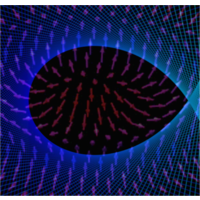
Unique spin configurations in thin films, including skyrmions and chiral domain walls, present fascinating physical questions while also promising future, low-energy computing systems. The emergent interfacial Dzyaloshinskii-Moriya interaction (DMI), which stabilizes these features, greatly changes the energetic and symmetry-based arguments by which magnetic domains have previously been described. The authors here analyze the behavior of magnetic bubbles in thin films influenced by DMI using classical interface thermodynamics via the Wulff construction, originally conceived to describe crystal facets more than 100 years ago. The striking resemblance of experimentally observed domain shapes to those predicted theoretically suggests that a significant energetic driving force for domain growth exists due to an anisotropic wall energy term from the interfacial DMI. This description explains the observed reversal in growth symmetry found here in Co/Ni multilayer films while presenting a new paradigm for describing the broader behavior of chiral domain walls.

Influence of complex disorder on skew-scattering Hall effects in L10-ordered FePt alloy

Bernd Zimmermann, Nguyen H. Long, Phivos Mavropoulos, Stefan Blügel, and Yuriy Mokrousov

Phys. Rev. B 94, 060406(R) (2016) - Published 11 August, 2016

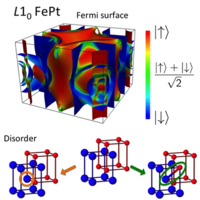
One of the key mechanisms for transverse spin-current generation in metals is the electron skew scattering off defects and impurities, where the spin-orbit interaction leads to an effective deflection of the electrons away from the direction of an applied electric field. Recently, there has been an intensive interest in the skew-scattering part of the Hall effects in an important spintronics material, L10-ordered FePt alloy, where conflicting data with regard to the skew-scattering magnitude have been reported in previous studies. To understand the reason for this controversy, the authors considered various sources of scattering in FePt and determined the skew scattering Hall angles from microscopic density functional theory calculations and Boltzmann transport theory. Based on their results, the authors are able to explain the extreme spread of available data for FePt with drastic dependence of the skew-scattering properties on the details of disorder.

Tuning the spin Hall effect of Pt from the moderately dirty to the superclean regime

Edurne Sagasta, Yasutomo Omori, Miren Isasa, Martin Gradhand, Luis E. Hueso, Yasuhiro Niimi, YoshiChika Otani, and Fèlix Casanova

Phys. Rev. B 94, 060412(R) (2016) - Published 30 August, 2016

The discovery of new spin-to-charge current conversion effects such as the spin Hall effect (SHE) is expanding the potential of spintronic applications. In contrast to the anomalous Hall effect (AHE), a systematic experimental study of the different mechanisms contributing to the SHE is lacking. Finding routes to maximize the SHE is not possible as long as it remains unclear which is the dominant mechanism in a material. The authors systematically study Pt, the prototypical SHE material, using the spin absorption method and find a single intrinsic spin Hall conductivity in a wide range of Pt conductivities, in good agreement with theory. By tuning the conductivity, they observe for the first time the crossover between the moderately dirty and the superclean scaling regimes of the SHE, equivalent to that obtained for the AHE. These results explain the dispersion of values in the literature and show a clear path to enhance this important effect.

Search for high-Tc conventional superconductivity at megabar pressures in the lithium-sulfur system

Christian Kokail, Christoph Heil, and Lilia Boeri

Phys. Rev. B 94, 060502(R) (2016) - Published 1 August, 2016

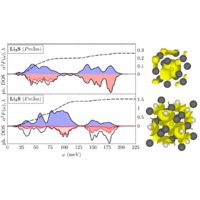
Superconductivity at high-pressures has attracted considerable interest after the report of a record critical temperature (Tc) of 203 K in sulfur hydride (H3S) at 200 GPa. In this work, the authors predict several novel lithium-sulfur compounds at high pressure using evolutionary crystal structure prediction techniques and investigate their superconducting properties with density functional linear response calculations. The calculations reveal an intrinsic correlation between superconductivity and real-space electron localization. We find that high-Tc superconductivity in the Li-S system occurs at pressures much higher than in H3S, i.e., only when the electrode-like interstitial charge localization typical of alkali-metal compounds is suppressed. This is illustrated in the image, which shows a comparison of the electron-phonon spectral function α2F(ω) of Li3S in the low- pressure (panel a, Tc=0 K) and high-pressure phases (panel c, Tc=80 K), calculated at 500 GPa. The right panels of the image show that the increase in Tc is accompanied by a shift of the electronic charge from interstitial regions to Li-S bonds.

Direct measurement of interfacial Dzyaloshinskii-Moriya interaction in X|CoFeB|MgO heterostructures with a scanning NV magnetometer (X=Ta,TaN, and W)

I. Gross, L. J. Martínez, J.-P. Tetienne, T. Hingant, J.-F. Roch, K. Garcia, R. Soucaille, J. P. Adam, J.-V. Kim, S. Rohart, A. Thiaville, J. Torrejon, M. Hayashi, and V. Jacques

Phys. Rev. B 94, 064413 (2016) - Published 11 August, 2016

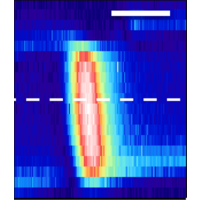
The Dzyaloshinskii-Moriya Interaction (DMI) has recently attracted considerable interest owing to its fundamental role in the stabilization of chiral spin textures in ultrathin ferromagnets, which are interesting candidates for novel spintronic technologies. Here, the authors present an experimental study of the DMI strength that is induced in nanometer-thick CoFeB ferromagnetic thin films in contact with different nonmagnetic metal underlayers. They use a novel technique for noninvasive high-sensitivity sensing of magnetic field: a scanning nanomagnetometer based on the magnetic response of a single nitrogen-vacancy defect in diamond. The magnetic domain walls are mapped, the spin structure and type of domain wall determined, and the DMI strength extracted. Importantly, the authors find local variation of the DMI constant, which clearly suggests that local field mapping techniques are extremely important to study this physics.

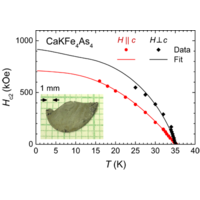
Anisotropic thermodynamic and transport properties of single-crystalline CaKFe4As4

W. R. Meier, T. Kong, U. S. Kaluarachchi, V. Taufour, N. H. Jo, G. Drachuck, A. E. Böhmer, S. M. Saunders, A. Sapkota, A. Kreyssig, M. A. Tanatar, R. Prozorov, A. I. Goldman, Fedor F. Balakirev, Alex Gurevich, S. L. Bud'ko, and P. C. Canfield

Phys. Rev. B 94, 064501 (2016) - Published 1 August, 2016

Since 2008, iron-based superconductors have been the focus of intense research. Unfortunately, the higher transition temperatures and most promising high-magnetic field properties have been associated with compounds that have to be chemically disordered, making it hard to fully understand their intrinsic properties. A fully ordered compound with near optimal properties would be ideal and CaKFe4As4 appears to be that compound. In this work, the authors present detailed anisotropic, structural, thermodynamic, and transport measurements that, in addition to revealing high upper critical fields, also provide the basis for further understanding of this fully ordered, high-Tc, iron-based superconductor. It is shown that CaKFe4As4 has exceptionally large upper critical fields (in excess of 650 kOe and possibly as high as 900 kOe) as well as high Tc values (35 K), which can be obtained and studied without any disorder-related effects obscuring or complicating the results.

Tuning Yu-Shiba-Rusinov states in a quantum dot

Anders Jellinggaard, Kasper Grove-Rasmussen, Morten Hannibal Madsen, and Jesper Nygård

Phys. Rev. B 94, 064520 (2016) - Published 29 August, 2016

Nanowire/superconductor hybrid devices are important systems that are currently used in many experimental programs. In these systems, deliberate or accidental quantum dots in the nanowire create Yu-Shiba-Rusinov subgap states when they couple to the superconductor. In this work, an array of bottom gates under an InAs nanowire is used to tune the coupling (ΓS) of individual quantum states to a superconductor as the system is probed with a weakly coupled normal lead. The paper includes measurements of a coupling-induced quantum phase transition as well as the Zeeman splitting of a subgap state for different values of ΓS. The authors analyze their data using an extension of the Anderson model and the numerical renormalization group procedure and give quantitative values for key parameters of the system.

RAPID COMMUNICATIONS

Structure, structural phase transitions, mechanical properties, defects

Characterization of hyperfine interaction between an NV electron spin and a first-shell C13 nuclear spin in diamond

K. Rama Koteswara Rao and Dieter Suter

Phys. Rev. B 94, 060101(R) (2016) - Published 3 August, 2016

Evidence for near-infrared photoluminescence of nitrogen vacancy centers in 4H-SiC

S. A. Zargaleh, B. Eble, S. Hameau, J.-L. Cantin, L. Legrand, M. Bernard, F. Margaillan, J.-S. Lauret, J.-F. Roch, H. J. von Bardeleben, E. Rauls, U. Gerstmann, and F. Treussart

Phys. Rev. B 94, 060102(R) (2016) - Published 5 August, 2016

Atomic structure of the i-R-Cd quasicrystals and consequences for magnetism

T. Yamada, H. Takakura, T. Kong, P. Das, W. T. Jayasekara, A. Kreyssig, G. Beutier, P. C. Canfield, M. de Boissieu, and A. I. Goldman

Phys. Rev. B 94, 060103(R) (2016) - Published 15 August, 2016

Lattice modes and the Jahn-Teller ferroelectric transition of GaV4S8

J. Hlinka, F. Borodavka, I. Rafalovskyi, Z. Docekalova, J. Pokorny, I. Gregora, V. Tsurkan, H. Nakamura, F. Mayr, C. A. Kuntscher, A. Loidl, S. Bordács, D. Szaller, H.-J. Lee, J. H. Lee, and I. Kézsmárki

Phys. Rev. B 94, 060104(R) (2016) - Published 26 August, 2016

Magnetism

Energetic molding of chiral magnetic bubbles

Derek Lau, Vignesh Sundar, Jian-Gang Zhu, and Vincent Sokalski

Phys. Rev. B 94, 060401(R) (2016) - Published 1 August, 2016

Unique spin configurations in thin films, including skyrmions and chiral domain walls, present fascinating physical questions while also promising future, low-energy computing systems. The emergent interfacial Dzyaloshinskii-Moriya interaction (DMI), which stabilizes these features, greatly changes the energetic and symmetry-based arguments by which magnetic domains have previously been described. The authors here analyze the behavior of magnetic bubbles in thin films influenced by DMI using classical interface thermodynamics via the Wulff construction, originally conceived to describe crystal facets more than 100 years ago. The striking resemblance of experimentally observed domain shapes to those predicted theoretically suggests that a significant energetic driving force for domain growth exists due to an anisotropic wall energy term from the interfacial DMI. This description explains the observed reversal in growth symmetry found here in Co/Ni multilayer films while presenting a new paradigm for describing the broader behavior of chiral domain walls.

Direct observation of magnetization dynamics generated by nanocontact spin-torque vortex oscillators

P. S. Keatley, S. R. Sani, G. Hrkac, S. M. Mohseni, P. Dürrenfeld, T. H. J. Loughran, J. Åkerman, and R. J. Hicken

Phys. Rev. B 94, 060402(R) (2016) - Published 2 August, 2016

Giant perpendicular magnetic anisotropy of an individual atom on two-dimensional transition metal dichalcogenides

Dorj Odkhuu

Phys. Rev. B 94, 060403(R) (2016) - Published 4 August, 2016

Spin crossover and hyperfine interactions of iron in (Mg,Fe)CO3 ferromagnesite

Han Hsu and Sheng-Chieh Huang

Phys. Rev. B 94, 060404(R) (2016) - Published 8 August, 2016

Optomagnonics in magnetic solids

Tianyu Liu, Xufeng Zhang, Hong X. Tang, and Michael E. Flatté

Phys. Rev. B 94, 060405(R) (2016) - Published 9 August, 2016

Influence of complex disorder on skew-scattering Hall effects in L10-ordered FePt alloy

Bernd Zimmermann, Nguyen H. Long, Phivos Mavropoulos, Stefan Blügel, and Yuriy Mokrousov

Phys. Rev. B 94, 060406(R) (2016) - Published 11 August, 2016

One of the key mechanisms for transverse spin-current generation in metals is the electron skew scattering off defects and impurities, where the spin-orbit interaction leads to an effective deflection of the electrons away from the direction of an applied electric field. Recently, there has been an intensive interest in the skew-scattering part of the Hall effects in an important spintronics material, L10-ordered FePt alloy, where conflicting data with regard to the skew-scattering magnitude have been reported in previous studies. To understand the reason for this controversy, the authors considered various sources of scattering in FePt and determined the skew scattering Hall angles from microscopic density functional theory calculations and Boltzmann transport theory. Based on their results, the authors are able to explain the extreme spread of available data for FePt with drastic dependence of the skew-scattering properties on the details of disorder.

Magnetic dilution and domain selection in the XY pyrochlore antiferromagnet Er2Ti2O7

J. Gaudet, A. M. Hallas, D. D. Maharaj, C. R. C. Buhariwalla, E. Kermarrec, N. P. Butch, T. J. S. Munsie, H. A. Dabkowska, G. M. Luke, and B. D. Gaulin

Phys. Rev. B 94, 060407(R) (2016) - Published 15 August, 2016

Raman scattering in correlated thin films as a probe of chargeless surface states

Brent Perreault, Johannes Knolle, Natalia B. Perkins, and F. J. Burnell

Phys. Rev. B 94, 060408(R) (2016) - Published 17 August, 2016

Correlated impurities and intrinsic spin-liquid physics in the kagome material herbertsmithite

Tian-Heng Han, M. R. Norman, J.-J. Wen, Jose A. Rodriguez-Rivera, Joel S. Helton, Collin Broholm, and Young S. Lee

Phys. Rev. B 94, 060409(R) (2016) - Published 18 August, 2016

Constraints on the merging of the transition lines at the tricritical point in a wing-structure phase diagram

Valentin Taufour, Udhara S. Kaluarachchi, and Vladimir G. Kogan

Phys. Rev. B 94, 060410(R) (2016) - Published 19 August, 2016

Large energy product enhancement in perpendicularly coupled MnBi/CoFe magnetic bilayers

T. R. Gao, L. Fang, S. Fackler, S. Maruyama, X. H. Zhang, L. L. Wang, T. Rana, P. Manchanda, A. Kashyap, K. Janicka, A. L. Wysocki, A. T. N’Diaye, E. Arenholz, J. A. Borchers, B. J. Kirby, B. B. Maranville, K. W. Sun, M. J. Kramer, V. P. Antropov, D. D. Johnson, R. Skomski, J. Cui, and I. Takeuchi

Phys. Rev. B 94, 060411(R) (2016) - Published 29 August, 2016

Tuning the spin Hall effect of Pt from the moderately dirty to the superclean regime

Edurne Sagasta, Yasutomo Omori, Miren Isasa, Martin Gradhand, Luis E. Hueso, Yasuhiro Niimi, YoshiChika Otani, and Fèlix Casanova

Phys. Rev. B 94, 060412(R) (2016) - Published 30 August, 2016

The discovery of new spin-to-charge current conversion effects such as the spin Hall effect (SHE) is expanding the potential of spintronic applications. In contrast to the anomalous Hall effect (AHE), a systematic experimental study of the different mechanisms contributing to the SHE is lacking. Finding routes to maximize the SHE is not possible as long as it remains unclear which is the dominant mechanism in a material. The authors systematically study Pt, the prototypical SHE material, using the spin absorption method and find a single intrinsic spin Hall conductivity in a wide range of Pt conductivities, in good agreement with theory. By tuning the conductivity, they observe for the first time the crossover between the moderately dirty and the superclean scaling regimes of the SHE, equivalent to that obtained for the AHE. These results explain the dispersion of values in the literature and show a clear path to enhance this important effect.

Superfluidity and superconductivity

Topological Yu-Shiba-Rusinov chain in monolayer transition-metal dichalcogenide superconductors

Junhua Zhang and Vivek Aji

Phys. Rev. B 94, 060501(R) (2016) - Published 1 August, 2016

Search for high-Tc conventional superconductivity at megabar pressures in the lithium-sulfur system

Christian Kokail, Christoph Heil, and Lilia Boeri

Phys. Rev. B 94, 060502(R) (2016) - Published 1 August, 2016

Superconductivity at high-pressures has attracted considerable interest after the report of a record critical temperature (Tc) of 203 K in sulfur hydride (H3S) at 200 GPa. In this work, the authors predict several novel lithium-sulfur compounds at high pressure using evolutionary crystal structure prediction techniques and investigate their superconducting properties with density functional linear response calculations. The calculations reveal an intrinsic correlation between superconductivity and real-space electron localization. We find that high-Tc superconductivity in the Li-S system occurs at pressures much higher than in H3S, i.e., only when the electrode-like interstitial charge localization typical of alkali-metal compounds is suppressed. This is illustrated in the image, which shows a comparison of the electron-phonon spectral function α2F(ω) of Li3S in the low- pressure (panel a, Tc=0 K) and high-pressure phases (panel c, Tc=80 K), calculated at 500 GPa. The right panels of the image show that the increase in Tc is accompanied by a shift of the electronic charge from interstitial regions to Li-S bonds.

Hot spot formation in electron-doped PCCO nanobridges

S. Charpentier, R. Arpaia, J. Gaudet, D. Matte, R. Baghdadi, T. Löfwander, D. Golubev, P. Fournier, T. Bauch, and F. Lombardi

Phys. Rev. B 94, 060503(R) (2016) - Published 1 August, 2016

Magnetic flux disorder and superconductor-insulator transition in nanohole thin films

Enzo Granato

Phys. Rev. B 94, 060504(R) (2016) - Published 1 August, 2016

Topological state engineering by potential impurities on chiral superconductors

Vardan Kaladzhyan, Joel Röntynen, Pascal Simon, and Teemu Ojanen

Phys. Rev. B 94, 060505(R) (2016) - Published 11 August, 2016

Observation of Ising spin-nematic order and its close relationship to the superconductivity in FeSe single crystals

Dongna Yuan, Jie Yuan, Yulong Huang, Shunli Ni, Zhongpei Feng, Huaxue Zhou, Yiyuan Mao, Kui Jin, Guangming Zhang, Xiaoli Dong, Fang Zhou, and Zhongxian Zhao

Phys. Rev. B 94, 060506(R) (2016) - Published 18 August, 2016

Generic Weyl phase in the vortex state of quasi-two-dimensional chiral superconductors

Tomohiro Yoshida and Masafumi Udagawa

Phys. Rev. B 94, 060507(R) (2016) - Published 29 August, 2016

ARTICLES

Structure, structural phase transitions, mechanical properties, defects

Glassy features of crystal plasticity

Arttu Lehtinen, Giulio Costantini, Mikko J. Alava, Stefano Zapperi, and Lasse Laurson

Phys. Rev. B 94, 064101 (2016) - Published 2 August, 2016

Role of composition, bond covalency, and short-range order in the disordering of stannate pyrochlores by swift heavy ion irradiation

Cameron L. Tracy, Jacob Shamblin, Sulgiye Park, Fuxiang Zhang, Christina Trautmann, Maik Lang, and Rodney C. Ewing

Phys. Rev. B 94, 064102 (2016) - Published 3 August, 2016

Multiscale approach to modeling intrinsic dissipation in solids

K. Kunal and N. R. Aluru

Phys. Rev. B 94, 064103 (2016) - Published 10 August, 2016

Phase stability and magnetic behavior of hexagonal phase of N2−O2 system with kagome lattice under high pressure and low temperature

Y. Akahama, D. Ishihara, H. Yamashita, H. Fujihisa, N. Hirao, and Y. Ohishi

Phys. Rev. B 94, 064104 (2016) - Published 10 August, 2016

Quantification of uncertainty in first-principles predicted mechanical properties of solids: Application to solid ion conductors

Zeeshan Ahmad and Venkatasubramanian Viswanathan

Phys. Rev. B 94, 064105 (2016) - Published 16 August, 2016

Interplay between intercalated oxygen superstructures and monolayer h-BN on Cu(100)

Chuanxu Ma, Jewook Park, Lei Liu, Yong-Sung Kim, Mina Yoon, Arthur P. Baddorf, Gong Gu, and An-Ping Li

Phys. Rev. B 94, 064106 (2016) - Published 18 August, 2016

Reflection quasilattices and the maximal quasilattice

Latham Boyle and Paul J. Steinhardt

Phys. Rev. B 94, 064107 (2016) - Published 25 August, 2016

First-principles simulations of the porous layered calcogenides Li2+xSnO3 and Li2+xSnS3

Jason Howard and N. A. W. Holzwarth

Phys. Rev. B 94, 064108 (2016) - Published 26 August, 2016

Inhomogeneous, disordered, and partially ordered systems

Scaling analysis of transverse Anderson localization in a disordered optical waveguide

Behnam Abaie and Arash Mafi

Phys. Rev. B 94, 064201 (2016) - Published 19 August, 2016

Relationship between the Einstein-Laub electromagnetic force and the Lorentz force on free charge

Kevin J. Webb

Phys. Rev. B 94, 064203 (2016) - Published 24 August, 2016

Graphene with vacancies: Supernumerary zero modes

Norman Weik, Johannes Schindler, Soumya Bera, Gemma C. Solomon, and Ferdinand Evers

Phys. Rev. B 94, 064204 (2016) - Published 26 August, 2016

Dynamics, dynamical systems, lattice effects

Strain-rate dependence of ramp-wave evolution and strength in tantalum

J. Matthew D. Lane, Stephen M. Foiles, Hojun Lim, and Justin L. Brown

Phys. Rev. B 94, 064301 (2016) - Published 25 August, 2016

Scaling in driven dynamics starting in the vicinity of a quantum critical point

Shuai Yin, Chung-Yu Lo, and Pochung Chen

Phys. Rev. B 94, 064302 (2016) - Published 25 August, 2016

Hydrogen diffusion in bulk and nanocrystalline palladium: A quasielastic neutron scattering study

Maiko Kofu, Naoki Hashimoto, Hiroshi Akiba, Hirokazu Kobayashi, Hiroshi Kitagawa, Madhusudan Tyagi, Antonio Faraone, John R. D. Copley, Wiebke Lohstroh, and Osamu Yamamuro

Phys. Rev. B 94, 064303 (2016) - Published 29 August, 2016

Experimental realization of robust dynamical decoupling with bounded controls in a solid-state spin system

F. Wang, C. Zu, L. He, W.-B. Wang, W.-G. Zhang, and L.-M. Duan

Phys. Rev. B 94, 064304 (2016) - Published 30 August, 2016

Magnetism

Itinerant G-type antiferromagnetism in D03-type V3Z (Z=Al, Ga, In) compounds: A first-principles study

Iosif Galanakis, Şaban Tırpancı, Kemal Özdoğan, and Ersoy Şaşıoğlu

Phys. Rev. B 94, 064401 (2016) - Published 1 August, 2016

Antiferromagnet-induced perpendicular magnetic anisotropy in ferromagnetic/antiferromagnetic/ferromagnetic trilayers

Bo-Yao Wang, Po-Han Lin, Ming-Shian Tsai, Chun-Wei Shih, Meng-Ju Lee, Chun-Wei Huang, Nae-Yeou Jih, and Der-Hsin Wei

Phys. Rev. B 94, 064402 (2016) - Published 1 August, 2016

Magnetic anisotropy in the frustrated spin-chain compound β−TeVO4

F. Weickert, N. Harrison, B. L. Scott, M. Jaime, A. Leitmäe, I. Heinmaa, R. Stern, O. Janson, H. Berger, H. Rosner, and A. A. Tsirlin

Phys. Rev. B 94, 064403 (2016) - Published 1 August, 2016

Tailoring transport properties of phase-separated manganite films with ordered magnetic nanostructures

V. Vlaminck, W. Yánez, J. Hoffman, A. Hoffmann, and D. Niebieskikwiat

Phys. Rev. B 94, 064404 (2016) - Published 2 August, 2016

Random SU(2)-symmetric spin-S chains

V. L. Quito, José A. Hoyos, and E. Miranda

Phys. Rev. B 94, 064405 (2016) - Published 3 August, 2016

Thermally stable magnetic skyrmions in multilayer synthetic antiferromagnetic racetracks

Xichao Zhang, Motohiko Ezawa, and Yan Zhou

Phys. Rev. B 94, 064406 (2016) - Published 3 August, 2016

Structural and magnetic field effects on spin fluctuations in Sr3Ru2O7

Shantanu Mukherjee and Wei-Cheng Lee

Phys. Rev. B 94, 064407 (2016) - Published 5 August, 2016

Field orientation dependence of magnetization reversal in thin films with perpendicular magnetic anisotropy

Lorenzo Fallarino, Ondrej Hovorka, and Andreas Berger

Phys. Rev. B 94, 064408 (2016) - Published 8 August, 2016

Effect of lattice constant on pseudo Jahn-Teller polar distortion: Application to search for new multiferroic compounds

Guang Song and Weiyi Zhang

Phys. Rev. B 94, 064409 (2016) - Published 8 August, 2016

Atomic long-range order effects on Curie temperature and adiabatic spin-wave dynamics in strained Fe-Co alloy films

Stephan Schönecker, Xiaoqing Li, Börje Johansson, and Levente Vitos

Phys. Rev. B 94, 064410 (2016) - Published 9 August, 2016

Spin wave excitations in the tetragonal double perovskite Sr2CuWO6

H. C. Walker, O. Mustonen, S. Vasala, D. J. Voneshen, M. D. Le, D. T. Adroja, and M. Karppinen

Phys. Rev. B 94, 064411 (2016) - Published 9 August, 2016

Two types of all-optical magnetization switching mechanisms using femtosecond laser pulses

M. S. El Hadri, P. Pirro, C.-H. Lambert, S. Petit-Watelot, Y. Quessab, M. Hehn, F. Montaigne, G. Malinowski, and S. Mangin

Phys. Rev. B 94, 064412 (2016) - Published 10 August, 2016

Direct measurement of interfacial Dzyaloshinskii-Moriya interaction in X|CoFeB|MgO heterostructures with a scanning NV magnetometer (X=Ta,TaN, and W)

I. Gross, L. J. Martínez, J.-P. Tetienne, T. Hingant, J.-F. Roch, K. Garcia, R. Soucaille, J. P. Adam, J.-V. Kim, S. Rohart, A. Thiaville, J. Torrejon, M. Hayashi, and V. Jacques

Phys. Rev. B 94, 064413 (2016) - Published 11 August, 2016

The Dzyaloshinskii-Moriya Interaction (DMI) has recently attracted considerable interest owing to its fundamental role in the stabilization of chiral spin textures in ultrathin ferromagnets, which are interesting candidates for novel spintronic technologies. Here, the authors present an experimental study of the DMI strength that is induced in nanometer-thick CoFeB ferromagnetic thin films in contact with different nonmagnetic metal underlayers. They use a novel technique for noninvasive high-sensitivity sensing of magnetic field: a scanning nanomagnetometer based on the magnetic response of a single nitrogen-vacancy defect in diamond. The magnetic domain walls are mapped, the spin structure and type of domain wall determined, and the DMI strength extracted. Importantly, the authors find local variation of the DMI constant, which clearly suggests that local field mapping techniques are extremely important to study this physics.

Observation of thermal spin-transfer torque via ferromagnetic resonance in magnetic tunnel junctions

Zhaohui Zhang, Lihui Bai, Xiaobin Chen, Hong Guo, X. L. Fan, D. S. Xue, D. Houssameddine, and C.-M. Hu

Phys. Rev. B 94, 064414 (2016) - Published 11 August, 2016

Influence of nonlocal damping on the field-driven domain wall motion

H. Y. Yuan, Zhe Yuan, Ke Xia, and X. R. Wang

Phys. Rev. B 94, 064415 (2016) - Published 12 August, 2016

Generic model for the hyperkagome iridate Na4Ir3O8 in the local-moment regime

Tomonari Mizoguchi, Kyusung Hwang, Eric Kin-Ho Lee, and Yong Baek Kim

Phys. Rev. B 94, 064416 (2016) - Published 15 August, 2016

Magnetic hyperfine interactions on Cd sites of the rare-earth cadmium compounds RCd (R=Ce, Pr, Nd, Sm, Gd, Tb, Dy, Ho, and Er)

F. H. M. Cavalcante, O. F. L. S. Leite Neto, H. Saitovitch, J. T. P. D. Cavalcante, A. W. Carbonari, R. N. Saxena, B. Bosch-Santos, L. F. D. Pereira, J. Mestnik-Filho, and M. Forker

Phys. Rev. B 94, 064417 (2016) - Published 15 August, 2016

Phase diagram and magnetic relaxation phenomena in Cu2OSeO3

F. Qian, H. Wilhelm, A. Aqeel, T. T. M. Palstra, A. J. E. Lefering, E. H. Brück, and C. Pappas

Phys. Rev. B 94, 064418 (2016) - Published 15 August, 2016

Domain size criterion for the observation of all-optical helicity-dependent switching in magnetic thin films

Mohammed Salah El Hadri, Michel Hehn, Philipp Pirro, Charles-Henri Lambert, Grégory Malinowski, Eric E. Fullerton, and Stéphane Mangin

Phys. Rev. B 94, 064419 (2016) - Published 15 August, 2016

Magnetodielectric effects in A-site cation-ordered chromate spinels LiMCr4O8 (M=Ga and In)

Rana Saha, Francois Fauth, Maxim Avdeev, Paula Kayser, Brendan J. Kennedy, and A. Sundaresan

Phys. Rev. B 94, 064420 (2016) - Published 15 August, 2016

High-resolution hard x-ray magnetic imaging with dichroic ptychography

Claire Donnelly, Valerio Scagnoli, Manuel Guizar-Sicairos, Mirko Holler, Fabrice Wilhelm, Francois Guillou, Andrei Rogalev, Carsten Detlefs, Andreas Menzel, Jörg Raabe, and Laura J. Heyderman

Phys. Rev. B 94, 064421 (2016) - Published 17 August, 2016

Current-driven periodic domain wall creation in ferromagnetic nanowires

Matthias Sitte, Karin Everschor-Sitte, Thierry Valet, Davi R. Rodrigues, Jairo Sinova, and Ar. Abanov

Phys. Rev. B 94, 064422 (2016) - Published 19 August, 2016

Pulse and quench induced dynamical phase transition in a chiral multiferroic spin chain

M. Azimi, M. Sekania, S. K. Mishra, L. Chotorlishvili, Z. Toklikishvili, and J. Berakdar

Phys. Rev. B 94, 064423 (2016) - Published 22 August, 2016

Nonlinear geometric scaling of coercivity in a three-dimensional nanoscale analog of spin ice

I. S. Shishkin, A. A. Mistonov, I. S. Dubitskiy, N. A. Grigoryeva, D. Menzel, and S. V. Grigoriev

Phys. Rev. B 94, 064424 (2016) - Published 23 August, 2016

Spin dynamics of the ordered dipolar-octupolar pseudospin-12 pyrochlore Nd2Zr2O7 probed by muon spin relaxation

J. Xu, C. Balz, C. Baines, H. Luetkens, and B. Lake

Phys. Rev. B 94, 064425 (2016) - Published 23 August, 2016

Voltage drop due to longitudinal spin accumulation across the ballistic domain wall

V. Fallahi and R. Safaei

Phys. Rev. B 94, 064426 (2016) - Published 24 August, 2016

Electronic structure and exchange interactions of insulating double perovskite La2CuRuO6

S. K. Panda, Y. O. Kvashnin, B. Sanyal, I. Dasgupta, and O. Eriksson

Phys. Rev. B 94, 064427 (2016) - Published 24 August, 2016

Phase transitions and ordering structures of a model of a chiral helimagnet in three dimensions

Yoshihiko Nishikawa and Koji Hukushima

Phys. Rev. B 94, 064428 (2016) - Published 25 August, 2016

Anisotropic magnetization relaxation in ferromagnetic multilayers with variable interlayer exchange coupling

A. F. Kravets, D. M. Polishchuk, Yu. I. Dzhezherya, A. I. Tovstolytkin, V. O. Golub, and V. Korenivski

Phys. Rev. B 94, 064429 (2016) - Published 26 August, 2016

Modulated magnetism and anomalous electronic transport in Ce3Cu4As4O2

Jiakui K. Wang, Shan Wu, Yiming Qiu, Jose A. Rodriguez-Rivera, Qingzhen Huang, C. Broholm, and E. Morosan

Phys. Rev. B 94, 064430 (2016) - Published 29 August, 2016

Variable variance Preisach model for multilayers with perpendicular magnetic anisotropy

A. F. Franco, C. Gonzalez-Fuentes, R. Morales, C. A. Ross, R. Dumas, J. Åkerman, and C. Garcia

Phys. Rev. B 94, 064431 (2016) - Published 29 August, 2016

Featureless quantum insulator on the honeycomb lattice

Panjin Kim, Hyunyong Lee, Shenghan Jiang, Brayden Ware, Chao-Ming Jian, Michael Zaletel, Jung Hoon Han, and Ying Ran

Phys. Rev. B 94, 064432 (2016) - Published 29 August, 2016

Acoustic magnons in the long-wavelength limit: Investigating the Goldstone violation in many-body perturbation theory

Mathias C. T. D. Müller, Christoph Friedrich, and Stefan Blügel

Phys. Rev. B 94, 064433 (2016) - Published 30 August, 2016

Enhancement of the spin transfer torque efficiency in magnetic STM junctions

Krisztián Palotás, Gábor Mándi, and László Szunyogh

Phys. Rev. B 94, 064434 (2016) - Published 30 August, 2016

Magnetic anisotropy in the Kitaev model systems Na2IrO3 and RuCl3

Jiří Chaloupka and Giniyat Khaliullin

Phys. Rev. B 94, 064435 (2016) - Published 31 August, 2016

Superfluidity and superconductivity

Anisotropic thermodynamic and transport properties of single-crystalline CaKFe4As4

W. R. Meier, T. Kong, U. S. Kaluarachchi, V. Taufour, N. H. Jo, G. Drachuck, A. E. Böhmer, S. M. Saunders, A. Sapkota, A. Kreyssig, M. A. Tanatar, R. Prozorov, A. I. Goldman, Fedor F. Balakirev, Alex Gurevich, S. L. Bud'ko, and P. C. Canfield

Phys. Rev. B 94, 064501 (2016) - Published 1 August, 2016

Since 2008, iron-based superconductors have been the focus of intense research. Unfortunately, the higher transition temperatures and most promising high-magnetic field properties have been associated with compounds that have to be chemically disordered, making it hard to fully understand their intrinsic properties. A fully ordered compound with near optimal properties would be ideal and CaKFe4As4 appears to be that compound. In this work, the authors present detailed anisotropic, structural, thermodynamic, and transport measurements that, in addition to revealing high upper critical fields, also provide the basis for further understanding of this fully ordered, high-Tc, iron-based superconductor. It is shown that CaKFe4As4 has exceptionally large upper critical fields (in excess of 650 kOe and possibly as high as 900 kOe) as well as high Tc values (35 K), which can be obtained and studied without any disorder-related effects obscuring or complicating the results.

Heat transport in nonuniform superconductors

Caroline Richard and Anton B. Vorontsov

Phys. Rev. B 94, 064502 (2016) - Published 4 August, 2016

Half-metallic superconducting triplet spin valve

Klaus Halterman and Mohammad Alidoust

Phys. Rev. B 94, 064503 (2016) - Published 4 August, 2016

Static and dynamic interaction between π and d electrons in organic superconductor β″-(BEDT-TTF)4[(H3O)Fe(C2O4)3]·C6H5Br studied by C13 NMR spectroscopy

Y. Ihara, Y. Futami, A. Kawamoto, K. Matsui, T. Goto, T. Sasaki, S. Benmansour, and C. J. Gómez-García

Phys. Rev. B 94, 064504 (2016) - Published 4 August, 2016

Vortex cutting in superconductors

A. Glatz, V. K. Vlasko-Vlasov, W. K. Kwok, and G. W. Crabtree

Phys. Rev. B 94, 064505 (2016) - Published 9 August, 2016

Superconducting energy scales and anomalous dissipative conductivity in thin films of molybdenum nitride

Julian Simmendinger, Uwe S. Pracht, Lena Daschke, Thomas Proslier, Jeffrey A. Klug, Martin Dressel, and Marc Scheffler

Phys. Rev. B 94, 064506 (2016) - Published 9 August, 2016

Band structure and electron-phonon coupling in H3S: A tight-binding model

L. Ortenzi, E. Cappelluti, and L. Pietronero

Phys. Rev. B 94, 064507 (2016) - Published 10 August, 2016

Leggett modes and multiband superconductivity in Sr2RuO4

Wen Huang, Thomas Scaffidi, Manfred Sigrist, and Catherine Kallin

Phys. Rev. B 94, 064508 (2016) - Published 10 August, 2016

Diamagnetic vortex barrier stripes in underdoped BaFe2(As1−xPx)2

A. Yagil, Y. Lamhot, A. Almoalem, S. Kasahara, T. Watashige, T. Shibauchi, Y. Matsuda, and O. M. Auslaender

Phys. Rev. B 94, 064510 (2016) - Published 11 August, 2016

Electron bubbles and Weyl fermions in chiral superfluid He3−A

Oleksii Shevtsov and J. A. Sauls

Phys. Rev. B 94, 064511 (2016) - Published 12 August, 2016

Signature of the Leggett mode in the A1g Raman response: From MgB2 to iron-based superconductors

T. Cea and L. Benfatto

Phys. Rev. B 94, 064512 (2016) - Published 16 August, 2016

Skyrmion-induced bound states in a superconductor

Sergey S. Pershoguba, Sho Nakosai, and Alexander V. Balatsky

Phys. Rev. B 94, 064513 (2016) - Published 17 August, 2016

Role of electron-electron interactions in the charge dynamics of rare-earth-doped CaFe2As2

Zhen Xing, T. J. Huffman, Peng Xu, A. J. Hollingshad, D. J. Brooker, N. E. Penthorn, M. M. Qazilbash, S. R. Saha, T. Drye, C. Roncaioli, and J. Paglione

Phys. Rev. B 94, 064514 (2016) - Published 17 August, 2016

Manifestation of chirality in the vortex lattice in a two-dimensional topological superconductor

Evan D. B. Smith, K. Tanaka, and Yuki Nagai

Phys. Rev. B 94, 064515 (2016) - Published 17 August, 2016

Crossed Andreev effects in two-dimensional quantum Hall systems

Zhe Hou, Yanxia Xing, Ai-Min Guo, and Qing-Feng Sun

Phys. Rev. B 94, 064516 (2016) - Published 22 August, 2016

Decay of near-critical currents in superconducting nanowires

Sergei Khlebnikov

Phys. Rev. B 94, 064517 (2016) - Published 23 August, 2016

Some implications of superconducting quantum interference to the application of master equations in engineering quantum technologies

S. N. A. Duffus, K. N. Bjergstrom, V. M. Dwyer, J. H. Samson, T. P. Spiller, A. M. Zagoskin, W. J. Munro, Kae Nemoto, and M. J. Everitt

Phys. Rev. B 94, 064518 (2016) - Published 24 August, 2016

Distinguishing between s+id and s+is pairing symmetries in multiband superconductors through spontaneous magnetization pattern induced by a defect

Shi-Zeng Lin, Saurabh Maiti, and Andrey Chubukov

Phys. Rev. B 94, 064519 (2016) - Published 29 August, 2016

Tuning Yu-Shiba-Rusinov states in a quantum dot

Anders Jellinggaard, Kasper Grove-Rasmussen, Morten Hannibal Madsen, and Jesper Nygård

Phys. Rev. B 94, 064520 (2016) - Published 29 August, 2016

Nanowire/superconductor hybrid devices are important systems that are currently used in many experimental programs. In these systems, deliberate or accidental quantum dots in the nanowire create Yu-Shiba-Rusinov subgap states when they couple to the superconductor. In this work, an array of bottom gates under an InAs nanowire is used to tune the coupling (ΓS) of individual quantum states to a superconductor as the system is probed with a weakly coupled normal lead. The paper includes measurements of a coupling-induced quantum phase transition as well as the Zeeman splitting of a subgap state for different values of ΓS. The authors analyze their data using an extension of the Anderson model and the numerical renormalization group procedure and give quantitative values for key parameters of the system.

Enhancement of superconducting transition temperature by pointlike disorder and anisotropic energy gap in FeSe single crystals

S. Teknowijoyo, K. Cho, M. A. Tanatar, J. Gonzales, A. E. Böhmer, O. Cavani, V. Mishra, P. J. Hirschfeld, S. L. Bud'ko, P. C. Canfield, and R. Prozorov

Phys. Rev. B 94, 064521 (2016) - Published 29 August, 2016

Mn-doping induced ferromagnetism and enhanced superconductivity in Bi4−xMnxO4S3 (0.075≤x≤0.15)

Zhenjie Feng, Xunqing Yin, Yiming Cao, Xianglian Peng, Tian Gao, Chuan Yu, Jingzhe Chen, Baojuan Kang, Bo Lu, Juan Guo, Qing Li, Wei-Shiuan Tseng, Zhongquan Ma, Chao Jing, Shixun Cao, Jincang Zhang, and N.-C. Yeh

Phys. Rev. B 94, 064522 (2016) - Published 30 August, 2016

Vortex states in a non-Abelian magnetic field

Predrag Nikolić

Phys. Rev. B 94, 064523 (2016) - Published 31 August, 2016

Spatial entanglement entropy in the ground state of the Lieb-Liniger model

C. M. Herdman, P.-N. Roy, R. G. Melko, and A. Del Maestro

Phys. Rev. B 94, 064524 (2016) - Published 31 August, 2016

Sign In to Your Journals Account

Filter

Filter

Article Lookup

Enter a citation