Browse Issues:

HIGHLIGHTED ARTICLES

Weyl node with random vector potential

Björn Sbierski, Kevin S. C. Decker, and Piet W. Brouwer

Phys. Rev. B 94, 220202(R) (2016) - Published 5 December, 2016

Weyl nodes, the essential low-energy theory of Weyl semimetals, are theoretically predicted to show a novel type of disorder-driven quantum phase transition. At a critical disorder strength, the system passes from a semimetal phase to a diffusive metal phase. Crucially, these theoretical predictions rest on the assumption that the disorder is of potential type, i.e., a spatially modulated energy offset for the two bands crossing at the Weyl node. However, there is no symmetry reason restricting realistic disorder to the potential case. In this Rapid Communication, the authors generalize the above setup to include generic spatially dependent couplings of the two bands, which can be interpreted as a random vector potential. Using a variety of analytical and numerical methods, the authors discover a phase diagram controlled by the number of independent components of the disorder vector. Surprisingly, no phase transition into a diffusive metal phase could be found for disorder of the single Pauli-matrix type. In contrast, all other forms of vector disorder are capable of driving a transition.

Anderson localization and ergodicity on random regular graphs

K. S. Tikhonov, A. D. Mirlin, and M. A. Skvortsov

Phys. Rev. B 94, 220203(R) (2016) - Published 22 December, 2016

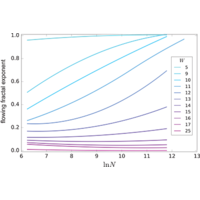
A disordered quantum system can be driven, e.g., by increasing disorder, through the Anderson transition between a delocalized and localized phase. Recently, Anderson localization on treelike graphs has attracted much attention in view of its connections with problems of many-body localization. One of the central questions in this context is that of ergodicity of eigenstates. The authors of this paper perform a numerical study of Anderson transition on random regular graphs (RRGs) with diagonal disorder. The problem can be described as a tight-binding model on a lattice with N sites that is locally a tree with constant connectivity. Focusing on the delocalized side of the transition, they show that the data can be interpreted in terms of the finite-size crossover from a small (N≪Nc) to a large (N≫Nc) system, where Nc is the correlation volume diverging exponentially at the transition. A distinct feature of this crossover is a nonmonotonicity of the spectral and wave-function statistics, which is related to properties of the critical phase in the studied model and renders the finite-size analysis highly nontrivial. The results support an analytical prediction that states in the delocalized phase (and at N≫Nc) are ergodic.

Stoner versus Heisenberg: Ultrafast exchange reduction and magnon generation during laser-induced demagnetization

Emrah Turgut, Dmitriy Zusin, Dominik Legut, Karel Carva, Ronny Knut, Justin M. Shaw, Cong Chen, Zhensheng Tao, Hans T. Nembach, Thomas J. Silva, Stefan Mathias, Martin Aeschlimann, Peter M. Oppeneer, Henry C. Kapteyn, Margaret M. Murnane, and Patrik Grychtol

Phys. Rev. B 94, 220408(R) (2016) - Published 28 December, 2016

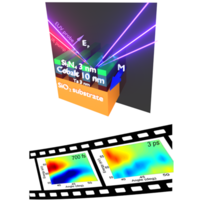
The excitation of a ferromagnetic film by a femtosecond laser pulse causes an unexpectedly fast quenching of the film’s magnetization on subpicosecond time scales. The microscopic physical mechanisms responsible for this remain a scientific puzzle. The authors employ femtosecond extreme ultraviolet pulses produced by high harmonic generation to follow how the magnetization of a thin cobalt film evolves after the excitation by a 40-fs laser pulse. By measuring the time-, energy-, and angle-resolved magneto-optical response of the Co films across the M2,3 absorption edge, they obtain a set of time-lapsed magnetic asymmetry spectra, which contain a wealth of information about the different mechanisms at work. When combined with advanced ab initio magneto-optical calculations, they identify two dominant contributions: first, a transient reduction of exchange splitting, and second, magnon excitation. This work thus distinguishes between two fundamental models of magnetism, the Stoner and Heisenberg models, which ascribe magnetization dynamics to an exchange splitting reduction and spin wave excitations, respectively.

Structural origins of the boson peak in metals: From high-entropy alloys to metallic glasses

Tobias Brink, Leonie Koch, and Karsten Albe

Phys. Rev. B 94, 224203 (2016) - Published 14 December, 2016

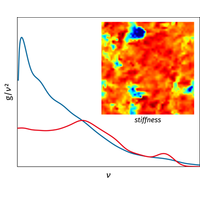
The boson peak is an excess in the vibrational spectrum of amorphous solids, which was recently conjectured to be simply related to features already inherent in the vibrations of the corresponding crystal. In this work, the authors reveal that this is not the case, at least for metallic systems. Using atomic-scale computer simulations of a four-component alloy in different structural states, either as a metallic glass or as a high-entropy alloy, they show that the boson peak does not occur in a defect-free lattice, independent of its density. This disproves, at least for the case of amorphous metals, the recent notion that the vibrational spectra of glasses are not distinct from that of crystals, but simply shifted because of the reduced density that always accompanies the amorphous state. Instead, additional modes arise in softened regions of the material, which are connected to structural defects. These defects can take the form of ”soft spots” in glasses or even a high concentration of lattice defects in crystals. The boson peak is therefore, in fact, a signature of structural disorder.

RAPID COMMUNICATIONS

Structure, structural phase transitions, mechanical properties, defects

Strain phase separation: Formation of ferroelastic domain structures

Fei Xue, Yongjun Li, Yijia Gu, Jinxing Zhang, and Long-Qing Chen

Phys. Rev. B 94, 220101(R) (2016) - Published 2 December, 2016

Evidence for stable square ice from quantum Monte Carlo

Ji Chen, Andrea Zen, Jan Gerit Brandenburg, Dario Alfè, and Angelos Michaelides

Phys. Rev. B 94, 220102(R) (2016) - Published 6 December, 2016

Unidirectional single-photon generation via matched zero-index metamaterials

Jingping Xu, Ge Song, Zhenqing Zhang, Yaping Yang, Hong Chen, M. Suhail Zubairy, and Shiyao Zhu

Phys. Rev. B 94, 220103(R) (2016) - Published 8 December, 2016

Inapplicability of exact constraints and a minimal two-parameter generalization to the DFT+U based correction of self-interaction error

Glenn Moynihan, Gilberto Teobaldi, and David D. O'Regan

Phys. Rev. B 94, 220104(R) (2016) - Published 16 December, 2016

Inhomogeneous, disordered, and partially ordered systems

On the disorder-driven quantum transition in three-dimensional relativistic metals

T. Louvet, D. Carpentier, and A. A. Fedorenko

Phys. Rev. B 94, 220201(R) (2016) - Published 5 December, 2016

Weyl node with random vector potential

Björn Sbierski, Kevin S. C. Decker, and Piet W. Brouwer

Phys. Rev. B 94, 220202(R) (2016) - Published 5 December, 2016

Weyl nodes, the essential low-energy theory of Weyl semimetals, are theoretically predicted to show a novel type of disorder-driven quantum phase transition. At a critical disorder strength, the system passes from a semimetal phase to a diffusive metal phase. Crucially, these theoretical predictions rest on the assumption that the disorder is of potential type, i.e., a spatially modulated energy offset for the two bands crossing at the Weyl node. However, there is no symmetry reason restricting realistic disorder to the potential case. In this Rapid Communication, the authors generalize the above setup to include generic spatially dependent couplings of the two bands, which can be interpreted as a random vector potential. Using a variety of analytical and numerical methods, the authors discover a phase diagram controlled by the number of independent components of the disorder vector. Surprisingly, no phase transition into a diffusive metal phase could be found for disorder of the single Pauli-matrix type. In contrast, all other forms of vector disorder are capable of driving a transition.

Anderson localization and ergodicity on random regular graphs

K. S. Tikhonov, A. D. Mirlin, and M. A. Skvortsov

Phys. Rev. B 94, 220203(R) (2016) - Published 22 December, 2016

A disordered quantum system can be driven, e.g., by increasing disorder, through the Anderson transition between a delocalized and localized phase. Recently, Anderson localization on treelike graphs has attracted much attention in view of its connections with problems of many-body localization. One of the central questions in this context is that of ergodicity of eigenstates. The authors of this paper perform a numerical study of Anderson transition on random regular graphs (RRGs) with diagonal disorder. The problem can be described as a tight-binding model on a lattice with N sites that is locally a tree with constant connectivity. Focusing on the delocalized side of the transition, they show that the data can be interpreted in terms of the finite-size crossover from a small (N≪Nc) to a large (N≫Nc) system, where Nc is the correlation volume diverging exponentially at the transition. A distinct feature of this crossover is a nonmonotonicity of the spectral and wave-function statistics, which is related to properties of the critical phase in the studied model and renders the finite-size analysis highly nontrivial. The results support an analytical prediction that states in the delocalized phase (and at N≫Nc) are ergodic.

Dynamics, dynamical systems, lattice effects

Phonon anharmonicity, lifetimes, and thermal transport in CH3NH3PbI3 from many-body perturbation theory

Lucy D. Whalley, Jonathan M. Skelton, Jarvist M. Frost, and Aron Walsh

Phys. Rev. B 94, 220301(R) (2016) - Published 8 December, 2016

Tunable breakdown of the polaron picture for mobile impurities in a topological semimetal

M. A. Caracanhas and R. G. Pereira

Phys. Rev. B 94, 220302(R) (2016) - Published 9 December, 2016

Boron arsenide phonon dispersion from inelastic x-ray scattering: Potential for ultrahigh thermal conductivity

Hao Ma, Chen Li, Shixiong Tang, Jiaqiang Yan, Ahmet Alatas, Lucas Lindsay, Brian C. Sales, and Zhiting Tian

Phys. Rev. B 94, 220303(R) (2016) - Published 14 December, 2016

Experimental demonstration of broadband reflectionless diffraction-free electromagnetic wave routing

Youming Zhang, Zhen Gao, Fei Gao, Xihang Shi, Hongyi Xu, Yu Luo, and Baile Zhang

Phys. Rev. B 94, 220304(R) (2016) - Published 23 December, 2016

Magnetism

Vortex-dynamics-mediated low-field magnetization switching in an exchange-coupled system

Weinan Zhou, Takeshi Seki, Hiroko Arai, Hiroshi Imamura, and Koki Takanashi

Phys. Rev. B 94, 220401(R) (2016) - Published 8 December, 2016

Precision ESR measurements of transverse anisotropy in the single-molecule magnet Ni4

Charles A. Collett, Rafael A. Allão Cassaro, and Jonathan R. Friedman

Phys. Rev. B 94, 220402(R) (2016) - Published 12 December, 2016

Integer quantum magnon Hall plateau-plateau transition in a spin-ice model

Baolong Xu, Tomi Ohtsuki, and Ryuichi Shindou

Phys. Rev. B 94, 220403(R) (2016) - Published 13 December, 2016

Interaction between a domain wall and spin supercurrent in easy-cone magnets

Se Kwon Kim and Yaroslav Tserkovnyak

Phys. Rev. B 94, 220404(R) (2016) - Published 21 December, 2016

Signature of frustrated moments in quantum critical CePd1−xNixAl

Akito Sakai, Stefan Lucas, Philipp Gegenwart, Oliver Stockert, Hilbert v. Löhneysen, and Veronika Fritsch

Phys. Rev. B 94, 220405(R) (2016) - Published 27 December, 2016

Complexity in the structural and magnetic properties of almost multiferroic EuTiO3

Z. Guguchia, Z. Salman, H. Keller, K. Roleder, J. Köhler, and A. Bussmann-Holder

Phys. Rev. B 94, 220406(R) (2016) - Published 27 December, 2016

Strong anisotropy within a Heisenberg model in the Jeff=12 insulating state of Sr2Ir0.8Ru0.2O4

S. Calder, J. W. Kim, A. E. Taylor, M. H. Upton, D. Casa, Guixin Cao, D. Mandrus, M. D. Lumsden, and A. D. Christianson

Phys. Rev. B 94, 220407(R) (2016) - Published 28 December, 2016

Stoner versus Heisenberg: Ultrafast exchange reduction and magnon generation during laser-induced demagnetization

Emrah Turgut, Dmitriy Zusin, Dominik Legut, Karel Carva, Ronny Knut, Justin M. Shaw, Cong Chen, Zhensheng Tao, Hans T. Nembach, Thomas J. Silva, Stefan Mathias, Martin Aeschlimann, Peter M. Oppeneer, Henry C. Kapteyn, Margaret M. Murnane, and Patrik Grychtol

Phys. Rev. B 94, 220408(R) (2016) - Published 28 December, 2016

The excitation of a ferromagnetic film by a femtosecond laser pulse causes an unexpectedly fast quenching of the film’s magnetization on subpicosecond time scales. The microscopic physical mechanisms responsible for this remain a scientific puzzle. The authors employ femtosecond extreme ultraviolet pulses produced by high harmonic generation to follow how the magnetization of a thin cobalt film evolves after the excitation by a 40-fs laser pulse. By measuring the time-, energy-, and angle-resolved magneto-optical response of the Co films across the M2,3 absorption edge, they obtain a set of time-lapsed magnetic asymmetry spectra, which contain a wealth of information about the different mechanisms at work. When combined with advanced ab initio magneto-optical calculations, they identify two dominant contributions: first, a transient reduction of exchange splitting, and second, magnon excitation. This work thus distinguishes between two fundamental models of magnetism, the Stoner and Heisenberg models, which ascribe magnetization dynamics to an exchange splitting reduction and spin wave excitations, respectively.

Superfluidity and superconductivity

Superconducting correlations above Tc in the pseudogap state of Bi2Sr2CaCu2O8+δ cuprates revealed by angular-dependent magnetotunneling

Th. Jacobs, S. O. Katterwe, and V. M. Krasnov

Phys. Rev. B 94, 220501(R) (2016) - Published 7 December, 2016

Trapping centers at the superfluid–Mott-insulator criticality: Transition between charge-quantized states

Yuan Huang, Kun Chen, Youjin Deng, and Boris Svistunov

Phys. Rev. B 94, 220502(R) (2016) - Published 12 December, 2016

Two-band superconductivity of bulk and surface states in Ag thin films on Nb

Tihomir Tomanic, Michael Schackert, Wulf Wulfhekel, Christoph Sürgers, and Hilbert v. Löhneysen

Phys. Rev. B 94, 220503(R) (2016) - Published 22 December, 2016

ARTICLES

Structure, structural phase transitions, mechanical properties, defects

Dynamical scaling for underdamped strain order parameters quenched below first-order phase transitions

N. Shankaraiah, Awadhesh K. Dubey, Sanjay Puri, and Subodh R. Shenoy

Phys. Rev. B 94, 224101 (2016) - Published 2 December, 2016

Scattering of waves by three-dimensional obstacles in elastic metamaterials with zero index

Fengming Liu, Feng Zhang, Wei Wei, Ni Hu, Gang Deng, and Ziyu Wang

Phys. Rev. B 94, 224102 (2016) - Published 14 December, 2016

Ultrafast destructuring of laser-irradiated tungsten: Thermal or nonthermal process

H. Zhang, C. Li, E. Bevillon, G. Cheng, J. P. Colombier, and R. Stoian

Phys. Rev. B 94, 224103 (2016) - Published 16 December, 2016

Unraveling the composition dependence of the martensitic transformation temperature: A first-principles study of Ti-Ta alloys

Tanmoy Chakraborty, Jutta Rogal, and Ralf Drautz

Phys. Rev. B 94, 224104 (2016) - Published 19 December, 2016

Midgap states and band gap modification in defective graphene/h-BN heterostructures

B. Sachs, T. O. Wehling, M. I. Katsnelson, and A. I. Lichtenstein

Phys. Rev. B 94, 224105 (2016) - Published 19 December, 2016

Electronic, transport, and magnetic properties of punctured carbon nanotubes

Jeová Calisto dos Santos, Fabrício Morais de Vasconcelos, Acrísio Lins de Aguiar, Tayroni Francisco de Alencar Alves, Vincent Meunier, and Eduardo Costa Girão

Phys. Rev. B 94, 224106 (2016) - Published 22 December, 2016

Persistence of polar distortion with electron doping in lone-pair driven ferroelectrics

Xu He and Kui-juan Jin

Phys. Rev. B 94, 224107 (2016) - Published 27 December, 2016

Ab initio prediction of stable nanotwin double layers and 4O structure in Ni2MnGa

Martin Zelený, Ladislav Straka, Alexei Sozinov, and Oleg Heczko

Phys. Rev. B 94, 224108 (2016) - Published 30 December, 2016

Key role of the short-range order on the response of the titanate pyrochlore Y2Ti2O7 to irradiation

G. Sattonnay, S. Cammelli, D. Menut, N. Sellami, C. Grygiel, I. Monnet, J. L. Béchade, J. P. Crocombette, A. Chartier, A. Soulié, R. Tétot, C. Legros, P. Simon, S. Miro, and L. Thomé

Phys. Rev. B 94, 224109 (2016) - Published 30 December, 2016

Monoclinic high-pressure polymorph of AlOOH predicted from first principles

Xin Zhong, Andreas Hermann, Yanchao Wang, and Yanming Ma

Phys. Rev. B 94, 224110 (2016) - Published 30 December, 2016

Inhomogeneous, disordered, and partially ordered systems

Relationship between structural and dynamic properties of Al-rich Al-Cu melts: Beyond the Stokes-Einstein relation

N. Jakse and A. Pasturel

Phys. Rev. B 94, 224201 (2016) - Published 12 December, 2016

A Floquet model for the many-body localization transition

Liangsheng Zhang, Vedika Khemani, and David A. Huse

Phys. Rev. B 94, 224202 (2016) - Published 12 December, 2016

Structural origins of the boson peak in metals: From high-entropy alloys to metallic glasses

Tobias Brink, Leonie Koch, and Karsten Albe

Phys. Rev. B 94, 224203 (2016) - Published 14 December, 2016

The boson peak is an excess in the vibrational spectrum of amorphous solids, which was recently conjectured to be simply related to features already inherent in the vibrations of the corresponding crystal. In this work, the authors reveal that this is not the case, at least for metallic systems. Using atomic-scale computer simulations of a four-component alloy in different structural states, either as a metallic glass or as a high-entropy alloy, they show that the boson peak does not occur in a defect-free lattice, independent of its density. This disproves, at least for the case of amorphous metals, the recent notion that the vibrational spectra of glasses are not distinct from that of crystals, but simply shifted because of the reduced density that always accompanies the amorphous state. Instead, additional modes arise in softened regions of the material, which are connected to structural defects. These defects can take the form of ”soft spots” in glasses or even a high concentration of lattice defects in crystals. The boson peak is therefore, in fact, a signature of structural disorder.

Boson peak dynamics of glassy glucose studied by integrated terahertz-band spectroscopy

Mikitoshi Kabeya, Tatsuya Mori, Yasuhiro Fujii, Akitoshi Koreeda, Byoung Wan Lee, Jae-Hyeon Ko, and Seiji Kojima

Phys. Rev. B 94, 224204 (2016) - Published 21 December, 2016

Short-range ordering effects on the electronic Bloch spectral function of real materials in the nonlocal coherent-potential approximation

Alberto Marmodoro, Arthur Ernst, Sergei Ostanin, Leonid Sandratskii, Paolo E. Trevisanutto, Nektarios N. Lathiotakis, and Julie B. Staunton

Phys. Rev. B 94, 224205 (2016) - Published 21 December, 2016

Symmetry constraints on many-body localization

Andrew C. Potter and Romain Vasseur

Phys. Rev. B 94, 224206 (2016) - Published 23 December, 2016

Universal dynamics of density correlations at the transition to the many-body localized state

M. Mierzejewski, J. Herbrych, and P. Prelovšek

Phys. Rev. B 94, 224207 (2016) - Published 28 December, 2016

Generalized multiband typical medium dynamical cluster approximation: Application to (Ga,Mn)N

Yi Zhang, R. Nelson, Elisha Siddiqui, K.-M. Tam, U. Yu, T. Berlijn, W. Ku, N. S. Vidhyadhiraja, J. Moreno, and M. Jarrell

Phys. Rev. B 94, 224208 (2016) - Published 29 December, 2016

Dynamics, dynamical systems, lattice effects

Lattice and magnetic dynamics in perovskite Y1−xLaxTiO3

Bing Li, Despina Louca, Jennifer Niedziela, Zongyao Li, Libin Zhang, Jianshi Zhou, and John B. Goodenough

Phys. Rev. B 94, 224301 (2016) - Published 7 December, 2016

First-principles investigation of the structural, dynamical, and dielectric properties of kesterite, stannite, and PMCA phases of Cu2ZnSnS4

S. Poyyapakkam Ramkumar, Y. Gillet, A. Miglio, M. J. van Setten, X. Gonze, and G.-M. Rignanese

Phys. Rev. B 94, 224302 (2016) - Published 8 December, 2016

Dynamical decoherence of the light induced interlayer coupling in YBa2Cu3O6+δ

C. R. Hunt, D. Nicoletti, S. Kaiser, D. Pröpper, T. Loew, J. Porras, B. Keimer, and A. Cavalleri

Phys. Rev. B 94, 224303 (2016) - Published 12 December, 2016

Field-enhanced ion transport in solids: Reexamination with molecular dynamics simulations

A. R. Genreith-Schriever and R. A. De Souza

Phys. Rev. B 94, 224304 (2016) - Published 16 December, 2016

Analytic evaluation of Kane fermion magneto-optics in two and three dimensions

J. D. Malcolm and E. J. Nicol

Phys. Rev. B 94, 224305 (2016) - Published 21 December, 2016

Effects of electronic relaxation processes on vibrational linewidths of adsorbates on surfaces: The case of CO/Cu(100)

D. Novko, M. Alducin, M. Blanco-Rey, and J. I. Juaristi

Phys. Rev. B 94, 224306 (2016) - Published 30 December, 2016

Magnetism

Phenomenological approach to a hyperkagome spin liquid: Emergent gauge fields and spinons

Yuan Wan and Yong Baek Kim

Phys. Rev. B 94, 224401 (2016) - Published 1 December, 2016

ESR study of the frustrated S=12 chain magnet LiCuVO4 in spiral and spin-modulated phases

L. A. Prozorova, L. E. Svistov, A. M. Vasiliev, and A. Prokofiev

Phys. Rev. B 94, 224402 (2016) - Published 2 December, 2016

Intertwined nematic orders in a frustrated ferromagnet

Yasir Iqbal, Pratyay Ghosh, Rajesh Narayanan, Brijesh Kumar, Johannes Reuther, and Ronny Thomale

Phys. Rev. B 94, 224403 (2016) - Published 2 December, 2016

Spin correlations and colossal magnetoresistance in HgCr2Se4

Chaojing Lin, Changjiang Yi, Youguo Shi, Lei Zhang, Guangming Zhang, Jens Müller, and Yongqing Li

Phys. Rev. B 94, 224404 (2016) - Published 5 December, 2016

Coalescence-driven magnetic order of the uncompensated antiferromagnetic Co doped ZnO

V. Ney, B. Henne, J. Lumetzberger, F. Wilhelm, K. Ollefs, A. Rogalev, A. Kovacs, M. Kieschnick, and A. Ney

Phys. Rev. B 94, 224405 (2016) - Published 5 December, 2016

Tunable magnetism and structural transformations in mixed light- and heavy-lanthanide dialuminides

Arjun K. Pathak, D. Paudyal, Y. Mudryk, K. A. Gschneidner, Jr., and V. K. Pecharsky

Phys. Rev. B 94, 224406 (2016) - Published 7 December, 2016

Exchange-mediated, nonlinear, out-of-plane magnetic field dependence of the ferromagnetic vortex gyrotropic mode frequency driven by core deformation

Jasper P. Fried, Hans Fangohr, Mikhail Kostylev, and Peter J. Metaxas

Phys. Rev. B 94, 224407 (2016) - Published 7 December, 2016

Magnetic properties of Sr3NiIrO6 and Sr3CoIrO6: Magnetic hysteresis with coercive fields of up to 55 T

John Singleton, Jae Wook Kim, Craig V. Topping, Anders Hansen, Eun-Deok Mun, S. Chikara, I. Lakis, Saman Ghannadzadeh, Paul Goddard, Xuan Luo, Yoon Seok Oh, Sang-Wook Cheong, and Vivien S. Zapf

Phys. Rev. B 94, 224408 (2016) - Published 8 December, 2016

Quantum effects in nanosystems: Good reasons to use phase-space Weyl symbols

Ruggero Vaia

Phys. Rev. B 94, 224409 (2016) - Published 8 December, 2016

Magnon Kerr effect in a strongly coupled cavity-magnon system

Yi-Pu Wang, Guo-Qiang Zhang, Dengke Zhang, Xiao-Qing Luo, Wei Xiong, Shuai-Peng Wang, Tie-Fu Li, C.-M. Hu, and J. Q. You

Phys. Rev. B 94, 224410 (2016) - Published 8 December, 2016

Anisotropic long-range spin systems

Nicolò Defenu, Andrea Trombettoni, and Stefano Ruffo

Phys. Rev. B 94, 224411 (2016) - Published 9 December, 2016

Green's function representation of spin pumping effect

Gen Tatara

Phys. Rev. B 94, 224412 (2016) - Published 8 December, 2016

Classical spin liquids in stacked triangular-lattice Ising antiferromagnets

D. T. Liu, F. J. Burnell, L. D. C. Jaubert, and J. T. Chalker

Phys. Rev. B 94, 224413 (2016) - Published 12 December, 2016

Fe dopant in ZnO: 2+ versus 3+ valency and ion-carrier s,p−d exchange interaction

J. Papierska, A. Ciechan, P. Bogusławski, M. Boshta, M. M. Gomaa, E. Chikoidze, Y. Dumont, A. Drabińska, H. Przybylińska, A. Gardias, J. Szczytko, A. Twardowski, M. Tokarczyk, G. Kowalski, B. Witkowski, K. Sawicki, W. Pacuski, M. Nawrocki, and J. Suffczyński

Phys. Rev. B 94, 224414 (2016) - Published 14 December, 2016

Electronic structure of UN based on specific heat and field-induced transitions up to 65 T

R. Troć, M. Samsel-Czekała, A. Pikul, A. V. Andreev, D. I. Gorbunov, Y. Skourski, and J. Sznajd

Phys. Rev. B 94, 224415 (2016) - Published 16 December, 2016

Terahertz spin-orbital excitations in the paramagnetic state of multiferroic Sr2FeSi2O7

Thuc T. Mai, C. Svoboda, M. T. Warren, T.-H. Jang, J. Brangham, Y. H. Jeong, S.-W. Cheong, and R. Valdés Aguilar

Phys. Rev. B 94, 224416 (2016) - Published 16 December, 2016

Finite-size scaling effect on Néel temperature of antiferromagnetic Cr2O3 (0001) films in exchange-coupled heterostructures

Satya Prakash Pati, Muftah Al-Mahdawi, Shujun Ye, Yohei Shiokawa, Tomohiro Nozaki, and Masashi Sahashi

Phys. Rev. B 94, 224417 (2016) - Published 19 December, 2016

Spin-orbit coupling and magnetic interactions in Si(111):{C,Si,Sn,Pb}

D. I. Badrtdinov, S. A. Nikolaev, M. I. Katsnelson, and V. V. Mazurenko

Phys. Rev. B 94, 224418 (2016) - Published 19 December, 2016

Current-induced nonlinear magnetoelectric effects in strontium hexaferrite

I. V. Zavislyak, M. A. Popov, and G. Srinivasan

Phys. Rev. B 94, 224419 (2016) - Published 19 December, 2016

Model analysis of magnetic susceptibility of Sr2IrO4: A two-dimensional Jeff=12 Heisenberg system with competing interlayer couplings

Tomohiro Takayama, Akiyo Matsumoto, George Jackeli, and Hidenori Takagi

Phys. Rev. B 94, 224420 (2016) - Published 20 December, 2016

Sequences of ground states and classification of frustration in odd-numbered antiferromagnetic rings

Wojciech Florek, Michał Antkowiak, and Grzegorz Kamieniarz

Phys. Rev. B 94, 224421 (2016) - Published 20 December, 2016

Many-body ab initio study of antiferromagnetic {Cr7M} molecular rings

A. Chiesa, S. Carretta, P. Santini, G. Amoretti, and E. Pavarini

Phys. Rev. B 94, 224422 (2016) - Published 20 December, 2016

Spin transport and dynamics in all-oxide perovskite La2/3Sr1/3MnO3/SrRuO3 bilayers probed by ferromagnetic resonance

Satoru Emori, Urusa S. Alaan, Matthew T. Gray, Volker Sluka, Yizhang Chen, Andrew D. Kent, and Y. Suzuki

Phys. Rev. B 94, 224423 (2016) - Published 20 December, 2016

Large magnetic anisotropy predicted for rare-earth-free Fe16−xCoxN2 alloys

Xin Zhao, Cai-Zhuang Wang, Yongxin Yao, and Kai-Ming Ho

Phys. Rev. B 94, 224424 (2016) - Published 23 December, 2016

Role of coherence in transport through engineered atomic spin devices

Alexey M. Shakirov, Yulia E. Shchadilova, Alexey N. Rubtsov, and Pedro Ribeiro

Phys. Rev. B 94, 224425 (2016) - Published 23 December, 2016

Magnetic anisotropy in surface-supported single-ion lanthanide complexes

Paul Stoll, Matthias Bernien, Daniela Rolf, Fabian Nickel, Qingyu Xu (徐庆宇), Claudia Hartmann, Tobias R. Umbach, Jens Kopprasch, Janina N. Ladenthin, Enrico Schierle, Eugen Weschke, Constantin Czekelius, Wolfgang Kuch, and Katharina J. Franke

Phys. Rev. B 94, 224426 (2016) - Published 23 December, 2016

Formation mechanisms of magnetic bubbles in an M-type hexaferrite: Role of chirality reversal at domain walls

H. Nakajima, A. Kotani, K. Harada, Y. Ishii, and S. Mori

Phys. Rev. B 94, 224427 (2016) - Published 27 December, 2016

Superfluidity and superconductivity

Theory of spin-selective Andreev reflection in the vortex core of a topological superconductor

Lun-Hui Hu, Chuang Li, Dong-Hui Xu, Yi Zhou, and Fu-Chun Zhang

Phys. Rev. B 94, 224501 (2016) - Published 1 December, 2016

Superconducting gap structure in ambient-pressure-grown LaO0.5F0.5BiS2

Jian Zhang, K. Huang, Z. F. Ding, D. E. MacLaughlin, O. O. Bernal, P.-C. Ho, C. Tan, X. Liu, D. Yazici, M. B. Maple, and Lei Shu

Phys. Rev. B 94, 224502 (2016) - Published 5 December, 2016

Nodal gap detection through polar angle-resolved density of states measurements in uniaxial superconductors

Yasumasa Tsutsumi, Takuya Nomoto, Hiroaki Ikeda, and Kazushige Machida

Phys. Rev. B 94, 224503 (2016) - Published 6 December, 2016

Closing the superconducting gap in small Pb nanoislands with high magnetic fields

Steffen Rolf-Pissarczyk, Jacob A. J. Burgess, Shichao Yan, and Sebastian Loth

Phys. Rev. B 94, 224504 (2016) - Published 7 December, 2016

Specific temperature dependence of pseudogap in YBa2Cu3O7−δ nanolayers

A. L. Solovjov, L. V. Omelchenko, V. B. Stepanov, R. V. Vovk, H.-U. Habermeier, H. Lochmajer, P. Przysłupski, and K. Rogacki

Phys. Rev. B 94, 224505 (2016) - Published 9 December, 2016

Vortex motion and flux-flow resistivity in dirty multiband superconductors

Mihail Silaev and Artjom Vargunin

Phys. Rev. B 94, 224506 (2016) - Published 12 December, 2016

Anisotropic spin fluctuations in Sr2RuO4: Role of spin-orbit coupling and induced strain

Sergio Cobo, Felix Ahn, Ilya Eremin, and Alireza Akbari

Phys. Rev. B 94, 224507 (2016) - Published 14 December, 2016

Competition of superconductivity with the structural transition in Mo3Sb7

G. Z. Ye, J.-G. Cheng, J.-Q. Yan, J. P. Sun, K. Matsubayashi, T. Yamauchi, T. Okada, Q. Zhou, D. S. Parker, B. C. Sales, and Y. Uwatoko

Phys. Rev. B 94, 224508 (2016) - Published 14 December, 2016

Symmetry-protected non-Abelian braiding of Majorana Kramers pairs

Pin Gao, Ying-Ping He, and Xiong-Jun Liu

Phys. Rev. B 94, 224509 (2016) - Published 15 December, 2016

Superradiance with an ensemble of superconducting flux qubits

Neill Lambert, Yuichiro Matsuzaki, Kosuke Kakuyanagi, Natsuko Ishida, Shiro Saito, and Franco Nori

Phys. Rev. B 94, 224510 (2016) - Published 15 December, 2016

Origin of doping-induced suppression and reemergence of magnetism in LaFeAsO1−xHx

Chang-Youn Moon, Hyowon Park, Kristjan Haule, and Ji Hoon Shim

Phys. Rev. B 94, 224511 (2016) - Published 15 December, 2016

Origin of superconductivity in the Weyl semimetal WTe2 under pressure

Pengchao Lu, Joon-Seok Kim, Jing Yang, Hao Gao, Juefei Wu, Dexi Shao, Bin Li, Dawei Zhou, Jian Sun, Deji Akinwande, Dingyu Xing, and Jung-Fu Lin

Phys. Rev. B 94, 224512 (2016) - Published 19 December, 2016

Multigap superconductivity and barrier-driven resonances in superconducting nanofilms with an inner potential barrier

Mauro M. Doria, Marco Cariglia, and Andrea Perali

Phys. Rev. B 94, 224513 (2016) - Published 20 December, 2016

Decoupling of first sound from second sound in dilute He3–superfluidHe4 mixtures

T. S. Riekki, M. S. Manninen, and J. T. Tuoriniemi

Phys. Rev. B 94, 224514 (2016) - Published 22 December, 2016

Superconductivity at very low density: The case of strontium titanate

Jonathan Ruhman and Patrick A. Lee

Phys. Rev. B 94, 224515 (2016) - Published 22 December, 2016

Carrier localization due to local magnetic order induced by magnetic impurities in Ba(Fe1−xTMx)2As2 (TM = Mn and Cr) as seen via optical spectra

T. Kobayashi, M. Nakajima, S. Miyasaka, and S. Tajima

Phys. Rev. B 94, 224516 (2016) - Published 23 December, 2016

Superconductivity from doublon condensation in the ionic Hubbard model

Abhisek Samanta and Rajdeep Sensarma

Phys. Rev. B 94, 224517 (2016) - Published 27 December, 2016

Towards a quantitative description of tunneling conductance of superconductors: Application to LiFeAs

A. Kreisel, R. Nelson, T. Berlijn, W. Ku, Ramakrishna Aluru, Shun Chi, Haibiao Zhou, Udai Raj Singh, Peter Wahl, Ruixing Liang, Walter N. Hardy, D. A. Bonn, P. J. Hirschfeld, and Brian M. Andersen

Phys. Rev. B 94, 224518 (2016) - Published 27 December, 2016

Nonlinear light–Higgs coupling in superconductors beyond BCS: Effects of the retarded phonon-mediated interaction

Naoto Tsuji, Yuta Murakami, and Hideo Aoki

Phys. Rev. B 94, 224519 (2016) - Published 29 December, 2016

Sign In to Your Journals Account

Filter

Filter

Article Lookup

Enter a citation