Browse Issues:

HIGHLIGHTED ARTICLES

Functional renormalization group approach to electronic structure calculations for systems without translational symmetry

Christian Seiler and Ferdinand Evers

Phys. Rev. B 94, 155102 (2016) - Published 3 October, 2016

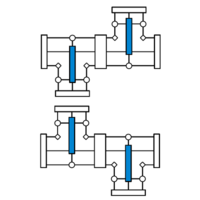
Good progress has been made in electronic structure calculations for real materials as well as for model Hamiltonians. However with an eye on ab initio calculations, it is still very challenging to accurately calculate, e.g., the dynamical response of small molecules or atom clusters. At present the method of choice is the GW-BSE method. Its notorious drawback is that solving a computationally demanding self-consistency equation is required. Thus motivated, the author explore an alternative idea replacing the self-consistency problem by the functional renormalization group (FRG). The traditional FRG was formulated for systems with translational symmetry. We investigate an alternative (εFRG) that is also applicable to inhomogeneous matter, such as disordered metals or molecules. It accounts for Fermi-liquid corrections to quasiparticle energies and particle-hole excitations. In principle it can go beyond the state of the art approximation, GW-BSE, by solving the Bethe-Salpeter equation (BSE) self-consistently We present an efficient implementation of εFRG together with performance tests on the spinless disordered Hubbard model.

Spin-orbit semimetals in the layer groups

Benjamin J. Wieder and C. L. Kane

Phys. Rev. B 94, 155108 (2016) - Published 6 October, 2016

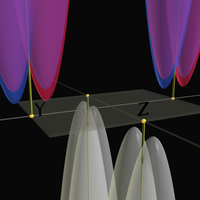
Since the discovery of graphene, there has been great interest in finding other nodal semimetals in two and three dimensions. Over the past few years, numerous examples of these materials have been proposed or observed. However, the explanations for the symmetry and topology mechanisms protecting nodal features in these materials have generally been provided on a case-by-case basis. In this paper, we use a mathematical consideration of crystal lattices on flat manifolds like Mquotobius strips and Klein bottles, most recently revived by Watanabe, Po, Vishwanath, and Zaletel, to develop a framework for discussing all possible two-dimensional and quasi-two-dimensional semimetals in systems with strong spin-orbit interactions. Using this framework, we draw connections to known nodal features in two- and three-dimensional semimetals like SrIrO3, and we predict new ones, including an exotic “Cat’s Cradle” Weyl fermion feature.

Gradient methods for variational optimization of projected entangled-pair states

Laurens Vanderstraeten, Jutho Haegeman, Philippe Corboz, and Frank Verstraete

Phys. Rev. B 94, 155123 (2016) - Published 14 October, 2016

The authors present a new method for variationally optimizing projected entangled-pair states (PEPS) in the thermodynamic limit based on the global energy functional and novel tensor contraction strategies. It is successfully benchmarked using Ising and Heisenberg Hamiltonians. The method is completely independent from previous PEPS implementations and improves on the variational energies and order parameters as compared to other state-of-the-art PEPS simulations. The algorithm presented here should prove valuable in simulating ground-state properties of strongly correlated quantum spin systems, can be used with other variational ansatzes, and can be applied to tensor network states in general.

Electrons, holes, and spin in the IV-VI monolayer four-six-enes

Ian Appelbaum and Pengke Li (李鹏科)

Phys. Rev. B 94, 155124 (2016) - Published 14 October, 2016

The electronic structure of crystalline materials reflects the influence of underlying discrete symmetries of the atomic lattice. When these symmetries are broken, associated degeneracies in the spectrum of states often split, with important consequences for potential electronic and spintronic applications. The mathematical language of group theory can be used to capture the effect of these symmetries and provide insight into the origins of spectrum features obtained from essentially empirical ab initio numerical calculations such as density functional theory. A salient example comes from the unusual electronic structure of atomically thin two-dimensional “four-six-ene” semiconductors such as tin sulfide, germanium telluride, etc. (related to group-V phosphorene but formed from group IV and VI). In this case, group theoretic methods provide a straightforward framework for understanding the consequences of inversion symmetry breaking due to inequivalent sublattice atomic identity. In particular, the quantum states at the edge of the fundamental band gap – relevant to all transport, optoelectronic, and spintronic properties – are shown to directly inherit their character from nearby points of high symmetry in the reciprocal lattice, where the form of allowable energetic interactions is constrained.

Laser angle-resolved photoemission as a probe of initial state kz dispersion, final-state band gaps, and spin texture of Dirac states in the Bi2Te3 topological insulator

Minna Ärrälä, Hasnain Hafiz, Daixiang Mou, Yun Wu, Rui Jiang, Trevor Riedemann, Thomas A. Lograsso, Bernardo Barbiellini, Adam Kaminski, Arun Bansil, and Matti Lindroos

Phys. Rev. B 94, 155144 (2016) - Published 27 October, 2016

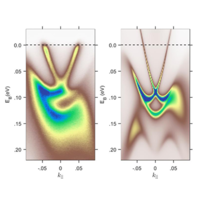
Angle-resolved photoemission spectroscopy (ARPES) is widely used to investigate topological states and their spin textures in topological materials. Here, the authors examine the role of the ARPES matrix element in laser-ARPES spectra, and delineate how imprints of the Dirac states and their spin textures are encoded in these spectra in terms of the character and symmetry of the underlying initial and final states. For this purpose, they collect laser-ARPES spectra from the exemplar topological insulator material Bi2Te3 over a wide range of momenta in the kx-ky plane at energies ranging from 5.57–6.70 eV for two different linear polarizations of the incident light. The experimental results are analyzed via first-principles fully relativistic calculations of ARPES intensities within the framework of the one-step model of photoemission. These include effects of the ARPES matrix element from a semi-infinite solid surface. The authors obtain new insight into the nature of the laser-ARPES spectra from topological materials, and show how these spectra contain fingerprints of the initial state kz dispersions and spin textures of the Dirac-cone states, and how laser-ARPES could open a previously unrecognized window on the presence of delicate gaps in the final-state spectra.

Dilatometric study of the metamagnetic and ferromagnetic phases in the triple-layered Sr4Ru3O10 system

W. Schottenhamel, M. Abdel-Hafiez, R. Fittipaldi, V. Granata, A. Vecchione, M. Hücker, A. U. B. Wolter, and B. Büchner

Phys. Rev. B 94, 155154 (2016) - Published 31 October, 2016

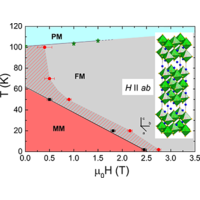
The Ruddlesden Popper series Srn+1RunO3+n+1 contains highly interesting physical phenomena depending on the number of RuO2 layers in the unit cell, spanning from unconventional superconductivity for the n=1 member Sr2RuO4 to itinerant ferromagnetism in the infinite-layer system SrRuO3. Obviously, the unique interplay between electronic, spin, and lattice degrees of freedom in this group of correlated itinerant electron systems leads to a tremendous change of the physical properties. This is also demonstrated by anisotropic and orbital-dependent magnetism and a strong spin-phonon coupling found in many members within the series. This paper focusses on triple-layer Sr4Ru3O10, which becomes ferromagnetic at Tc∼105 K and shows a metamagnetic transition below T*∼50 K for a magnetic field along the ab plane. The authors investigate the magnetoelastic properties of this compound as a function of temperature and magnetic field. The high-resolution thermal expansion and magnetostriction measurements indicate a highly anisotropic response with a specific rearrangement of the crystal lattice in fields parallel and perpendicular to the c axis. Finally, they reconstruct the T-H phase diagram, which shows a new feature suggestive of the multiple-orbital character of Sr4Ru3O10, where both the ferromagnetic (dxy) and the metamagnetic orbitals (dxz;yz) coexist and interact.

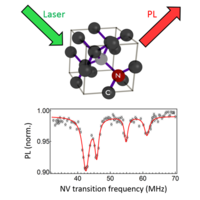
Wide-band nanoscale magnetic resonance spectroscopy using quantum relaxation of a single spin in diamond

James D. A. Wood, David A. Broadway, Liam T. Hall, Alastair Stacey, David A. Simpson, Jean-Philippe Tetienne, and Lloyd C. L. Hollenberg

Phys. Rev. B 94, 155402 (2016) - Published 5 October, 2016

Magnetic resonance spectroscopy is one of the most important tools used across the physical and life sciences, but typically requires macroscopic samples. A key challenge is therefore to develop methods suitable for the nanometric regime. This paper investigates a new approach whereby quantum relaxation of a single nitrogen-vacancy center spin in diamond is monitored to construct a spectrum of the surrounding electron and nuclear spin environment within a nanometric volume. In contrast to existing decoherence-based techniques, the technique is all optical, requiring no complex quantum control, and intrinsically broadband, which means it can probe both electron and nuclear spin resonances. As an illustration, the authors report broadband nanoscale magnetic resonance spectroscopy of nitrogen impurities located within the diamond. This work provides a new route towards magnetic resonance spectroscopy of electrons and nuclear spins at the single molecule level.

ARTICLES

Electronic structure and strongly correlated systems

Functional renormalization group approach to electronic structure calculations for systems without translational symmetry

Christian Seiler and Ferdinand Evers

Phys. Rev. B 94, 155102 (2016) - Published 3 October, 2016

Good progress has been made in electronic structure calculations for real materials as well as for model Hamiltonians. However with an eye on ab initio calculations, it is still very challenging to accurately calculate, e.g., the dynamical response of small molecules or atom clusters. At present the method of choice is the GW-BSE method. Its notorious drawback is that solving a computationally demanding self-consistency equation is required. Thus motivated, the author explore an alternative idea replacing the self-consistency problem by the functional renormalization group (FRG). The traditional FRG was formulated for systems with translational symmetry. We investigate an alternative (εFRG) that is also applicable to inhomogeneous matter, such as disordered metals or molecules. It accounts for Fermi-liquid corrections to quasiparticle energies and particle-hole excitations. In principle it can go beyond the state of the art approximation, GW-BSE, by solving the Bethe-Salpeter equation (BSE) self-consistently We present an efficient implementation of εFRG together with performance tests on the spinless disordered Hubbard model.

Anomalous transport near the Lifshitz transition at the LaAlO3/SrTiO3 interface

S. Nandy, N. Mohanta, S. Acharya, and A. Taraphder

Phys. Rev. B 94, 155103 (2016) - Published 3 October, 2016

Hall response and edge current dynamics in Chern insulators out of equilibrium

M. D. Caio, N. R. Cooper, and M. J. Bhaseen

Phys. Rev. B 94, 155104 (2016) - Published 4 October, 2016

Ab initio electronic relaxation times and transport in noble metals

Jamal I. Mustafa, Marco Bernardi, Jeffrey B. Neaton, and Steven G. Louie

Phys. Rev. B 94, 155105 (2016) - Published 5 October, 2016

Constructing topological models by symmetrization: A projected entangled pair states study

Carlos Fernández-González, Roger S. K. Mong, Olivier Landon-Cardinal, David Pérez-García, and Norbert Schuch

Phys. Rev. B 94, 155106 (2016) - Published 5 October, 2016

Ferromagnetism beyond Lieb's theorem

Natanael C. Costa, Tiago Mendes-Santos, Thereza Paiva, Raimundo R. dos Santos, and Richard T. Scalettar

Phys. Rev. B 94, 155107 (2016) - Published 6 October, 2016

Spin-orbit semimetals in the layer groups

Benjamin J. Wieder and C. L. Kane

Phys. Rev. B 94, 155108 (2016) - Published 6 October, 2016

Since the discovery of graphene, there has been great interest in finding other nodal semimetals in two and three dimensions. Over the past few years, numerous examples of these materials have been proposed or observed. However, the explanations for the symmetry and topology mechanisms protecting nodal features in these materials have generally been provided on a case-by-case basis. In this paper, we use a mathematical consideration of crystal lattices on flat manifolds like Mquotobius strips and Klein bottles, most recently revived by Watanabe, Po, Vishwanath, and Zaletel, to develop a framework for discussing all possible two-dimensional and quasi-two-dimensional semimetals in systems with strong spin-orbit interactions. Using this framework, we draw connections to known nodal features in two- and three-dimensional semimetals like SrIrO3, and we predict new ones, including an exotic “Cat’s Cradle” Weyl fermion feature.

Statistical mechanics approach to the electric polarization and dielectric constant of band insulators

Frédéric Combes, Maximilian Trescher, Frédéric Piéchon, and Jean-Noël Fuchs

Phys. Rev. B 94, 155109 (2016) - Published 6 October, 2016

Inverse participation ratios in the XXZ spin chain

Grégoire Misguich, Vincent Pasquier, and Jean-Marc Luck

Phys. Rev. B 94, 155110 (2016) - Published 6 October, 2016

Correlation and current anomalies in helical quantum dots

C. De Beule, N. Traverso Ziani, M. Zarenia, B. Partoens, and B. Trauzettel

Phys. Rev. B 94, 155111 (2016) - Published 7 October, 2016

Pure spin current and perfect valley filter by designed separation of the chiral states in two-dimensional honeycomb lattices

Da-Ping Liu, Zhi-Ming Yu, and Yu-Liang Liu

Phys. Rev. B 94, 155112 (2016) - Published 7 October, 2016

Theory of (2+1)-dimensional fermionic topological orders and fermionic/bosonic topological orders with symmetries

Tian Lan, Liang Kong, and Xiao-Gang Wen

Phys. Rev. B 94, 155113 (2016) - Published 10 October, 2016

Detecting a preformed pair phase: Response to a pairing forcing field

A. Tagliavini, M. Capone, and A. Toschi

Phys. Rev. B 94, 155114 (2016) - Published 10 October, 2016

Minimal model for the frustrated spin ladder system BiCu2PO6

Leanna Splinter, Nils A. Drescher, Holger Krull, and Götz S. Uhrig

Phys. Rev. B 94, 155115 (2016) - Published 10 October, 2016

High-resolution optical spectroscopy and magnetic properties of Yb3+ in Y2SiO5

Sacha Welinski, Alban Ferrier, Mikael Afzelius, and Philippe Goldner

Phys. Rev. B 94, 155116 (2016) - Published 10 October, 2016

X-ray absorption and emission spectroscopy study of Mn and Co valence and spin states in TbMn1−xCoxO3

V. Cuartero, S. Lafuerza, M. Rovezzi, J. García, J. Blasco, G. Subías, and E. Jiménez

Phys. Rev. B 94, 155117 (2016) - Published 12 October, 2016

Large anomalous magnetic moment in three-dimensional Dirac and Weyl semimetals

E. C. I. van der Wurff and H. T. C. Stoof

Phys. Rev. B 94, 155118 (2016) - Published 12 October, 2016

Mott-Hubbard transition and spin-liquid state on the pyrochlore lattice

Nyayabanta Swain, Rajarshi Tiwari, and Pinaki Majumdar

Phys. Rev. B 94, 155119 (2016) - Published 13 October, 2016

Two holes in a two-dimensional quantum antiferromagnet: A variational study based on entangled-plaquette states

Fabio Mezzacapo, Adriano Angelone, and Guido Pupillo

Phys. Rev. B 94, 155120 (2016) - Published 13 October, 2016

Topological semimetal to insulator quantum phase transition in the Zintl compounds Ba2X(X=Si,Ge)

Ziming Zhu, Mingda Li, and Ju Li

Phys. Rev. B 94, 155121 (2016) - Published 13 October, 2016

Signatures and conditions for phase band crossings in periodically driven integrable systems

Bhaskar Mukherjee, Arnab Sen, Diptiman Sen, and K. Sengupta

Phys. Rev. B 94, 155122 (2016) - Published 13 October, 2016

Gradient methods for variational optimization of projected entangled-pair states

Laurens Vanderstraeten, Jutho Haegeman, Philippe Corboz, and Frank Verstraete

Phys. Rev. B 94, 155123 (2016) - Published 14 October, 2016

The authors present a new method for variationally optimizing projected entangled-pair states (PEPS) in the thermodynamic limit based on the global energy functional and novel tensor contraction strategies. It is successfully benchmarked using Ising and Heisenberg Hamiltonians. The method is completely independent from previous PEPS implementations and improves on the variational energies and order parameters as compared to other state-of-the-art PEPS simulations. The algorithm presented here should prove valuable in simulating ground-state properties of strongly correlated quantum spin systems, can be used with other variational ansatzes, and can be applied to tensor network states in general.

Electrons, holes, and spin in the IV-VI monolayer four-six-enes

Ian Appelbaum and Pengke Li (李鹏科)

Phys. Rev. B 94, 155124 (2016) - Published 14 October, 2016

The electronic structure of crystalline materials reflects the influence of underlying discrete symmetries of the atomic lattice. When these symmetries are broken, associated degeneracies in the spectrum of states often split, with important consequences for potential electronic and spintronic applications. The mathematical language of group theory can be used to capture the effect of these symmetries and provide insight into the origins of spectrum features obtained from essentially empirical ab initio numerical calculations such as density functional theory. A salient example comes from the unusual electronic structure of atomically thin two-dimensional “four-six-ene” semiconductors such as tin sulfide, germanium telluride, etc. (related to group-V phosphorene but formed from group IV and VI). In this case, group theoretic methods provide a straightforward framework for understanding the consequences of inversion symmetry breaking due to inequivalent sublattice atomic identity. In particular, the quantum states at the edge of the fundamental band gap – relevant to all transport, optoelectronic, and spintronic properties – are shown to directly inherit their character from nearby points of high symmetry in the reciprocal lattice, where the form of allowable energetic interactions is constrained.

Mixed s-sourcery: Building many-body states using bubbles of nothing

Brian Swingle and John McGreevy

Phys. Rev. B 94, 155125 (2016) - Published 17 October, 2016

Analysis of two-orbital correlations in wave functions restricted to electron-pair states

Katharina Boguslawski, Paweł Tecmer, and Örs Legeza

Phys. Rev. B 94, 155126 (2016) - Published 14 October, 2016

Superconductivity and nematic fluctuations in a model of doped FeSe monolayers: Determinant quantum Monte Carlo study

Philipp T. Dumitrescu, Maksym Serbyn, Richard T. Scalettar, and Ashvin Vishwanath

Phys. Rev. B 94, 155127 (2016) - Published 17 October, 2016

Fractal symmetries: Ungauging the cubic code

Dominic J. Williamson

Phys. Rev. B 94, 155128 (2016) - Published 17 October, 2016

Evidence for impact ionization in vanadium dioxide

Joshua Holleman, Michael M. Bishop, Carlos Garcia, J. S. R. Vellore Winfred, Shinbuhm Lee, Ho Nyung Lee, Christianne Beekman, Efstratios Manousakis, and Stephen A. McGill

Phys. Rev. B 94, 155129 (2016) - Published 17 October, 2016

Magnetic-field-induced mixed-level Kondo effect in two-level systems

Arturo Wong, Anh T. Ngo, and Sergio E. Ulloa

Phys. Rev. B 94, 155130 (2016) - Published 17 October, 2016

Charge self-consistency in density functional theory combined with dynamical mean field theory: k-space reoccupation and orbital order

Sumanta Bhandary, Elias Assmann, Markus Aichhorn, and Karsten Held

Phys. Rev. B 94, 155131 (2016) - Published 19 October, 2016

Existence of topological nontrivial surface states in strained transition metals: W, Ta, Mo, and Nb

Danny Thonig, Tomáš Rauch, Hossein Mirhosseini, Jürgen Henk, Ingrid Mertig, Henry Wortelen, Bernd Engelkamp, Anke B. Schmidt, and Markus Donath

Phys. Rev. B 94, 155132 (2016) - Published 19 October, 2016

Heterodyne Hall effect in a two-dimensional electron gas

Takashi Oka and Leda Bucciantini

Phys. Rev. B 94, 155133 (2016) - Published 20 October, 2016

Quadratic band touching with long-range interactions in and out of equilibrium

Balázs Dóra and Igor F. Herbut

Phys. Rev. B 94, 155134 (2016) - Published 20 October, 2016

Magnetic collapse and the behavior of transition metal oxides at high pressure

I. Leonov, L. Pourovskii, A. Georges, and I. A. Abrikosov

Phys. Rev. B 94, 155135 (2016) - Published 20 October, 2016

Theory of a 3+1D fractional chiral metal: Interacting variant of the Weyl semimetal

Tobias Meng, Adolfo G. Grushin, Kirill Shtengel, and Jens H. Bardarson

Phys. Rev. B 94, 155136 (2016) - Published 20 October, 2016

Possible Bose-Einstein condensate associated with an orbital degree of freedom in the Mott insulator CaCrO3

J.-S. Zhou, L.-P. Cao, J. A. Alonso, J. Sanchez-Benitez, M. T. Fernandez-Diaz, X. Li, J.-G. Cheng, L. G. Marshall, C.-Q. Jin, and J. B. Goodenough

Phys. Rev. B 94, 155137 (2016) - Published 21 October, 2016

Orbital-dependent Fermi surface shrinking as a fingerprint of nematicity in FeSe

Laura Fanfarillo, Joseph Mansart, Pierre Toulemonde, Hervé Cercellier, Patrick Le Fèvre, François Bertran, Belen Valenzuela, Lara Benfatto, and Véronique Brouet

Phys. Rev. B 94, 155138 (2016) - Published 21 October, 2016

Microscopic theory of Dzyaloshinsky-Moriya interaction in pyrochlore oxides with spin-orbit coupling

Naoya Arakawa

Phys. Rev. B 94, 155139 (2016) - Published 24 October, 2016

Violation of cluster decomposition and absence of light cones in local integer and half-integer spin chains

L. Dell'Anna, O. Salberger, L. Barbiero, A. Trombettoni, and V. E. Korepin

Phys. Rev. B 94, 155140 (2016) - Published 25 October, 2016

Photoemission spectra from reduced density matrices: The band gap in strongly correlated systems

Stefano Di Sabatino, J. A. Berger, Lucia Reining, and Pina Romaniello

Phys. Rev. B 94, 155141 (2016) - Published 25 October, 2016

Lindblad-driven discretized leads for nonequilibrium steady-state transport in quantum impurity models: Recovering the continuum limit

F. Schwarz, M. Goldstein, A. Dorda, E. Arrigoni, A. Weichselbaum, and J. von Delft

Phys. Rev. B 94, 155142 (2016) - Published 27 October, 2016

Energetics of the AK13 semilocal Kohn-Sham exchange energy functional

A. Lindmaa and R. Armiento

Phys. Rev. B 94, 155143 (2016) - Published 27 October, 2016

Laser angle-resolved photoemission as a probe of initial state kz dispersion, final-state band gaps, and spin texture of Dirac states in the Bi2Te3 topological insulator

Minna Ärrälä, Hasnain Hafiz, Daixiang Mou, Yun Wu, Rui Jiang, Trevor Riedemann, Thomas A. Lograsso, Bernardo Barbiellini, Adam Kaminski, Arun Bansil, and Matti Lindroos

Phys. Rev. B 94, 155144 (2016) - Published 27 October, 2016

Angle-resolved photoemission spectroscopy (ARPES) is widely used to investigate topological states and their spin textures in topological materials. Here, the authors examine the role of the ARPES matrix element in laser-ARPES spectra, and delineate how imprints of the Dirac states and their spin textures are encoded in these spectra in terms of the character and symmetry of the underlying initial and final states. For this purpose, they collect laser-ARPES spectra from the exemplar topological insulator material Bi2Te3 over a wide range of momenta in the kx-ky plane at energies ranging from 5.57–6.70 eV for two different linear polarizations of the incident light. The experimental results are analyzed via first-principles fully relativistic calculations of ARPES intensities within the framework of the one-step model of photoemission. These include effects of the ARPES matrix element from a semi-infinite solid surface. The authors obtain new insight into the nature of the laser-ARPES spectra from topological materials, and show how these spectra contain fingerprints of the initial state kz dispersions and spin textures of the Dirac-cone states, and how laser-ARPES could open a previously unrecognized window on the presence of delicate gaps in the final-state spectra.

Coulomb and electron-phonon interactions in metals

Igor S. Tupitsyn, Andrey S. Mishchenko, Naoto Nagaosa, and Nikolay Prokof'ev

Phys. Rev. B 94, 155145 (2016) - Published 27 October, 2016

Antagonistic effects of nearest-neighbor repulsion on the superconducting pairing dynamics in the doped Mott insulator regime

A. Reymbaut, M. Charlebois, M. Fellous Asiani, L. Fratino, P. Sémon, G. Sordi, and A.-M. S. Tremblay

Phys. Rev. B 94, 155146 (2016) - Published 27 October, 2016

Effect of polaronic charge transfer on band alignment at the Cu/TiO2 interface

Keith P. McKenna

Phys. Rev. B 94, 155147 (2016) - Published 27 October, 2016

Hourglass fermion surface states in stacked topological insulators with nonsymmorphic symmetry

Motohiko Ezawa

Phys. Rev. B 94, 155148 (2016) - Published 27 October, 2016

Nature of a single doped hole in two-leg Hubbard and t−J ladders

Shenxiu Liu, Hong-Chen Jiang, and Thomas P. Devereaux

Phys. Rev. B 94, 155149 (2016) - Published 28 October, 2016

Thermodynamic and spectral properties of adiabatic Peierls chains

Manuel Weber, Fakher F. Assaad, and Martin Hohenadler

Phys. Rev. B 94, 155150 (2016) - Published 28 October, 2016

Nonequilibrium transport and electron-glass effects in thin GexTe films

Z. Ovadyahu

Phys. Rev. B 94, 155151 (2016) - Published 28 October, 2016

Enhancing superconductivity in A3C60 fullerides

Minjae Kim, Yusuke Nomura, Michel Ferrero, Priyanka Seth, Olivier Parcollet, and Antoine Georges

Phys. Rev. B 94, 155152 (2016) - Published 28 October, 2016

Spin liquid like Raman signatures in the hyperkagome iridate Na4Ir3O8

Satyendra Nath Gupta, P. V. Sriluckshmy, Ashiwini Balodhi, D. V. S. Muthu, S. R. Hassan, Yogesh Singh, T. V. Ramakrishnan, and A. K. Sood

Phys. Rev. B 94, 155153 (2016) - Published 28 October, 2016

Dilatometric study of the metamagnetic and ferromagnetic phases in the triple-layered Sr4Ru3O10 system

W. Schottenhamel, M. Abdel-Hafiez, R. Fittipaldi, V. Granata, A. Vecchione, M. Hücker, A. U. B. Wolter, and B. Büchner

Phys. Rev. B 94, 155154 (2016) - Published 31 October, 2016

The Ruddlesden Popper series Srn+1RunO3+n+1 contains highly interesting physical phenomena depending on the number of RuO2 layers in the unit cell, spanning from unconventional superconductivity for the n=1 member Sr2RuO4 to itinerant ferromagnetism in the infinite-layer system SrRuO3. Obviously, the unique interplay between electronic, spin, and lattice degrees of freedom in this group of correlated itinerant electron systems leads to a tremendous change of the physical properties. This is also demonstrated by anisotropic and orbital-dependent magnetism and a strong spin-phonon coupling found in many members within the series. This paper focusses on triple-layer Sr4Ru3O10, which becomes ferromagnetic at Tc∼105 K and shows a metamagnetic transition below T*∼50 K for a magnetic field along the ab plane. The authors investigate the magnetoelastic properties of this compound as a function of temperature and magnetic field. The high-resolution thermal expansion and magnetostriction measurements indicate a highly anisotropic response with a specific rearrangement of the crystal lattice in fields parallel and perpendicular to the c axis. Finally, they reconstruct the T-H phase diagram, which shows a new feature suggestive of the multiple-orbital character of Sr4Ru3O10, where both the ferromagnetic (dxy) and the metamagnetic orbitals (dxz;yz) coexist and interact.

Angle-resolved photoemission observation of Mn-pnictide hybridization and negligible band structure renormalization in BaMn2As2 and BaMn2Sb2

W.-L. Zhang, P. Richard, A. van Roekeghem, S.-M. Nie, N. Xu, P. Zhang, H. Miao, S.-F. Wu, J.-X. Yin, B. B. Fu, L.-Y. Kong, T. Qian, Z.-J. Wang, Z. Fang, A. S. Sefat, S. Biermann, and H. Ding

Phys. Rev. B 94, 155155 (2016) - Published 31 October, 2016

Probing strong correlations with light scattering: Example of the quantum Ising model

H. M. Babujian, M. Karowski, and A. M. Tsvelik

Phys. Rev. B 94, 155156 (2016) - Published 31 October, 2016

Semiconductors I: bulk

Photoinduced magnetization effect in a p-type Hg1−xMnxTe single crystal investigated by infrared photoluminescence

Liangqing Zhu, Jun Shao, Xiren Chen, Yanqiu Li, Liang Zhu, Zhen Qi, Tie Lin, Wei Bai, Xiaodong Tang, and Junhao Chu

Phys. Rev. B 94, 155201 (2016) - Published 5 October, 2016

Diluted magnetic semiconductors with narrow band gaps

Bo Gu and Sadamichi Maekawa

Phys. Rev. B 94, 155202 (2016) - Published 10 October, 2016

Thermal conductivity switch: Optimal semiconductor/metal melting transition

Kwangnam Kim and Massoud Kaviany

Phys. Rev. B 94, 155203 (2016) - Published 17 October, 2016

Observation of collective excitations in MgZnO/ZnO two-dimensional electron systems by resonant Raman scattering

A. B. Van'kov, B. D. Kaysin, V. E. Kirpichev, V. V. Solovyev, and I. V. Kukushkin

Phys. Rev. B 94, 155204 (2016) - Published 19 October, 2016

Mechanism of relativistic Doppler reflection from a photoinduced moving plasma front studied by terahertz time-domain spectroscopy

Nanase Kohno, Ryuji Itakura, and Masaaki Tsubouchi

Phys. Rev. B 94, 155205 (2016) - Published 27 October, 2016

Photovoltaic anomalous Hall effect in line-node semimetals

Katsuhisa Taguchi, Dong-Hui Xu, Ai Yamakage, and K. T. Law

Phys. Rev. B 94, 155206 (2016) - Published 28 October, 2016

Semiconductors II: surfaces, interfaces, microstructures, and related topics

Theory of edge-state optical absorption in two-dimensional transition metal dichalcogenide flakes

Maxim Trushin, Edmund J. R. Kelleher, and Tawfique Hasan

Phys. Rev. B 94, 155301 (2016) - Published 6 October, 2016

Spontaneous edge current in a small chiral superconductor with a rough surface

Shu-Ichiro Suzuki and Yasuhiro Asano

Phys. Rev. B 94, 155302 (2016) - Published 7 October, 2016

Fano resonances in photonic crystal slabs near optical bound states in the continuum

Cédric Blanchard, Jean-Paul Hugonin, and Christophe Sauvan

Phys. Rev. B 94, 155303 (2016) - Published 7 October, 2016

Dirac cones, Floquet side bands, and theory of time-resolved angle-resolved photoemission

Aaron Farrell, A. Arsenault, and T. Pereg-Barnea

Phys. Rev. B 94, 155304 (2016) - Published 12 October, 2016

Andreev reflection and bound state formation in a ballistic two-dimensional electron gas probed by a quantum point contact

Hiroshi Irie, Clemens Todt, Norio Kumada, Yuichi Harada, Hiroki Sugiyama, Tatsushi Akazaki, and Koji Muraki

Phys. Rev. B 94, 155305 (2016) - Published 12 October, 2016

Nanohelices as superlattices: Bloch oscillations and electric dipole transitions

C. A. Downing, M. G. Robinson, and M. E. Portnoi

Phys. Rev. B 94, 155306 (2016) - Published 13 October, 2016

Anomalously deep polarization in SrTiO3 (001) interfaced with an epitaxial ultrathin manganite film

Zhen Wang, Jing Tao, Liping Yu, Hangwen Guo, Lina Chen, Myung-Geun Han, Lijun Wu, Huolin Xin, Kim Kisslinger, E. W. Plummer, Jiandi Zhang, and Yimei Zhu

Phys. Rev. B 94, 155307 (2016) - Published 17 October, 2016

Nature of excitons bound to inversion domain boundaries: Origin of the 3.45-eV luminescence lines in spontaneously formed GaN nanowires on Si(111)

Carsten Pfüller, Pierre Corfdir, Christian Hauswald, Timur Flissikowski, Xiang Kong, Johannes K. Zettler, Sergio Fernández-Garrido, Pınar Doğan, Holger T. Grahn, Achim Trampert, Lutz Geelhaar, and Oliver Brandt

Phys. Rev. B 94, 155308 (2016) - Published 17 October, 2016

Ab initio density functional theory study on the atomic and electronic structure of GaP/Si(001) heterointerfaces

O. Romanyuk, O. Supplie, T. Susi, M. M. May, and T. Hannappel

Phys. Rev. B 94, 155309 (2016) - Published 18 October, 2016

Strain dependence of band gaps and exciton energies in pure and mixed transition-metal dichalcogenides

Rodrick Kuate Defo, Shiang Fang, Sharmila N. Shirodkar, Georgios A. Tritsaris, Athanasios Dimoulas, and Efthimios Kaxiras

Phys. Rev. B 94, 155310 (2016) - Published 27 October, 2016

Chern insulating state in laterally patterned semiconductor heterostructures

Tommy Li and Oleg P. Sushkov

Phys. Rev. B 94, 155311 (2016) - Published 28 October, 2016

Morphing of two-dimensional hole systems at ν=3/2 in parallel magnetic fields: Compressible, stripe, and fractional quantum Hall phases

Yang Liu, M. A. Mueed, Md. Shafayat Hossain, S. Hasdermir, L. N. Pfeiffer, K. W. West, K. W. Baldwin, and M. Shayegan

Phys. Rev. B 94, 155312 (2016) - Published 31 October, 2016

Smearing of the quantum anomalous Hall effect due to statistical fluctuations of magnetic dopants

Z. Yue and M. E. Raikh

Phys. Rev. B 94, 155313 (2016) - Published 31 October, 2016

Surface physics, nanoscale physics, low-dimensional systems

Boundary conditions at closed edge of bilayer graphene and energy bands of collapsed nanotubes

Takeshi Nakanishi and Tsuneya Ando

Phys. Rev. B 94, 155401 (2016) - Published 3 October, 2016

Wide-band nanoscale magnetic resonance spectroscopy using quantum relaxation of a single spin in diamond

James D. A. Wood, David A. Broadway, Liam T. Hall, Alastair Stacey, David A. Simpson, Jean-Philippe Tetienne, and Lloyd C. L. Hollenberg

Phys. Rev. B 94, 155402 (2016) - Published 5 October, 2016

Magnetic resonance spectroscopy is one of the most important tools used across the physical and life sciences, but typically requires macroscopic samples. A key challenge is therefore to develop methods suitable for the nanometric regime. This paper investigates a new approach whereby quantum relaxation of a single nitrogen-vacancy center spin in diamond is monitored to construct a spectrum of the surrounding electron and nuclear spin environment within a nanometric volume. In contrast to existing decoherence-based techniques, the technique is all optical, requiring no complex quantum control, and intrinsically broadband, which means it can probe both electron and nuclear spin resonances. As an illustration, the authors report broadband nanoscale magnetic resonance spectroscopy of nitrogen impurities located within the diamond. This work provides a new route towards magnetic resonance spectroscopy of electrons and nuclear spins at the single molecule level.

Electronic band structure effects in the stopping of protons in copper

Edwin E. Quashie, Bidhan C. Saha, and Alfredo A. Correa

Phys. Rev. B 94, 155403 (2016) - Published 5 October, 2016

Effect of strain, thickness, and local surface environment on electron transport properties of oxygen-terminated copper thin films

Alfonso Sanchez-Soares, Sarah L. T. Jones, John J. Plombon, Ananth P. Kaushik, Roger E. Nagle, James S. Clarke, and James C. Greer

Phys. Rev. B 94, 155404 (2016) - Published 5 October, 2016

High-temperature large-gap quantum anomalous Hall insulating state in ultrathin double perovskite films

Santu Baidya, Umesh V. Waghmare, Arun Paramekanti, and Tanusri Saha-Dasgupta

Phys. Rev. B 94, 155405 (2016) - Published 5 October, 2016

Efficient many-body calculations for two-dimensional materials using exact limits for the screened potential: Band gaps of MoS2, h-BN, and phosphorene

Filip A. Rasmussen, Per S. Schmidt, Kirsten T. Winther, and Kristian S. Thygesen

Phys. Rev. B 94, 155406 (2016) - Published 6 October, 2016

Generation of spin-dependent coherent states in a quantum wire

J. Pawłowski, P. Szumniak, and S. Bednarek

Phys. Rev. B 94, 155407 (2016) - Published 6 October, 2016

Indirect exchange interaction between magnetic impurities in the two-dimensional topological insulator based on CdTe/HgTe/CdTe quantum wells

P. D. Kurilovich, V. D. Kurilovich, and I. S. Burmistrov

Phys. Rev. B 94, 155408 (2016) - Published 7 October, 2016

Defect compensation by Cr vacancies and oxygen interstitials in Ti4+-doped Cr2O3 epitaxial thin films

Tiffany C. Kaspar, Peter V. Sushko, Mark E. Bowden, Steve M. Heald, Alexandra Papadogianni, Carsten Tschammer, Oliver Bierwagen, and Scott A. Chambers

Phys. Rev. B 94, 155409 (2016) - Published 7 October, 2016

Intrinsic magnetism in penta-hexa-graphene: A first-principles study

Yierpan Aierken, Ortwin Leenaerts, and François M. Peeters

Phys. Rev. B 94, 155410 (2016) - Published 10 October, 2016

Quantum thermal transport through anharmonic systems: A self-consistent approach

Dahai He, Juzar Thingna, Jian-Sheng Wang, and Baowen Li

Phys. Rev. B 94, 155411 (2016) - Published 10 October, 2016

Femtosecond plasmon and photon wave packets excited by a high-energy electron on a metal or dielectric surface

Benjamin J. M. Brenny, Albert Polman, and F. Javier García de Abajo

Phys. Rev. B 94, 155412 (2016) - Published 10 October, 2016

Exciton dynamics in GaAs/(Al,Ga)As core-shell nanowires with shell quantum dots

Pierre Corfdir, Hanno Küpers, Ryan B. Lewis, Timur Flissikowski, Holger T. Grahn, Lutz Geelhaar, and Oliver Brandt

Phys. Rev. B 94, 155413 (2016) - Published 11 October, 2016

Electron hydrodynamics dilemma: Whirlpools or no whirlpools

Francesco M. D. Pellegrino, Iacopo Torre, Andre K. Geim, and Marco Polini

Phys. Rev. B 94, 155414 (2016) - Published 11 October, 2016

Stable monolayer honeycomb-like structures of RuX2 (X=S,Se)

Fatih Ersan, Seymur Cahangirov, Gökhan Gökoğlu, Angel Rubio, and Ethem Aktürk

Phys. Rev. B 94, 155415 (2016) - Published 11 October, 2016

Tight-binding approach to strain and curvature in monolayer transition-metal dichalcogenides

Alexander J. Pearce, Eros Mariani, and Guido Burkard

Phys. Rev. B 94, 155416 (2016) - Published 12 October, 2016

Readout of Majorana parity states using a quantum dot

Kaveh Gharavi, Darryl Hoving, and Jonathan Baugh

Phys. Rev. B 94, 155417 (2016) - Published 12 October, 2016

Strong and ultrastrong coupling with free-space radiation

S. Huppert, A. Vasanelli, G. Pegolotti, Y. Todorov, and C. Sirtori

Phys. Rev. B 94, 155418 (2016) - Published 13 October, 2016

Transport spectroscopy of a spin-orbit-coupled spin to a quantum dot

G. Giavaras and Franco Nori

Phys. Rev. B 94, 155419 (2016) - Published 13 October, 2016

Giant tunneling electroresistance induced by ferroelectrically switchable two-dimensional electron gas at nonpolar BaTiO3/SrTiO3 interface

Qingyun Wu, Lei Shen, Ming Yang, Jun Zhou, Jingsheng Chen, and Yuan Ping Feng

Phys. Rev. B 94, 155420 (2016) - Published 13 October, 2016

Temperature-dependent magnetospectroscopy of HgTe quantum wells

A. V. Ikonnikov, S. S. Krishtopenko, O. Drachenko, M. Goiran, M. S. Zholudev, V. V. Platonov, Yu. B. Kudasov, A. S. Korshunov, D. A. Maslov, I. V. Makarov, O. M. Surdin, A. V. Philippov, M. Marcinkiewicz, S. Ruffenach, F. Teppe, W. Knap, N. N. Mikhailov, S. A. Dvoretsky, and V. I. Gavrilenko

Phys. Rev. B 94, 155421 (2016) - Published 13 October, 2016

Plasmon resonant (e, 2e) spectroscopy on Be(0001)

Gianluca Di Filippo, Damiano Sbaraglia, Alessandro Ruocco, and Giovanni Stefani

Phys. Rev. B 94, 155422 (2016) - Published 13 October, 2016

Spin-orbit coupling and spin relaxation in phosphorene: Intrinsic versus extrinsic effects

Marcin Kurpas, Martin Gmitra, and Jaroslav Fabian

Phys. Rev. B 94, 155423 (2016) - Published 13 October, 2016

Spin-polarized currents and noise in normal-metal/superconductor junctions with Yu-Shiba-Rusinov impurities

Daniel Persson, Oleksii Shevtsov, Tomas Löfwander, and Mikael Fogelström

Phys. Rev. B 94, 155424 (2016) - Published 14 October, 2016

Excitonic properties of semiconducting monolayer and bilayer MoTe2

C. Robert, R. Picard, D. Lagarde, G. Wang, J. P. Echeverry, F. Cadiz, P. Renucci, A. Högele, T. Amand, X. Marie, I. C. Gerber, and B. Urbaszek

Phys. Rev. B 94, 155425 (2016) - Published 17 October, 2016

Nitrogen substitution impacts organic-metal interface energetics

Ao Yang, Antoni Franco-Cañellas, Mikio Sato, Bin Wang, Rong-Bin Wang, Harunobu Koike, Ingo Salzmann, Pardeep Kumar Thakur, Tien-Lin Lee, Lijia Liu, Satoshi Kera, Alexander Gerlach, Kaname Kanai, Jian Fan, Frank Schreiber, and Steffen Duhm

Phys. Rev. B 94, 155426 (2016) - Published 17 October, 2016

Ultrafast reflectivity dynamics of highly excited Si surfaces below the melting transition

R. Gunnella, G. Zgrablic, E. Giangrisostomi, F. D'Amico, E. Principi, C. Masciovecchio, A. Di Cicco, and F. Parmigiani

Phys. Rev. B 94, 155427 (2016) - Published 17 October, 2016

Strongly bound Mott-Wannier excitons in GeS and GeSe monolayers

Lidia C. Gomes, P. E. Trevisanutto, A. Carvalho, A. S. Rodin, and A. H. Castro Neto

Phys. Rev. B 94, 155428 (2016) - Published 17 October, 2016

Surface plasmon lifetime in metal nanoshells

Arman S. Kirakosyan, Mark I. Stockman, and Tigran V. Shahbazyan

Phys. Rev. B 94, 155429 (2016) - Published 17 October, 2016

Metasurface perfect absorber based on guided resonance of a photonic hypercrystal

You-Chia Chang, Alexander V. Kildishev, Evgenii E. Narimanov, and Theodore B. Norris

Phys. Rev. B 94, 155430 (2016) - Published 17 October, 2016

Comparative study of the interfaces of graphene and hexagonal boron nitride with silver

Manuela Garnica, Martin Schwarz, Jacob Ducke, Yuanqin He, Felix Bischoff, Johannes V. Barth, Willi Auwärter, and Daniele Stradi

Phys. Rev. B 94, 155431 (2016) - Published 18 October, 2016

Infrared to terahertz optical conductivity of n-type and p-type monolayer MoS2 in the presence of Rashba spin-orbit coupling

Y. M. Xiao, W. Xu, B. Van Duppen, and F. M. Peeters

Phys. Rev. B 94, 155432 (2016) - Published 18 October, 2016

Temperature and voltage measurement in quantum systems far from equilibrium

Abhay Shastry and Charles A. Stafford

Phys. Rev. B 94, 155433 (2016) - Published 19 October, 2016

Anharmonic renormalization of the dispersion of flexural modes in graphene using atomistic calculations

Hengjia Wang and Murray S. Daw

Phys. Rev. B 94, 155434 (2016) - Published 20 October, 2016

Temperature dependence of Raman-active phonons and anharmonic interactions in layered hexagonal BN

Ramon Cuscó, Bernard Gil, Guillaume Cassabois, and Luis Artús

Phys. Rev. B 94, 155435 (2016) - Published 20 October, 2016

Thermoelectric transport through Majorana bound states and violation of Wiedemann-Franz law

J. P. Ramos-Andrade, O. Ávalos-Ovando, P. A. Orellana, and S. E. Ulloa

Phys. Rev. B 94, 155436 (2016) - Published 20 October, 2016

Landauer formulation of photon transport in driven systems

Chiao-Hsuan Wang and Jacob M. Taylor

Phys. Rev. B 94, 155437 (2016) - Published 20 October, 2016

Observation of the exciton Mott transition in the photoluminescence of coupled quantum wells

Gabija Kiršanskė, Petru Tighineanu, Raphaël S. Daveau, Javier Miguel-Sánchez, Peter Lodahl, and Søren Stobbe

Phys. Rev. B 94, 155438 (2016) - Published 21 October, 2016

Reconstruction of the phonon relaxation times using solutions of the Boltzmann transport equation

Mojtaba Forghani, Nicolas G. Hadjiconstantinou, and Jean-Philippe M. Péraud

Phys. Rev. B 94, 155439 (2016) - Published 24 October, 2016

Elastic versus inelastic spin-polarized electron scattering from a ferromagnetic surface

Sergey N. Samarin, Oleg M. Artamonov, Alexander P. Baraban, Mikhail Kostylev, Paul Guagliardo, Jamal Berakdar, and James F. Williams

Phys. Rev. B 94, 155440 (2016) - Published 24 October, 2016

Theory of proximity-induced exchange coupling in graphene on hBN/(Co, Ni)

Klaus Zollner, Martin Gmitra, Tobias Frank, and Jaroslav Fabian

Phys. Rev. B 94, 155441 (2016) - Published 24 October, 2016

Local thickness-dependent permittivity model for nonlocal bounded wire-medium structures

Alexander B. Yakovlev, Maziar Hedayati, Mário G. Silveirinha, and George W. Hanson

Phys. Rev. B 94, 155442 (2016) - Published 26 October, 2016

Anomalous spin Josephson effect

Mei-Juan Wang, Jun Wang, Lei Hao, and Jun-Feng Liu

Phys. Rev. B 94, 155443 (2016) - Published 28 October, 2016

Charge order in an interacting monolayer under transverse bias

Tim Ludwig and Carsten Timm

Phys. Rev. B 94, 155444 (2016) - Published 28 October, 2016

Signatures of nonlocal Cooper-pair transport and of a singlet-triplet transition in the critical current of a double-quantum-dot Josephson junction

B. Probst, F. Domínguez, A. Schroer, A. Levy Yeyati, and P. Recher

Phys. Rev. B 94, 155445 (2016) - Published 28 October, 2016

Interedge backscattering in buried split-gate-defined graphene quantum point contacts

Shaohua Xiang, Alina Mreńca-Kolasińska, Vaidotas Miseikis, Stefano Guiducci, Krzysztof Kolasiński, Camilla Coletti, Bartłomiej Szafran, Fabio Beltram, Stefano Roddaro, and Stefan Heun

Phys. Rev. B 94, 155446 (2016) - Published 28 October, 2016

Formation of the BiAg2 surface alloy on lattice-mismatched interfaces

Z. M. Abd El-Fattah, P. Lutz, I. Piquero-Zulaica, J. Lobo-Checa, F. Schiller, H. Bentmann, J. E. Ortega, and F. Reinert

Phys. Rev. B 94, 155447 (2016) - Published 28 October, 2016

Comparative study of thermal properties of group-VA monolayers with buckled and puckered honeycomb structures

Guohui Zheng, Yalei Jia, Song Gao, and San-Huang Ke

Phys. Rev. B 94, 155448 (2016) - Published 31 October, 2016

Signatures of distinct impurity configurations in atomic-resolution valence electron-energy-loss spectroscopy: Application to graphene

Myron D. Kapetanakis, Mark P. Oxley, Wu Zhou, Stephen J. Pennycook, Juan-Carlos Idrobo, and Sokrates T. Pantelides

Phys. Rev. B 94, 155449 (2016) - Published 31 October, 2016

Signatures of four-particle correlations associated with exciton-carrier interactions in coherent spectroscopy on bulk GaAs

D. Webber, B. L. Wilmer, X. Liu, M. Dobrowolska, J. K. Furdyna, A. D. Bristow, and K. C. Hall

Phys. Rev. B 94, 155450 (2016) - Published 31 October, 2016

Numerical study on collective excitations in graphene

Seiji Uryu

Phys. Rev. B 94, 155451 (2016) - Published 31 October, 2016

Adsorption geometry and electronic properties of flat-lying monolayers of tetracene on the Ag(111) surface

N. L. Zaitsev, I. A. Nechaev, U. Höfer, and E. V. Chulkov

Phys. Rev. B 94, 155452 (2016) - Published 31 October, 2016

Thermal conductance by Dirac fermions in a normal-insulator-superconductor junction of silicene

Ganesh C. Paul, Surajit Sarkar, and Arijit Saha

Phys. Rev. B 94, 155453 (2016) - Published 31 October, 2016

ERRATA

Erratum: Optical transition energies of isolated molecular monomers and weakly interacting two-dimensional aggregates [Phys. Rev. B 93, 165426 (2016)]

Roman Forker, Thomas Dienel, Andreas Krause, Marco Gruenewald, Matthias Meissner, Tino Kirchhuebel, Oliver Gröning, and Torsten Fritz

Phys. Rev. B 94, 159901 (2016) - Published 4 October, 2016

Publisher's Note: Temperature- and doping-dependent optical absorption in the small-polaron system Pr1−xCaxMnO3 [Phys. Rev. B 92, 035145 (2015)]

S. Mildner, J. Hoffmann, P. E. Blöchl, S. Techert, and C. Jooss

Phys. Rev. B 94, 159902 (2016) - Published 26 October, 2016

Sign In to Your Journals Account

Filter

Filter

Article Lookup

Enter a citation