Browse Issues:

HIGHLIGHTED ARTICLES

Classes of metastable thermodynamic quantum time crystals

S. I. Mukhin and T. R. Galimzyanov

Phys. Rev. B 100, 081103(R) (2019) - Published 12 August, 2019

Quantum field theories of many-body systems predict “instantonic crystals” connecting degenerate thermodynamic states with classically broken symmetries. The instantons break continuous translation symmetry of Euclidean space along the axis of imaginary time. The possibility for the emergence of “thermodynamic quantum time crystals” that extremize the Euclidean action of the system appeals to the imagination. However, the authors prove here that at least two general classes of “instantonic crystals”, connecting states of Fermi systems with charge, spin, or superconducting orders can constitute neither thermodynamic equilibrium nor the ground state.

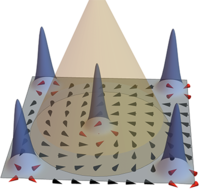
Topology and observables of the non-Hermitian Chern insulator

Mark R. Hirsbrunner, Timothy M. Philip, and Matthew J. Gilbert

Phys. Rev. B 100, 081104(R) (2019) - Published 12 August, 2019

Given the rising importance of non-Hermitian theories that describe open lossy systems, significant research has focused on studying non-Hermitian topological invariants. However, recent work suggests that related observables may no longer be quantized. Here, the authors illustrate the underlying structure of the Green’s function of non-Hermitian Hamiltonians that precludes the quantization of the Chern-Simons coefficient, resulting in the nonquantization of the Hall response of non-Hermitian Chern insulators. By showing nonquantization across a broad class of non-Hermitian Hamiltonians, the authors demonstrate the disconnect in non-Hermitian systems between a topological invariant, the Chern number, and its associated observable, the Hall conductivity.

Spinning radiation from a topological insulator

Emroz Khan and Evgenii E. Narimanov

Phys. Rev. B 100, 081408(R) (2019) - Published 22 August, 2019

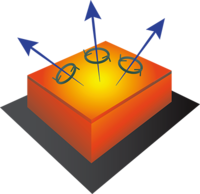
Axion coupling in topological insulators dramatically changes the electromagnetic response of these materials. Here, the authors show that this coupling leads to the emergence of spin angular momentum in the associated thermal radiation where all emitted light is elliptically polarized in the same direction. In contrast to conventional thermal emitters with a structured interface, a slab of a topological insulator with a thin magnetic coating would radiate thermal photons with the same magnitude and direction of circular polarization in all emission angles.

Magic angle hierarchy in twisted graphene multilayers

Eslam Khalaf, Alex J. Kruchkov, Grigory Tarnopolsky, and Ashvin Vishwanath

Phys. Rev. B 100, 085109 (2019) - Published 2 August, 2019

The recent discovery of correlated insulating states and superconductivity in twisted bilayer graphene has opened the door to a new approach to designing correlated materials by controlling the twist angles. In this study, the authors propose a large class of graphene-based moiré heterostructures which similarly exhibit flat bands at a sequence of magic angles whose pattern is analytically related to the bilayer magic angles. The proposed setup may be experimentally more stable compared to the bilayer case and features the coexistence of a flat band with Dirac dispersing bands, potentially leading to qualitatively different types of flat-band induced correlated phases.

Generalized route to effective field theories for quantum systems with local constraints

Attila Szabó, Garry Goldstein, Claudio Castelnovo, and Alexei M. Tsvelik

Phys. Rev. B 100, 085113 (2019) - Published 5 August, 2019

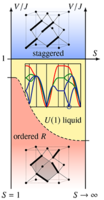
Effective models featuring hard local constraints describe several strongly correlated electronic systems that exhibit interesting and exotic behavior from emergent gauge symmetries to deconfined criticality and topological order. A systematic field-theoretic approach to such models remained elusive to date, with effective theories constructed from physical insight. Here, the authors propose a general large-S path-integral formalism to obtain field theories for hard constrained Hamiltonians. They demonstrate its potential by performing a systematic study of quantum dimer models, including such on nonbipartite lattices.

Topologically protected photonic modes in composite quantum Hall/quantum spin Hall waveguides

Shukai Ma, Bo Xiao, Yang Yu, Kueifu Lai, Gennady Shvets, and Steven M. Anlage

Phys. Rev. B 100, 085118 (2019) - Published 8 August, 2019

The authors report on the creation of the first optical analog of a composite quantum Hall (QH) and quantum spin-Hall (QSH) interface that carries topologically protected modes - a heterogeneous structure that is unprecedented in condensed matter physics. The effective spin degree of freedom of the topologically protected electromagnetic modes determines their unique pathways through these systems. Experimental realizations include backscatter-free 2-port isolators, unique 3-port circulators with strong isolation, and full 4-port circulators, based on composite QH and QSH structures.

Proximity exchange effects in MoSe2 and WSe2 heterostructures with CrI3: Twist angle, layer, and gate dependence

Klaus Zollner, Paulo E. Faria Junior, and Jaroslav Fabian

Phys. Rev. B 100, 085128 (2019) - Published 16 August, 2019

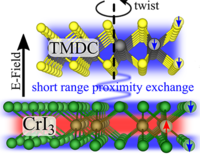
Proximity effects in two-dimensional heterostructures allow to transform nonmagnetic materials into synthetic magnets that do not involve magnetic ions. Based on density functional theory calculations, the present study predicts a sizeable proximity exchange interactions, induced by ferromagnetic CrI3, in transition metal dichalcogenides. Remarkably, the exchange coupling depends qualitatively on the twist angle, while being also tunable by an electric field. The authors establish the short-range character of the proximity effect and make specific predictions for the excitonic level splittings, due to the induced exchange coupling.

Chiral twist on the high-Tc phase diagram in moiré heterostructures

Yu-Ping Lin and Rahul M. Nandkishore

Phys. Rev. B 100, 085136 (2019) - Published 26 August, 2019

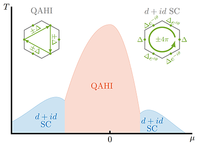
Moiré heterostructures involving graphene realize a host of ill-understood insulating and superconducting phases with high tunability. In this work, the authors develop an asymptotically exact treatment of the weak-coupling instabilities in such systems at a particular doping value. The analysis predicts a remarkable high-Tc-like phase diagram where, upon doping, an exotic chiral insulator gives way to an equally exotic chiral superconductor. The results are unambiguous and independent of the details of the microscopic interactions.

Higher-order Floquet topological phases with corner and bulk bound states

Martin Rodriguez-Vega, Abhishek Kumar, and Babak Seradjeh

Phys. Rev. B 100, 085138 (2019) - Published 26 August, 2019

Periodically driven systems can be quite different from those in equilibrium. For example, vortices stirred in a fluid can trap nearby objects, such as bubbles. The authors report their theoretical discovery of new phases of a two-dimensional quantum system under periodic drive, in which nonequilibrium states are stabilized at the corners as well as within stirred vortices in the bulk. These are higher-order topological phases, exhibiting the intimate connection between corner and bulk vortex structures generated by spatiotemporal modulations.

Generalized Fourier's law for nondiffusive thermal transport: Theory and experiment

Chengyun Hua, Lucas Lindsay, Xiangwen Chen, and Austin J. Minnich

Phys. Rev. B 100, 085203 (2019) - Published 21 August, 2019

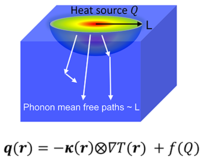
Fourier’s law, which relates the heat flux and temperature fields at macroscopic length scales, is fundamental to the mathematical description of heat transport. While it is well-known that Fourier’s law breaks down at lengths comparable to the mean free path of the heat carriers, an appropriate modification has remained unknown until now. In the present work, the authors derive analytically a generalized Fourier’s law that is valid over transport regimes spanning ballistic to diffusive. This relation shows that in the nondiffusive regime the heat flux and temperature fields not only have a nonlocal relationship but also depend on the properties of the heat source itself, a prediction that is verified by thermal spectroscopy experiments. This constitutive law provides a theoretical basis to understand nonlocal effects in the transport of heat at mesoscopic length scales.

Hole mobility of strained GaN from first principles

Samuel Poncé, Debdeep Jena, and Feliciano Giustino

Phys. Rev. B 100, 085204 (2019) - Published 29 August, 2019

Wurzite GaN possesses a low hole mobility, preventing its mass adoption for applications in high-power transistors. The authors perform predictive abinitio calculations of the phonon-limited mobility of GaN and find that hole mobilities as high as 120 cm2/Vs at room temperature could potentially be achieved by reversing the sign of the crystal-field splitting via uniaxial compressive strain or biaxial tensile strain. The experimental realization of this proposal will contribute to the development of high-power electronics based on GaN.

Non-Abelian Berry phase for open quantum systems: Topological protection versus geometric dephasing

Kyrylo Snizhko, Reinhold Egger, and Yuval Gefen

Phys. Rev. B 100, 085303 (2019) - Published 9 August, 2019

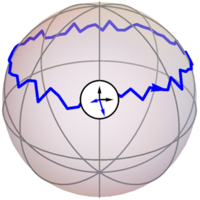
To what extent can coupling to a dissipative environment hinder the emergence of a geometric phase? And does dissipation undermine its possibly non-Abelian nature? Here, the authors show that non-Abelian geometric phase survives the presence of an environment, albeit modified. The dissipative coupling is manifest in the non-Abelian dynamics. Moreover, it gives rise to non-Abelian geometric dephasing, which may suppress or enhance coherent contributions, depending on the order of adiabatic operations.

Phonon engineering with superlattices: Generalized nanomechanical potentials

O. Ortíz, M. Esmann, and N. D. Lanzillotti-Kimura

Phys. Rev. B 100, 085430 (2019) - Published 22 August, 2019

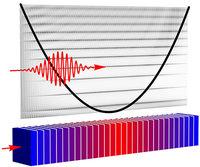
Acoustic phonons constitute a promising platform for single-particle quantum simulations. To this end, the implementation of effective phononic potentials is a key requirement. In this work, the authors propose a method to mimic the effects of one-dimensional potentials on high-frequency acoustic phonons. Based on perturbed periodic superlattices, the theoretical study introduces nanostructures that are much more compact than previous implementations. This compactness enables the realization of experimental studies, even when absorption effects are considered.

RAPID COMMUNICATIONS

Electronic structure and strongly correlated systems

Raman scattering from current-stabilized nonequilibrium phases in Ca2RuO4

K. Fürsich, J. Bertinshaw, P. Butler, M. Krautloher, M. Minola, and B. Keimer

Phys. Rev. B 100, 081101(R) (2019) - Published 1 August, 2019
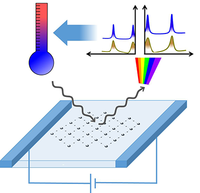
Here, the authors study the current-stabilized nonequilibrium semimetallic and metallic phases in Ca2RuO4 by Raman light scattering. Using Raman thermometry, they find that Joule heating can be completely avoided by supplying sufficient cooling power. Additionally, they confirm the absence of long-range antiferromagnetic order and identify a substantial Fano broadening of several phonons, which suggests coupling to charge and orbital fluctuations. The results demonstrate that the semimetallic state is a genuine effect of the applied electrical current and that the current-induced phases have characteristics distinct from the equilibrium ones.

Complete description of the magnetic ground state in spinel vanadates

Jyoti Krishna, N. Singh, S. Shallcross, J. K. Dewhurst, E. K. U. Gross, T. Maitra, and S. Sharma

Phys. Rev. B 100, 081102(R) (2019) - Published 2 August, 2019

Classes of metastable thermodynamic quantum time crystals

S. I. Mukhin and T. R. Galimzyanov

Phys. Rev. B 100, 081103(R) (2019) - Published 12 August, 2019

Quantum field theories of many-body systems predict “instantonic crystals” connecting degenerate thermodynamic states with classically broken symmetries. The instantons break continuous translation symmetry of Euclidean space along the axis of imaginary time. The possibility for the emergence of “thermodynamic quantum time crystals” that extremize the Euclidean action of the system appeals to the imagination. However, the authors prove here that at least two general classes of “instantonic crystals”, connecting states of Fermi systems with charge, spin, or superconducting orders can constitute neither thermodynamic equilibrium nor the ground state.

Topology and observables of the non-Hermitian Chern insulator

Mark R. Hirsbrunner, Timothy M. Philip, and Matthew J. Gilbert

Phys. Rev. B 100, 081104(R) (2019) - Published 12 August, 2019

Given the rising importance of non-Hermitian theories that describe open lossy systems, significant research has focused on studying non-Hermitian topological invariants. However, recent work suggests that related observables may no longer be quantized. Here, the authors illustrate the underlying structure of the Green’s function of non-Hermitian Hamiltonians that precludes the quantization of the Chern-Simons coefficient, resulting in the nonquantization of the Hall response of non-Hermitian Chern insulators. By showing nonquantization across a broad class of non-Hermitian Hamiltonians, the authors demonstrate the disconnect in non-Hermitian systems between a topological invariant, the Chern number, and its associated observable, the Hall conductivity.

Topological surface states above the Fermi level in Hf2Te2P

T. J. Boyle, A. Rossi, M. Walker, P. Carlson, M. K. Miller, J. Zhao, P. Klavins, C. Jozwiak, A. Bostwick, E. Rotenberg, V. Taufour, I. M. Vishik, and E. H. da Silva Neto

Phys. Rev. B 100, 081105(R) (2019) - Published 12 August, 2019

Obtaining Majorana and other boundary modes from the metamorphosis of impurity-induced states: Exact solutions via the T-matrix

Vardan Kaladzhyan and Cristina Bena

Phys. Rev. B 100, 081106(R) (2019) - Published 12 August, 2019

Topological proximity effects in a Haldane graphene bilayer system

Peng Cheng, Philipp W. Klein, Kirill Plekhanov, Klaus Sengstock, Monika Aidelsburger, Christof Weitenberg, and Karyn Le Hur

Phys. Rev. B 100, 081107(R) (2019) - Published 13 August, 2019

Universal shift of the fidelity susceptibility peak away from the critical point of the Berezinskii-Kosterlitz-Thouless quantum phase transition

Lukasz Cincio, Marek M. Rams, Jacek Dziarmaga, and Wojciech H. Zurek

Phys. Rev. B 100, 081108(R) (2019) - Published 19 August, 2019

Interplay between band crossing and charge density wave instabilities

P. D. Grigoriev, A. A. Sinchenko, P. A. Vorobyev, A. Hadj-Azzem, P. Lejay, A. Bosak, and P. Monceau

Phys. Rev. B 100, 081109(R) (2019) - Published 22 August, 2019

Conjectures about the ground-state energy of the Lieb-Liniger model at weak repulsion

Zoran Ristivojevic

Phys. Rev. B 100, 081110(R) (2019) - Published 28 August, 2019

Semiconductors I: bulk

Picosecond time-resolved dynamics of energy transfer between GaN and the various excited states of Eu3+ ions

Ruoqiao Wei, Brandon Mitchell, Dolf Timmerman, Tom Gregorkiewicz, Wanxin Zhu, Jun Tatebayashi, Shuhei Ichikawa, Yasufumi Fujiwara, and Volkmar Dierolf

Phys. Rev. B 100, 081201(R) (2019) - Published 2 August, 2019

Phonon- and charged-impurity-assisted indirect free-carrier absorption in Ga2O3

Hartwin Peelaers and Chris G. Van de Walle

Phys. Rev. B 100, 081202(R) (2019) - Published 5 August, 2019

Subband picture of high-harmonic generation in solids

Tomohiro Tamaya and Takeo Kato

Phys. Rev. B 100, 081203(R) (2019) - Published 8 August, 2019

Ideal type-II Weyl phonons in wurtzite CuI

Jian Liu, Wenjie Hou, En Wang, Shengjie Zhang, Jia-Tao Sun, and Sheng Meng

Phys. Rev. B 100, 081204(R) (2019) - Published 22 August, 2019

Semiconductors II: surfaces, interfaces, microstructures, and related topics

Dynamic spin-charge coupling: ac spin Hall magnetoresistance in nonmagnetic conductors

P. S. Alekseev and M. I. Dyakonov

Phys. Rev. B 100, 081301(R) (2019) - Published 5 August, 2019

Surface physics, nanoscale physics, low-dimensional systems

Electric circuits for non-Hermitian Chern insulators

Motohiko Ezawa

Phys. Rev. B 100, 081401(R) (2019) - Published 2 August, 2019

Disentangling spin-orbit coupling and local magnetism in a quasi-two-dimensional electron system

Xinxin Cai, Yilikal Ayino, Jin Yue, Peng Xu, Bharat Jalan, and Vlad S. Pribiag

Phys. Rev. B 100, 081402(R) (2019) - Published 7 August, 2019

Quantum thermoelectrics based on two-dimensional semi-Dirac materials

Alestin Mawrie and Bhaskaran Muralidharan

Phys. Rev. B 100, 081403(R) (2019) - Published 7 August, 2019

Fluctuation-driven Coulomb drag in interacting quantum dot systems

Miguel A. Sierra, David Sánchez, Antti-Pekka Jauho, and Kristen Kaasbjerg

Phys. Rev. B 100, 081404(R) (2019) - Published 13 August, 2019

Theory of quantum oscillations in quasicrystals: Quantizing spiral Fermi surfaces

Stephen Spurrier and Nigel R. Cooper

Phys. Rev. B 100, 081405(R) (2019) - Published 13 August, 2019

Examining the Casimir puzzle with an upgraded AFM-based technique and advanced surface cleaning

Mingyue Liu, Jun Xu, G. L. Klimchitskaya, V. M. Mostepanenko, and U. Mohideen

Phys. Rev. B 100, 081406(R) (2019) - Published 15 August, 2019

Carrier recombination mechanism at defects in wide band gap two-dimensional materials from first principles

Feng Wu, Tyler J. Smart, Junqing Xu, and Yuan Ping

Phys. Rev. B 100, 081407(R) (2019) - Published 19 August, 2019

Spinning radiation from a topological insulator

Emroz Khan and Evgenii E. Narimanov

Phys. Rev. B 100, 081408(R) (2019) - Published 22 August, 2019

Axion coupling in topological insulators dramatically changes the electromagnetic response of these materials. Here, the authors show that this coupling leads to the emergence of spin angular momentum in the associated thermal radiation where all emitted light is elliptically polarized in the same direction. In contrast to conventional thermal emitters with a structured interface, a slab of a topological insulator with a thin magnetic coating would radiate thermal photons with the same magnitude and direction of circular polarization in all emission angles.

Metasurface bilayer for slow microwave surface waves

J. D. de Pineda, G. P. Ward, A. P. Hibbins, and J. R. Sambles

Phys. Rev. B 100, 081409(R) (2019) - Published 23 August, 2019

Nonreciprocal and collimated surface plasmons in drift-biased graphene metasurfaces

D. Correas-Serrano and J. S. Gomez-Diaz

Phys. Rev. B 100, 081410(R) (2019) - Published 26 August, 2019

Spectroscopic signatures of spin-orbit coupling and free excitons in individual suspended carbon nanotubes

Morgane Gandil, Kazunari Matsuda, Brahim Lounis, and Philippe Tamarat

Phys. Rev. B 100, 081411(R) (2019) - Published 26 August, 2019

Optimized cavity-mediated dispersive two-qubit gates between spin qubits

M. Benito, J. R. Petta, and Guido Burkard

Phys. Rev. B 100, 081412(R) (2019) - Published 29 August, 2019

ARTICLES

Electronic structure and strongly correlated systems

Hidden SU(2) symmetries, the symmetry hierarchy, and the emergent eightfold way in spin-1 quantum magnets

Hui-Ke Jin, Jian-Jian Miao, and Yi Zhou

Phys. Rev. B 100, 085101 (2019) - Published 1 August, 2019

Upper limit on shift current generation in extended systems

Liang Z. Tan and Andrew M. Rappe

Phys. Rev. B 100, 085102 (2019) - Published 1 August, 2019

Dimensional crossover in the SU(4) Heisenberg model in the six-dimensional antisymmetric self-conjugate representation revealed by quantum Monte Carlo and linear flavor-wave theory

Francisco H. Kim, Fakher F. Assaad, Karlo Penc, and Frédéric Mila

Phys. Rev. B 100, 085103 (2019) - Published 1 August, 2019

Doping-driven metal-insulator transition in correlated electron systems with strong Hund's exchange coupling

Jakob Steinbauer, Luca de' Medici, and Silke Biermann

Phys. Rev. B 100, 085104 (2019) - Published 1 August, 2019

Diffusive transport in a quasiperiodic Fibonacci chain: Absence of many-body localization at weak interactions

Vipin Kerala Varma and Marko Žnidarič

Phys. Rev. B 100, 085105 (2019) - Published 1 August, 2019

Strain tuning and anisotropic spin correlations in iron-based systems

Roland Willa, Max Fritz, and Jörg Schmalian

Phys. Rev. B 100, 085106 (2019) - Published 1 August, 2019

Tunneling density of states, correlation energy, and spin polarization in the fractional quantum Hall regime

Gaurav Chaudhary, Dmitry K. Efimkin, and Allan H. MacDonald

Phys. Rev. B 100, 085107 (2019) - Published 2 August, 2019

Magnetic field-dependent low-energy magnon dynamics in α–RuCl3

Ilkem Ozge Ozel, Carina A. Belvin, Edoardo Baldini, Itamar Kimchi, Seunghwan Do, Kwang-Yong Choi, and Nuh Gedik

Phys. Rev. B 100, 085108 (2019) - Published 2 August, 2019

Magic angle hierarchy in twisted graphene multilayers

Eslam Khalaf, Alex J. Kruchkov, Grigory Tarnopolsky, and Ashvin Vishwanath

Phys. Rev. B 100, 085109 (2019) - Published 2 August, 2019

The recent discovery of correlated insulating states and superconductivity in twisted bilayer graphene has opened the door to a new approach to designing correlated materials by controlling the twist angles. In this study, the authors propose a large class of graphene-based moiré heterostructures which similarly exhibit flat bands at a sequence of magic angles whose pattern is analytically related to the bilayer magic angles. The proposed setup may be experimentally more stable compared to the bilayer case and features the coexistence of a flat band with Dirac dispersing bands, potentially leading to qualitatively different types of flat-band induced correlated phases.

Non-Hermitian Majorana modes protect degenerate steady states

Simon Lieu

Phys. Rev. B 100, 085110 (2019) - Published 2 August, 2019

Berry curvature unravelled by the anomalous Nernst effect in Mn3Ge

Christoph Wuttke, Federico Caglieris, Steffen Sykora, Francesco Scaravaggi, Anja U. B. Wolter, Kaustuv Manna, Vicky Süss, Chandra Shekhar, Claudia Felser, Bernd Büchner, and Christian Hess

Phys. Rev. B 100, 085111 (2019) - Published 5 August, 2019

Effect of propagator renormalization on the band gap of insulating solids

Sergei Iskakov, Alexander A. Rusakov, Dominika Zgid, and Emanuel Gull

Phys. Rev. B 100, 085112 (2019) - Published 5 August, 2019

Generalized route to effective field theories for quantum systems with local constraints

Attila Szabó, Garry Goldstein, Claudio Castelnovo, and Alexei M. Tsvelik

Phys. Rev. B 100, 085113 (2019) - Published 5 August, 2019

Effective models featuring hard local constraints describe several strongly correlated electronic systems that exhibit interesting and exotic behavior from emergent gauge symmetries to deconfined criticality and topological order. A systematic field-theoretic approach to such models remained elusive to date, with effective theories constructed from physical insight. Here, the authors propose a general large-S path-integral formalism to obtain field theories for hard constrained Hamiltonians. They demonstrate its potential by performing a systematic study of quantum dimer models, including such on nonbipartite lattices.

Nonequilibrium spectral functions from multiterminal steady-state density functional theory

Stefan Kurth, David Jacob, Nahual Sobrino, and Gianluca Stefanucci

Phys. Rev. B 100, 085114 (2019) - Published 6 August, 2019

Construction of many-body eigenstates with displacement transformations in disordered systems

Miguel Ortuño, Andres M. Somoza, and Louk Rademaker

Phys. Rev. B 100, 085115 (2019) - Published 6 August, 2019

Non-Abelian twist to integer quantum Hall states

Pedro L. S. Lopes, Victor L. Quito, Bo Han, and Jeffrey C. Y. Teo

Phys. Rev. B 100, 085116 (2019) - Published 6 August, 2019

Catalysis of dynamical chiral symmetry breaking by chiral chemical potential in Dirac semimetals

V. V. Braguta, M. I. Katsnelson, A. Yu. Kotov, and A. M. Trunin

Phys. Rev. B 100, 085117 (2019) - Published 6 August, 2019

Topologically protected photonic modes in composite quantum Hall/quantum spin Hall waveguides

Shukai Ma, Bo Xiao, Yang Yu, Kueifu Lai, Gennady Shvets, and Steven M. Anlage

Phys. Rev. B 100, 085118 (2019) - Published 8 August, 2019

The authors report on the creation of the first optical analog of a composite quantum Hall (QH) and quantum spin-Hall (QSH) interface that carries topologically protected modes - a heterogeneous structure that is unprecedented in condensed matter physics. The effective spin degree of freedom of the topologically protected electromagnetic modes determines their unique pathways through these systems. Experimental realizations include backscatter-free 2-port isolators, unique 3-port circulators with strong isolation, and full 4-port circulators, based on composite QH and QSH structures.

Comparison of quantum spin Hall states in quasicrystals and crystals

Huaqing Huang and Feng Liu

Phys. Rev. B 100, 085119 (2019) - Published 8 August, 2019

Influence of crystal structure on charge carrier effective masses in BiFeO3

J. Kane Shenton, David R. Bowler, and Wei Li Cheah

Phys. Rev. B 100, 085120 (2019) - Published 8 August, 2019

Interplay of disorder and interactions in a system of subcritically tilted and anisotropic three-dimensional Weyl fermions

Tycho S. Sikkenk and Lars Fritz

Phys. Rev. B 100, 085121 (2019) - Published 9 August, 2019

Magnetic phase diagrams of the ferromagnetic Kondo lattice CePd2Al8

Le Wang, Cuixiang Wang, Ziyi Liu, Jinguang Cheng, Shanshan Miao, Youting Song, Youguo Shi, and Yi-feng Yang

Phys. Rev. B 100, 085122 (2019) - Published 12 August, 2019

Dynamics of compact quantum electrodynamics at large fermion flavor

Wei Wang, Da-Chuan Lu, Xiao Yan Xu, Yi-Zhuang You, and Zi Yang Meng

Phys. Rev. B 100, 085123 (2019) - Published 13 August, 2019

Quantum oscillations in strongly correlated topological Kondo insulators

Robert Peters, Tsuneya Yoshida, and Norio Kawakami

Phys. Rev. B 100, 085124 (2019) - Published 13 August, 2019

Cancellation of vacuum diagrams and the long-time limit in out-of-equilibrium diagrammatic quantum Monte Carlo

Alice Moutenet, Priyanka Seth, Michel Ferrero, and Olivier Parcollet

Phys. Rev. B 100, 085125 (2019) - Published 14 August, 2019

Band edge evolution of transparent ZnM2IIIO4 (MIII=Co, Rh, Ir) spinels

Matthew J. Wahila, Zachary W. Lebens-Higgins, Adam J. Jackson, David O. Scanlon, Tien-Lin Lee, Jiaye Zhang, Kelvin H. L. Zhang, and Louis F. J. Piper

Phys. Rev. B 100, 085126 (2019) - Published 15 August, 2019

Foliated fracton order in the Majorana checkerboard model

Taige Wang, Wilbur Shirley, and Xie Chen

Phys. Rev. B 100, 085127 (2019) - Published 16 August, 2019

Proximity exchange effects in MoSe2 and WSe2 heterostructures with CrI3: Twist angle, layer, and gate dependence

Klaus Zollner, Paulo E. Faria Junior, and Jaroslav Fabian

Phys. Rev. B 100, 085128 (2019) - Published 16 August, 2019

Proximity effects in two-dimensional heterostructures allow to transform nonmagnetic materials into synthetic magnets that do not involve magnetic ions. Based on density functional theory calculations, the present study predicts a sizeable proximity exchange interactions, induced by ferromagnetic CrI3, in transition metal dichalcogenides. Remarkably, the exchange coupling depends qualitatively on the twist angle, while being also tunable by an electric field. The authors establish the short-range character of the proximity effect and make specific predictions for the excitonic level splittings, due to the induced exchange coupling.

Interaction-dependent anisotropy of fractional quantum Hall states

Akshay Krishna, Fan Chen, Matteo Ippoliti, and R. N. Bhatt

Phys. Rev. B 100, 085129 (2019) - Published 19 August, 2019

Exact zero modes in a quantum compass chain under inhomogeneous transverse fields

Ning Wu and Wen-Long You

Phys. Rev. B 100, 085130 (2019) - Published 19 August, 2019

Momentum-resolved lattice dynamics of parent and electron-doped Sr2IrO4

C. D. Dashwood, H. Miao, J. G. Vale, D. Ishikawa, D. A. Prishchenko, V. V. Mazurenko, V. G. Mazurenko, R. S. Perry, G. Cao, A. de la Torre, F. Baumberger, A. Q. R. Baron, D. F. McMorrow, and M. P. M. Dean

Phys. Rev. B 100, 085131 (2019) - Published 19 August, 2019

Nearly degenerate px+ipy and dx2−y2 pairing symmetry in the heavy fermion superconductor YbRh2Si2

Yu Li, Qianqian Wang, Yuanji Xu, Wenhui Xie, and Yi-feng Yang

Phys. Rev. B 100, 085132 (2019) - Published 20 August, 2019

Bond particle theory for the pseudogap phase of underdoped cuprates

R. Eder

Phys. Rev. B 100, 085133 (2019) - Published 21 August, 2019

Transport across junctions of pseudospin-one fermions

Sourav Nandy, K. Sengupta, and Diptiman Sen

Phys. Rev. B 100, 085134 (2019) - Published 23 August, 2019

Deformation induced pseudomagnetic fields in complex carbon architectures

R. Gupta, S. Maisel, F. Rost, D. Weckbecker, M. Fleischmann, H. Soni, S. Sharma, A. Görling, and S. Shallcross

Phys. Rev. B 100, 085135 (2019) - Published 23 August, 2019

Chiral twist on the high-Tc phase diagram in moiré heterostructures

Yu-Ping Lin and Rahul M. Nandkishore

Phys. Rev. B 100, 085136 (2019) - Published 26 August, 2019

Moiré heterostructures involving graphene realize a host of ill-understood insulating and superconducting phases with high tunability. In this work, the authors develop an asymptotically exact treatment of the weak-coupling instabilities in such systems at a particular doping value. The analysis predicts a remarkable high-Tc-like phase diagram where, upon doping, an exotic chiral insulator gives way to an equally exotic chiral superconductor. The results are unambiguous and independent of the details of the microscopic interactions.

Highly anisotropic interlayer magnetoresitance in ZrSiS nodal-line Dirac semimetal

M. Novak, S. N. Zhang, F. Orbanić, N. Biliškov, G. Eguchi, S. Paschen, A. Kimura, X. X. Wang, T. Osada, K. Uchida, M. Sato, Q. S. Wu, O. V. Yazyev, and I. Kokanović

Phys. Rev. B 100, 085137 (2019) - Published 26 August, 2019

Higher-order Floquet topological phases with corner and bulk bound states

Martin Rodriguez-Vega, Abhishek Kumar, and Babak Seradjeh

Phys. Rev. B 100, 085138 (2019) - Published 26 August, 2019

Periodically driven systems can be quite different from those in equilibrium. For example, vortices stirred in a fluid can trap nearby objects, such as bubbles. The authors report their theoretical discovery of new phases of a two-dimensional quantum system under periodic drive, in which nonequilibrium states are stabilized at the corners as well as within stirred vortices in the bulk. These are higher-order topological phases, exhibiting the intimate connection between corner and bulk vortex structures generated by spatiotemporal modulations.

Spin-orbit entangled j=12 moments in Ba2CeIrO6: A frustrated fcc quantum magnet

A. Revelli, C. C. Loo, D. Kiese, P. Becker, T. Fröhlich, T. Lorenz, M. Moretti Sala, G. Monaco, F. L. Buessen, J. Attig, M. Hermanns, S. V. Streltsov, D. I. Khomskii, J. van den Brink, M. Braden, P. H. M. van Loosdrecht, S. Trebst, A. Paramekanti, and M. Grüninger

Phys. Rev. B 100, 085139 (2019) - Published 26 August, 2019

Theory of collective magnetophonon resonance and melting of a field-induced Wigner solid

Luca V. Delacrétaz, Blaise Goutéraux, Sean A. Hartnoll, and Anna Karlsson

Phys. Rev. B 100, 085140 (2019) - Published 26 August, 2019

Crystal electric field splitting and f-electron hybridization in heavy-fermion CePt2In7

Yu-Xia Duan, Chen Zhang, Ján Rusz, Peter M. Oppeneer, Tomasz Durakiewicz, Yasmine Sassa, Oscar Tjernberg, Martin Månsson, Magnus H. Berntsen, Fan-Ying Wu, Yin-Zou Zhao, Jiao-Jiao Song, Qi-Yi Wu, Yang Luo, Eric D. Bauer, Joe D. Thompson, and Jian-Qiao Meng

Phys. Rev. B 100, 085141 (2019) - Published 26 August, 2019

Higher-form symmetries and d-wave superconductors from doped Mott insulators

Ki-Seok Kim and Yuji Hirono

Phys. Rev. B 100, 085142 (2019) - Published 27 August, 2019

Resonant x-ray emission and valence-band lifetime broadening in LiNO3

John Vinson, Terrence Jach, Matthias Müller, Rainer Unterumsberger, and Burkhard Beckhoff

Phys. Rev. B 100, 085143 (2019) - Published 28 August, 2019

Optical signatures of the chiral anomaly in mirror-symmetric Weyl semimetals

Aaron Hui, Yi Zhang, and Eun-Ah Kim

Phys. Rev. B 100, 085144 (2019) - Published 28 August, 2019

Origin of quasilocal plasmons in Nb-substituted EuTiO3

A. Chaudhuri, A. Midya, K. Rubi, X. Chi, T. C. Asmara, X. J. Yu, R. Mahendiran, and A. Rusydi

Phys. Rev. B 100, 085145 (2019) - Published 29 August, 2019

DFT+DMFT study of oxygen vacancies in a Mott insulator

Jaime Souto-Casares, Nicola A. Spaldin, and Claude Ederer

Phys. Rev. B 100, 085146 (2019) - Published 30 August, 2019

Origin of the enhanced ferroelectricity in multiferroic SmMn2O5

S. Mansouri, S. Jandl, M. Balli, P. Fournier, Y. Ishii, H. Kimura, M. Orlita, and M. Chaker

Phys. Rev. B 100, 085147 (2019) - Published 30 August, 2019

Semiconductors I: bulk

Interseries transitions between Rydberg excitons in Cu2O

Sjard Ole Krüger and Stefan Scheel

Phys. Rev. B 100, 085201 (2019) - Published 2 August, 2019

Electronic structure as a guide in screening for potential thermoelectrics: Demonstration for half-Heusler compounds

Zhenzhen Feng, Yuhao Fu, Aditya Putatunda, Yongsheng Zhang, and David J. Singh

Phys. Rev. B 100, 085202 (2019) - Published 12 August, 2019

Generalized Fourier's law for nondiffusive thermal transport: Theory and experiment

Chengyun Hua, Lucas Lindsay, Xiangwen Chen, and Austin J. Minnich

Phys. Rev. B 100, 085203 (2019) - Published 21 August, 2019

Fourier’s law, which relates the heat flux and temperature fields at macroscopic length scales, is fundamental to the mathematical description of heat transport. While it is well-known that Fourier’s law breaks down at lengths comparable to the mean free path of the heat carriers, an appropriate modification has remained unknown until now. In the present work, the authors derive analytically a generalized Fourier’s law that is valid over transport regimes spanning ballistic to diffusive. This relation shows that in the nondiffusive regime the heat flux and temperature fields not only have a nonlocal relationship but also depend on the properties of the heat source itself, a prediction that is verified by thermal spectroscopy experiments. This constitutive law provides a theoretical basis to understand nonlocal effects in the transport of heat at mesoscopic length scales.

Hole mobility of strained GaN from first principles

Samuel Poncé, Debdeep Jena, and Feliciano Giustino

Phys. Rev. B 100, 085204 (2019) - Published 29 August, 2019

Wurzite GaN possesses a low hole mobility, preventing its mass adoption for applications in high-power transistors. The authors perform predictive abinitio calculations of the phonon-limited mobility of GaN and find that hole mobilities as high as 120 cm2/Vs at room temperature could potentially be achieved by reversing the sign of the crystal-field splitting via uniaxial compressive strain or biaxial tensile strain. The experimental realization of this proposal will contribute to the development of high-power electronics based on GaN.

Semiconductors II: surfaces, interfaces, microstructures, and related topics

Effect of optically induced potential on the energy of trapped exciton polaritons below the condensation threshold

M. Pieczarka, M. Boozarjmehr, E. Estrecho, Y. Yoon, M. Steger, K. West, L. N. Pfeiffer, K. A. Nelson, D. W. Snoke, A. G. Truscott, and E. A. Ostrovskaya

Phys. Rev. B 100, 085301 (2019) - Published 5 August, 2019

Pseudodrag of a polariton superfluid

Igor Y. Chestnov, Yuri G. Rubo, and Alexey V. Kavokin

Phys. Rev. B 100, 085302 (2019) - Published 6 August, 2019

Non-Abelian Berry phase for open quantum systems: Topological protection versus geometric dephasing

Kyrylo Snizhko, Reinhold Egger, and Yuval Gefen

Phys. Rev. B 100, 085303 (2019) - Published 9 August, 2019

To what extent can coupling to a dissipative environment hinder the emergence of a geometric phase? And does dissipation undermine its possibly non-Abelian nature? Here, the authors show that non-Abelian geometric phase survives the presence of an environment, albeit modified. The dissipative coupling is manifest in the non-Abelian dynamics. Moreover, it gives rise to non-Abelian geometric dephasing, which may suppress or enhance coherent contributions, depending on the order of adiabatic operations.

Evolution of the free energy of the GaN(0001) surface based on first-principles phonon calculations

Pawel Kempisty and Yoshihiro Kangawa

Phys. Rev. B 100, 085304 (2019) - Published 16 August, 2019

Hyperfine interaction for holes in quantum dots: k·p model

Paweł Machnikowski, Krzysztof Gawarecki, and Łukasz Cywiński

Phys. Rev. B 100, 085305 (2019) - Published 21 August, 2019

Topologically protected wave packets and quantum rings in silicene

Bartłomiej Szafran, Bartłomiej Rzeszotarski, and Alina Mreńca-Kolasińska

Phys. Rev. B 100, 085306 (2019) - Published 22 August, 2019

Dynamics of crosshatch patterns in heteroepitaxy

Fabrizio Rovaris, Marvin H. Zoellner, Peter Zaumseil, Anna Marzegalli, Luciana Di Gaspare, Monica De Seta, Thomas Schroeder, Peter Storck, Georg Schwalb, Giovanni Capellini, and Francesco Montalenti

Phys. Rev. B 100, 085307 (2019) - Published 27 August, 2019

Floquet dynamical quantum phase transitions

Kai Yang, Longwen Zhou, Wenchao Ma, Xi Kong, Pengfei Wang, Xi Qin, Xing Rong, Ya Wang, Fazhan Shi, Jiangbin Gong, and Jiangfeng Du

Phys. Rev. B 100, 085308 (2019) - Published 28 August, 2019

Tuning the topological features of quantum-dot hydrogen and helium by a magnetic field

Wenchen Luo and Tapash Chakraborty

Phys. Rev. B 100, 085309 (2019) - Published 30 August, 2019

Surface physics, nanoscale physics, low-dimensional systems

Chemical doping induced zone-edge phonon renormalization in single-layer MoS2

Ziqian Wang, Guangxue Zhao, Ruichun Luo, Isaac Johnson, Hamzeh Kashani, and Mingwei Chen

Phys. Rev. B 100, 085401 (2019) - Published 1 August, 2019

Tunable visible-light excitonic absorption and high photoconversion efficiency in two-dimensional group-VI monolayer materials

Jingjing Min, Chunxiang Zhao, Zaiping Zeng, Yu Jia, and Zuliang Du

Phys. Rev. B 100, 085402 (2019) - Published 2 August, 2019

Layer-dependent intrinsic anomalous Hall effect in Fe3GeTe2

Xianqing Lin and Jun Ni

Phys. Rev. B 100, 085403 (2019) - Published 5 August, 2019

Gate-tunable quantum Hall effects in defect-suppressed Bi2Se3 films

Nikesh Koirala, Maryam Salehi, Jisoo Moon, and Seongshik Oh

Phys. Rev. B 100, 085404 (2019) - Published 5 August, 2019

Supremacy of incoherent sudden cycles

Jukka P. Pekola, Bayan Karimi, George Thomas, and Dmitri V. Averin

Phys. Rev. B 100, 085405 (2019) - Published 6 August, 2019

Berry curvature induced thermopower in type-I and type-II Weyl semimetals

Kamal Das and Amit Agarwal

Phys. Rev. B 100, 085406 (2019) - Published 6 August, 2019

Spin-orbit coupling induced robust spin-Seebeck effect and pure thermal spin currents in achiral molecule systems

Hua-Hua Fu, Gui-Fang Du, Dan-Dan Wu, Qing-Bo Liu, and Ruqian Wu

Phys. Rev. B 100, 085407 (2019) - Published 7 August, 2019

Topology protection–unprotection transition: Example from multiterminal superconducting nanostructures

Xiao-Li Huang and Yuli V. Nazarov

Phys. Rev. B 100, 085408 (2019) - Published 7 August, 2019

Consistent description of mesoscopic transport: Case study of current-dependent magnetoconductance in single GaN:Ge nanowires

Patrick Uredat, Pascal Hille, Jörg Schörmann, Martin Eickhoff, Peter J. Klar, and Matthias T. Elm

Phys. Rev. B 100, 085409 (2019) - Published 7 August, 2019

Nonlocal transport in superconducting heterostructures based on Weyl semimetals

Hai Li and Gang Ouyang

Phys. Rev. B 100, 085410 (2019) - Published 8 August, 2019

Distinctive optoelectronic properties of nanostructured MoS2 bilayers

Vladan Mlinar

Phys. Rev. B 100, 085411 (2019) - Published 8 August, 2019

Induced spin-orbit coupling in twisted graphene–transition metal dichalcogenide heterobilayers: Twistronics meets spintronics

Alessandro David, Péter Rakyta, Andor Kormányos, and Guido Burkard

Phys. Rev. B 100, 085412 (2019) - Published 8 August, 2019

Formation of two-dimensional small polarons at the conducting LaAlO3/SrTiO3 interface

Weilong Kong, Jun Zhou, Yong Zheng Luo, Tong Yang, Shijie Wang, Jingsheng Chen, Andrivo Rusydi, Yuan Ping Feng, and Ming Yang

Phys. Rev. B 100, 085413 (2019) - Published 9 August, 2019

Quasiparticles of a periodically driven quantum dot coupled between superconducting and normal leads

B. Baran and T. Domański

Phys. Rev. B 100, 085414 (2019) - Published 9 August, 2019

Ballistic thermoelectric properties of monolayer semiconducting transition metal dichalcogenides and oxides

G. Özbal, R. T. Senger, C. Sevik, and H. Sevinçli

Phys. Rev. B 100, 085415 (2019) - Published 12 August, 2019

Stability, efficiency, and mechanism of n-type doping by hydrogen adatoms in two-dimensional transition metal dichalcogenides

Sehoon Oh, June Yeong Lim, Seongil Im, and Hyoung Joon Choi

Phys. Rev. B 100, 085416 (2019) - Published 12 August, 2019

Ab initio approach to lattice softening of an Al slab driven by collective electronic excitations after ultrashort laser pulse irradiation

Hiroki Katow and Yoshiyuki Miyamoto

Phys. Rev. B 100, 085417 (2019) - Published 12 August, 2019

Levitons in superconducting point contacts

Matteo Acciai, Flavio Ronetti, Dario Ferraro, Jérôme Rech, Thibaut Jonckheere, Maura Sassetti, and Thierry Martin

Phys. Rev. B 100, 085418 (2019) - Published 12 August, 2019

Protocol for a resonantly driven three-qubit Toffoli gate with silicon spin qubits

M. J. Gullans and J. R. Petta

Phys. Rev. B 100, 085419 (2019) - Published 13 August, 2019

Ab initio investigation of single-layer high thermal conductivity boron compounds

Hang Fan, Huan Wu, Lucas Lindsay, and Yongjie Hu

Phys. Rev. B 100, 085420 (2019) - Published 14 August, 2019

Optical excitation of surface plasmons and terahertz emission from metals

I. V. Oladyshkin, D. A. Fadeev, and V. A. Mironov

Phys. Rev. B 100, 085421 (2019) - Published 14 August, 2019

Effect of stacking structure on lithium adsorption and diffusion in bilayer black phosphorene

Ruina Hu, Guigui Xu, Yanmin Yang, Jian-Min Zhang, Kehua Zhong, and Zhigao Huang

Phys. Rev. B 100, 085422 (2019) - Published 14 August, 2019

Effects of strain on electronic and magnetic properties of Co/WS2 nanolayer: A density functional and Monte Carlo study

Hamideh Kahnouji, S. Javad Hashemifar, Nafiseh Rezaei, and Mojtaba Alaei

Phys. Rev. B 100, 085423 (2019) - Published 15 August, 2019

Quantized Fermi arc mediated transport in Weyl semimetal nanowires

Vardan Kaladzhyan and Jens H. Bardarson

Phys. Rev. B 100, 085424 (2019) - Published 15 August, 2019

Temperature dependence of the side-jump spin Hall conductivity

Cong Xiao, Yi Liu, Zhe Yuan, Shengyuan A. Yang, and Qian Niu

Phys. Rev. B 100, 085425 (2019) - Published 16 August, 2019

Metasurface-mediated anisotropic radiative heat transfer between nanoparticles

Yong Zhang, Mauro Antezza, Hong-Liang Yi, and He-Ping Tan

Phys. Rev. B 100, 085426 (2019) - Published 16 August, 2019

Exotic impurity-induced states in single-layer h-BN: The role of sublattice structure and intervalley interactions

Saif Ullah, Fernando Sato, Marcos G. Menezes, and Rodrigo B. Capaz

Phys. Rev. B 100, 085427 (2019) - Published 19 August, 2019

Jackiw-Rebbi zero modes in non-uniform topological insulator nanowire

Sayan Jana, Arijit Saha, and Sourin Das

Phys. Rev. B 100, 085428 (2019) - Published 19 August, 2019

Manipulating Majorana zero modes in double quantum dots

Jesus D. Cifuentes and Luis G. G. V. Dias da Silva

Phys. Rev. B 100, 085429 (2019) - Published 20 August, 2019

Phonon engineering with superlattices: Generalized nanomechanical potentials

O. Ortíz, M. Esmann, and N. D. Lanzillotti-Kimura

Phys. Rev. B 100, 085430 (2019) - Published 22 August, 2019

Acoustic phonons constitute a promising platform for single-particle quantum simulations. To this end, the implementation of effective phononic potentials is a key requirement. In this work, the authors propose a method to mimic the effects of one-dimensional potentials on high-frequency acoustic phonons. Based on perturbed periodic superlattices, the theoretical study introduces nanostructures that are much more compact than previous implementations. This compactness enables the realization of experimental studies, even when absorption effects are considered.

Dynamic anapole in metasurfaces made of sculptured cylinders

Evangelia Takou, Anna C. Tasolamprou, Odysseas Tsilipakos, and Eleftherios N. Economou

Phys. Rev. B 100, 085431 (2019) - Published 22 August, 2019

Hydrogen ion scattering from a potassium impurity adsorbed on graphene

M. A. Romero, A. Iglesias-García, Evelina A. García, and E. C. Goldberg

Phys. Rev. B 100, 085432 (2019) - Published 23 August, 2019

Charge transfer statistics and qubit dynamics at the tunneling Fermi-edge singularity

V. V. Ponomarenko and I. A. Larkin

Phys. Rev. B 100, 085433 (2019) - Published 23 August, 2019

RKKY interaction in biased single-layer silicene

Moslem Zare

Phys. Rev. B 100, 085434 (2019) - Published 26 August, 2019

Single atom laser in normal-superconductor quantum dots

Gianluca Rastelli and Michele Governale

Phys. Rev. B 100, 085435 (2019) - Published 28 August, 2019

Giant optical activity and Kerr effect in type-I and type-II Weyl semimetals

Kabyashree Sonowal, Ashutosh Singh, and Amit Agarwal

Phys. Rev. B 100, 085436 (2019) - Published 28 August, 2019

Scanning tunneling microscope study of quantum Hall isospin ferromagnetic states in the zero Landau level in a graphene monolayer

Si-Yu Li, Yu Zhang, Long-Jing Yin, and Lin He

Phys. Rev. B 100, 085437 (2019) - Published 28 August, 2019

Many-electron effective potential in low-dimensional nanostructures: Towards understanding the Wigner crystallization

Reyna Méndez-Camacho, Esteban Cruz-Hernández, and Ramón Castañeda-Priego

Phys. Rev. B 100, 085438 (2019) - Published 29 August, 2019

Cavity quantum electrodynamic analysis of spasing in nanospherical dimers

Tharindu Warnakula, Sarath D. Gunapala, Mark I. Stockman, and Malin Premaratne

Phys. Rev. B 100, 085439 (2019) - Published 29 August, 2019

Isotropic charge screening of anisotropic black phosphorus revealed by potassium adatoms

Zhen Tian, Yu Gan, Taiming Zhang, Binbin Wang, Hengxing Ji, Yexin Feng, and Jiamin Xue

Phys. Rev. B 100, 085440 (2019) - Published 30 August, 2019

ERRATA

Erratum: Spin dynamics of hot excitons in diluted magnetic semiconductors with spin-orbit interaction [Phys. Rev. B 100, 045306 (2019)]

F. Ungar, P. I. Tamborenea, and V. M. Axt

Phys. Rev. B 100, 089901 (2019) - Published 12 August, 2019

Erratum: Dynamic light scattering in network-forming sodium ultraphosphate liquids near the glass transition [Phys. Rev. B 80, 064201 (2009)]

R. Fabian, Jr. and D. L. Sidebottom

Phys. Rev. B 100, 089903 (2019) - Published 13 August, 2019

Sign In to Your Journals Account

Filter

Filter

Article Lookup

Enter a citation