Browse Issues:

HIGHLIGHTED ARTICLES

Symmetry and quantum kinetics of the nonlinear Hall effect

S. Nandy and Inti Sodemann

Phys. Rev. B 100, 195117 (2019) - Published 12 November, 2019

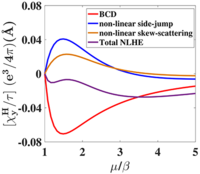
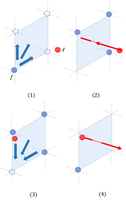
Unlike the ordinary Hall effect, the nonlinear Hall effect (NLHE) can occur in time-reversal-invariant metals lacking inversion symmetry. The authors uncover that two disorder-mediated corrections to the NLHE, namely, the nonlinear side jump and the nonlinear skew scattering, can be as large as the intrinsic Berry curvature dipole contribution. These findings will help to understand recent experiments searching for NLHE in various materials. They also offer a description of the role of disorder in current rectification in materials without inversion symmetry that could be relevant for wireless energy harvesting technology.

Sampling scheme for neuromorphic simulation of entangled quantum systems

Stefanie Czischek, Jan M. Pawlowski, Thomas Gasenzer, and Martin Gärttner

Phys. Rev. B 100, 195120 (2019) - Published 13 November, 2019

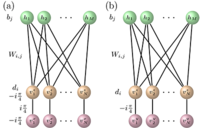
Neural networks can be used to represent a large class of quantum many-body states in a classical-statistical manner. This includes entangled states such as the paradigmatic Bell states or a quantum Ising chain near its critical point. The task of sampling from these states may be performed efficiently by physically implementing the network on neuromorphic hardware. A deep neural network structure is proposed for the sampling of arbitrary and, in general, noncommuting observables, where a phase-reweighting scheme is used in view of the complex coupling parameters. Entanglement is demonstrated through the violation of Bell inequalities.

Learnability scaling of quantum states: Restricted Boltzmann machines

Dan Sehayek, Anna Golubeva, Michael S. Albergo, Bohdan Kulchytskyy, Giacomo Torlai, and Roger G. Melko

Phys. Rev. B 100, 195125 (2019) - Published 15 November, 2019

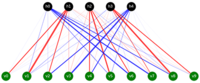
Motivated by the recent success of machine learning techniques in many-body physics, the authors study the scaling complexities of quantum state reconstruction in the restricted Boltzmann machine on the paradigmatic one-dimensional transverse-field Ising model. The authors demonstrate that the scaling complexities in the number of parameters and in the size of the training data are polynomial. Moreover, they show that the number of parameters required for reconstruction can be significantly reduced via pruning out network weights – indicating that overparameterization is required to facilitate the learning process.

Coupled structural distortions, domains, and control of phase competition in polar SmBaMn2O6

Elizabeth A. Nowadnick, Jiangang He, and Craig J. Fennie

Phys. Rev. B 100, 195129 (2019) - Published 18 November, 2019

Understanding and controlling the competing ground states realized in correlated oxides is a significant challenge. Manipulating subtle geometric distortions to crystal structure provides an opportunity to control these states by changing the environment in which electrons interact. Here, the authors explore the structurally complex polar manganite SmBaMn2O6 and reveal how a set of coupled structural distortions stabilize the ground state. They show how modulations to crystal structure at domain walls and in epitaxially strained thin films can stabilize competing phases.

Wilson loop approach to fragile topology of split elementary band representations and topological crystalline insulators with time-reversal symmetry

Adrien Bouhon, Annica M. Black-Schaffer, and Robert-Jan Slager

Phys. Rev. B 100, 195135 (2019) - Published 21 November, 2019

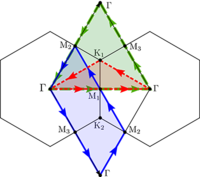
Recently, there has been rapid progress in classifying topological band structures by examining possible configurations, arising through consideration of the constraints of the underlying lattice symmetry. Apart from topologically stable and trivial bands, these pursuits have identified fragile topologies that can be trivialized by additional bands. The authors present a general and directly implementable tool to diagnose the full topological characterization of bands using Wilson flows. As a result, they find a general relation and unambiguous representation of these novel topological concepts.

Fracton fusion and statistics

Shriya Pai and Michael Hermele

Phys. Rev. B 100, 195136 (2019) - Published 22 November, 2019

Universal properties of quasiparticle excitations, such as fusion and statistics of anyons in two dimensions, play a central role in characterizing quantum phases of matter. Here, the authors develop a systematic framework to describe fusion and statistical processes of fractons and other quasiparticle excitations with subdimensional mobility. The restricted mobility of excitations leads to statistical processes that differ dramatically from more familiar braiding processes of anyons.

Electron-phonon coupling and Kohn anomaly due to floating two-dimensional electronic bands on the surface of ZrSiS

Siwei Xue, Tiantian Zhang, Changjiang Yi, Shuyuan Zhang, Xun Jia, Luiz H. Santos, Chen Fang, Youguo Shi, Xuetao Zhu, and Jiandong Guo

Phys. Rev. B 100, 195409 (2019) - Published 7 November, 2019

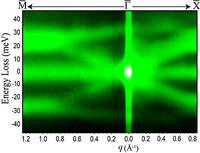
Electron phonon coupling (EPC) between surface electronic states and surface phonons is significant for low-dimensional devices. This is especially important for topological materials with exotic surface states. The authors experimentally map out the surface phonon dispersions of a topological nodal line semimetal ZrSiS with exotic surface floating two-dimensional electronic bands. They reveal a prominent Kohn anomaly in a surface phonon branch, originating from the interactions with the two-dimensional electrons. This discovery provides an EPC picture, important for the applications of topological nodal line semimetals.

Interaction-induced charge transfer in a mesoscopic electron spectrometer

Stefan G. Fischer, Jinhong Park, Yigal Meir, and Yuval Gefen

Phys. Rev. B 100, 195411 (2019) - Published 8 November, 2019

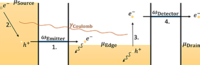
A theoretical analysis reveals the physical origin behind energetic signatures, measured in an electron spectrometer, that have recently been realized experimentally. In the device, electrons are injected and detected at specific energies. Surprisingly, signals arise in which the detection energy exceeds the injection energy. The theoretical treatment shows that these signals can be linked to interactions that were so far thought to be negligible in the description of mesoscopic samples, between electrons that propagate in spatially separate parts of the spectrometer.

Bridging between laboratory and rotating-frame master equations for open quantum systems

Gal Shavit, Baruch Horovitz, and Moshe Goldstein

Phys. Rev. B 100, 195436 (2019) - Published 27 November, 2019

The evolution of a driven open quantum system is often described by the Lindblad master equation. Two prevalent forms of this equation involve approximations with distinct and limited applicability ranges, possibly leading to different outcomes. This work introduces a generalized approach bridging between the two previous methods and uncovering novel behavior in previously inaccessible regimes. The relevance of the generalized approach to quantum-technology systems, such as cavity-coupled quantum dots and single-spin EPR experiments, is demonstrated.

ARTICLES

Electronic structure and strongly correlated systems

Transition to metallization in warm dense helium-hydrogen mixtures using stochastic density functional theory within the Kubo-Greenwood formalism

Yael Cytter, Eran Rabani, Daniel Neuhauser, Martin Preising, Ronald Redmer, and Roi Baer

Phys. Rev. B 100, 195101 (2019) - Published 1 November, 2019

Valley anisotropy in elastic metamaterials

Shuaifeng Li, Ingi Kim, Satoshi Iwamoto, Jianfeng Zang, and Jinkyu Yang

Phys. Rev. B 100, 195102 (2019) - Published 4 November, 2019

Realization of interlayer ferromagnetic interaction in MnSb2Te4 toward the magnetic Weyl semimetal state

Taito Murakami, Yusuke Nambu, Takashi Koretsune, Gu Xiangyu, Takafumi Yamamoto, Craig M. Brown, and Hiroshi Kageyama

Phys. Rev. B 100, 195103 (2019) - Published 4 November, 2019

Site-occupation Green's function embedding theory: A density functional approach to dynamical impurity solvers

Laurent Mazouin, Matthieu Saubanère, and Emmanuel Fromager

Phys. Rev. B 100, 195104 (2019) - Published 4 November, 2019

Characterization of localized effective spins in gapped quantum spin chains

Hayate Nakano and Seiji Miyashita

Phys. Rev. B 100, 195105 (2019) - Published 4 November, 2019

Tensor renormalization group in bosonic field theory

Manuel Campos, Germán Sierra, and Esperanza López

Phys. Rev. B 100, 195106 (2019) - Published 6 November, 2019

Dynamical scaling laws of out-of-time-ordered correlators

Bo-Bo Wei, Gaoyong Sun, and Myung-Joong Hwang

Phys. Rev. B 100, 195107 (2019) - Published 6 November, 2019

Two-dimensional topological materials discovery by symmetry-indicator method

Di Wang, Feng Tang, Jialin Ji, Wenqing Zhang, Ashvin Vishwanath, Hoi Chun Po, and Xiangang Wan

Phys. Rev. B 100, 195108 (2019) - Published 7 November, 2019

Entanglement conductance as a characterization of a delocalized-localized phase transition in free fermion models

Mohammad Pouranvari and Jahanfar Abouie

Phys. Rev. B 100, 195109 (2019) - Published 7 November, 2019

Observation of optical absorption correlated with surface state of topological insulator

Jiwon Jeon, Kwangnam Yu, Jiho Kim, Jisoo Moon, Seongshik Oh, and E. J. Choi

Phys. Rev. B 100, 195110 (2019) - Published 7 November, 2019

Phase diagram of spin-1 chains with Dzyaloshinskii-Moriya interaction

Hugo Tschirhart, Ernest T. S. Ong, Pinaki Sengupta, and Thomas L. Schmidt

Phys. Rev. B 100, 195111 (2019) - Published 8 November, 2019

Contrasting pressure evolution of f-electron hybridized states in CeRhIn5 and YbNi3Ga9: An optical conductivity study

H. Okamura, A. Takigawa, T. Yamasaki, E. D. Bauer, S. Ohara, Y. Ikemoto, and T. Moriwaki

Phys. Rev. B 100, 195112 (2019) - Published 8 November, 2019

Transverse thermopower in Dirac and Weyl semimetals

Gargee Sharma and Sumanta Tewari

Phys. Rev. B 100, 195113 (2019) - Published 11 November, 2019

Strongly correlated electrons: Analytic mean-field theories with two-particle self-consistency

Václav Janiš, Peter Zalom, Vladislav Pokorný, and Antonín Klíč

Phys. Rev. B 100, 195114 (2019) - Published 11 November, 2019

Inhomogeneous electronic state of organic conductor κ−(BEDT-TTF)2Cu[N(CN)2]I studied by C13 NMR spectroscopy

T. Kobayashi, A. Suzuta, K. Tsuji, Y. Ihara, and A. Kawamoto

Phys. Rev. B 100, 195115 (2019) - Published 11 November, 2019

Origin of ferroelectricity in orthorhombic LuFeO3

Ujjal Chowdhury, Sudipta Goswami, Amritendu Roy, Shailendra Rajput, A. K. Mall, R. Gupta, S. D. Kaushik, V. Siruguri, S. Saravanakumar, S. Israel, R. Saravanan, A. Senyshyn, T. Chatterji, J. F. Scott, Ashish Garg, and Dipten Bhattacharya

Phys. Rev. B 100, 195116 (2019) - Published 12 November, 2019

Symmetry and quantum kinetics of the nonlinear Hall effect

S. Nandy and Inti Sodemann

Phys. Rev. B 100, 195117 (2019) - Published 12 November, 2019

Unlike the ordinary Hall effect, the nonlinear Hall effect (NLHE) can occur in time-reversal-invariant metals lacking inversion symmetry. The authors uncover that two disorder-mediated corrections to the NLHE, namely, the nonlinear side jump and the nonlinear skew scattering, can be as large as the intrinsic Berry curvature dipole contribution. These findings will help to understand recent experiments searching for NLHE in various materials. They also offer a description of the role of disorder in current rectification in materials without inversion symmetry that could be relevant for wireless energy harvesting technology.

4f conduction in the magnetic semiconductor NdN

W. F. Holmes-Hewett, R. G. Buckley, B. J. Ruck, F. Natali, and H. J. Trodahl

Phys. Rev. B 100, 195119 (2019) - Published 13 November, 2019

Sampling scheme for neuromorphic simulation of entangled quantum systems

Stefanie Czischek, Jan M. Pawlowski, Thomas Gasenzer, and Martin Gärttner

Phys. Rev. B 100, 195120 (2019) - Published 13 November, 2019

Neural networks can be used to represent a large class of quantum many-body states in a classical-statistical manner. This includes entangled states such as the paradigmatic Bell states or a quantum Ising chain near its critical point. The task of sampling from these states may be performed efficiently by physically implementing the network on neuromorphic hardware. A deep neural network structure is proposed for the sampling of arbitrary and, in general, noncommuting observables, where a phase-reweighting scheme is used in view of the complex coupling parameters. Entanglement is demonstrated through the violation of Bell inequalities.

Ferroelectric order versus metallicity in Sr1−xCaxTiO3−δ (x=0.009)

Johannes Engelmayer, Xiao Lin, Fulya Koç, Christoph P. Grams, Joachim Hemberger, Kamran Behnia, and Thomas Lorenz

Phys. Rev. B 100, 195121 (2019) - Published 13 November, 2019

Nature and impact of stripe freezing in La1.67Sr0.33NiO4

A. M. Merritt, D. Reznik, V. O. Garlea, G. D. Gu, and J. M. Tranquada

Phys. Rev. B 100, 195122 (2019) - Published 14 November, 2019

Nontrivial topology in the layered Dirac nodal-line semimetal candidate SrZnSb2 with distorted Sb square nets

Jinyu Liu, Pengfei Liu, Kyle Gordon, Eve Emmanouilidou, Jie Xing, David Graf, Bryan C. Chakoumakos, Yan Wu, Huibo Cao, Dan Dessau, Qihang Liu, and Ni Ni

Phys. Rev. B 100, 195123 (2019) - Published 14 November, 2019

Time- and momentum-resolved tunneling spectroscopy of pump-driven nonthermal excitations in Mott insulators

Krissia Zawadzki and Adrian E. Feiguin

Phys. Rev. B 100, 195124 (2019) - Published 15 November, 2019

Learnability scaling of quantum states: Restricted Boltzmann machines

Dan Sehayek, Anna Golubeva, Michael S. Albergo, Bohdan Kulchytskyy, Giacomo Torlai, and Roger G. Melko

Phys. Rev. B 100, 195125 (2019) - Published 15 November, 2019

Motivated by the recent success of machine learning techniques in many-body physics, the authors study the scaling complexities of quantum state reconstruction in the restricted Boltzmann machine on the paradigmatic one-dimensional transverse-field Ising model. The authors demonstrate that the scaling complexities in the number of parameters and in the size of the training data are polynomial. Moreover, they show that the number of parameters required for reconstruction can be significantly reduced via pruning out network weights – indicating that overparameterization is required to facilitate the learning process.

Strain-tunable orbital, spin-orbit, and optical properties of monolayer transition-metal dichalcogenides

Klaus Zollner, Paulo E. Faria Junior, and Jaroslav Fabian

Phys. Rev. B 100, 195126 (2019) - Published 15 November, 2019

Surface electronic structure of the wide band gap topological insulator PbBi4Te4Se3

I. A. Shvets, I. I. Klimovskikh, Z. S. Aliev, M. B. Babanly, F. J. Zúñiga, J. Sánchez-Barriga, M. Krivenkov, A. M. Shikin, and E. V. Chulkov

Phys. Rev. B 100, 195127 (2019) - Published 18 November, 2019

Free and interacting short-range entangled phases of fermions: Beyond the tenfold way

Yu-An Chen, Anton Kapustin, Alex Turzillo, and Minyoung You

Phys. Rev. B 100, 195128 (2019) - Published 18 November, 2019

Coupled structural distortions, domains, and control of phase competition in polar SmBaMn2O6

Elizabeth A. Nowadnick, Jiangang He, and Craig J. Fennie

Phys. Rev. B 100, 195129 (2019) - Published 18 November, 2019

Understanding and controlling the competing ground states realized in correlated oxides is a significant challenge. Manipulating subtle geometric distortions to crystal structure provides an opportunity to control these states by changing the environment in which electrons interact. Here, the authors explore the structurally complex polar manganite SmBaMn2O6 and reveal how a set of coupled structural distortions stabilize the ground state. They show how modulations to crystal structure at domain walls and in epitaxially strained thin films can stabilize competing phases.

Giant enhancement of cryogenic thermopower by polar structural instability in the pressurized semimetal MoTe2

Hidefumi Takahashi, Kento Hasegawa, Tomoki Akiba, Hideaki Sakai, Mohammad Saeed Bahramy, and Shintaro Ishiwata

Phys. Rev. B 100, 195130 (2019) - Published 19 November, 2019

Exact chiral-spin-liquid state in a Kitaev-type spin model

Jianlong Fu

Phys. Rev. B 100, 195131 (2019) - Published 19 November, 2019

Rashba splitting of Dirac points and symmetry breaking in strained artificial graphene

Vram Mughnetsyan, Aram Manaselyan, Manuk Barseghyan, Albert Kirakosyan, and David Laroze

Phys. Rev. B 100, 195132 (2019) - Published 20 November, 2019

Hybridization fluctuations in the half-filled periodic Anderson model

Danqing Hu, Jian-Jun Dong, and Yi-feng Yang

Phys. Rev. B 100, 195133 (2019) - Published 20 November, 2019

Observation of bulk states and spin-polarized topological surface states in transition metal dichalcogenide Dirac semimetal candidate NiTe2

Barun Ghosh, Debashis Mondal, Chia-Nung Kuo, Chin Shan Lue, Jayita Nayak, Jun Fujii, Ivana Vobornik, Antonio Politano, and Amit Agarwal

Phys. Rev. B 100, 195134 (2019) - Published 20 November, 2019

Wilson loop approach to fragile topology of split elementary band representations and topological crystalline insulators with time-reversal symmetry

Adrien Bouhon, Annica M. Black-Schaffer, and Robert-Jan Slager

Phys. Rev. B 100, 195135 (2019) - Published 21 November, 2019

Recently, there has been rapid progress in classifying topological band structures by examining possible configurations, arising through consideration of the constraints of the underlying lattice symmetry. Apart from topologically stable and trivial bands, these pursuits have identified fragile topologies that can be trivialized by additional bands. The authors present a general and directly implementable tool to diagnose the full topological characterization of bands using Wilson flows. As a result, they find a general relation and unambiguous representation of these novel topological concepts.

Fracton fusion and statistics

Shriya Pai and Michael Hermele

Phys. Rev. B 100, 195136 (2019) - Published 22 November, 2019

Universal properties of quasiparticle excitations, such as fusion and statistics of anyons in two dimensions, play a central role in characterizing quantum phases of matter. Here, the authors develop a systematic framework to describe fusion and statistical processes of fractons and other quasiparticle excitations with subdimensional mobility. The restricted mobility of excitations leads to statistical processes that differ dramatically from more familiar braiding processes of anyons.

Experimental verification of the origin of positive linear magnetoresistance in CoFe(V1−xMnx)Si Heusler alloys

S. Yamada, S. Kobayashi, A. Masago, L. S. R. Kumara, H. Tajiri, T. Fukushima, S. Abo, Y. Sakuraba, K. Hono, T. Oguchi, and K. Hamaya

Phys. Rev. B 100, 195137 (2019) - Published 25 November, 2019

Topological phase transition in the archetypal f-electron correlated system of cerium

Junwon Kim, Dong-Choon Ryu, Chang-Jong Kang, Kyoo Kim, Hongchul Choi, T.-S. Nam, and B. I. Min

Phys. Rev. B 100, 195138 (2019) - Published 25 November, 2019

Effect of Coulomb screening on the discrete scale invariance of quasibound states in three-dimensional topological semimetals

Hongchao Liu, Haiwen Liu, Robert Joynt, and X. C. Xie

Phys. Rev. B 100, 195140 (2019) - Published 25 November, 2019

Period 4 stripe in the extended two-dimensional Hubbard model

Boris Ponsioen, Sangwoo S. Chung, and Philippe Corboz

Phys. Rev. B 100, 195141 (2019) - Published 25 November, 2019

Steady-state density functional theory for thermoelectric effects

N. Sobrino, R. D'Agosta, and S. Kurth

Phys. Rev. B 100, 195142 (2019) - Published 25 November, 2019

Study of counterintuitive transport properties in the Aubry-André-Harper model via entanglement entropy and persistent current

Nilanjan Roy and Auditya Sharma

Phys. Rev. B 100, 195143 (2019) - Published 25 November, 2019

Exchange-correlation contributions to thermodynamic properties of the homogeneous electron gas from a cumulant Green's function approach

J. J. Kas, T. D. Blanton, and J. J. Rehr

Phys. Rev. B 100, 195144 (2019) - Published 26 November, 2019

Magnon crystals and magnetic phases in a kagome-stripe antiferromagnet

S. Acevedo, C. A. Lamas, M. Arlego, and P. Pujol

Phys. Rev. B 100, 195145 (2019) - Published 27 November, 2019

Supersymmetry in an interacting Majorana model on the kagome lattice

Chengshu Li, Étienne Lantagne-Hurtubise, and Marcel Franz

Phys. Rev. B 100, 195146 (2019) - Published 27 November, 2019

Theoretical and experimental evidence for the intrinsic three-dimensional Dirac state in Cu2HgSnSe4

Yang-Yang Lv, Lin Cao, Qian-Qian Yuan, Si-Si Chen, Zhi-Qiang Shi, Qi-Yuan Li, Y. B. Chen, Shu-Hua Yao, Jian Zhou, Huaiqiang Wang, Haijun Zhang, Shao-Chun Li, Defa Liu, and Yan-Feng Chen

Phys. Rev. B 100, 195147 (2019) - Published 27 November, 2019

Semiconductors I: bulk

High harmonic generation in crystals using maximally localized Wannier functions

R. E. F. Silva, F. Martín, and M. Ivanov

Phys. Rev. B 100, 195201 (2019) - Published 15 November, 2019

Investigating the high-temperature thermoelectric properties of n-type rutile TiO2

S. Thébaud, Ch. Adessi, and G. Bouzerar

Phys. Rev. B 100, 195202 (2019) - Published 25 November, 2019

Semiconductors II: surfaces, interfaces, microstructures, and related topics

Strong interactions and biexcitons in a polariton mixture

M. A. Bastarrachea-Magnani, A. Camacho-Guardian, M. Wouters, and G. M. Bruun

Phys. Rev. B 100, 195301 (2019) - Published 4 November, 2019

Ab initio treatment of silicon-hydrogen bond rupture at Si/SiO2 interfaces

Markus Jech, Al-Moatasem El-Sayed, Stanislav Tyaginov, Alexander L. Shluger, and Tibor Grasser

Phys. Rev. B 100, 195302 (2019) - Published 5 November, 2019

Model interactions for Pfaffian paired states based on Chern-Simons field theory description

Stevan Đurđević and Milica V. Milovanović

Phys. Rev. B 100, 195303 (2019) - Published 8 November, 2019

Predictive design of intrinsic half-metallicity in zigzag tungsten dichalcogenide nanoribbons

Ping Cui, Jiang Zeng, Haowei Peng, Jin-Ho Choi, Zhenyu Li, Changgan Zeng, Chih-Kang Shih, John P. Perdew, and Zhenyu Zhang

Phys. Rev. B 100, 195304 (2019) - Published 8 November, 2019

Injection current in ferroelectric group-IV monochalcogenide monolayers

Suman Raj Panday, Salvador Barraza-Lopez, Tonatiuh Rangel, and Benjamin M. Fregoso

Phys. Rev. B 100, 195305 (2019) - Published 11 November, 2019

Multiple toroidal dipole Fano resonances of asymmetric dielectric nanohole arrays

Chaobiao Zhou, Shiyu Li, Yi Wang, and Mingsheng Zhan

Phys. Rev. B 100, 195306 (2019) - Published 18 November, 2019

Spin-dependent Dirac electrons and valley polarization in the ferromagnetic stanene/CrI3 van der Waals heterostructure

Baoxing Zhai, Juan Du, Chenhai Shen, Tianxing Wang, Yuting Peng, Qiming Zhang, and Congxin Xia

Phys. Rev. B 100, 195307 (2019) - Published 21 November, 2019

Diagnosis of topological nodal lines with nontrivial monopole charge in the presence of rotation symmetries

Heqiu Li, Chen Fang, and Kai Sun

Phys. Rev. B 100, 195308 (2019) - Published 27 November, 2019

Surface physics, nanoscale physics, low-dimensional systems

Strong acoustic plasmons in chemically doped graphene induced by a nearby metal surface

Vito Despoja, Dino Novko, Ivor Lončarić, Neven Golenić, Leonardo Marušić, and Vyacheslav M. Silkin

Phys. Rev. B 100, 195401 (2019) - Published 4 November, 2019

Landau levels of bilayer graphene in a WSe2/bilayer graphene van der Waals heterostructure

Ya-Wen Chuang, Jing Li, Hailong Fu, Kenji Watanabe, Takashi Taniguchi, and Jun Zhu

Phys. Rev. B 100, 195402 (2019) - Published 4 November, 2019

Many-impurity phonon Casimir effect in atomic chains

Aleksandr Rodin

Phys. Rev. B 100, 195403 (2019) - Published 5 November, 2019

Conformal transformation of Dyakonov surface waves into bound states of cylindrical metamaterials

Veerachart Kajorndejnukul, David Artigas, and Lluis Torner

Phys. Rev. B 100, 195404 (2019) - Published 5 November, 2019

Energy barriers for Pb adatom diffusion on stepped ultrathin Pb(111) quantum nanofilms: First-principles calculations

Yong Han, James W. Evans, and Feng Liu

Phys. Rev. B 100, 195405 (2019) - Published 5 November, 2019

Nonlocal magnetolectric effects in diffusive conductors with spatially inhomogeneous spin-orbit coupling

Cristina Sanz-Fernández, Juan Borge, Ilya V. Tokatly, and F. Sebastián Bergeret

Phys. Rev. B 100, 195406 (2019) - Published 5 November, 2019

Optical response of (InGa)(AsSb)/GaAs quantum dots embedded in a GaP matrix

Petr Steindl, Elisa Maddalena Sala, Benito Alén, David Fuertes Marrón, Dieter Bimberg, and Petr Klenovský

Phys. Rev. B 100, 195407 (2019) - Published 6 November, 2019

Sound of Fermi arcs: a linearly dispersing gapless surface plasmon mode in undoped Weyl semimetals

F. Adinehvand, Z. Faraei, T. Farajollahpour, and S. A. Jafari

Phys. Rev. B 100, 195408 (2019) - Published 7 November, 2019

Electron-phonon coupling and Kohn anomaly due to floating two-dimensional electronic bands on the surface of ZrSiS

Siwei Xue, Tiantian Zhang, Changjiang Yi, Shuyuan Zhang, Xun Jia, Luiz H. Santos, Chen Fang, Youguo Shi, Xuetao Zhu, and Jiandong Guo

Phys. Rev. B 100, 195409 (2019) - Published 7 November, 2019

Electron phonon coupling (EPC) between surface electronic states and surface phonons is significant for low-dimensional devices. This is especially important for topological materials with exotic surface states. The authors experimentally map out the surface phonon dispersions of a topological nodal line semimetal ZrSiS with exotic surface floating two-dimensional electronic bands. They reveal a prominent Kohn anomaly in a surface phonon branch, originating from the interactions with the two-dimensional electrons. This discovery provides an EPC picture, important for the applications of topological nodal line semimetals.

Interaction-induced charge transfer in a mesoscopic electron spectrometer

Stefan G. Fischer, Jinhong Park, Yigal Meir, and Yuval Gefen

Phys. Rev. B 100, 195411 (2019) - Published 8 November, 2019

A theoretical analysis reveals the physical origin behind energetic signatures, measured in an electron spectrometer, that have recently been realized experimentally. In the device, electrons are injected and detected at specific energies. Surprisingly, signals arise in which the detection energy exceeds the injection energy. The theoretical treatment shows that these signals can be linked to interactions that were so far thought to be negligible in the description of mesoscopic samples, between electrons that propagate in spatially separate parts of the spectrometer.

Dynamical conductivity of the Fermi arc and the Volkov-Pankratov states on the surface of Weyl semimetals

Dibya Kanti Mukherjee, David Carpentier, and Mark Oliver Goerbig

Phys. Rev. B 100, 195412 (2019) - Published 11 November, 2019

Effective lattice model of graphene moiré superlattices on hexagonal boron nitride

Xianqing Lin and Jun Ni

Phys. Rev. B 100, 195413 (2019) - Published 12 November, 2019

Symmetry breaking of in-plane Raman scattering by elliptically polarized light in MoS2

Teng-De Huang, Kristan Bryan Simbulan, Yu-Fan Chiang, Yann-Wen Lan, and Ting-Hua Lu

Phys. Rev. B 100, 195414 (2019) - Published 12 November, 2019

Spin-polarized currents driven by spin-dependent surface screening

Piotr Graczyk and Maciej Krawczyk

Phys. Rev. B 100, 195415 (2019) - Published 14 November, 2019

Laser heating of cantilevered tips: Implications for photoinduced force microscopy

Bongsu Kim and Eric O. Potma

Phys. Rev. B 100, 195416 (2019) - Published 18 November, 2019

Removing all periodic boundary conditions: Efficient nonequilibrium Green's function calculations

Nick Papior, Gaetano Calogero, Susanne Leitherer, and Mads Brandbyge

Phys. Rev. B 100, 195417 (2019) - Published 18 November, 2019

Unidirectional Seebeck effect in magnetic topological insulators

Xiao-Qin Yu, Zhen-Gang Zhu, and Gang Su

Phys. Rev. B 100, 195418 (2019) - Published 18 November, 2019

Hybrid neural network potential for multilayer graphene

Mingjian Wen and Ellad B. Tadmor

Phys. Rev. B 100, 195419 (2019) - Published 18 November, 2019

Probing the singlet-triplet splitting in double quantum dots: Implications of the ac field amplitude

G. Giavaras and Yasuhiro Tokura

Phys. Rev. B 100, 195421 (2019) - Published 20 November, 2019

Quantum anomalous Hall effect by coupling heavy atomic layers with CrI3

Majeed Ur Rehman, Xinlong Dong, Tao Hou, Zeyu Li, Shifei Qi, and Zhenhua Qiao

Phys. Rev. B 100, 195422 (2019) - Published 21 November, 2019

Charge transport of a spin-orbit-coupled Luttinger liquid

Chen-Hsuan Hsu, Peter Stano, Yosuke Sato, Sadashige Matsuo, Seigo Tarucha, and Daniel Loss

Phys. Rev. B 100, 195423 (2019) - Published 21 November, 2019

Structure factor of fluctuating interfaces: From liquid surfaces to suspended graphene

Jose Hernández-Muñoz, Pedro Tarazona, Rafael Ramírez, Carlos P. Herrero, and Enrique Chacón

Phys. Rev. B 100, 195424 (2019) - Published 21 November, 2019

Effects of strong electron interactions and resonant scattering on power output of nano-devices

D. B. Karki and Mikhail N. Kiselev

Phys. Rev. B 100, 195425 (2019) - Published 22 November, 2019

Suppressing backscattering of helical edge modes with a spin bath

Andrey A. Bagrov, Francisco Guinea, and Mikhail I. Katsnelson

Phys. Rev. B 100, 195426 (2019) - Published 22 November, 2019

Comparative study of heat-driven and power-driven refrigerators with Coulomb-coupled quantum dots

A.-M. Daré

Phys. Rev. B 100, 195427 (2019) - Published 25 November, 2019

Emission of plasmons by drifting Dirac electrons: A hallmark of hydrodynamic transport

Dmitry Svintsov

Phys. Rev. B 100, 195428 (2019) - Published 25 November, 2019

Topological signatures in quantum transport in anomalous Floquet-Anderson insulators

Esteban A. Rodríguez-Mena and L. E. F. Foa Torres

Phys. Rev. B 100, 195429 (2019) - Published 25 November, 2019

Cation effect on excitons in perovskite nanocrystals from single-dot photoluminescence of CH3NH3PbI3

Lige Liu, Federico Pevere, Feng Zhang, Haizheng Zhong, and Ilya Sychugov

Phys. Rev. B 100, 195430 (2019) - Published 25 November, 2019

Nanoscopic time crystal obtained by nonergodic spin dynamics

Carla Lupo and Cedric Weber

Phys. Rev. B 100, 195431 (2019) - Published 25 November, 2019

Multicritical behavior in topological phase transitions

S. Rufo, Nei Lopes, Mucio A. Continentino, and M. A. R. Griffith

Phys. Rev. B 100, 195432 (2019) - Published 25 November, 2019

Edge-plasmon assisted electro-optical modulator

Ivan A. Pshenichnyuk, Gleb I. Nazarikov, Sergey S. Kosolobov, Andrei I. Maimistov, and Vladimir P. Drachev

Phys. Rev. B 100, 195434 (2019) - Published 26 November, 2019

Large and controllable spin-valley splitting in two-dimensional WS2/h−VN heterostructure

Congming Ke, Yaping Wu, Weihuang Yang, Zhiming Wu, Chunmiao Zhang, Xu Li, and Junyong Kang

Phys. Rev. B 100, 195435 (2019) - Published 26 November, 2019

Bridging between laboratory and rotating-frame master equations for open quantum systems

Gal Shavit, Baruch Horovitz, and Moshe Goldstein

Phys. Rev. B 100, 195436 (2019) - Published 27 November, 2019

The evolution of a driven open quantum system is often described by the Lindblad master equation. Two prevalent forms of this equation involve approximations with distinct and limited applicability ranges, possibly leading to different outcomes. This work introduces a generalized approach bridging between the two previous methods and uncovering novel behavior in previously inaccessible regimes. The relevance of the generalized approach to quantum-technology systems, such as cavity-coupled quantum dots and single-spin EPR experiments, is demonstrated.

Sign In to Your Journals Account

Filter

Filter

Article Lookup

Enter a citation