

- Perspective
Fundamental symmetries of topological insulator effective models
Phys. Rev. B 113, 139606 – Published 27 April, 2026
DOI: https://doi.org/10.1103/w67g-4hnx
Abstract
Simplified models with a minimal number of degrees of freedom have been a fruitful tool for gaining understanding of the essence of topological-insulator physics without the ballast of complications typical for band structures of these narrow-gap materials. The Bernevig-Hughes-Zhang model is such a minimal model, designed for describing the quantum spin Hall effect in HgTe quantum wells, more precisely, the transition between a trivial and topological phase as a function of the quantum well thickness. Since symmetry is central to the idea of quantum anomalies (e.g., the parity anomaly) in topological insulators, it is essential to identify them properly in these minimal models. In this work, we use dimensional reduction of three-dimensional point groups to the two-dimensional point groups appropriate for these quasi-two-dimensional minimal models, using the models for thin and thick layers of HgTe as examples. We determine the actions of crystal and time reversal operations on the basis states and the associated conserved quantum numbers, which aid the interpretation of the physics. While the usual effective models are invariant under the parity operation , this symmetry is broken by electric fields along the direction. We identify parity-odd contributions such as the well-known Rashba-type term in these effective models and show which quantum numbers remain conserved.
Physics Subject Headings (PhySH)
Collections
This article appears in the following collection:
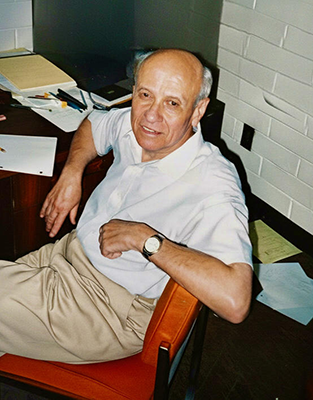
Honoring the legacy of Emmanuel Rashba
The passing of Professor Emmanuel Rashba in early 2025 was an irreparable loss to the physics community. For many decades prior, his numerous significant contributions have been driving solid state physics to surprising new places, realizations, and applications. To pay tribute to his many enduring, groundbreaking ideas, Physical Review B presents a special Collection with contributions by some of his disciples, collaborators, and connoisseurs of his mastery in top-shelf solid state research. Papers belonging to the collection will be published through 2026. It was initiated by Mark Dykman and Alexander Efros and colleagues. An Editorial from them and the contributed articles are linked below.
