

- Perspective
Rashba-driven insights into molecular excitons
Phys. Rev. B 114, 019601 – Published 1 July, 2026
DOI: https://doi.org/10.1103/p8n4-f4zz
Abstract
Molecular (Frenkel) excitons are electron-hole pairs localized on molecular sites but their wave function may be delocalized over many molecules. These quasiparticles govern the optical response of organic crystals and aggregates. Rashba made foundational, enduring contributions to this field: he built dynamic theories of vibronic spectra in the narrow band limit, explained impurity induced spectral anomalies (including polarization selective “anomalous impurity absorption” near exciton bands), predicted and systematized giant oscillator strength for shallow impurity bound excitons, and, together with experimental colleagues, turned isotopic editing in mixed crystals into a quantitative spectroscopic tool to reconstruct exciton band structures. The inspiration drawn from these ideas continues to have a profound impact on modern exciton physics. To illustrate this influence, in this work we review the exciton scattering technique, a multiscale approach based on the particle-in-a-box concept. This model is developed for efficient calculations of excited-state electronic structures and optical spectra in low-dimensional conjugated macromolecular systems such as dendrimers. Rashba's concepts and legacy continue to shape contemporary understanding of organic semiconductors, molecular aggregates, and other low-dimensional materials.
Physics Subject Headings (PhySH)
Collections
This article appears in the following collection:
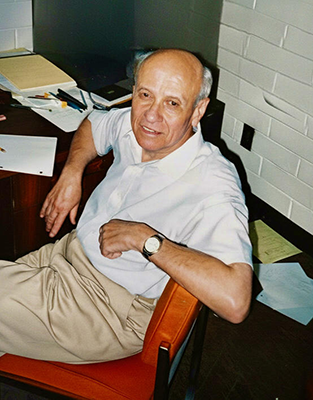
Honoring the legacy of Emmanuel Rashba
The passing of Professor Emmanuel Rashba in early 2025 was an irreparable loss to the physics community. For many decades prior, his numerous significant contributions have been driving solid state physics to surprising new places, realizations, and applications. To pay tribute to his many enduring, groundbreaking ideas, Physical Review B presents a special Collection with contributions by some of his disciples, collaborators, and connoisseurs of his mastery in top-shelf solid state research. Papers belonging to the collection will be published through 2026. It was initiated by Mark Dykman and Alexander Efros and colleagues. An Editorial from them and the contributed articles are linked below.
