

- Perspective
- Open Access
Dynamics of photoexcited exciton-phonon systems: Time-dependent theoretical approaches
Phys. Rev. B 114, 019602 – Published 6 July, 2026
DOI: https://doi.org/10.1103/h7v9-2z61
Abstract
Electronic excitations of molecular aggregates experience fluctuations of thermal phonons, which cause decoherence and trapping. Such process is denoted by exciton-polaron formation. Depending on the exciton-phonon coupling strength and the temperature, it may be convenient to describe properties of electronic excited states using either excitonic or polaronic representation. Two types of theoretical approaches are described: the first based on Heisenberg representation elegantly describes the excitation process, while the second, based on the time-dependent variational principle, describes the excitation evolution and trapping using polaron picture.
Physics Subject Headings (PhySH)
Collections
This article appears in the following collection:
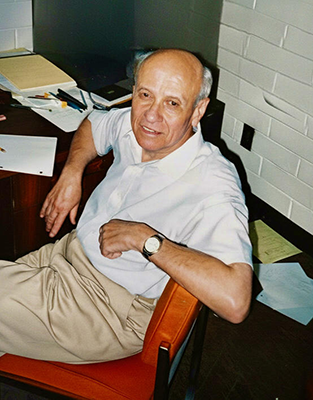
Honoring the legacy of Emmanuel Rashba
The passing of Professor Emmanuel Rashba in early 2025 was an irreparable loss to the physics community. For many decades prior, his numerous significant contributions have been driving solid state physics to surprising new places, realizations, and applications. To pay tribute to his many enduring, groundbreaking ideas, Physical Review B presents a special Collection with contributions by some of his disciples, collaborators, and connoisseurs of his mastery in top-shelf solid state research. Papers belonging to the collection will be published through 2026. It was initiated by Mark Dykman and Alexander Efros and colleagues. An Editorial from them and the contributed articles are linked below.
Article Text
References (82)
- A. S. Davydov, Theory of Molecular Excitons (Springer, New York, NY, 1971).
- M. Pope and C. E. Swenberg, Electronic Processes in Organic Crystals and Polymers, 2nd ed. (Oxford Academic, New York, NY, 1999).
- H. van Amerongen, L. Valkunas, and R. van Grondelle, Photosynthetic Excitons (World Scientific, Singapore, 2006).
- R. E. Blankenship, Molecular Mechanisms of Photosynthesis, 2nd ed. (Wiley Blackwell, Chichester, West Sussex, UK, 2014).
- V. Sláma, L. Cupellini, and B. Mennucci, Excitonic nature of carotenoid–phthalocyanine dyads and its role in transient absorption spectra, ACS Phys. Chem Au 2, 206 (2022).
- I. G. Prandi, L. Viani, O. Andreussi, and B. Mennucci, Combining classical molecular dynamics and quantum mechanical methods for the description of electronic excitations: The case of carotenoids, J. Comput. Chem. 37, 981 (2016).
- E. Romero, V. I. Novoderezhkin, and R. van Grondelle, Quantum design of photosynthesis for bio-inspired solar-energy conversion, Nature (London) 543, 355 (2017).
- V. L. Broude, E. I. Rashba, and E. F. Sheka, Spectroscopy of Molecular Excitons (Springer-Verlag, New York, NY, 1985).
- Edited by E. I. Rashba and M. D. Sturge, Excitons, Vol. 2, Modern Problems in Condensed Matter Sciences (North-Holland, Amsterdam/New York, 1982).
- L. Landau, The movement of electrons in the crystal lattice, Phys. Z. Sowjetunion 3, 644 (1933).
- M. Grover and R. Silbey, Exciton migration in molecular crystals, J. Chem. Phys. 54, 4843 (1971).
- A. G. Redfield, On the theory of relaxation processes, IBM J. Res. Dev. 1, 19 (1957).
- H. P. Breuer and F. Petruccione, The Theory of Open Quantum Systems (Oxford University Press, Oxford, 2007).
- A. Ishizaki, T. R. Calhoun, G. S. Schlau-Cohen, and G. R. Fleming, Quantum coherence and its interplay with protein environments in photosynthetic electronic energy transfer, Phys. Chem. Chem. Phys. 12, 7319 (2010).
- S. Korsakas, J. Bučinskas, and D. Abramavicius, Long memory effects in excitonic systems dynamics: Spectral relations and excitation transport, J. Chem. Phys. 152, 244114 (2020).
- W. M. Zhang, T. Meier, V. Chernyak, and S. Mukamel, Exciton-migration and three-pulse femtosecond optical spectroscopies of photosynthetic antenna complexes, J. Chem. Phys. 108, 7763 (1998).
- A. Ishizaki and G. R. Fleming, On the adequacy of the Redfield equation and related approaches to the study of quantum dynamics in electronic energy transfer, J. Chem. Phys. 130, 234110 (2009).
- A. Fruchtman, N. Lambert, and E. M. Gauger, When do perturbative approaches accurately capture the dynamics of complex quantum systems? Sci. Rep. 6, 28204 (2016).
- D. Abramavicius, B. Palmieri, D. V. Voronine, F. Šanda, and S. Mukamel, Coherent multidimensional optical spectroscopy of excitons in molecular aggregates; quasiparticle versus supermolecule perspectives, Chem. Rev. 109, 2350 (2009).
- V. May and O. Kühn, Charge and Energy Transfer Dynamics in Molecular Systems, 3rd ed. (Wiley-VCH, Weinheim, 2011).
- S. Jang, J. Cao, and R. J. Silbey, Fourth-order quantum master equation and its Markovian bath limit, J. Chem. Phys. 116, 2705 (2002).
- S. J. Jang, Partially polaron-transformed quantum master equation for exciton and charge transport dynamics, J. Chem. Phys. 157, 104107 (2022).
- U. Weiss, Quantum Dissipative Systems (World Scientific, Singapore, Hackensack, 2012).
- A. J. Leggett, S. Chakravarty, A. T. Dorsey, M. P. Fisher, A. Garg, and W. Zwerger, Dynamics of the dissipative two-state system, Rev. Mod. Phys. 59, 1 (1987).
- Y. Tanimura, Numerically “exact” approach to open quantum dynamics: The hierarchical equations of motion (HEOM), J. Chem. Phys. 153, 020901 (2020).
- Y. Tanimura, Stochastic Liouville, Langevin, Fokker–Planck, and master equation approaches to quantum dissipative systems, J. Phys. Soc. Jpn. 75, 082001 (2006).
- J. J. Ding, J. Xu, J. Hu, R. X. Xu, and Y. Yan, Optimized hierarchical equations of motion theory for Drude dissipation and efficient implementation to nonlinear spectroscopies, J. Chem. Phys. 135, 164107 (2011).
- J. Xu, R.-X. Xu, D. Abramavicius, H.-D. Zhang, and Y.-J. Yan, Advancing hierarchical equations of motion for efficient evaluation of coherent two-dimensional spectroscopy, Chin. J. Chem. Phys. 24, 497 (2011).
- C. Curutchet and B. Mennucci, Quantum chemical studies of light harvesting, Chem. Rev. 117, 294 (2017).
- A. Gelzinis, D. Abramavicius, and L. Valkunas, Absorption lineshapes of molecular aggregates revisited, J. Chem. Phys. 142, 154107 (2015).
- F. D. Fuller, J. Pan, A. Gelzinis, V. Butkus, S. Senlik, D. E. Wilcox, C. F. Yocum, L. Valkunas, D. Abramavicius, and J. P. Ogilvie, Vibronic coherence in oxygenic photosynthesis, Nat. Chem. 6, 706 (2014).
- J. Chmeliov, A. Gelzinis, E. Songaila, R. Augulis, C. D. Duffy, A. V. Ruban, and L. Valkunas, The nature of self-regulation in photosynthetic light-harvesting antenna, Nat. Plants 2, 16045 (2016).
- D. Loco, S. Jurinovich, L. Cupellini, M. F. S. J. Menger, and B. Mennucci, The modeling of the absorption lineshape for embedded molecules through a polarizable QM/MM approach, Photochem. Photobiol. Sci. 17, 552 (2018).
- E. Cignoni, V. Slama, L. Cupellini, and B. Mennucci, The atomistic modeling of light-harvesting complexes from the physical models to the computational protocol, J. Chem. Phys. 156, 120901 (2022).
- P. E. Parris and V. M. Kenkre, Variational considerations in the study of carrier transport in organic crystals, Phys. Rev. B 70, 064304 (2004).
- J. Sun, L. Duan, and Y. Zhao, Delocalized Davydov Ansatz for the Holstein polaron, J. Chem. Phys. 138, 174116 (2013).
- L. Chen, M. Gelin, and Y. Zhao, Dynamics of the spin-boson model: A comparison of the multiple Davydov Ansätze, Chem. Phys. 515, 108 (2018).
- V. Chorošajev, O. Rancova, and D. Abramavicius, Polaronic effects at finite temperatures in the B850 ring of the LH2 complex, Phys. Chem. Chem. Phys. 18, 7966 (2016).
- V. Chorošajev, A. Gelzinis, L. Valkunas, and D. Abramavicius, Dynamics of exciton-polaron transition in molecular assemblies: The variational approach, J. Chem. Phys. 140, 244108 (2014).
- L. Chen and Y. Zhao, Finite temperature dynamics of a Holstein polaron: The thermo-field dynamics approach, J. Chem. Phys. 147, 214102 (2017).
- D. Abramavicius, V. Chorošajev, and L. Valkunas, Tracing feed-back driven exciton dynamics in molecular aggregates, Phys. Chem. Chem. Phys. 20, 21225 (2018).
- M. Jakučionis and D. Abramavičius, Temperature-controlled open-quantum-system dynamics using a time-dependent variational method, Phys. Rev. A 103, 032202 (2021).
- V. Balevičius Jr, T. Wei, D. Di Tommaso, D. Abramavicius, J. Hauer, T. Polívka, and C. D. P. Duffy, The full dynamics of energy relaxation in large organic molecules: From photo-excitation to solvent heating, Chem. Sci. 10, 4792 (2019).
- A. Raab, I. Burghardt, and H.-D. Meyer, The multiconfiguration time-dependent Hartree method generalized to the propagation of density operators, J. Chem. Phys. 111, 8759 (1999).
- M. Schröter, S. D. Ivanov, J. Schulze, S. P. Polyutov, Y. Yan, T. Pullerits, and O. Kühn, Exciton–vibrational coupling in the dynamics and spectroscopy of Frenkel excitons in molecular aggregates, Phys. Rep. 567, 1 (2015).
- M. Jakučionis and D. Abramavičius, Thermalization of open quantum systems using the multiple-Davydov- variational approach, Phys. Rev. A 107, 062205 (2023).
- Y. Zhao, K. Sun, L. Chen, and M. Gelin, The hierarchy of Davydov's Ansätze and its applications, WIREs Comput. Mol. Sci. 12, e1589 (2022).
- A. Mikalčiūtė and D. Abramavičius, Complete exciton Hamiltonian for photosynthetic pigment–protein complexes, J. Chem. Phys. 162, 164109 (2025).
- R. Jankowiak, M. Reppert, V. Zazubovich, J. Pieper, and T. Reinot, Site selective and single complex laser-based spectroscopies: A window on excited state electronic structure, excitation energy transfer, and electron–phonon coupling of selected photosynthetic complexes, Chem. Rev. 111, 4546 (2011).
- A. Kell, X. Feng, M. Reppert, and R. Jankowiak, On the shape of the phonon spectral density in photosynthetic complexes, J. Phys. Chem. B 117, 7317 (2013).
- A. Anda, L. D. Vico, T. Hansen, and D. Abramavičius, Absorption and fluorescence lineshape theory for polynomial potentials, J. Chem. Theory Comput. 12, 5979 (2016).
- T. J. Zuehlsdorff, A. Montoya-Castillo, J. A. Napoli, T. E. Markland, and C. M. Isborn, Optical spectra in the condensed phase: Capturing anharmonic and vibronic features using dynamic and static approaches, J. Chem. Phys. 151, 074111 (2019).
- L. Allan and T. J. Zuehlsdorff, Taming the third order cumulant approximation to linear optical spectroscopy, J. Chem. Phys. 160, 074108 (2024).
- M. L. Chaillet, F. Lengauer, J. Adolphs, F. Müh, A. S. Fokas, D. J. Cole, A. W. Chin, and T. Renger, Static disorder in excitation energies of the Fenna–Matthews–Olson protein: Structure-based theory meets experiment, J. Phys. Chem. Lett. 11, 10306 (2020).
- E. Bašinskaitė, V. Butkus, D. Abramavicius, and L. Valkunas, Vibronic models for nonlinear spectroscopy simulations, Photosynth. Res. 121, 95 (2014).
- M. Jakučionis, A. Žukas, and D. Abramavičius, Modeling molecular J and H aggregates using multiple-Davydov D2 ansatz, Phys. Chem. Chem. Phys. 24, 17665 (2022).
- O. Rancova, M. Jakučionis, L. Valkunas, and D. Abramavicius, Origin of non-Gaussian site energy disorder in molecular aggregates, Chem. Phys. Lett. 674, 120 (2017).
- O. Rancova, R. Jankowiak, and D. Abramavicius, Role of bath fluctuations in the double-excitation manifold in shaping the 2DES of bacterial reaction centers at low temperature, J. Phys. Chem. B 122, 1348 (2018).
- O. Rancova, R. Jankowiak, and D. Abramavicius, Probing environment fluctuations by two-dimensional electronic spectroscopy of molecular systems at temperatures below 5 K, J. Chem. Phys. 142, 212428 (2015).
- A. C. Newell and J. V. Moloney, Nonlinear Optics (Westview Press, Boulder, CO, 2004).
- F. C. Spano and S. Mukamel, Nonlinear susceptibilities of molecular aggregates: Enhancement of by size, Phys. Rev. A 40, 5783 (1989).
- J. A. Leegwater and S. Mukamel, Exciton-scattering mechanism for enhanced nonlinear response of molecular nanostructures, Phys. Rev. A 46, 452 (1992).
- V. Chernyak, W. M. Zhang, and S. Mukamel, Multidimensional femtosecond spectroscopies of molecular aggregates and semiconductor nanostructures: The nonlinear exciton equations, J. Chem. Phys. 109, 9587 (1998).
- S. Mukamel and D. Abramavicius, Many-body approaches for simulating coherent nonlinear spectroscopies of electronic and vibrational excitons, Chem. Rev. 104, 2073 (2004).
- V. Bubilaitis and D. Abramavicius, Signatures of exciton–exciton annihilation in 2DES spectra including up to six-wave mixing processes, J. Chem. Phys. 161, 104106 (2024).
- V. Bubilaitis and D. Abramavicius, Compact modeling of highly excited linear aggregates using generalized quantum particles, Chem. Phys. 588, 112445 (2025).
- V. M. Axt and S. Mukamel, Nonlinear optics of semiconductor and molecular nanostructures; a common perspective, Rev. Mod. Phys. 70, 145 (1998).
- F. Rossi and T. Kuhn, Theory of ultrafast phenomena in photoexcited semiconductors, Rev. Mod. Phys. 74, 895 (2002).
- N. W. Ashcroft and N. D. Mermin, Solid State Physics (Thomson Learning Inc., New York, 1976).
- T. Kobayashi, J-Aggregates (World Scientific Publishing Company, Singapore, River Edge, NJ, 1996).
- S. Ramesh, Y. Wang, P. Chabera, R. Araujo, M. Aboulsaad, T. Edvinsson, F. Gao, and T. Pullerits, Coherent phonons, localization, and slow polaron formation in lead-free gold perovskite, Adv. Opt. Mater. 13, 2402882 (2025).
- K. Zheng, M. Abdellah, Q. Zhu, Q. Kong, G. Jennings, C. A. Kurtz, M. E. Messing, Y. Niu, D. J. Gosztola, M. J. Al-Marri, X. Zhang, T. Pullerits, and S. E. Canton, Direct experimental evidence for photoinduced strong-coupling polarons in organolead halide perovskite nanoparticles, J. Phys. Chem. Lett. 7, 4535 (2016).
- F. Thouin, D. A. Valverde-Chávez, C. Quarti, D. Cortecchia, I. Bargigia, D. Beljonne, A. Petrozza, C. Silva, and A. R. S. Kandada, Phonon coherences reveal the polaronic character of excitons in two-dimensional lead halide perovskites, Nat. Mater. 18, 349 (2019).
- M. D. Smith, A. Jaffe, E. R. Dohner, A. M. Lindenberg, and H. I. Karunadasa, Structural origins of broadband emission from layered Pb–Br hybrid perovskites, Chem. Sci. 8, 4497 (2017).
- M. R. Philpott, Theory of the coupling of electronic and vibrational excitations in molecular crystals and helical polymers, J. Chem. Phys. 55, 2039 (1971).
- F. C. Spano, The spectral signatures of Frenkel polarons in H- and J-aggregates, Acc. Chem. Res. 43, 429 (2010).
- S. Polyutov, O. Kühn, and T. Pullerits, Exciton-vibrational coupling in molecular aggregates: Electronic versus vibronic dimer, Chem. Phys. 394, 21 (2012).
- A. Chenu, N. Christensson, H. F. Kauffmann, and T. Mančal, Enhancement of vibronic and ground-state vibrational coherences in 2D spectra of photosynthetic complexes, Sci. Rep. 3, 2029 (2013).
- Y.-C. Cheng and R. J. Silbey, A unified theory for charge-carrier transport in organic crystals, J. Chem. Phys. 128, 114713 (2008).
- D. R. Yarkony and R. Silbey, Variational approach to exciton transport in molecular crystals, J. Chem. Phys. 67, 5818 (1977).
- L. Valkunas, D. Abramavicius, and T. Mančal, Molecular Excitation Dynamics and Relaxation (Wiley-VCH Verlag GmbH & Co. KGaA, 2013).
- S. Mukamel, Principles of Nonlinear Optical Spectroscopy (Oxford University Press, New York, 1995).

