

- Perspective
Spin-deflection coupling in carbon nanotubes
Phys. Rev. B 113, 139601 – Published 13 April, 2026
DOI: https://doi.org/10.1103/gc6v-j95h
Abstract
In this article I review the physics of spin-deflection coupling in carbon nanotubes. The underlying theory was developed by Emannuel Rashba and me [Phys. Rev. B 81, 125426 (2010)]. Here I will describe the state of the field at the time, the intriguing observations that motivated the work, and the special properties of carbon nanotubes that provide a robust mechanism for coupling between electron spin and phononic/mechanical degrees of freedom that is qualitatively distinct from the familiar coupling mechanisms in other (one-, two-, and three-dimensional) materials. In tribute to Emmanuel's legacy I will include brief personal recollections to convey the deep impact he made on me, while keeping the majority focused on a pedagogical discussion of the physics we explored (as he certainly would have wanted it).
Physics Subject Headings (PhySH)
Collections
This article appears in the following collection:
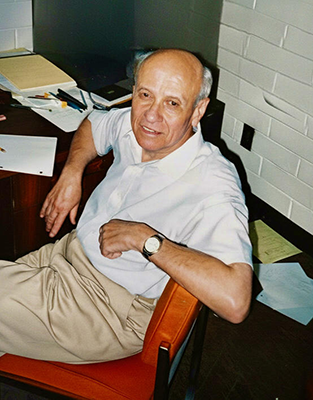
Honoring the legacy of Emmanuel Rashba
The passing of Professor Emmanuel Rashba in early 2025 was an irreparable loss to the physics community. For many decades prior, his numerous significant contributions have been driving solid state physics to surprising new places, realizations, and applications. To pay tribute to his many enduring, groundbreaking ideas, Physical Review B presents a special Collection with contributions by some of his disciples, collaborators, and connoisseurs of his mastery in top-shelf solid state research. Papers belonging to the collection will be published through 2026. It was initiated by Mark Dykman and Alexander Efros and colleagues. An Editorial from them and the contributed articles are linked below.
