

- Perspective
Rashba spin-orbit coupling and artificially engineered topological superconductors
Phys. Rev. B 113, 139604 – Published 20 April, 2026
DOI: https://doi.org/10.1103/6qwr-4679
Abstract
One of the most important physical effects in condensed matter physics is the Rashba spin-orbit coupling (RSOC), introduced in seminal works by Emmanuel Rashba. In this article, we discuss, describe, and review (providing critical perspectives on) the crucial role of RSOC in the currently active research area of topological quantum computation. Most, if not all, of the current experimental topological quantum computing platforms use the idea of Majorana zero modes as the qubit ingredient because of their non-Abelian anyonic property of having an intrinsic quantum degeneracy, which enables nonlocal encoding protected by a topological energy gap. It turns out that RSOC is a crucial ingredient in producing a low-dimensional topological superconductor in the laboratory, and such topological superconductors naturally have isolated localized midgap Majorana zero modes. In addition, increasing the RSOC strength enhances the topological gap, thus enhancing the topological immunity of the qubits to decoherence. Thus, Rashba's classic work on SOC may lead not only to the realization of localized non-Abelian anyons, but also fault-tolerant quantum computation.
Physics Subject Headings (PhySH)
Collections
This article appears in the following collection:
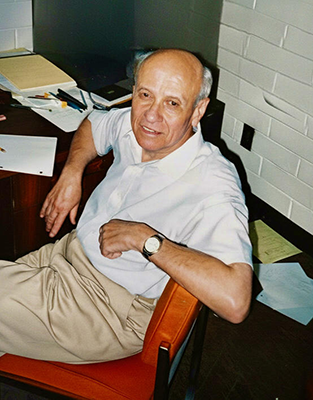
Honoring the legacy of Emmanuel Rashba
The passing of Professor Emmanuel Rashba in early 2025 was an irreparable loss to the physics community. For many decades prior, his numerous significant contributions have been driving solid state physics to surprising new places, realizations, and applications. To pay tribute to his many enduring, groundbreaking ideas, Physical Review B presents a special Collection with contributions by some of his disciples, collaborators, and connoisseurs of his mastery in top-shelf solid state research. Papers belonging to the collection will be published through 2026. It was initiated by Mark Dykman and Alexander Efros and colleagues. An Editorial from them and the contributed articles are linked below.
