

- Perspective
Resonant Edelstein and inverse Edelstein effects, charge-to-spin conversion, and spin pumping from chiral-spin modes
Phys. Rev. B 113, 099602 – Published 25 March, 2026
DOI: https://doi.org/10.1103/5p54-96d7
Abstract
Spin-orbit coupling in systems with broken inversion symmetry gives rise to the Edelstein effect, which is the spin polarization induced by an electric field or current, and the inverse-Edelstein effect (also known as the spin-galvanic effect), which is the electric current induced by an oscillatory magnetic field or spin polarization. At the same time, an interplay between spin-orbit coupling and electron-electron interaction leads to a special type of collective excitation—chiral-spin modes—which are oscillations of spin polarization in the absence of a magnetic field. As a result, both Edelstein and inverse-Edelstein effects exhibit resonances at the frequencies of chiral-spin collective modes. Here, we present a detailed study of the effect of electron correlations on the resonances in Edelstein and inverse-Edelstein effects in a single-valley two-dimensional electron gas and in a multivalley Dirac system with proximity-induced spin-orbit coupling. While the chiral-spin modes involve both in-plane and out-of-plane oscillations of spins, we show that only the in-plane modes are responsible for the resonances. In the multivalley system, electron correlations split the in-plane modes into two. We study the spectral-weight distribution between the two modes over a large parameter space of intra- and intervalley interactions. Finally, we demonstrate that chiral-spin modes enable a resonant enhancement of charge-to-spin conversion and directional control of the injected spins in the spin-pumping process, both of which are relevant to spintronics.
Physics Subject Headings (PhySH)
Collections
This article appears in the following collection:
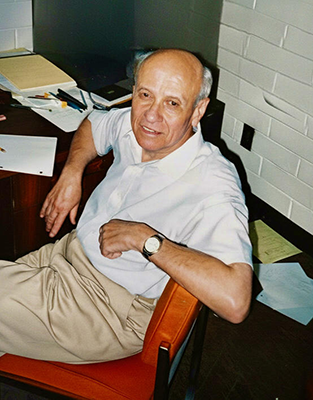
Honoring the legacy of Emmanuel Rashba
The passing of Professor Emmanuel Rashba in early 2025 was an irreparable loss to the physics community. For many decades prior, his numerous significant contributions have been driving solid state physics to surprising new places, realizations, and applications. To pay tribute to his many enduring, groundbreaking ideas, Physical Review B presents a special Collection with contributions by some of his disciples, collaborators, and connoisseurs of his mastery in top-shelf solid state research. Papers belonging to the collection will be published through 2026. It was initiated by Mark Dykman and Alexander Efros and colleagues. An Editorial from them and the contributed articles are linked below.
