Recent Articles

Quantum optics in Maxwell's fish eye lens with single atoms and photons

J. Perczel, P. Kómár, and M. D. Lukin

Phys. Rev. A 98, 033803 (2018) - Published 5 September, 2018

The imaging properties of a lens that may perfectly focus electromagnetic waves is investigated at the quantum level. The lens is shown to be diffraction limited, and its role in entangling operations based on dipole-dipole interactions is discussed.

Exploring six modes of an optical parametric oscillator

Luis F. Muñoz-Martínez, Felippe Alexandre Silva Barbosa, Antônio Sales Coelho, Luis Ortiz-Gutiérrez, Marcelo Martinelli, Paulo Nussenzveig, and Alessandro S. Villar

Phys. Rev. A 98, 023823 (2018) - Published 13 August, 2018

Researchers have entangled six modes of a laser cavity—a record number for such a device.

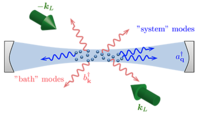
Photon thermalization via laser cooling of atoms

Chiao-Hsuan Wang, M. J. Gullans, J. V. Porto, William D. Phillips, and Jacob M. Taylor

Phys. Rev. A 98, 013834 (2018) - Published 19 July, 2018

Laser cooling, a well-known technique, is now investigated from the point of view of the reemitted photons. A general framework to study multiple scattering of photons inside an optically thick atomic ensemble is developed, which might help to engineer photonic states with controllable chemical potential and temperature in a many-body setting.

Universal bound states of one-dimensional bosons with two- and three-body attractions

Yusuke Nishida

Phys. Rev. A 97, 061603(R) (2018) - Published 14 June, 2018

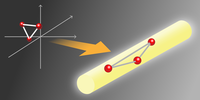
Three research groups have solved the three-body problem for bosons confined in a one-dimensional system.

Pure confinement-induced trimer in one-dimensional atomic waveguides

Ludovic Pricoupenko

Phys. Rev. A 97, 061604(R) (2018) - Published 14 June, 2018

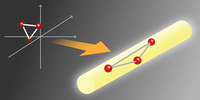
Three research groups have solved the three-body problem for bosons confined in a one-dimensional system.

One-dimensional three-boson problem with two- and three-body interactions

G. Guijarro, A. Pricoupenko, G. E. Astrakharchik, J. Boronat, and D. S. Petrov

Phys. Rev. A 97, 061605(R) (2018) - Published 14 June, 2018

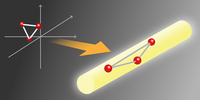
Three research groups have solved the three-body problem for bosons confined in a one-dimensional system.

PT-symmetric circuit QED

Fernando Quijandría, Uta Naether, Sahin K. Özdemir, Franco Nori, and David Zueco

Phys. Rev. A 97, 053846 (2018) - Published 30 May, 2018

A circuit-QED architecture is proposed to study PT symmetry and its breaking. In addition to being scalable, the platform is shown to be flexible and versatile concerning the engineering of Hamiltonians and corresponding fabrication on real physical systems.

Astronomical random numbers for quantum foundations experiments

Calvin Leung, Amy Brown, Hien Nguyen, Andrew S. Friedman, David I. Kaiser, and Jason Gallicchio

Phys. Rev. A 97, 042120 (2018) - Published 24 April, 2018

To help test quantum physics, a new method generates random numbers using light from distant stars and quasars that presumably have no correlation with experiments on Earth.

Fingering instabilities and pattern formation in a two-component dipolar Bose-Einstein condensate

Kui-Tian Xi, Tim Byrnes, and Hiroki Saito

Phys. Rev. A 97, 023625 (2018) - Published 16 February, 2018

Fingering instabilities and pattern formation are studied at the interface of an oppositely polarized two-component Bose-Einstein condensate with strong dipole-dipole interactions in three dimensions. It is shown that the rotational symmetry is spontaneously broken by fingering instability when the dipole-dipole interactions are strengthened.

Photons and polaritons in a broken-time-reversal nonplanar resonator

Ningyuan Jia, Nathan Schine, Alexandros Georgakopoulos, Albert Ryou, Ariel Sommer, and Jonathan Simon

Phys. Rev. A 97, 013802 (2018) - Published 3 January, 2018

The combination of twisted resonators with Rydberg polaritons is experimentally explored to simultaneously break inversion and time-reversal symmetries. Besides showing how to design a low-loss optical isolator, the work provides tools for the exploration of topological many-body physics from light.

Precision mass ratio of He+3 to HD+

S. Hamzeloui, J. A. Smith, D. J. Fink, and E. G. Myers

Phys. Rev. A 96, 060501(R) (2017) - Published 27 December, 2017

A precision measurement of the mass ratio of 3He+ and HD+ shows a discrepancy of more than 4 standard deviations with respect to the current literature values of the masses of the proton, deuteron, and nucleus of 3He.

Quantum tiltmeter with atom interferometry

Wen-Jie Xu, Min-Kang Zhou, Miao-Miao Zhao, Ke Zhang, and Zhong-Kun Hu

Phys. Rev. A 96, 063606 (2017) - Published 5 December, 2017

An atom interferometer serves as a sensitive tiltmeter that can measure Earth’s tidal deformations.

Observation of a spinning top in a Bose-Einstein condensate

R. N. Bisset, S. Serafini, E. Iseni, M. Barbiero, T. Bienaimé, G. Lamporesi, G. Ferrari, and F. Dalfovo

Phys. Rev. A 96, 053605 (2017) - Published 2 November, 2017

The spinning-top behavior of quantized vortices in an elongated cigar-shaped Bose-Einstein condensate is analyzed theoretically and verified experimentally. It is found that contributions to the angular momentum of these vortices are tightly confined to the region surrounding the core of the condensate, in stark contrast to untrapped condensates where all atoms contribute a unit of ħ.

Spectroscopic measurement of the softness of ultracold atomic collisions

Jonathan Coslovsky, Gadi Afek, Alexander Mil, Ido Almog, and Nir Davidson

Phys. Rev. A 96, 032713 (2017) - Published 19 September, 2017

The softness of collisions, or the average number of collisions each atom undergoes until its energy decorrelates significantly, is measured spectroscopically for ultracold atoms. The knowledge obtained is important for improving various technologies involving ultracold atoms, such as atomic clocks, quantum metrology, and the realization of quantum information systems.

Optical properties of honeycomb photonic structures

Artem D. Sinelnik, Mikhail V. Rybin, Stanislav Y. Lukashenko, Mikhail F. Limonov, and Kirill B. Samusev

Phys. Rev. A 95, 063837 (2017) - Published 23 June, 2017

Predictions of diffraction patterns for honeycomb photonic crystals were part of a comprehensive study of these structures that may be useful in nanoscale photonic devices.

Controlling the net charge on a nanoparticle optically levitated in vacuum

Martin Frimmer, Karol Luszcz, Sandra Ferreiro, Vijay Jain, Erik Hebestreit, and Lukas Novotny

Phys. Rev. A 95, 061801(R) (2017) - Published 6 June, 2017

A method to charge and discharge levitated nanoparticles is demonstrated, allowing one to enhance the control of its motion by the interaction with electric fields. The nanoparticles might be used as a tool for force sensing in microscopic scales.

Quantum dark solitons as qubits in Bose-Einstein condensates

M. I. Shaukat, E. V. Castro, and H. Terças

Phys. Rev. A 95, 053618 (2017) - Published 18 May, 2017

Dark solitons in a Bose-Einstein condensate could, according to calculations, function as qubits with long lifetimes.

Quantum speedup of the traveling-salesman problem for bounded-degree graphs

Alexandra E. Moylett, Noah Linden, and Ashley Montanaro

Phys. Rev. A 95, 032323 (2017) - Published 22 March, 2017

The traveling-salesman problem is an iconic route-finding task, with applications from chip design to planning and logistics. Here the authors show that if the graph of cities to be visited is of low degree, a traveling salesman armed with a quantum satnav can find the best route quadratically faster than using any known classical method.

Using electric fields for pulse compression and group-velocity control

Qian Li, Adam Kinos, Axel Thuresson, Lars Rippe, and Stefan Kröll

Phys. Rev. A 95, 032104 (2017) - Published 7 March, 2017

A one-atom-thick sheet of boron atoms exhibits Dirac cones, marking the first time this electronic property has been found in a material lacking a graphene-like crystal structure.

Bounds on the speedup in quantum signaling

Pablo Arrighi, Vincent Nesme, and Reinhard F. Werner

Phys. Rev. A 95, 012331 (2017) - Published 26 January, 2017
The notion of quantum signaling speedup is thoroughly analyzed by using cellular automata to set up equivalent quantum and classical systems. It is shown that, in the long term, quantum information cannot flow asymptotically faster than classical information.

Sign In to Your Journals Account

Filter

Recent Issues

Vol. 114, Iss. 4
October 2026
Vol. 114, Iss. 3
September 2026
Vol. 114, Iss. 2
August 2026
Vol. 114, Iss. 1
July 2026
Category
Article Type
Section

Filter

Article Lookup

Enter a citation