Browse by Subject

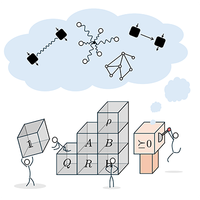
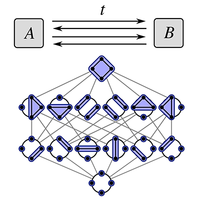
Tripartite Haar Random State Has No Bipartite Entanglement

Zhi Li, Takato Mori, and Beni Yoshida

Phys. Rev. X 16, 041013 (2026) - Published 13 October, 2026

Researchers demonstrate that bipartite Einstein-Podolsky-Rosen entanglement cannot be distilled from tripartite Haar random states by local operations.

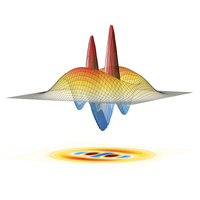
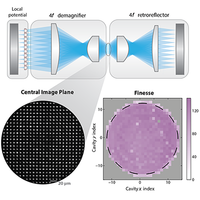
Stability, Degeneracy, and Scalability of a 600-Site Cavity Array Microscope

Anna Soper, Danial Shadmany, Adam L. Shaw, Lukas Palm, David I. Schuster, and Jonathan Simon

Phys. Rev. X 16, 041009 (2026) - Published 8 October, 2026

A scalable cavity array microscope architecture is presented, featuring over 600 independent optical cavities for parallelized light-matter interactions, providing opportunities for quantum networking and sensing applications.

Topological Mixed States: Phases of Matter from Axiomatic Approaches

Tai-Hsuan Yang, Bowen Shi, and Jong Yeon Lee

Phys. Rev. X 16, 041002 (2026) - Published 2 October, 2026

A quantum information framework classifies mixed-state topological phases for open quantum systems, introducing phase invariants based on an information convex set, memory capacity, and secret sharing.

Variational Multi-Gaussian Phase-Space Bosonic Dynamics via Automatic Differentiation

Jacopo Tosca, Francesco Carnazza, Luca Giacomelli, and Cristiano Ciuti

Phys. Rev. X 16, 031077 (2026) - Published 24 September, 2026

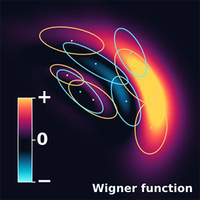
Researchers introduce a variational multi-Gaussian phase-space method combining analytical techniques with automatic differentiation to reveal the critical dynamics of large open quantum bosonic lattices.

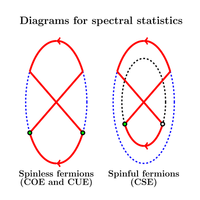
Chaotic Many-Body Quantum Dynamics, Spectral Correlations, and Energy Diffusion

J. T. Chalker and Dominik Hahn

Phys. Rev. X 16, 031076 (2026) - Published 23 September, 2026

Researchers analyze a solvable many-body model to demonstrate how energy diffusion governs spectral correlations in chaotic quantum systems.

Interaction-Assisted Topological Pumping in Few- and Many-Atom Rydberg Arrays

Chenxi Huang, Tao Chen, Qian Liang, Matthew A. Krebs, Ethan Springhorn, Ruiyu Li, Mingsheng Tian, Kaden R. A. Hazzard, Jacob P. Covey, and Bryce Gadway

Phys. Rev. X 16, 031075 (2026) - Published 21 September, 2026

Strong dipolar interactions in Rydberg atom arrays are found to be able to bind particles into correlated pairs and clusters that undergo efficient topological pumping along a synthetic dimension.

Geometrically Frustrated Quadrupoles on the Pyrochlore Lattice and Generalized Spin Liquids

Kristian Tyn Kai Chung, Sylvain Petit, Julien Robert, and Paul McClarty

Phys. Rev. X 16, 031065 (2026) - Published 11 September, 2026

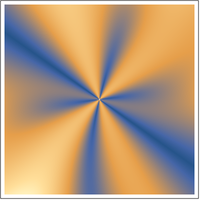
A semiclassical framework models quantum quadrupoles as biaxial tensors, showing how angular-momentum-dependent geometries dictate generalized nematic phases and quadrupolar spin liquids in frustrated magnets.

Quantum Birthmarks: Ergodicity Breaking Beyond Scarring

Anton M. Graf, Saul Atwood, Mingxuan Xiao, Roland Ketzmerick, Eric J. Heller, and Joonas Keski-Rahkonen

Phys. Rev. X 16, 031063 (2026) - Published 10 September, 2026

Researchers develop a theoretical framework showing that quantum systems permanently retain a memory of their initial state and early dynamics, in defiance of classical expectations.

General Quantum Circuit Framework for Extended Wigner’s Friend Scenarios: Logically and Causally Consistent Reasoning without Absolute Measurement Events

V. Vilasini and Mischa P. Woods

Phys. Rev. X 16, 031062 (2026) - Published 9 September, 2026

Researchers develop a quantum circuit framework for extended Wigner’s friend scenarios, resolving logical paradoxes by tracking Heisenberg cuts.

Removing Nodal and Support-Mismatch Pathologies in Variational Monte Carlo via Blurred Sampling

Zhou-Quan Wan, Roeland Wiersema, and Shiwei Zhang

Phys. Rev. X 16, 031059 (2026) - Published 2 September, 2026

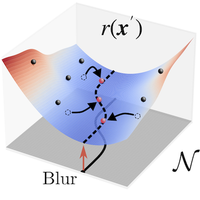
A Monte Carlo postprocessing method called blurred sampling eliminates infinite variance and systematic bias in variational quantum many-body simulations.

Entanglement Certification Using Noncontextuality Inequalities

Yujie Zhang, Jonah Spodek, David Schmid, Carter Reid, Liam J. Morrison, Thomas Jennewein, Kevin J. Resch, and Robert W. Spekkens

Phys. Rev. X 16, 031057 (2026) - Published 1 September, 2026

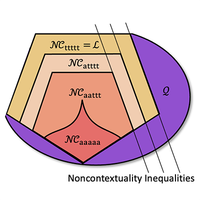
Researchers demonstrate a gauge-independent entanglement certification method based on noncontextuality inequalities that detects entangled states without requiring prior measurement device characterization.

Low-Depth Quantum Symmetrization

Zhenning Liu, Andrew M. Childs, and Daniel Gottesman

Phys. Rev. X 16, 031056 (2026) - Published 31 August, 2026

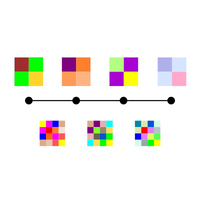
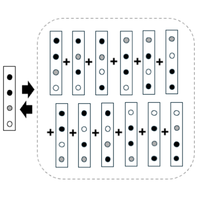
Researchers develop low-depth quantum symmetrization algorithms that enable efficient bosonic simulations, low-depth Dicke state preparation, and multiphoton interferometric imaging.

Quantum Thermal State Preparation for Near-Term Quantum Processors

Jerome Lloyd and Dmitry A. Abanin

Phys. Rev. X 16, 031053 (2026) - Published 28 August, 2026

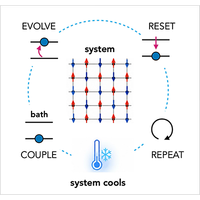
Researchers develop an algorithm that prepares many-body quantum thermal states accurately by combining bath resetting and modulated coupling.

Demonstrating Coherent Quantum Routers for Bucket-Brigade Quantum Random Access Memory on a Superconducting Processor

Sheng Zhang, Yun-Jie Wang, Peng Wang, Ren-Ze Zhao, Xiao-Yan Yang, Ze-An Zhao, Tian-Le Wang, Hai-Feng Zhang, Zhi-Fei Li, Yuan Wu, Hao-Ran Tao, Liang-Liang Guo, Lei Du, Chi Zhang, Zhi-Long Jia, Wei-Cheng Kong, Zhuo-Zhi Zhang, Xiang-Xiang Song, Yu-Chun Wu, Zhao-Yun Chen, Peng Duan, and Guo-Ping Guo

Phys. Rev. X 16, 031051 (2026) - Published 25 August, 2026

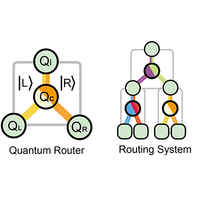
Researchers demonstrate coherent quantum routers on a superconducting processor to realize resilient routing for quantum memories.

Semidefinite Block-Matrix Relaxations for Computing Quantum Correlations

Nicola D’Alessandro, Carles Roch i Carceller, and Armin Tavakoli

Phys. Rev. X 16, 031050 (2026) - Published 25 August, 2026

Researchers provide a computational method for bounding the correlations arising in a multitude of quantum information problems.

Generation of Large Coherent-State Superpositions in Free-Space Optical Pulses

Lucas Caron, Hector Simon, Hugo Basset, Romaric Journet, and Rosa Tualle-Brouri

Phys. Rev. X 16, 031047 (2026) - Published 21 August, 2026

Researchers generate large-amplitude optical cat states in free space, establishing a vital building block for fault-tolerant quantum computing.

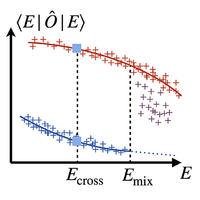
Eigenstate Thermalization in Thermal First-Order Phase Transitions

Maksym Serbyn, Alexander Avdoshkin, Oriana K. Diessel, and David A. Huse

Phys. Rev. X 16, 031042 (2026) - Published 18 August, 2026

Researchers demonstrate that thermal first-order phase transitions require a generalization of the eigenstate thermalization hypothesis, leading to the coexistence of distinct eigenstate classes and Schrödinger-cat-like states.

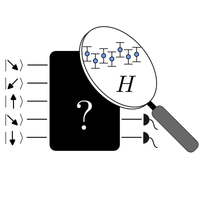
Bounded-Error Quantum Simulation via Hamiltonian and Lindbladian Learning

Tristan Kraft, Manoj K. Joshi, William T. Lam, Tobias Olsacher, Florian Kranzl, Johannes Franke, Lata Kh Joshi, Rainer Blatt, Augusto Smerzi, Daniel Stilck França, Benoît Vermersch, Barbara Kraus, Christian F. Roos, and Peter Zoller

Phys. Rev. X 16, 031037 (2026) - Published 13 August, 2026

Researchers introduce a framework that infers quantum dynamics and error bounds from experimental data to validate large-scale quantum simulations.

Free Probability in a Minimal Quantum Circuit Model

Felix Fritzsch and Pieter W. Claeys

Phys. Rev. X 16, 031027 (2026) - Published 5 August, 2026

Researchers characterize out-of-time-order correlation functions in a quantum circuit model, mapping system-bath interactions to free probability structures.

Leading and Beyond Leading-Order Spectral Form Factor in Chaotic Quantum Many-Body Systems Across All Dyson Symmetry Classes

Vijay Kumar, Tomaž Prosen, and Dibyendu Roy

Phys. Rev. X 16, 031019 (2026) - Published 27 July, 2026
Researchers analytically calculate the spectral form factor up to second order in time for chaotic many-body systems across all Dyson symmetry classes.

Sign In to Your Journals Account

Filter

Filter

Article Lookup

Enter a citation